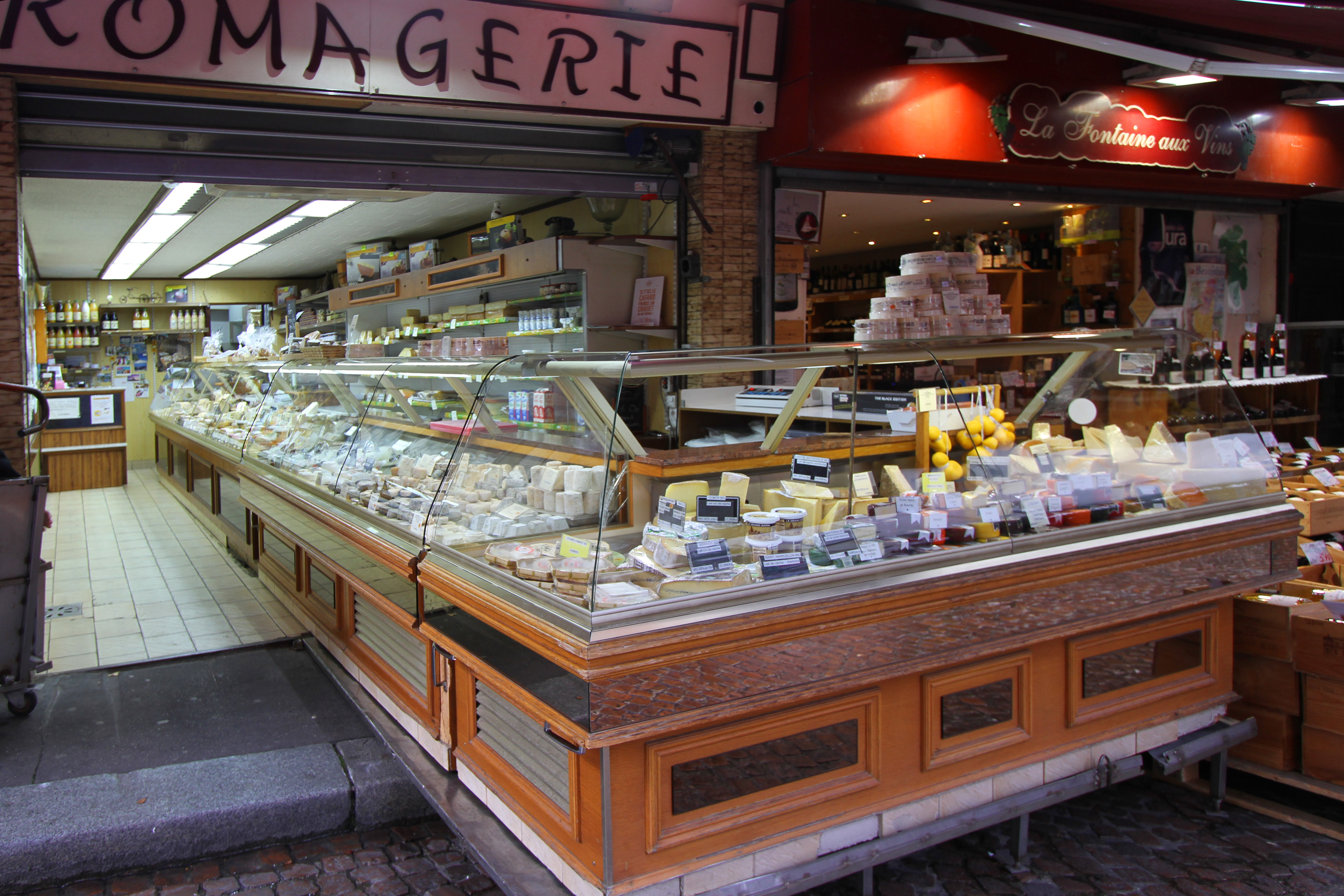
Fromagerie Gérard Mulot
Step into a fromagerie where the fromager-affineur—a master cheesemaker and aging expert—reveals how France's greatest cheeses develop their character through time, terroir, and human knowledge.
Welcome to Food & Markets of Paris, where we explore how this city truly eats. Over the next few hours, we'll wander through neighborhood markets redolent with seasonal produce, slip into family-run fromageries and bakeries where expertise flows through generations, sit down for honest bistro lunch, and discover small wine shops that know their customers by name. This isn't a tour of famous restaurants—it's about the daily rituals that sustain Parisian life. Food here is not performance; it's conversation between vendor and buyer, a commitment to quality and seasonality, a measure of time itself. As we move through these streets and markets, you'll see that understanding Paris means understanding how it feeds itself.
Welcome to a space where cheese isn't just food; it's a living thing. Push open the door and you'll notice the smell first: earthy, funky, rich—sometimes pungent, sometimes barely there. This is the olfactory signature of a working fromagerie, where hundreds of wheels and wedges rest in climate-controlled cellars beneath your feet, aging in darkness and stillness.
Look around the counter. What you're seeing isn't a random collection of local and imported cheeses. Every wheel, every wedge is here because someone—the fromager-affineur—believes it deserves a place. An affineur is part scientist, part custodian. Unlike a cheesemaker who produces cheese, an affineur ages it. They source wheels from dairy farmers across France, then take responsibility for their final maturation. They control temperature, humidity, and turning schedules. They taste constantly, testing readiness, calibrating flavor, deciding the precise moment when a Comté reaches its peak complexity or a Camembert achieves that perfect creamy center.
Notice the organized chaos on the shelves. You might see young Chèvre—chalky and fresh, still weeks from perfection. Next to it, a Selles-sur-Cher, wrapped in charcoal-tinged leaves from the Loire Valley, its rind developing the distinctive wrinkles that signal proper aging. There are likely Époisses or Taleggio—the pungent washed-rind varieties that announce themselves loudly and unapologetically. And always, somewhere, a Reblochon or a Morbier with its distinctive dark line of ash running through the middle.
Each cheese tells a story of terroir—the same concept you know from wine. The grass a Normandy cow eats flavors her milk differently than a Savoyard alpine pasture. Seasonal grazing creates seasonal variation in flavor. An affineur understands these rhythms. They know which producers to trust, which wheels to buy young, and which to pass by. This knowledge accumulates over decades.
Ask the person behind the counter to describe what they're selling. This isn't salesmanship; it's translation. They'll tell you which Comté comes from cows that grazed on clover-rich meadows—notice the deeper gold color—and how to taste the hazelnut notes that emerge if you let it warm in your mouth for a moment. They'll cut you a sample of a Beaufort and explain how the microbes in the mountain air create that particular kind of crystalline crunch you feel on your tongue. They might warn you away from a Munster that still needs another week to develop properly.
This is the opposite of industrial food systems. Here, there's no standardization, no uniformity. A fromagerie like this one insists on variation, seasonality, provenance. It's intimate commerce—the vendor holds specific knowledge about specific products and transfers it to you. When you buy a cheese here, you're not just purchasing a commodity. You're participating in the ritual of daily eating that shapes Parisian food culture. You're accepting a recommendation from someone who has already done the work of selection and aging, freeing you from guesswork.
Take a wheel of Époisses with you, or a creamy Valençay. Something that will continue to change on your table, ripening slightly, deepening in flavor. You're not buying something finished—you're buying something alive.
Rue Mouffetard Market
That is stop one, in the walk itself. The remaining 10 stops, the map and the route between them open with one free account.
Continue the walkThe written walk is free.
Thank you! Your report has been submitted.
Report an issue
Help us improve by reporting any issues you notice.