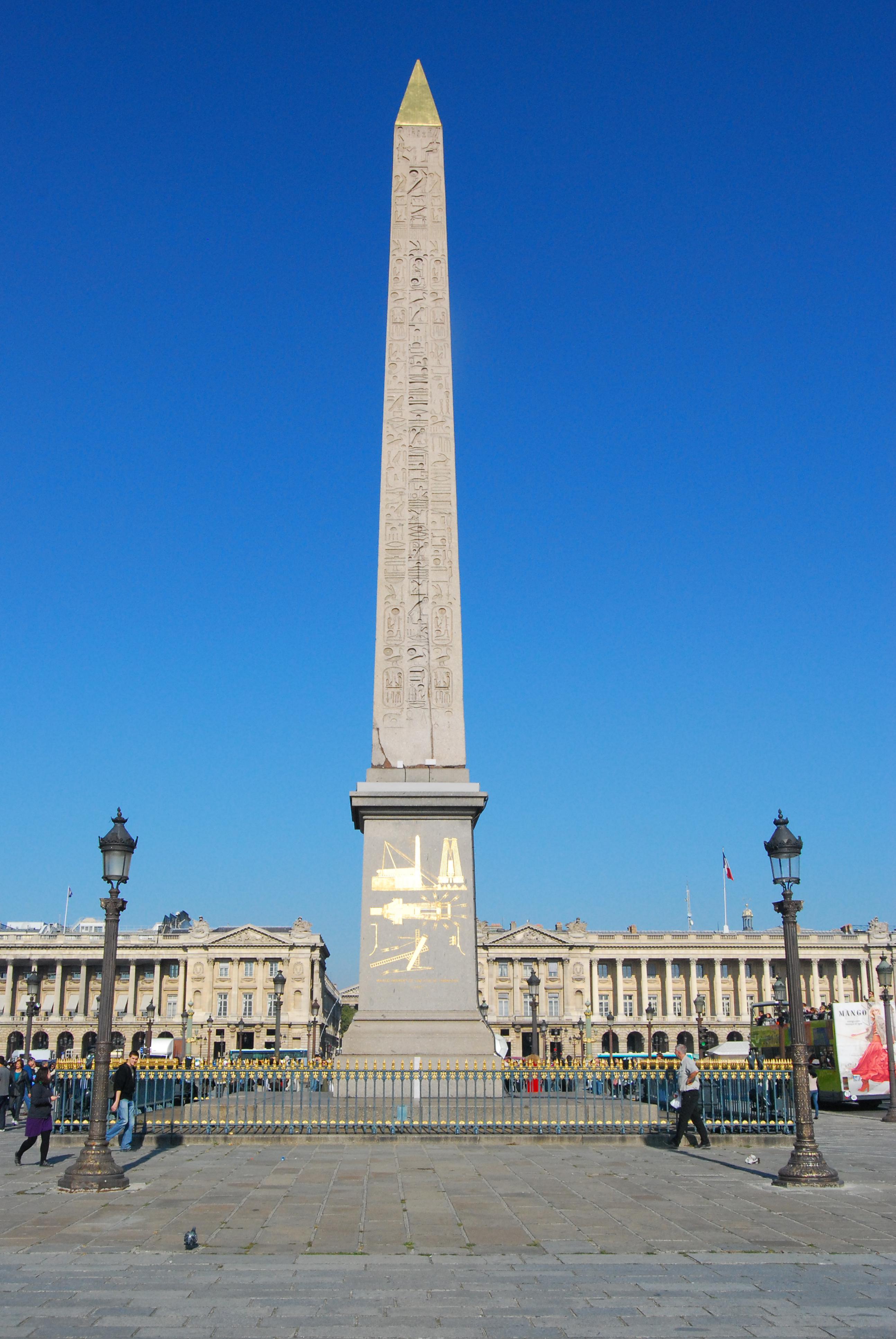
Place de la Concorde
This is where 1,119 people were executed during the Terror (1793-1795), including King Louis XVI and Queen Marie Antoinette. The Obelisk of Luxor now marks the spot where the guillotine's blade fell thousands of times.
You stand in Place de la Concorde, where 1,119 people lost their heads to the guillotine's blade. The wide-open plaza—beautiful, rational, geometric—was the stage for revolutionary terror. Over the next two hours, you'll walk through Paris's revolutionary heart, discovering how ordinary people seized power, how utopian ideals curdled into violence, and how this moment remade the city itself. We begin at the endpoint: the execution ground. From here, we'll trace backwards through Parisian streets to understand why the crowds came, what they believed, and what they built when the terror ended. These were real people—shopkeepers, aristocrats, idealists, victims. Their revolution still echoes in the city around you.
Look around you. This immense square—more than eight hectares of white gravel and neoclassical symmetry—was once a killing ground. Between 1793 and 1795, over a thousand people died here in the span of just two years. Louis XVI lost his head here on January 21, 1793. His wife, Marie Antoinette, followed nine months later. You are standing at the physical center of the Terror, the place where the revolution's most utopian ideals collided violently with its darkest impulses. This is where three thousand victims in total met the blade—though many histories cite 1,119 as the precise count for this location during the Terror years.
It's a strange feeling, isn't it? The square is now a monument to reconciliation—tourists take selfies, traffic circles endlessly, the obelisk presides in serene indifference. But if you look closely at the pavement, if you let yourself feel the weight of what happened here, you understand something crucial: revolutions are not abstract political events. They are embodied. They happen in real places, to real bodies, by real hands. The people who operated the guillotine were not cartoon villains. They believed they were serving justice. Many of them were local shopkeepers, artisans, even priests. These were real people—the executioners and the executed. That's what makes this history so difficult. It refuses the comfort of simple villainy.
The obelisk standing before you was a gift from Egypt in 1829, long after the Terror had ended. It's 3,300 years old—older than Christianity, older than democracy as we understand it. Louis-Philippe, the last French king, installed it here as an act of deliberate amnesia. He was saying: look, we have moved on. We are past this. We are civilized enough to stand a monument to ancient Egypt where we once shed our own blood. In a sense, he was right. The fact that we can now walk here peacefully, that this square has been reclaimed for commerce and tourism and everyday life, speaks to something profound about human resilience. But it also speaks to our capacity to forget, to bury trauma beneath gravel and traffic.
Here's something that might surprise you: the place wasn't originally called "de la Concorde." It was the "Place de la Révolution" when it became the scaffold. The revolution was already so violent, so unstable, so conscious of its own terror, that within a generation it needed to rename the space. "Concorde" means harmony, agreement, peace. The very name is an act of denial—or perhaps of hope. Either way, it's a choice, a deliberate attempt to overwrite what the square had become. The blood was washed away. The guillotine was dismantled. The name was changed. And Paris did something most post-revolutionary cities don't manage: it transformed a space of mass death into a space where millions of people now walk without knowing or remembering what took place.
But you need to know. Because understanding the Terror—not excusing it, but understanding it—is the only way to understand the revolution's contradictions. The same revolution that abolished feudalism and proclaimed the rights of man also murdered its own children. The same leaders who spoke of reason and justice operated under paranoia and ideology. The revolution promised liberation but it also delivered control, surveillance, betrayal. These contradictions aren't bugs in the revolutionary system—they're central to how revolutions actually work. Idealism and violence are locked together.
The story begins at the Bastille, where the revolution erupted in hope and chaos. But the killing—the industrial, systematic killing—happened here, on this quiet square. Over the course of this tour, you'll see how Paris moved through these stages, how the geography of revolution is written into the city's stone and streets. You'll understand how intellectual ferment at the Palais Royal became raw power at Concorde. How the revolutionary dream became the revolutionary nightmare. You'll see the fortress that once embodied tyranny completely erased, leaving only an absence. But that comes later.
For now, stand here. Notice the vastness of the space. Notice how the obelisk casts a long shadow in the evening light. Notice how the traffic flows around it, oblivious. This was the price of democracy's birth. Not the only price—but one of them. Real people died here. Let that sink in. Then we'll walk to the next stop, and begin to understand why.
Tuileries Palace Site & Garden
That is stop one, in the walk itself. The remaining 9 stops, the map and the route between them open with one free account.
Continue the walkThe written walk is free.
Thank you! Your report has been submitted.
Report an issue
Help us improve by reporting any issues you notice.