Aventine Keyhole
The most perfectly framed secret in Rome: bend down and peer through a bronze keyhole in the Knights of Malta's private gate, and St. Peter's dome appears suspended in a jeweled tunnel of cypress and laurel.
Rome has two cities in one. There's the Rome that everyone sees — the Colosseum, the Vatican, the Trevi Fountain, the gelato queues. And then there's the Rome that hides behind unmarked doors, up quiet hills, inside courtyards that most guidebooks don't bother to mention.
This tour is about that second Rome. Over ten stops, we'll peer through keyholes, push through anonymous entrances, and walk into spaces that range from a 5th-century church that's emptier than your living room to an entire neighborhood that looks like it was designed by someone who'd been reading too many fairy tales. The thread connecting them all is simple: the best things in Rome don't announce themselves. They wait to be found.
Start early if you can — the Aventine Hill is quietest before the tour buses arrive, and the light through the keyhole is best in the morning.
Welcome to the opening act. You're standing in the Piazza dei Cavalieri di Malta, on the Aventine Hill, about to see something that made you walk up here in the first place, even if you didn't know it yet.
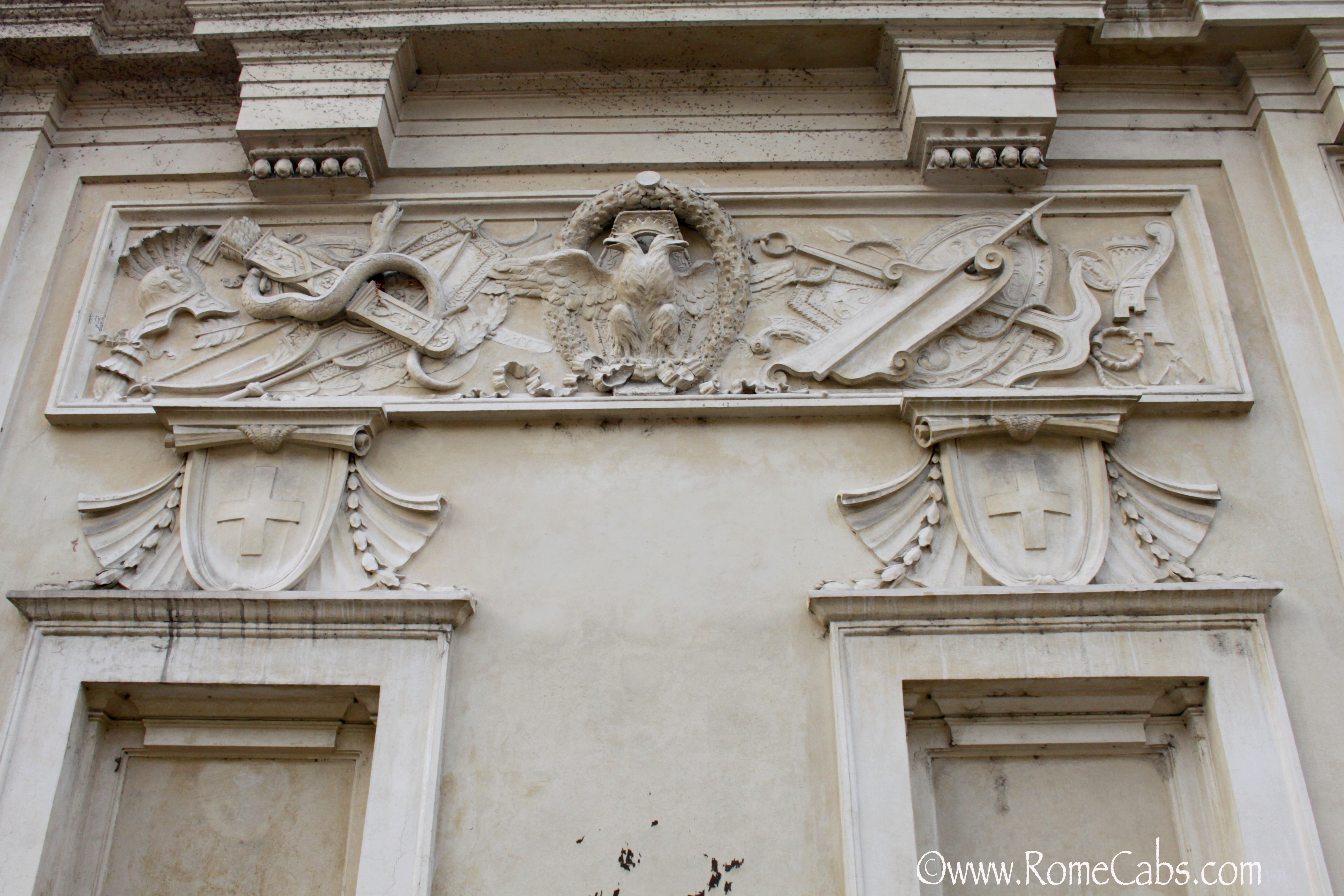
There's a gate. It looks official — austere, even. Bronze fittings. Ornamental carvings everywhere. Stone shields. Sculpted spears. This is the private entrance to the Villa del Priorato di Malta, designed in 1765 by Giovanni Battista Piranesi, the legendary Venetian architect who made buildings whisper their stories in stone. The whole piazza is his, too. He filled it with geometric motifs and heraldic reliefs celebrating the Sovereign Military Order of Malta, the medieval knights who took over this fortified monastery centuries ago and never really left.
But forget the architecture for a second. Look at the keyhole.
It's small. Modest. Almost apologetic. Bend down, bring your eye close to the bronze, and wait for the trick. There it is — St. Peter's dome. The copper-green masterpiece of Michelangelo, sitting at the end of what looks like a natural telescope. A perfect green alley of clipped laurel and cypress leads your eye straight to it, 250 meters away, but compressed. Framed. Possessed.
This is no accident. Piranesi built this portal and then filled the gardens with hedges and laurel in such a way that the dome floats dead center in your keyhole view. He created what the Romans call the "occhio di Roma" — Rome's eye — a living telescope. Whether he planned this alignment precisely, or whether he built it and the alignment happened like a gift, nobody really knows. But either way: he made a door that isn't a door. He made a keyhole that isn't just a keyhole. He made a secret that's not quite secret, because thousands of people peek through it every year.
Here's what nobody tells you: through this keyhole, you're technically looking at three countries at once. Italy, Vatican City, and the Sovereign Military Order of Malta — which has its own territorial status granted by the Italian government. A holy trinity of sovereignty, held in a bronze circle the size of a euro coin.
This is how Rome works. Not in grand monuments or crowded piazzas. But in keyholes. In angles. In what you see only if you know where to kneel and look.
Parco Savello (Orange Garden)
That is stop one, in the walk itself. The remaining 9 stops, the map and the route between them open with one free account.
Continue the walkThe written walk is free.
Thank you! Your report has been submitted.
Report an issue
Help us improve by reporting any issues you notice.