Barcelona · Spain
2,000 Years in One Neighbourhood: The Gothic Quarter
Barcelona, Spain
Hidden Roman temple columns in a medieval courtyard Underground Roman streets at MUHBA Civil War bomb scars at Plaça de Sant Felip Neri The medieval Jewish quarter (El Call) Gaudi's very first public commission
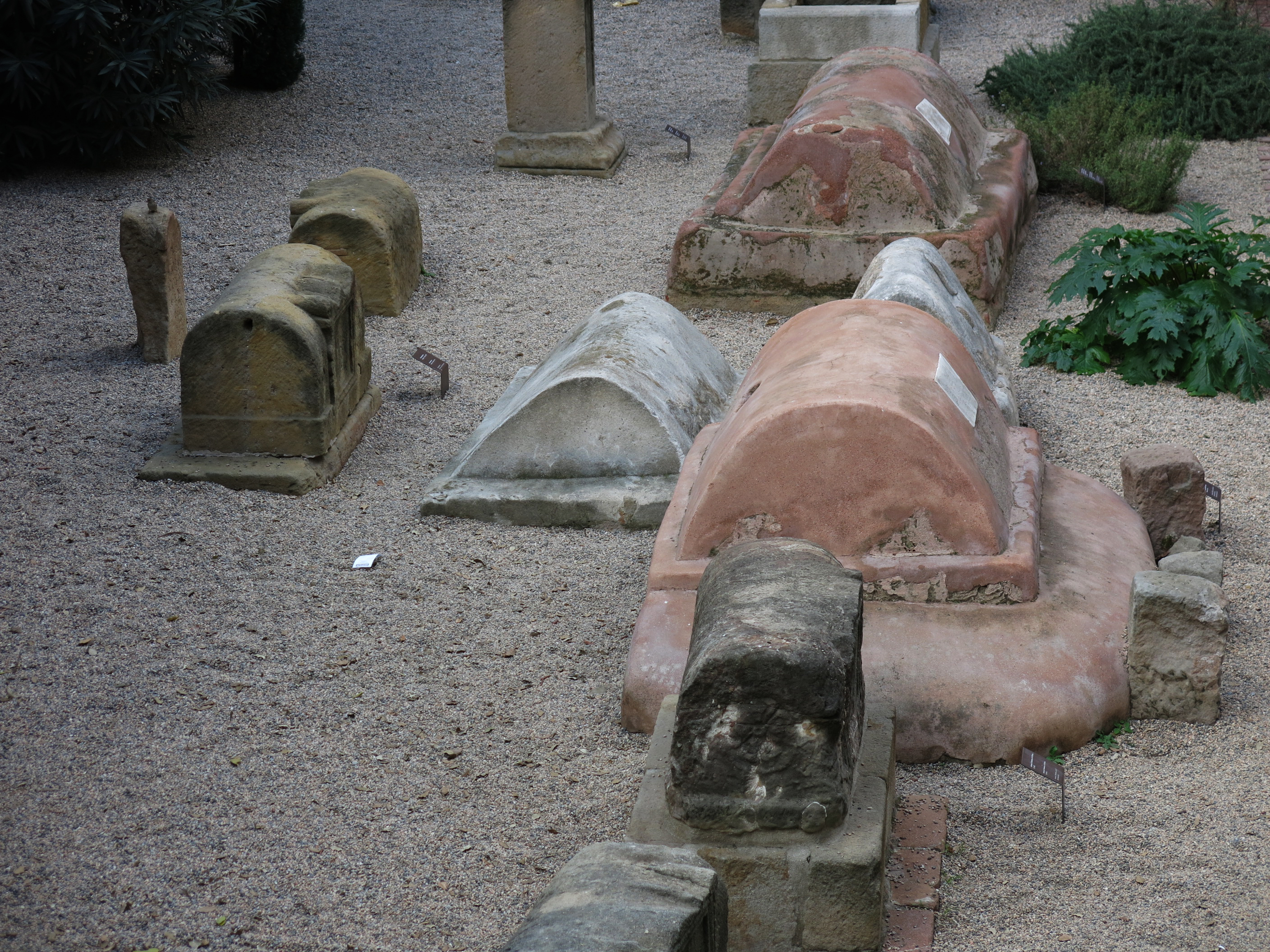
Ninety-five Roman tombs discovered in 1956-1959, where Barcelona's ordinary citizens were buried between the 2nd and 3rd centuries AD.
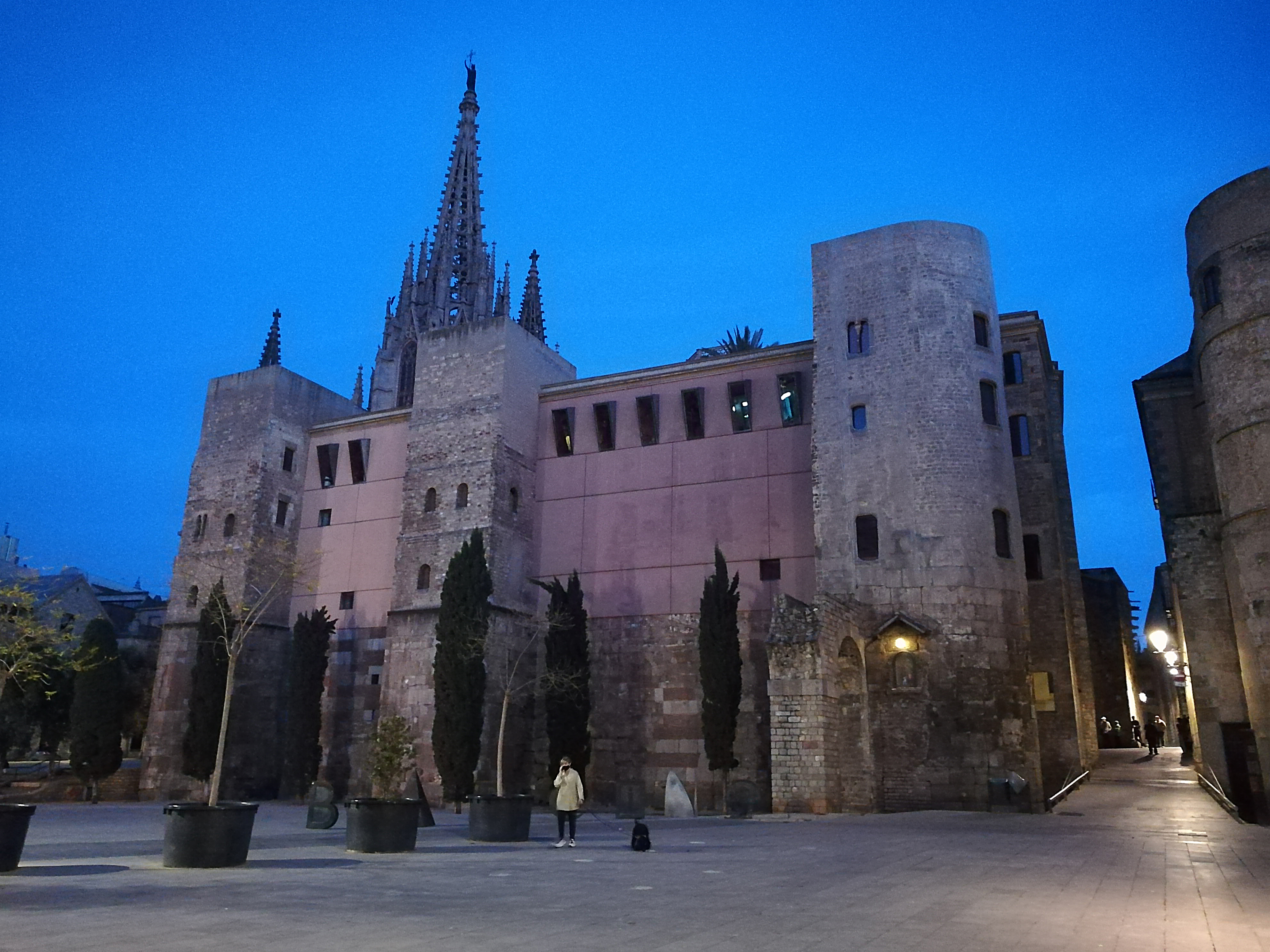
Two cylindrical Roman towers flanking the Porta Praetoria, the northern entrance to the walled city of Barcino, with traces of the aqueduct still visible.
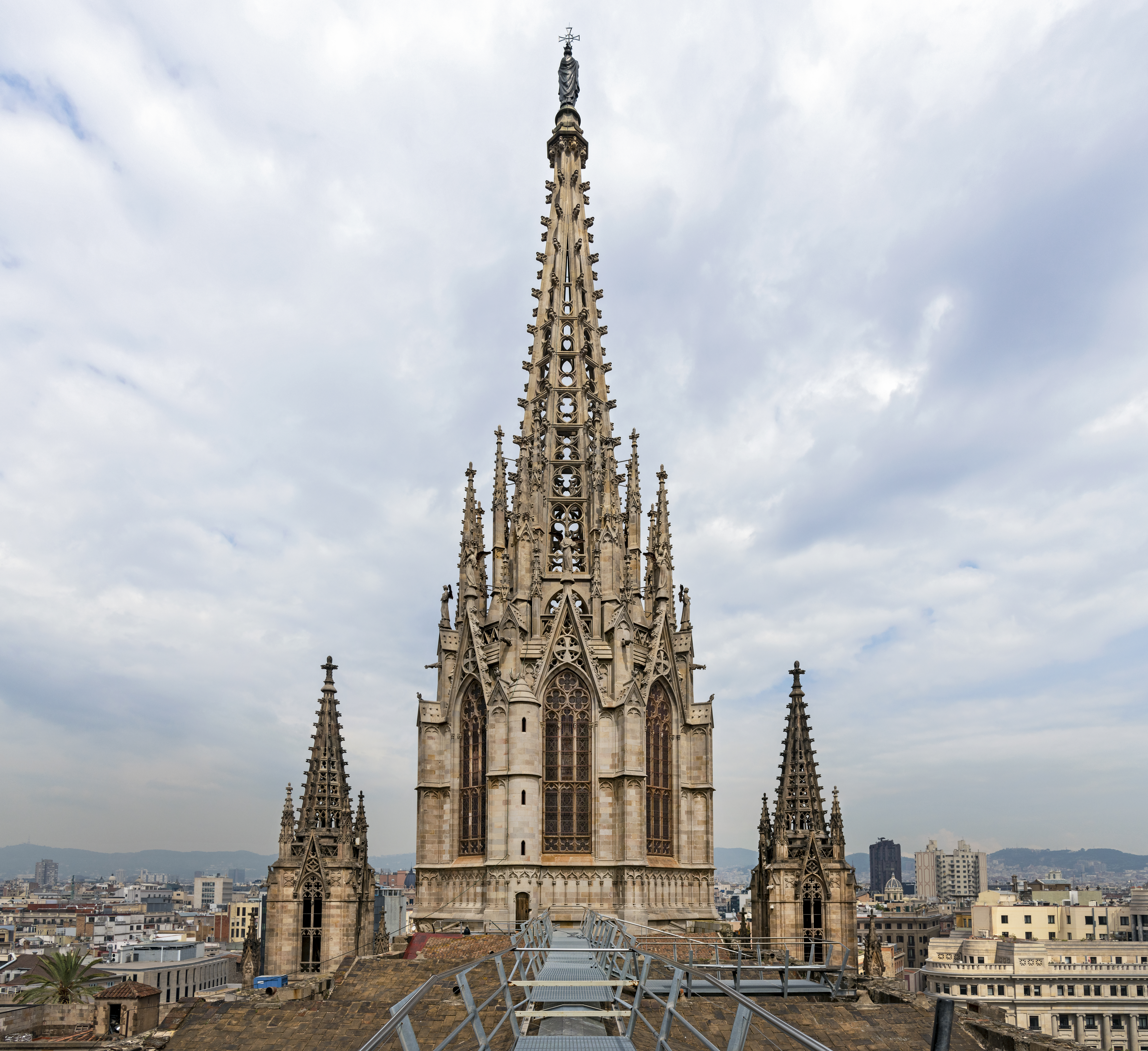
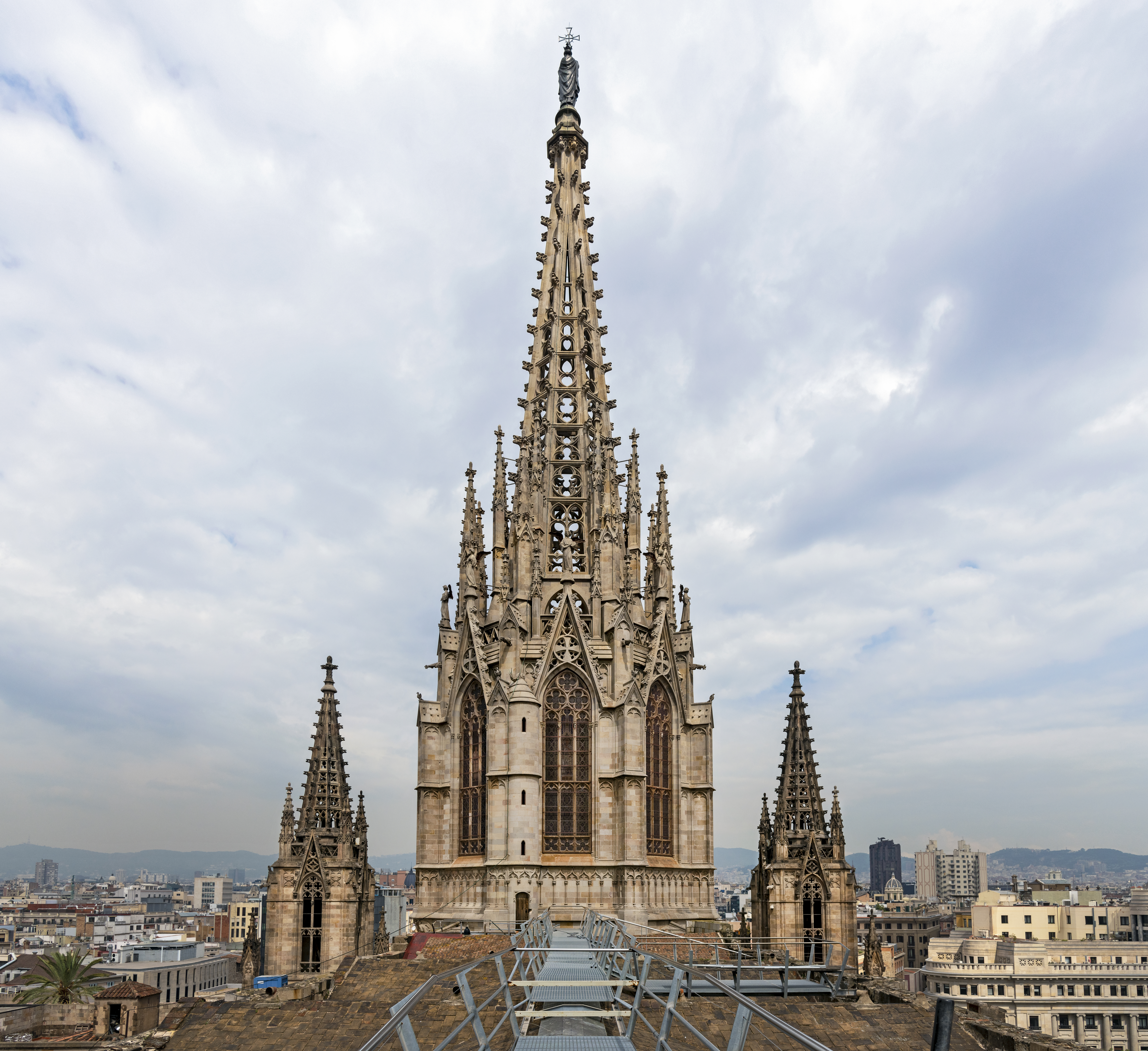
The cathedral that rose over a thousand years of predecessors—Roman forum, Visigothic basilica, Romanesque church. Look for the 13 geese in the cloister honoring Santa Eulàlia's 13 tortures, and the surprisingly young Gothic facade added for the 1888 World Fair.
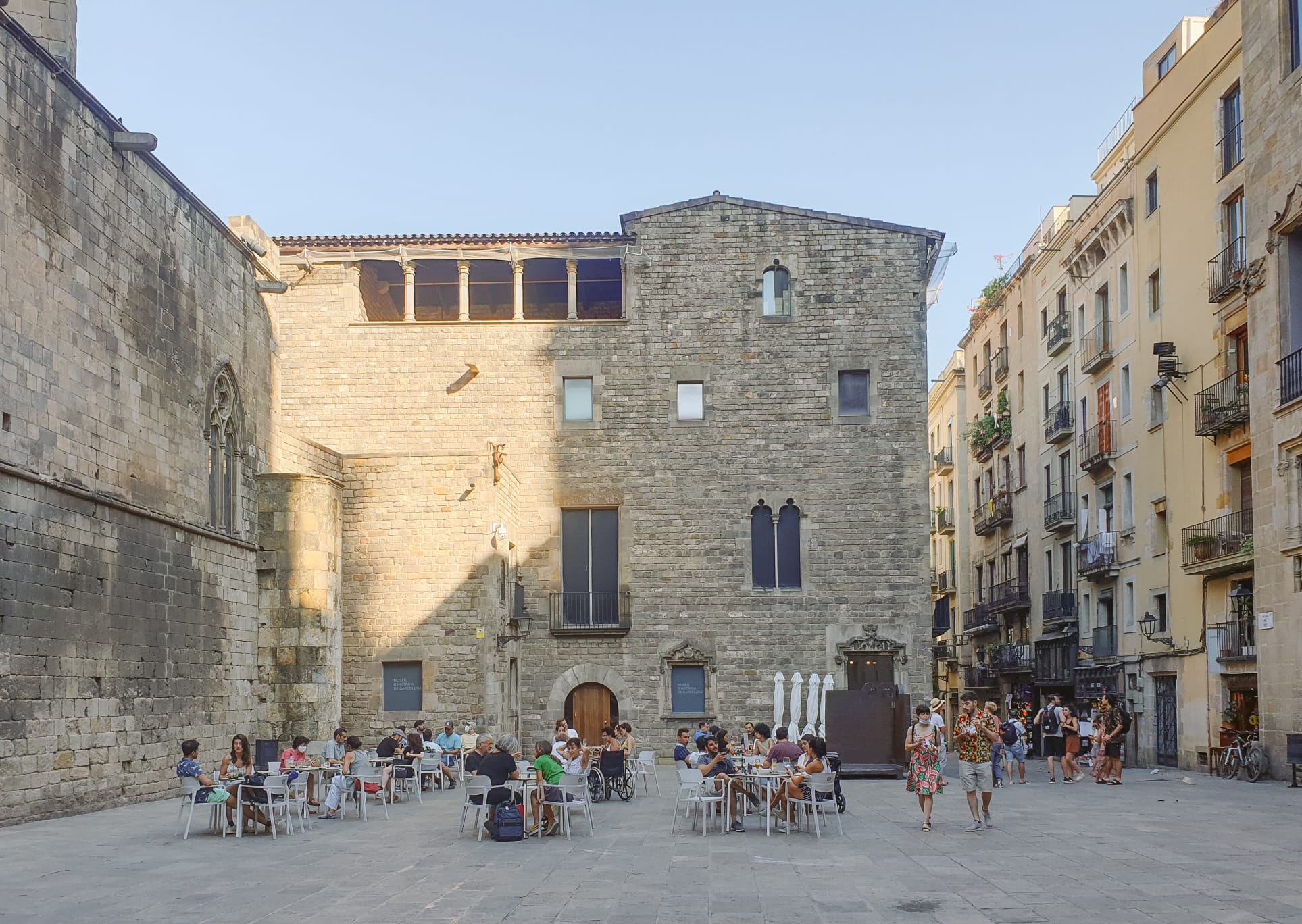
The medieval royal square where counts and kings held court. The Saló del Tinell, a 14th-century throne room where Columbus may have presented to Ferdinand and Isabella. The 15th-century watchtower overlooking both city and sea. Below: Roman streets waiting underground.
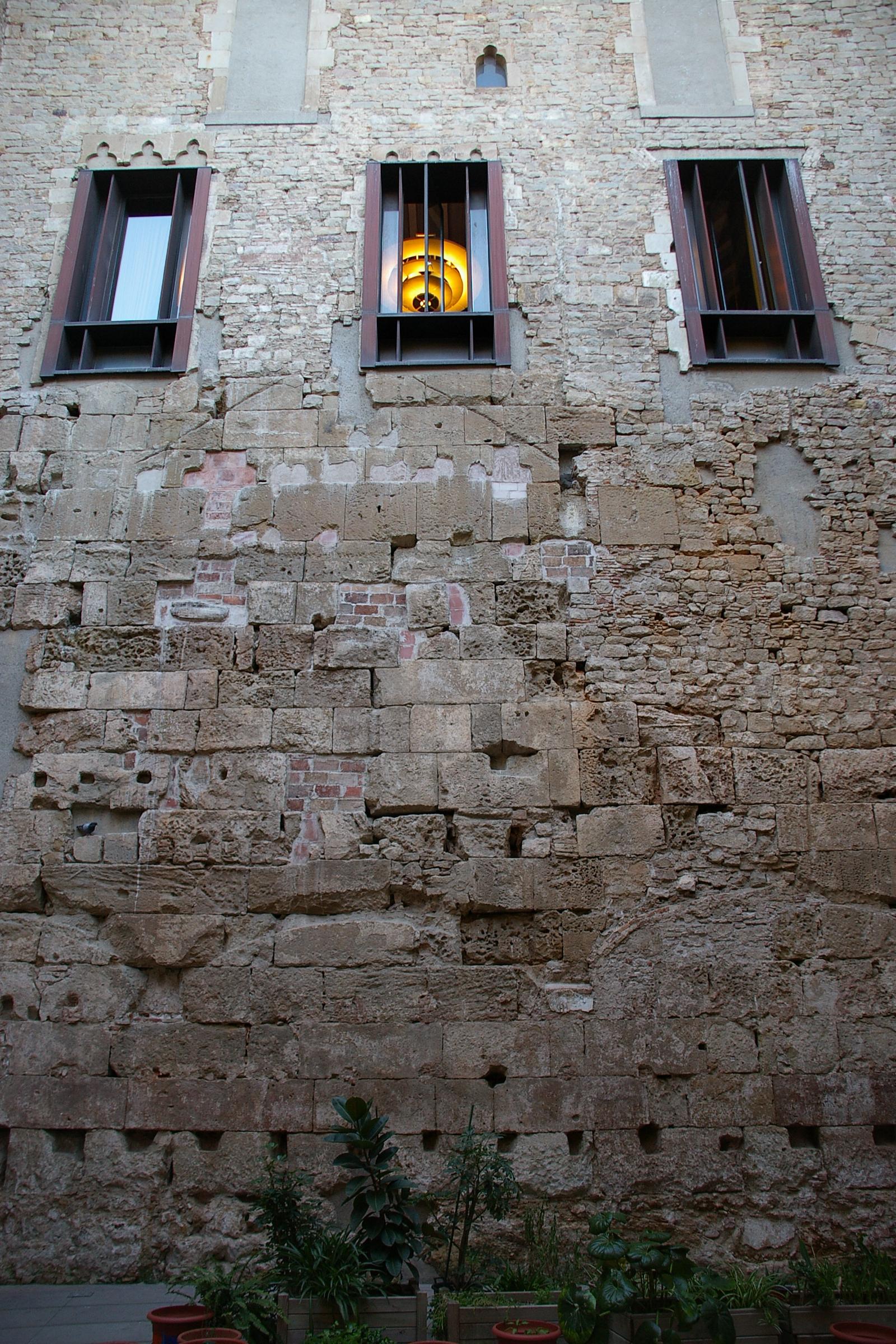
The 1.5km defensive perimeter that protected Roman Barcino, reinforced in the 4th century with 81 towers rising 18 metres high. Medieval builders later grew their city directly on top of, and into, these ancient foundations.
Beneath Plaça del Rei lies a 4,000 m² underground excavation—actual Roman streets, shops, workshops, and homes. You're about to walk through the place where ordinary Romans lived, worked, and died.
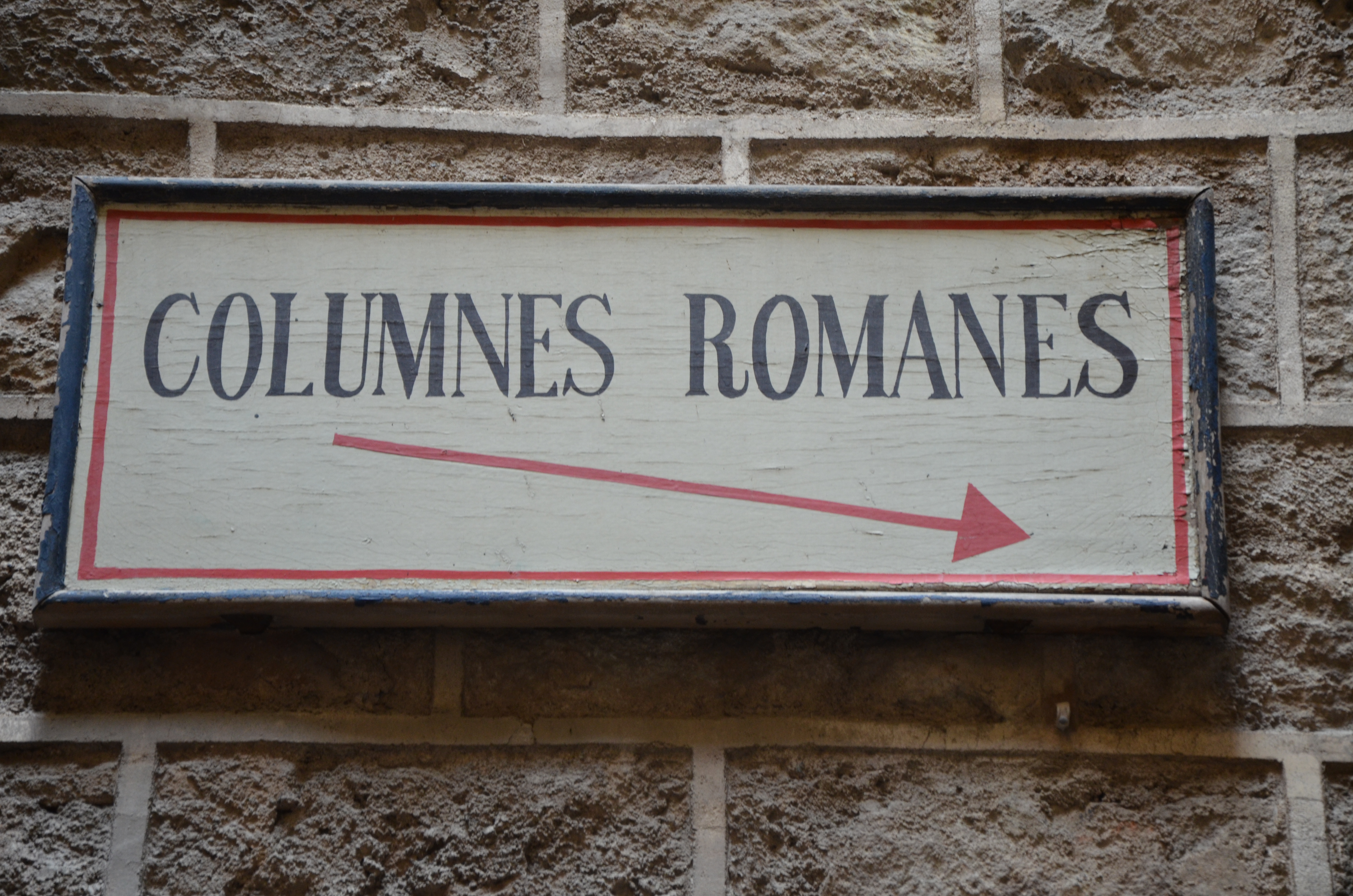
Four columns from a 1st-century Roman temple, 9 metres tall, stand inside a 15th-century Gothic building. They mark the highest point of Roman Barcino and are one of the most striking examples of how time folds over itself in this city.
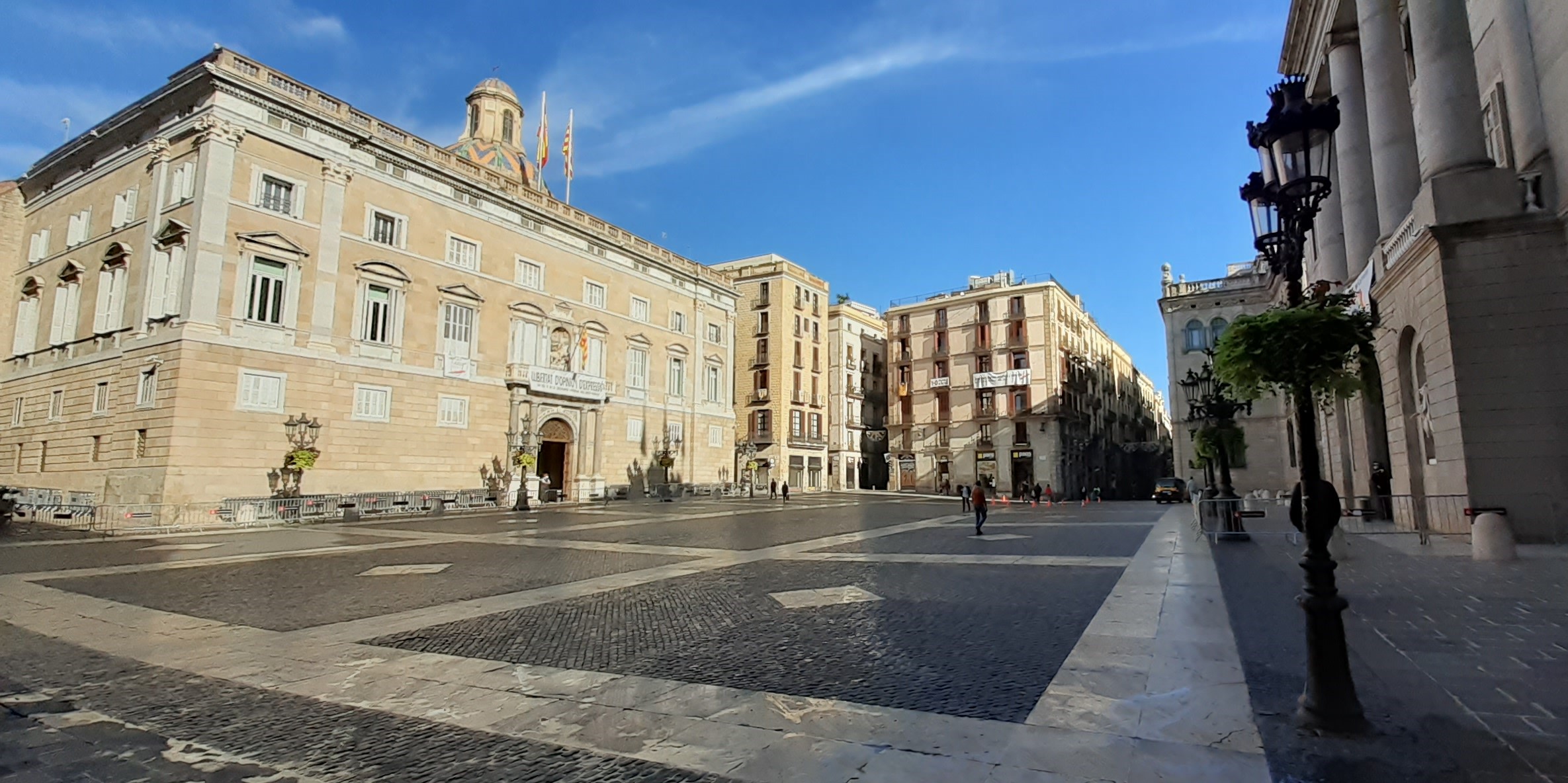
Two thousand years of power concentrated on one square. Roman forum, medieval councils, today's Catalan government and City Hall face each other across contested ground.
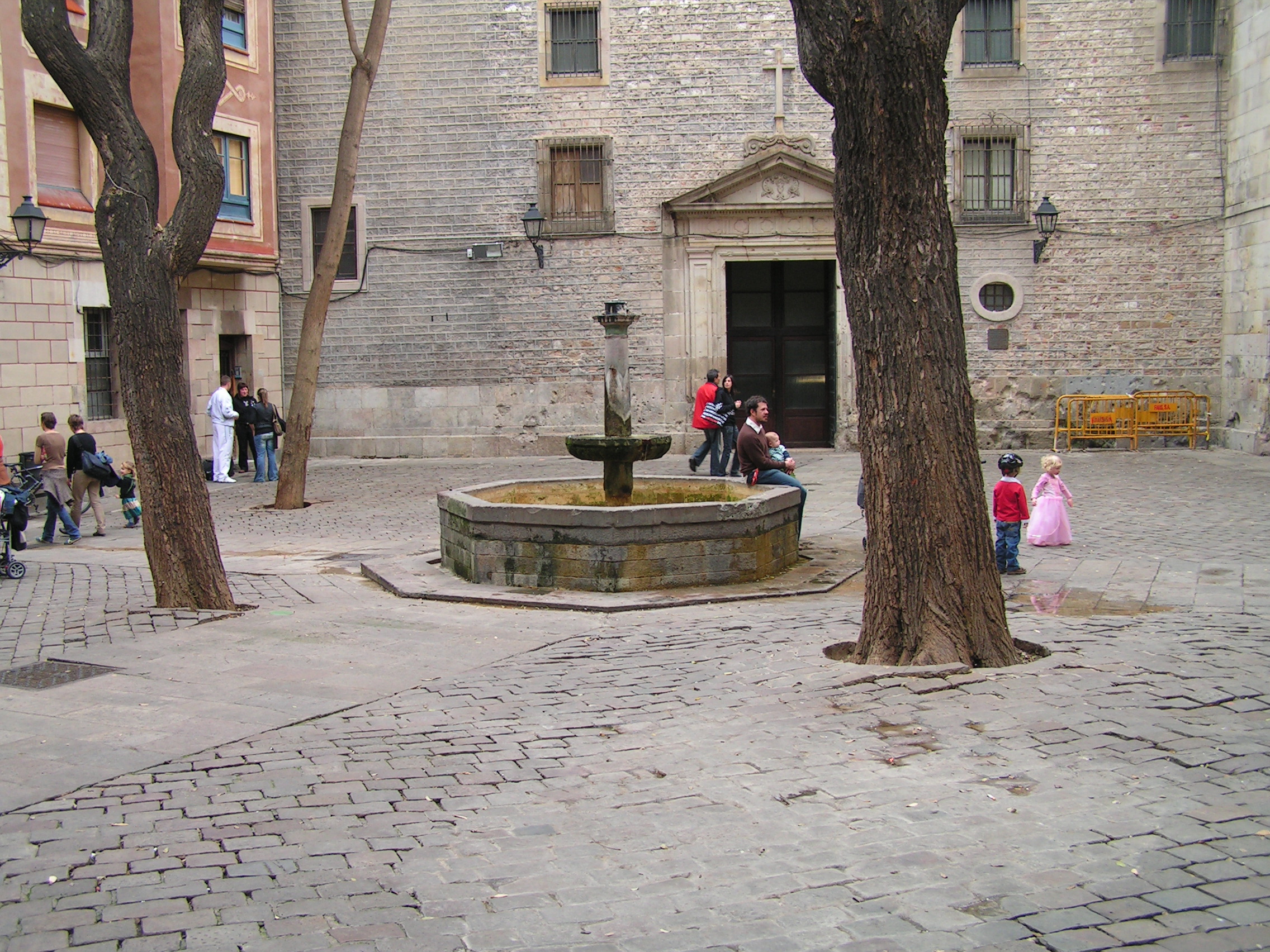
A quiet corner scarred by shrapnel. On January 30, 1938, bombs fell on children sheltering in the church. The façade was never repaired—preserved as memorial to 42 dead.
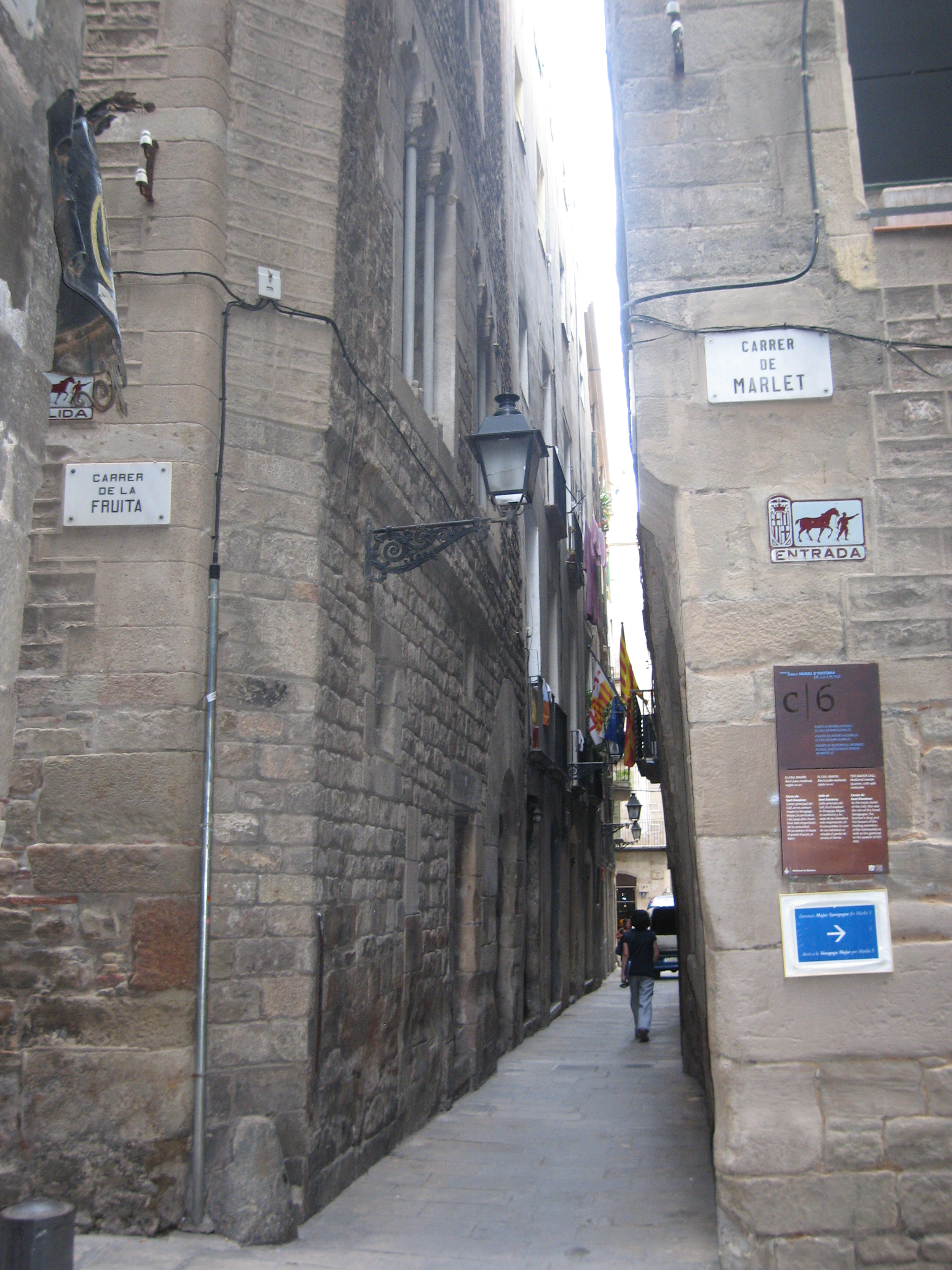
The medieval Jewish quarter preserved in narrow streets—a thriving community until the 1391 pogrom and 1492 expulsion. Walk where one of Europe's oldest communities lived, worked, and worshipped.
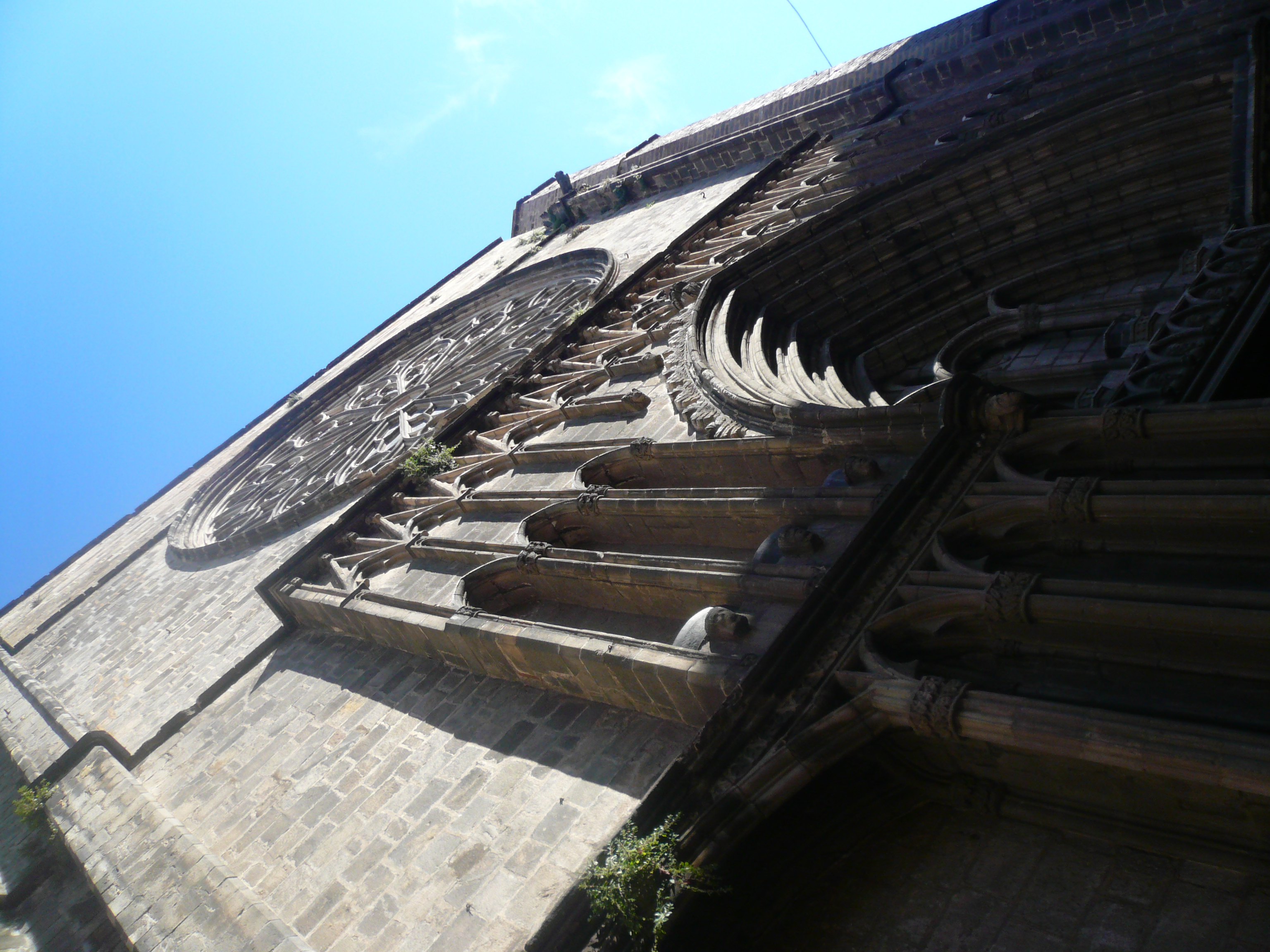
Catalan Gothic at its finest—a single-nave church with a 10-metre rose window (one of the largest in the world). Built for the people, not the cathedral chapter, between 1319 and 1453.
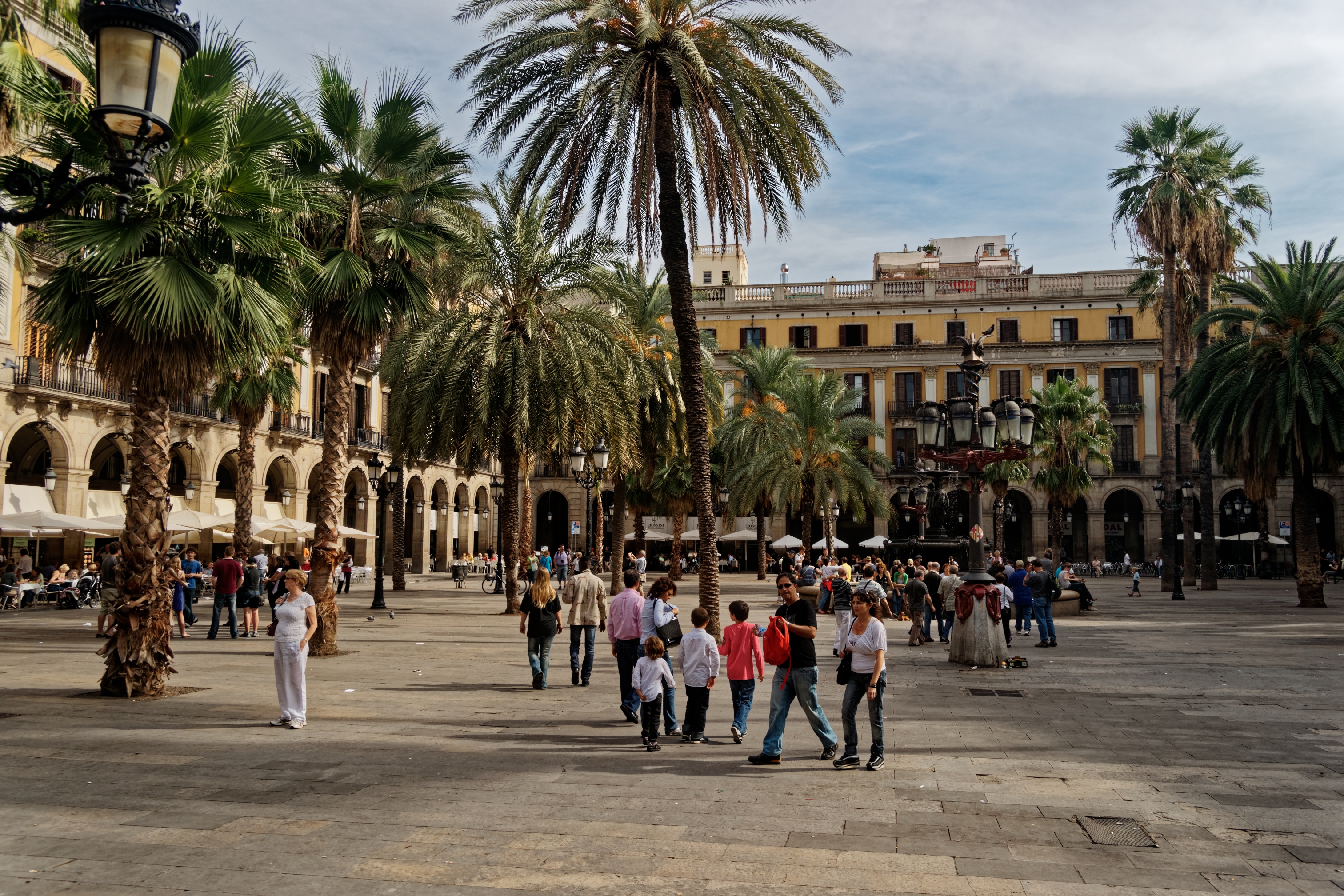
An arcaded 19th-century plaza built where a medieval convent once stood. Home to Gaudí's first public commission: two cast-iron lampposts with Mercury's caduceus at the crown.
This is the real story from one stop on this walk — every stop has one.
If you only have one day, this tour gives you the heartbeat of Barcelona — its most iconic sights, its rhythm, and the…
Discover that Barcelona's real cuisine isn't in tourist restaurants but in its historic markets, neighbourhood…
Trace Barcelona's relationship with the sea — from the medieval shipyards that launched Mediterranean fleets to the 1992…
We use cookies to analyse site traffic and improve your experience. You can choose to accept or reject analytics cookies. Learn more