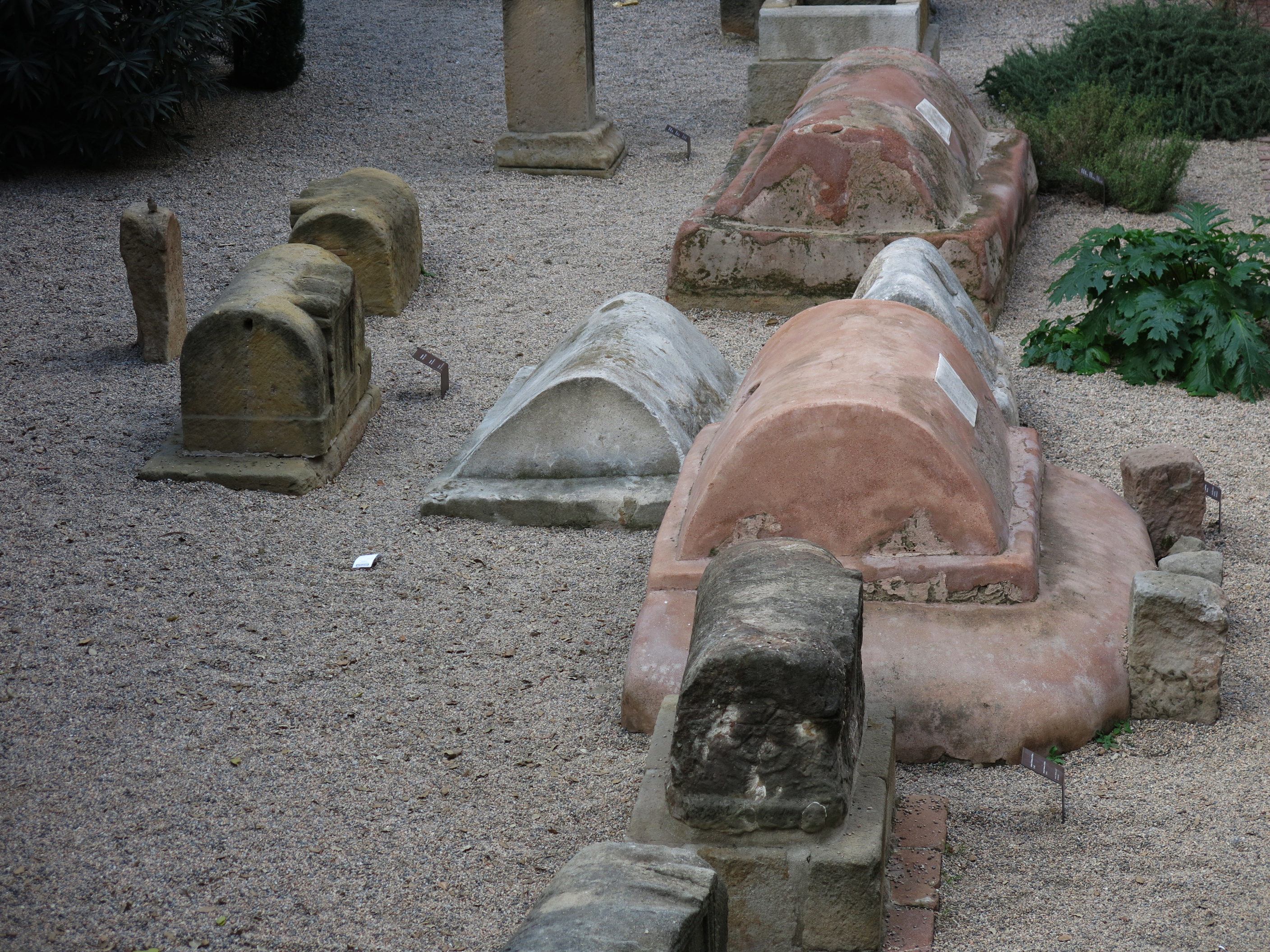
Roman Cemetery
Ninety-five Roman tombs discovered in 1956-1959, where Barcelona's ordinary citizens were buried between the 2nd and 3rd centuries AD.
Welcome to the oldest neighbourhood in Barcelona. Over the next two hours, you and I are going to walk through 2,000 years of history — and I mean that literally. We'll start where the Romans buried their dead, pass through the gates of their walled city, descend beneath the streets to walk on actual Roman roads, and surface through layers of medieval power, religious devotion, wartime devastation, and artistic genius.
The Gothic Quarter isn't a museum. It's a living archaeological site where every century left its mark on the one before. Roman walls hold up medieval houses. A Gothic cathedral sits on a Visigothic basilica that sat on a Roman forum. Bomb scars from 1938 pockmark a church from the 1700s. And somewhere in the middle of all of it, a 22-year-old Antoni Gaudi got his first public commission — a pair of lampposts.
The key to this tour is looking up, looking down, and looking closely. The layers are everywhere if you know where to find them. Ready? Let's start with the dead.
You're standing outside what was once the boundary line between life and death—literally. Roman law forbade burials inside city walls, so Barcino's dead were laid to rest out here, along the Via Augusta, the main road running past the city. What you're looking at isn't glamorous. These aren't the mausoleums of emperors or wealthy merchants' elaborate monuments. These are the graves of ordinary people—dock workers, merchants' wives, people who lived paycheck to paycheck in the Roman world just like we do now. Ninety-five tombs, discovered between 1956 and 1959 when they were doing construction work. Ground-truth archaeology, basically. Just digging up the street and suddenly there's the entire necropolis.
The tombs you can see today are marked with simple stone monuments called cupae—think of them as the Roman version of a headstone, though humbler. Some families buried their small pets alongside their dead. People left ceramic vessels and oil lamps in the graves, things you'd need in the afterlife, or maybe just tokens of love. The remains tell a story: malnutrition, dental problems, the hard lives of ordinary Barcelonians in the 2nd and 3rd centuries, the golden age of Barcino when the city was at its peak with somewhere between 3,500 and 5,000 inhabitants.
What's wild is how layered this feels. You're standing here, in 2026, looking at graves from nearly 1,900 years ago. A Roman teenager buried here would have been dead for almost two thousand years. And above their graves, for centuries, the city kept growing. The medieval city grew up around them. The Gothic Quarter rose. Renaissance Barcelona happened. The Spanish Civil War happened. And here in this quiet plaza, the dead stayed put.
This is where we begin because you can't understand what comes next without understanding the dead. These tombs prove Barcino was real—that real people were born here, worked here, died here, and were mourned here. Walk through those graves. Feel the weight of it. Then let's go find the city they left behind.
Plaça Nova
That is stop one, in the walk itself. The remaining 11 stops, the map and the route between them open with one free account.
Continue the walkThe written walk is free.
Thank you! Your report has been submitted.
Report an issue
Help us improve by reporting any issues you notice.