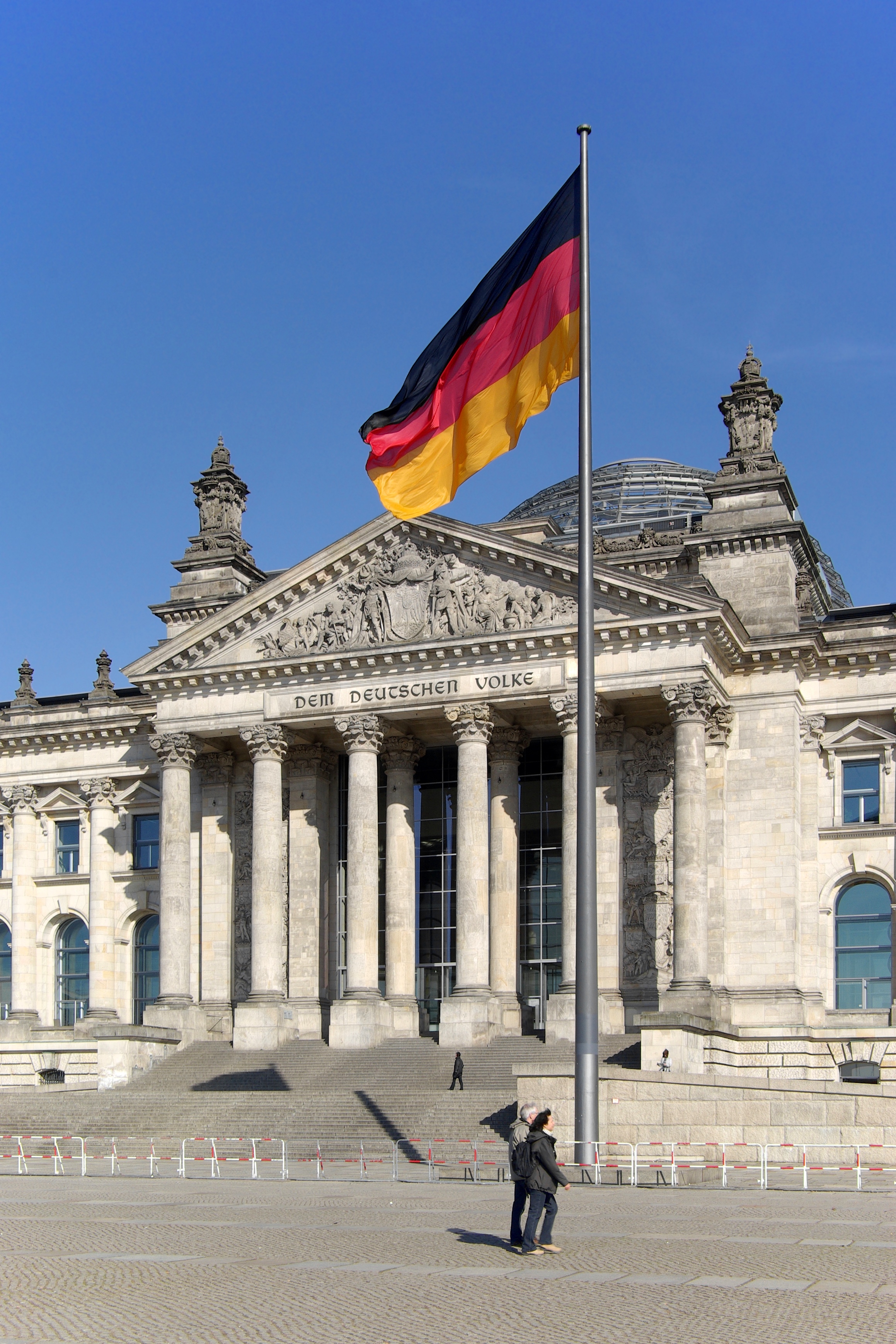
Reichstag
On 27 February 1933 the Reichstag burned, giving Hitler the emergency decree that suspended civil rights overnight; weeks later, on 23 March, parliament passed the Enabling Act and voted itself out of existence. This stop follows the legal machinery by which German democracy was dismantled in under two months.
Find a spot on the lawn in front of the Reichstag and take a moment. Families are picnicking, tourists are queuing, and the German parliament is at work behind the stone facade — an entirely ordinary day in a functioning democracy. That ordinariness is the point of this walk, because within sight of where you stand, an earlier German democracy was dismantled in a matter of weeks — not by force of arms, but in offices. Over the next three kilometers and nine stops, you'll cross a single square kilometer of vanished ministries — the ground where the apparatus of dictatorship was assembled, operated, and finally destroyed. Let's be honest with each other at the start: this is a heavy walk, and some stops will stay with you. It is not a walk of horrors, though. It is a walk about mechanisms and choices — how a state was captured, how its crimes were administered, and what Berlin, with remarkable candor, chose to build on the ruins. Take a breath. Then let's begin where the takeover did.
Stand back far enough to take in the whole west front — the grey columns, and above them the bronze letters: Dem Deutschen Volke, "To the German People." They were cast in 1916 from two French cannons captured a century earlier. Keep them in view, because everything that follows is about how the building beneath them was turned against the people it names.
On the evening of 27 February 1933, Adolf Hitler had been chancellor for exactly four weeks — head of a coalition, hemmed in, or so his conservative partners believed, by a cabinet with only three Nazi ministers. Around nine o'clock, passers-by saw flames behind these windows. Inside, police found a 24-year-old Dutch bricklayer named Marinus van der Lubbe, half-blind from a work injury and shirtless, because he had used his shirt as kindling. He insisted he had acted alone, hoping to rouse German workers to resist, and most historians today believe him. It scarcely mattered. By the time the glass dome over the chamber cracked in the heat, Hitler and Göring were standing here declaring it the signal for a Communist uprising that existed nowhere except in their announcements.
What happened next is the part to hold onto, because it happened at a desk, not in the street. Overnight, Interior Ministry lawyers drafted a short emergency decree under Article 48 of the Weimar constitution, and the next morning — 28 February, before the ashes were cold — President Hindenburg signed it. The Reichstag Fire Decree suspended, in a few paragraphs, freedom of speech, of the press, of assembly, the privacy of post and telephone, and protection from arrest without a judge. It was presented as temporary. It stayed in force until 1945. Within days thousands of Communists and Social Democrats were in custody, including sitting deputies of this parliament, their immunity dissolved by the very decree the fire had produced.
The building was now a burned shell, so parliament moved across the square to the Kroll Opera House. There, on 23 March 1933, it met to vote on the Enabling Act — a law letting the government make laws without parliament, without the president, even against the constitution. It required a two-thirds majority the Nazis did not have, so they manufactured one: the 81 Communist deputies, jailed or in hiding, were struck from the count; the standing orders were quietly rewritten so absentees no longer broke the quorum; SA men lined the aisles of the opera house, muttering threats at anyone who hesitated. The Catholic Centre Party, soothed with vague promises, voted yes.
One party said no. Otto Wels, chairman of the Social Democrats, walked to the podium — reportedly with a cyanide capsule in his pocket in case he was seized on the spot — and gave the last free speech in a German parliament for twelve years: "You can take our lives and our freedom, but not our honour." Hitler rose and sneered that he did not want their votes anyway. The count was 444 to 94, every no from the SPD benches. Parliament had, with due procedure and a recorded vote, abolished itself.
That is the thread this whole walk follows: the dictatorship you will trace from here south to Potsdamer Platz was built by decree, signature and filing cabinet, each step wearing the costume of legality — and the war those signatures unleashed will bring us, at the end, to a square that had to come back from nothing. Notice, too, what the Nazis did with this building once they had it: essentially nothing. The chamber was never repaired; the rubber-stamp Reichstag kept meeting at the opera house. A regime run from desks had no use for a debating chamber, only for its shell — which is why the Soviet flag raised over this roof in 1945 meant what it did, a story the next stop owns.
Before you walk on, find the row of jagged cast-iron slabs at the lawn's edge by Scheidemannstraße: 96 of them, one for each Reichstag deputy murdered under the regime, each edge stamped with a name, a party, a place and a date. Many were taken under the Fire Decree written the night this building burned. And one dry footnote: van der Lubbe was beheaded in January 1934 under a death penalty enacted after his deed — retroactive law, from the self-declared government of order. German courts finally overturned the verdict in 2008. If you would like to go up to the roof later, register online a few days ahead; entry is free, like this tour.
Soviet War Memorial, Tiergarten
That is stop one, in the walk itself. The remaining 8 stops, the map and the route between them open with one free account.
Continue the walkThe written walk is free.
Thank you! Your report has been submitted.
Report an issue
Help us improve by reporting any issues you notice.