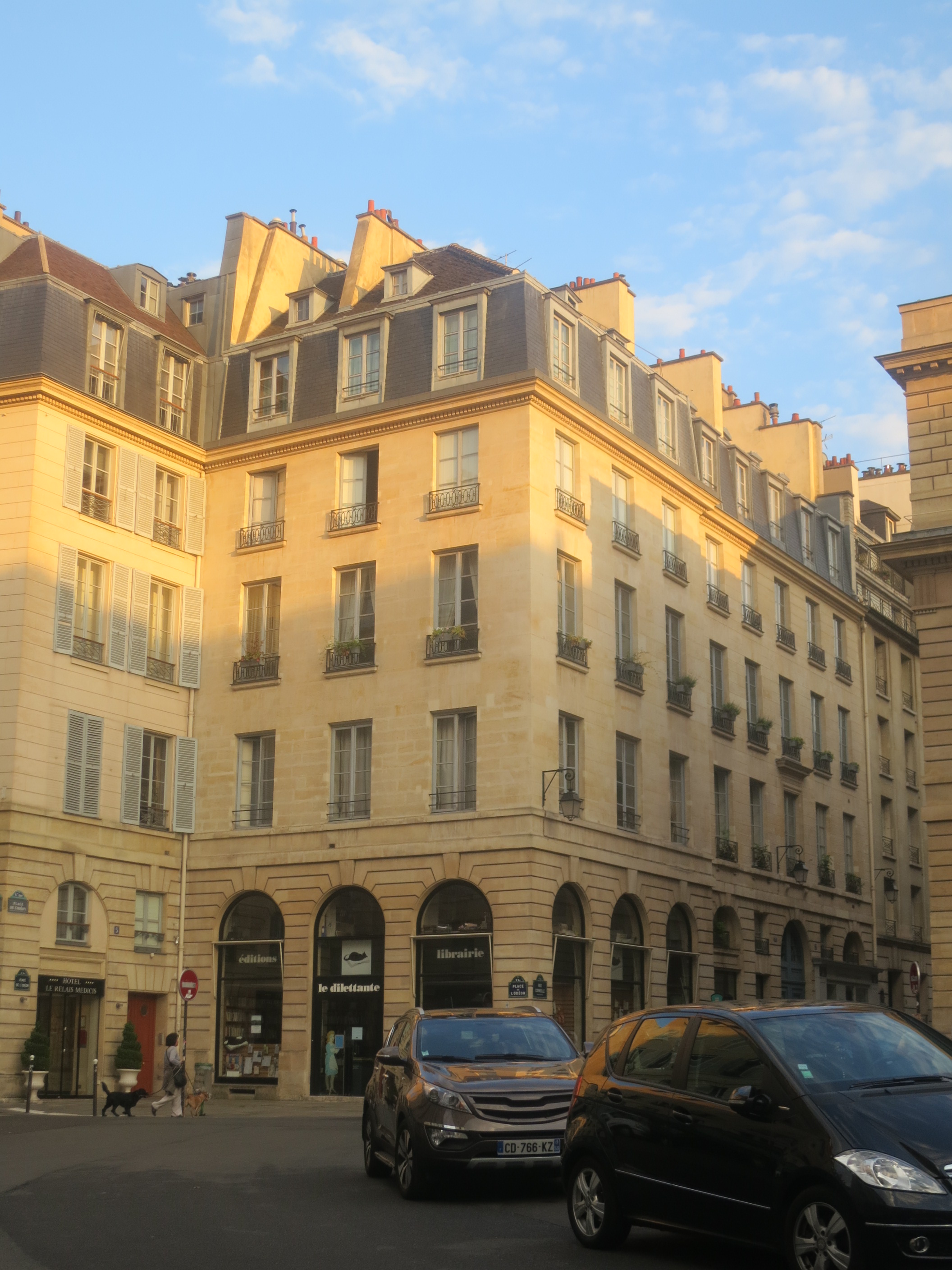
Odéon Theatre
Occupied during May 1968 by students and workers who transformed this temple of bourgeois culture into a revolutionary assembly hall, hosting all-night debates that embodied the radical imagination of the uprising.
We're standing at the Odéon Theatre, where fifty-five years ago, students and workers seized this stage and transformed it into a parliament of revolution. Today we retrace a longer arc: back through this very city's streets to 1871, when another generation barricaded these same squares. Paris is not simply a backdrop to revolution—its cobblestones, its neighborhoods, its gathering places are the instruments themselves. From the occupied Odéon in May 1968 to the bloody final stand at Père-Lachaise Cemetery one century before, these streets have repeatedly become weapons in the hands of ordinary Parisians demanding a different world. We'll walk this geography of uprising, discovering how the revolutionary spirit hasn't vanished—it's embedded in the city itself.
Stand here on Place de l'Odéon and imagine the night of May 15, 1968. Students and workers burst through these doors, occupying this grand 18th-century theatre—not to watch a play, but to stage something far more radical. They came seeking space for democracy: unscripted, all-night assemblies where anyone could speak, debate, decide. The theatre's director, the legendary actor and director Jean-Louis Barrault, didn't call the police. He allowed the occupation. That choice matters.
Inside, for weeks, the stage became a tribune. Thousands crowded the seats, the aisles, the balconies. Students from the Sorbonne—just a short walk from here—joined factory workers whose strikes had paralyzed France. They weren't debating abstractions. They were imagining: What would a truly democratic society look like? What did it mean to work? To create? To live? Spray-painted on these very walls, they wrote "L'imagination au pouvoir"—Imagination to Power. Not guns. Not ideology handed down. Imagination.
That slogan captures something essential about this moment. For the first time in the century, workers and students occupied the same space, claimed the same time, spoke with equal voice. The factory worker and the philosophy student sat side by side. The cultural hierarchy dissolved. This was not a mob—it was deliberative, chaotic, passionate, and utterly alive.
Why the theatre? Because revolutionaries understand symbols. In 1830, Victor Hugo's play "Battle of Hernani" premiered at a theatre much like this one. It sparked riots. The romantic drama challenged classical rules, and young artists fought the establishment to defend it. It was called "the battle of Hernani." Now, nearly 140 years later, students and workers reclaimed that same battle: the right to imagine differently, to speak freely, to challenge authority.
The occupation lasted through June. Debates raged about work, art, politics, freedom. Some called for immediate revolution. Others pushed for fundamental reform of education and labour. There were disagreements—harsh ones. But the space existed. That mattered. For weeks, this building wasn't a symbol of bourgeois culture handed down from above. It belonged to the people occupying it.
When the police cleared it, the occupiers left reluctantly but not defeated. The movement continued. Factories stayed occupied. The spirit didn't die—it transformed. May 1968 didn't overthrow the government. It didn't seize power. But it cracked something open. It showed that another way of acting, thinking, imagining was possible. It proved that working people and intellectuals could share a vision, even temporarily. It demonstrated that culture and revolution weren't separate—they were intertwined.
Today this theatre still hosts performances. But if you look closely, you can still see traces. The walls remember. The space remembers what democracy looked like when it wasn't managed from above, when it was raw, urgent, invented night by night. The slogan they painted remains, fading but present: Imagination to Power. Not nostalgia. This tradition is alive. Every strike, every occupation, every moment when people claim space to imagine collectively—that's the continuity. That's what started here.
Sorbonne
That is stop one, in the walk itself. The remaining 10 stops, the map and the route between them open with one free account.
Continue the walkThe written walk is free.
Thank you! Your report has been submitted.
Report an issue
Help us improve by reporting any issues you notice.