Raphael's Rooms (Stanze di Raffaello)
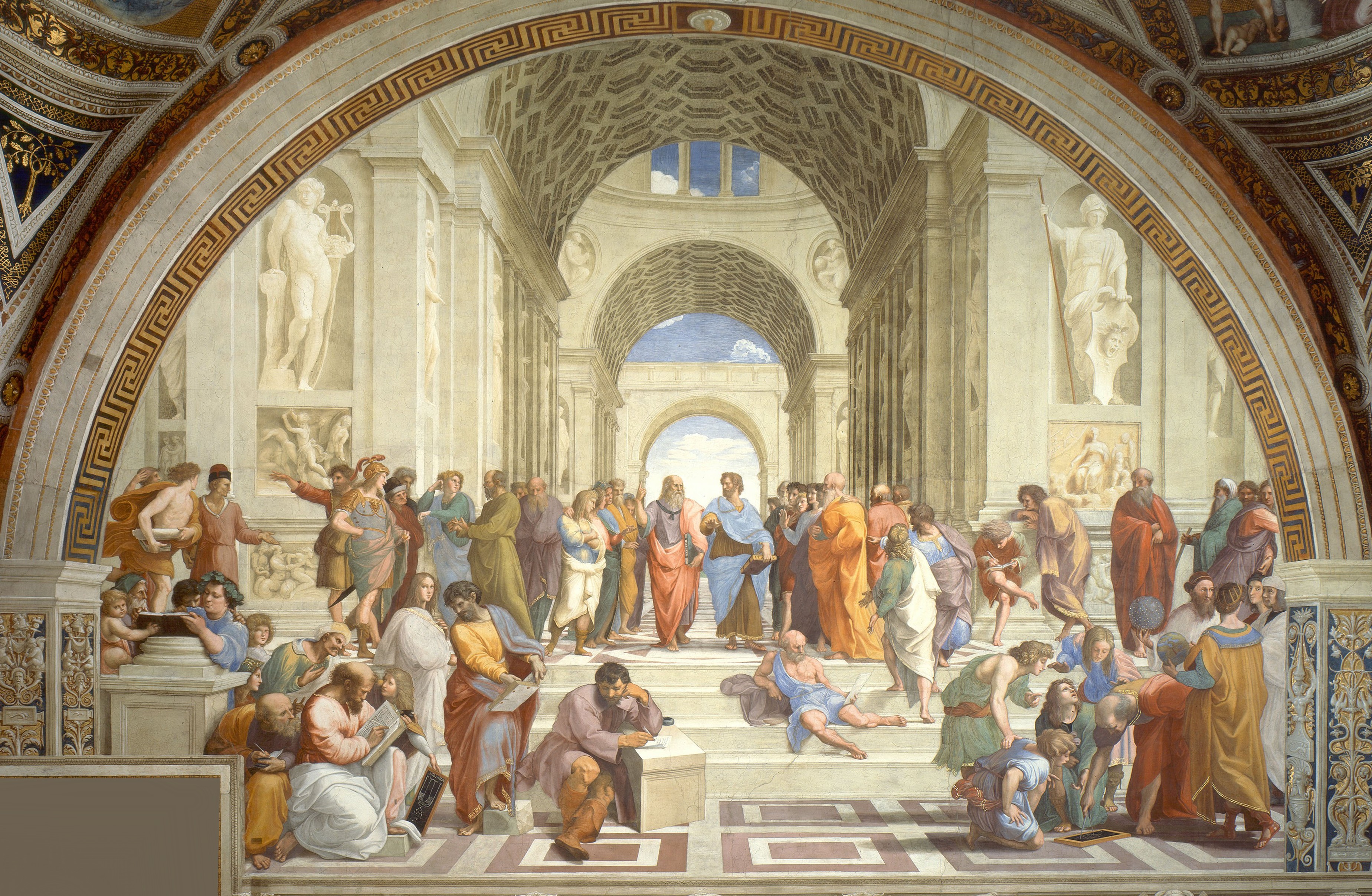
At 25, Raphael transformed four ordinary rooms in the papal apartments into a manifesto for Renaissance thought. The School of Athens—his most audacious work—is philosophy rendered as architecture, where every figure is a living portrait of someone Raphael knew, and where his rivalry with Michelangelo burned hot enough to change how he held his brush.
Welcome to Renaissance Rome, where three extraordinary men competed for the favor of popes and reshaped an entire city in the process. Michelangelo, Raphael, and Bramante arrived here within years of each other at the start of the sixteenth century, summoned by Julius II, a pope who understood that genius thrives on rivalry. Over the next few hours, you will trace their ambitions from the papal apartments of the Vatican to the streets of the centro storico, seeing how their competition produced some of the greatest art and architecture in human history. We begin where it all started: inside the Vatican, where a twenty-five-year-old Raphael picked up a brush and changed painting forever.
Walk into the Stanza della Segnatura and you're standing in the room where Julius II lived and worked. In 1508, the same year Michelangelo began stretching across the Sistine ceiling just down the corridor, the Pope summoned a 25-year-old from Urbino named Raffaello Sanzio. No audition. No apprenticeship in Rome. Just: here are these rooms, paint them. It's almost violent in its confidence—the kind of bet a patron makes only on raw genius.
The School of Athens came third in the sequence. First was La Disputa, theology on one wall—the Church's answer to heaven. Then Parnassus, poetry and music. And then this: philosophy, rendered as a cathedral of the mind. The fresco shows perhaps fifty figures in a vast barrel-vaulted interior that seems to breathe outward into impossible space. Plato and Aristotle stride toward you through the center like equals in a debate that never ends. But here's what stops you: Raphael didn't invent these people from thin air. Plato is Leonardo da Vinci—the old master whose shadow still falls across everything. Heraclitus, the solitary figure descending the steps on the left, is Michelangelo.
That last one matters. You need to understand what was happening in the Vatican those years. Michelangelo was locked in the Sistine Chapel, the chapel Raphael couldn't access. The scaffolding was up. The doors were closed. And Raphael burned to know what his rival was doing. According to the stories that survive, it was Bramante—the architect overseeing both projects, and Raphael's mentor—who orchestrated the espionage. He unlocked the chapel doors one afternoon. Raphael went in. He saw those nude male figures rippling with anatomical power, those bodies that seemed to contain storms. He saw the scale of it: the ceiling soaring above him like a painted sky.
He went back to his own walls changed. Not defeated—changed. You can feel it in the figures he painted afterward. They gain weight, muscular presence, a kind of sculptural heft that wasn't there before. And then—the story goes—over a year later, after the School of Athens was finished, Raphael returned to add that single figure of Heraclitus as Michelangelo. Was it apology? Homage? A way of saying: I saw what you did, and it matters? The sources disagree. But what matters is that it happened at all—that Raphael was capable of looking at a rival's genius and letting it change the work right there on the wall.
This is what genius looks like when it's terrified and hungry and young enough to believe it can learn from anyone. The School of Athens isn't just a painting. It's a conversation that took place in real time, between two men who never directly spoke.
Sources: - [The School of Athens - Wikipedia](https://en.wikipedia.org/wiki/The_School_of_Athens) - [Raphael Rooms - Wikipedia](https://en.wikipedia.org/wiki/Raphael_Rooms) - [Frescoes and friction: The true story of Raphael vs Michelangelo](https://luxurylondon.co.uk/culture/art/raphael-vs-michelangelo-art-feud-renaissance/) - [Raphael's "The School of Athens" – Fun facts and rivalries](https://www.artlovingitaly.com/raphael-raffaello-sanzio-school-athens-pope-julius-rivalry-michelangelo/)
Sistine Chapel
That is stop one, in the walk itself. The remaining 9 stops, the map and the route between them open with one free account.
Continue the walkThe written walk is free.
Thank you! Your report has been submitted.
Report an issue
Help us improve by reporting any issues you notice.