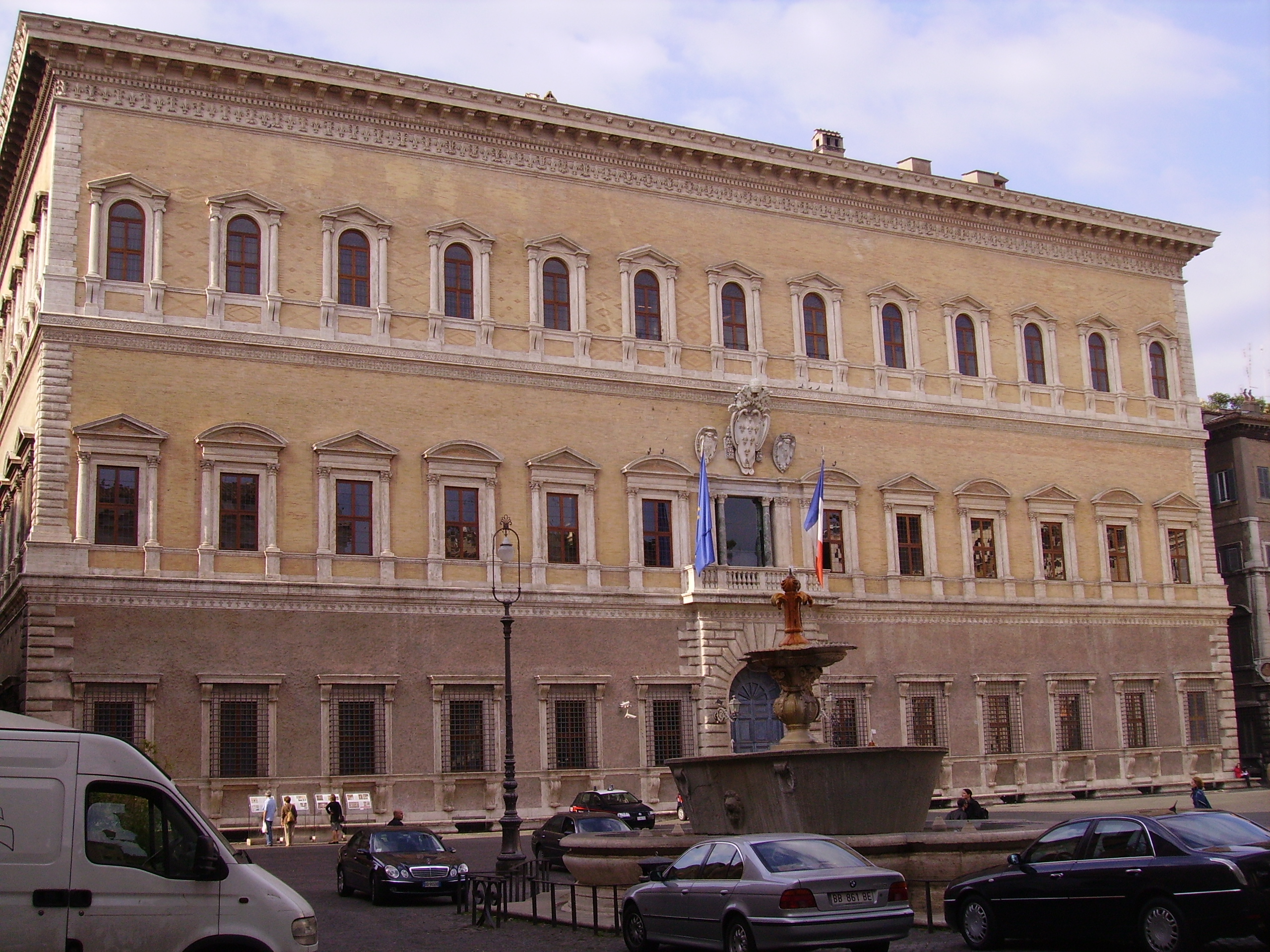
Palazzo Farnese
The Palazzo Farnese is a masterpiece of Renaissance architecture built for Cardinal Alessandro Farnese, who became Pope Paul III, showcasing the immense wealth and patronage of the papal family during Rome's golden age.
Welcome to a Rome that few tourists see — a Rome not of marble monuments, but of cobblestones worn smooth by centuries of ordinary lives. We begin here at Palazzo Farnese, where Renaissance popes displayed their power through stone and symmetry, where authority shaped the city below. But our journey moves across the Tiber and inward, into the neighborhoods that history displaced but never defeated.
Trastevere and the Ghetto are Rome's truest neighbourhoods — places where the powerless were pushed to the margins, yet built something irreplaceable. Here, you'll smell the cooking that survived expulsion, hear echoes of languages that refused to disappear, and walk streets that remember. The textures you'll feel underfoot — ancient cobbles, Renaissance brick, the worn stones of doorways — these are the fingerprints of resilience.
This walk is about displacement and defiance, about how communities transform survival into culture, exile into home. It's about the architecture of power we leave behind, and the human architecture we discover ahead.
We begin here, at the Palazzo Farnese, and there's something important about starting a walking tour at a palace. Not because we're celebrating it, but because it shapes everything that comes next. This isn't just beautiful architecture—though it's magnificent, with that Michelangelo cornice crowning the facade like a tiara on a king. It's a statement. A declaration. It says: this is where power lives.
The palace was started in 1517, built for Cardinal Alessandro Farnese, a man who climbed higher than anyone could have imagined. He became Pope. Paul III. One of the most influential popes of the Renaissance, a man who could reshape Rome itself with a word. And this palace—it's the physical manifestation of that power. It took seventy-two years to build, from 1517 to 1589, because creating power takes time. Sangallo began it, then Michelangelo himself contributed that famous cornice, the architectural crown that makes it unmistakable. Even today, that cornice remains one of Rome's most recognizable architectural features.
Look around you at the Campo de' Fiori. This piazza, this neighborhood, thrives because of that palace and the networks of power it represents. Even today, you can see it in the way the square breathes—the gelato vendors, the street musicians, the tourists resting on the steps among seasonal flowers. It's a living, breathing place precisely because centuries of influence shaped it that way. Everything here—the stones beneath your feet, the rhythm of commerce, the evening atmosphere when candlelight glints off old walls—exists within networks established by people who wielded extraordinary power.
But here's where the story gets complicated, and why we're beginning our tour here. The Farnese family didn't just build palaces. They made decisions. As patrons, as papal powers, as leaders of Rome, they created rules. They enforced hierarchies. And some of those rules—some of those hierarchies—shaped the lives of thousands of people who had no say in the matter.
The courtyard, visible through the gates when you look closely, still glints with Renaissance refinement. The decorated rooms inside held councils that altered the course of history. And just across the river, just beyond the Campo, those same systems of power created another kind of wall. Not a palace wall, but a physical one. A forced boundary. A neighborhood entirely defined by someone else's rules.
So we stand here at the beginning, looking at Renaissance splendor, because this is the world of patronage and privilege that defined the rules—including the rules that will echo through every street we walk today. The Palazzo Farnese is where power chose to live. Our tour is about everyone else.
Jewish Ghetto
That is stop one, in the walk itself. The remaining 9 stops, the map and the route between them open with one free account.
Continue the walkThe written walk is free.
Thank you! Your report has been submitted.
Report an issue
Help us improve by reporting any issues you notice.