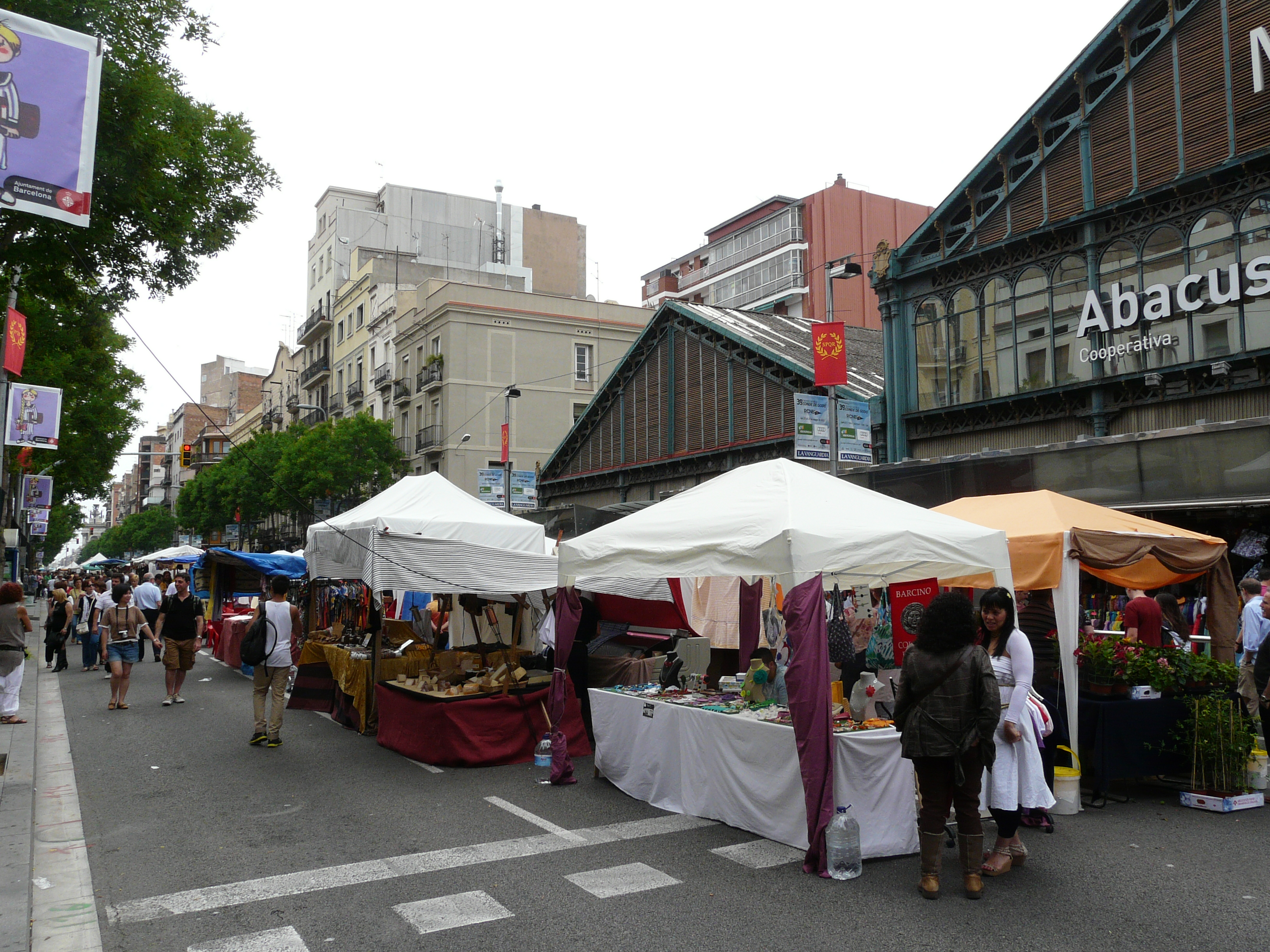
Mercat d'Hostafrancs
Mercat d'Hostafrancs is one of Barcelona's oldest markets, built in 1888 with an elegant iron-and-glass structure designed by Antoni Rovira i Trias. Today, over 90 stalls sell everything from fresh fish and produce to vintage books and clothes — a working neighbourhood market where tourists rarely venture.
Welcome to Sants. Not the postcard Barcelona you've seen a thousand times — no Sagrada Familia, no crowds on Las Ramblas. What you're about to walk through is the neighbourhood where Barcelona actually works, where ordinary people have always done extraordinary things.
For over a century, this has been a place of makers and builders. Textile barons who turned a sleepy village into an industrial powerhouse. Workers who filled these streets with radical dreams and revolutionary fervour. Neighbours who painted their entire street in colours so bold the city couldn't ignore them. And most recently, a community that literally occupied an abandoned factory and transformed it into something magical — something that still stands today as a monument to what people can do when they stop asking permission.
Today we're walking about three kilometres through 11 stops that tell this story. We'll start where Sants was born — at a market that's been feeding this neighbourhood since 1888 — and end at a factory that became a symbol of resistance and reinvention. It'll take us about two hours, mostly on flat streets, and I promise you won't see another tourist the entire way.
Ready? Let's go.
Welcome to Mercat d'Hostafrancs. Look around. You're probably the only person in here right now who isn't buying dinner.
This isn't one of those Instagram markets with craft beer stalls and artisanal cheese counters. This is a market where a woman in a pink apron has been selling croquetas from the same stall since 1994, where the fishmonger knows what you want before you ask, where you'll hear more Catalan than Spanish and definitely more Spanish than English. The fluorescent lights are unflattering, the tiles are worn, the smell is real — a mix of salt water, fresh bread, and the kind of everyday life Barcelona tourists somehow never find.
But this building? This is architecture. Built in 1888, just as Sants was transforming from a rural village into an industrial powerhouse. The architect was Antoni Rovira i Trias — the same guy who designed some of Barcelona's most important public buildings. He understood something crucial: working people deserved beauty, even if they were just buying fish.
Look up. See those iron beams holding up the ceiling, the geometric patterns in the metalwork, the glass panels letting in natural light? That wasn't cheap. That wasn't accidental. In an era when markets could have been simple sheds, Rovira i Trias designed something that said: the people of Sants matter. Your daily needs matter. Your market deserves a landmark building.
This place opened during Barcelona's industrial boom, when Sants was becoming a factory neighbourhood. Thousands of workers moved here — textile workers, metalworkers, people building the Barcelona we know today. They needed food, they needed community, and they got both here. For 130-odd years, this market has been the heartbeat of the neighbourhood. Elections were debated around these stalls. Children learned to cook watching their mothers choose vegetables here. People fell in love while waiting in line for fish.
The 90-plus stalls you see now represent continuity and change. Some have been here for decades — family businesses that moved here with their parents or grandparents. Others are newer — someone's gamble to stay in a neighbourhood that keeps trying to gentrify itself. You'll find the obvious things: beautiful produce from Spain and North Africa, fresh fish delivered daily, cheese, jamon. But also books, vintage clothes, cleaning supplies, flowers. This is what a real market is — not a curated experience, but the proof that ordinary life is still happening here.
That's the thread you'll find running through all eleven stops today. In Sants, ordinary people built extraordinary things. Not monuments. Not things designed for tourists or posterity. Things designed for living — for feeding your family, for gathering, for building something together.
This market is where that story begins.
Parc de l'Espanya Industrial
That is stop one, in the walk itself. The remaining 10 stops, the map and the route between them open with one free account.
Continue the walkThe written walk is free.
Thank you! Your report has been submitted.
Report an issue
Help us improve by reporting any issues you notice.