Tomioka Hachimangu
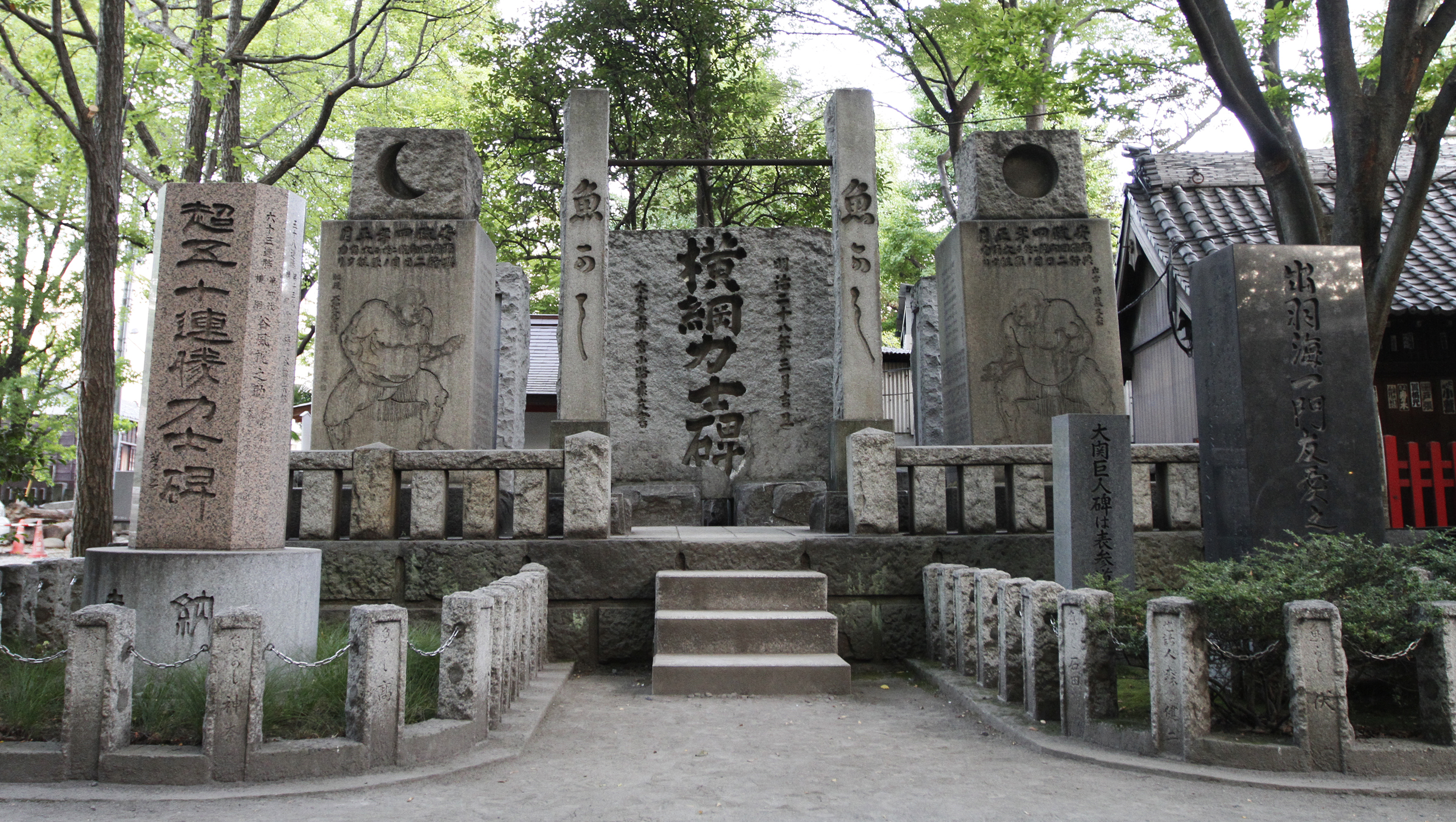
Tomioka Hachimangu, founded in 1627 and enriched by the timber and rice money moving through Fukagawa, is where the shogunate licensed kanjin-zumo in 1684 - not as sport, but as a supervised way of raising a construction fund. Its 1900 yokozuna monument still receives the name of every newly promoted grand champion, while the hall behind it is reinforced concrete from 1956.
Before anything else, the shape of the day. Nine stops, a little over four kilometres, about two hours, one-way from Monzen-Nakacho to Kiba and flat the whole way. The walking is free. Three stops have optional interiors and all three are cheap — a garden at 150 yen, a museum at 400, and a contemporary art museum whose price depends on the show — and each is flagged as you reach it. Give yourself about six minutes here. The precinct is open and free, the station is right behind you, and the two things actually worth finding are both off the main approach. A word first about what this walk is. Kiyosumi-Shirakawa, twenty minutes north, is marketed to visitors on a tidy causal story about old timber warehouses and coffee roasters. This walk checks that story out loud, in the order the evidence turns up. Fair warning: the coffee is genuinely good. It is the history that needs auditing.
We begin where the money was. This shrine was founded in 1627 on a sandbank at the mouth of the river, and it did not grow rich on piety. It grew rich on timber and rice - the bulk commodities that arrived here by water and sat in big low buildings until somebody in the city wanted them.
Which brings us to the sharpest idea on this stop. In 1684, the first year of Jokyo, a wrestler-promoter named Ikazuchi Gondayu and his associates petitioned the shogunate's magistrate for temples and shrines for permission to hold kanjin-zumo in this precinct. Kanjin is the word that matters, and it is not a sporting term at all. It means the soliciting of donations for religious construction - the licensed, supervised raising of a building fund. Sumo had been banned in Edo as a public nuisance. What got it un-banned was that it could be pointed at a construction budget. The stated purposes were the prosperity of a newly reclaimed district and the restoration of this shrine's own hall, and the permission came with conditions that read like a company charter: a professional body of wrestlers, managed by elders, answerable to the magistrate.
Read that again slowly. Officially sanctioned sumo in Edo began here, and it began as a financing instrument, invented in a merchant quarter - because a merchant quarter is where somebody looks at a crowd and sees a subscription list.
For roughly the next century, spring and autumn tournaments were held in this precinct, and the apparatus we now think of as immemorial was assembled in that stretch. By the 1740s there was a settled seasonal circuit of four meets a year. The oldest surviving printed banzuke, the ranking sheet, dates from 1757 - and a ranking sheet is a promoter's document first: it tells the buyer who is worth the ticket. Sumo's permanent home came later and elsewhere; another walk in this catalogue tells that part.
Now go left of the approach and you will see why the wrestlers still come back. The Yokozuna Rikishi-hi was completed in 1900: white granite, roughly three and a half metres, a metre thick, some twenty tonnes of it. The twelfth yokozuna, Jinmaku Kyugoro, drove it through; he spent his retirement putting up stones. Look at the flanks, because that is where the donors are carved, and they are not sports people - Ito Hirobumi, Yamagata Aritomo, Okuma Shigenobu. Two prime ministers and a founding oligarch, paying for a rock. The back lists the yokozuna in sequence from the first; it filled at number forty-five, which is why supplementary stones stand beside it. Carving resumed in 1998 with the sixty-sixth, and the ritual is still live - a newly promoted yokozuna performs his ring-entering ceremony here, then has his name cut into the granite. Notice what survived, too. Everything around you burned in 1945 and the stone did not, and it had already outlived one disaster: the ensemble stood behind the hall until the 1923 earthquake and was moved out here in the rebuilding.
Now the thing almost everyone walks past. Just inside the great torii, on your right, stands a bronze of a stocky man in travelling clothes. That is Ino Tadataka, who came to Edo at fifty to study astronomy and kept a retirement house at Fukagawa Kuroe-cho, minutes from where you stand. He prayed here before every survey he ever made. The first was on 11 June 1800 - he was fifty-five and setting out on foot for Ezo, which we now call Hokkaido. The statue only went up in 2001. Most visitors stride straight past it to the sumo stones.
Then turn to the hall and be slightly rude about it. It is 1956, and it is reinforced concrete - poured, not jointed. The raids took the buildings; only the stone stayed. Where the concrete in this district originally came from is stop five of this walk, and it is nearer than you would guess. Expect scaffolding, as well: the shrine turns four hundred in 2027 and is mid-renovation, with seismic reinforcement, a new roof and a guest hall serving as temporary sanctuary. Part of it is funded by crowdfunding. Which is kanjin. Same instrument, new interface.
If you are here in mid-August you may get soaked - spectators throw water over the mikoshi carriers and the street runs wet. But be precise, because the listings often are not: the full Hon-matsuri, with the great joint procession of neighbourhood mikoshi, runs only every three years. 2026 was one. The next is 2029.
And here is the thread, stated plainly, because this is the stop that gets to state it. The patrons who paid for this shrine floated their logs into ponds a bit over a kilometre north-east of here, and those ponds are where this walk ends. Everything you are about to see was built to hold something that came in off the water.
Naritasan Fukagawa Fudodo
That is stop one, in the walk itself. The remaining 8 stops, the map and the route between them open with one free account.
Continue the walkThe written walk is free.
Thank you! Your report has been submitted.
Report an issue
Help us improve by reporting any issues you notice.