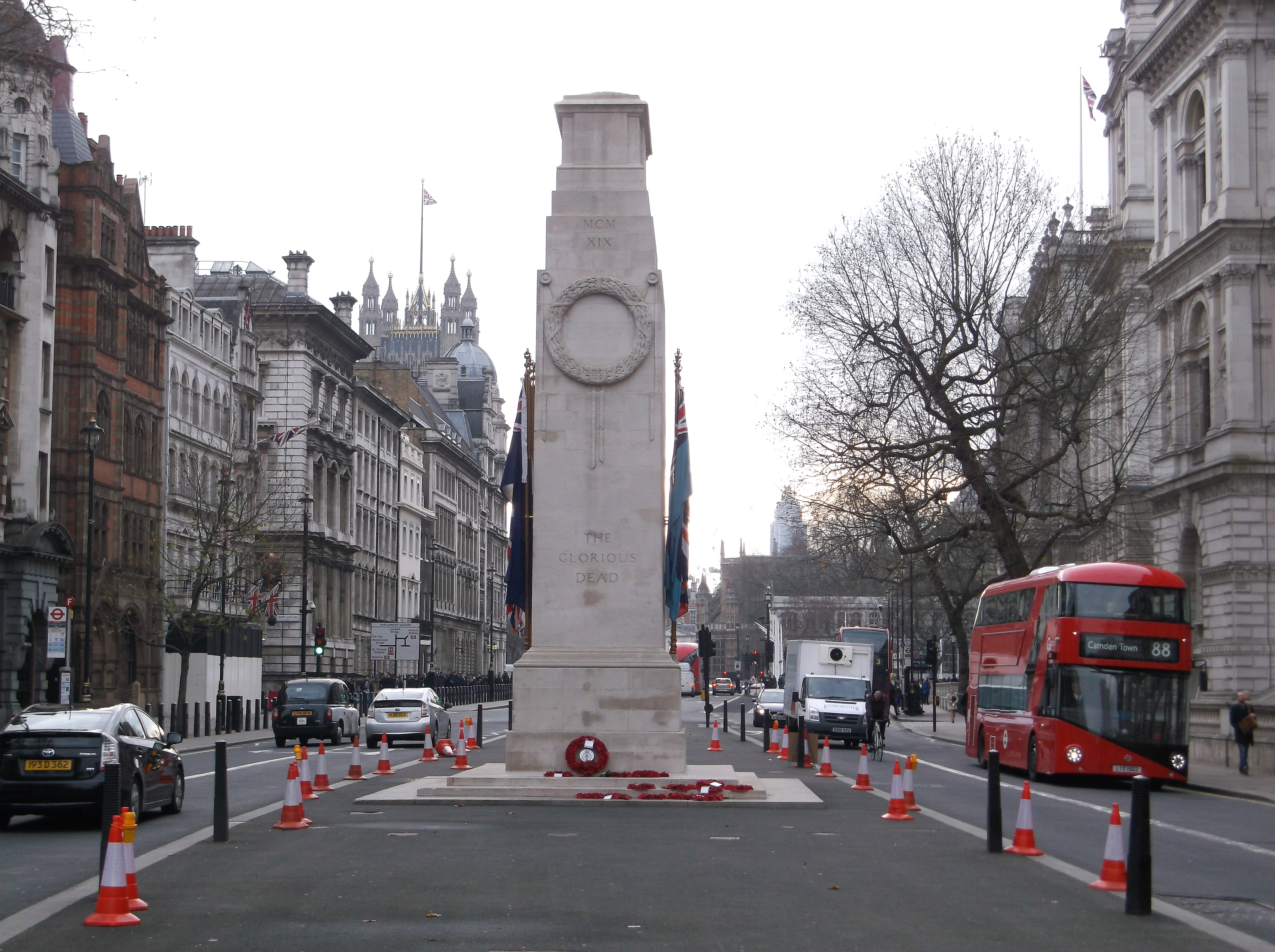
The Cenotaph
Britain's most solemn war memorial sits on Whitehall, commemorating the millions lost in World War I and beyond. This understated monument marks the emotional foundation of Westminster's story of power and sacrifice.
Westminster isn't just a neighborhood — it's the physical embodiment of power itself. Over the next ninety minutes, we're going to walk through a thousand years of it, and here's what makes this journey remarkable: you'll witness how power changes form without ever changing address.
We start at the quietest place in London, where the nation pauses to remember what power costs. Then we'll move into the machinery of it all — the great engine of Parliament, the clock tower that's become this city's heartbeat. But Westminster saves its most sacred space for the middle of our walk: an abbey so old, so weighted with crowns and history, that you'll feel the weight of ceremony in the stones.
After that, the story shifts. You'll see where power actually *lives* — intimate gardens, quiet streets, ordinary townhouses where extraordinary decisions were made. And then, in the final stretch, Westminster reveals its most flamboyant face: the royal parks, the guards, the palace itself.
This isn't a museum tour. It's a walk through the literal architecture of Britain's soul.
Welcome. Before we go anywhere else, I want you to stand here for a moment.
You're looking at the Cenotaph — not grand, not decorated, not built to impress. Just a pale stone structure rising from the pavement on Whitehall, at the very heart of British government. And that understatement is precisely the point.
The word 'cenotaph' means an empty tomb — a monument without a body. When Sir Edwin Lutyens designed this in 1919, just after the First World War ended, he knew that millions of British soldiers would never come home. Their bodies lay in France, in Flanders, scattered across the battlefields of the Somme and Passchendaele. So instead of a traditional monument with grand statuary or inscriptions, he created this: a simple stone chest, slightly curved, that seems to hold absence itself.
Notice how it draws the eye without demanding it. There's a quality of restraint here that feels almost painful. The stonework is beautifully crafted, but deliberately austere. It's as if shouting would dishonor what it remembers. You won't find the names of the dead here — there are too many. What you will find is the brevity of inscription: 'The Glorious Dead.' Those three words do more work than any lengthy eulogy could.
This is where Britain comes to mourn. Every November, on Remembrance Sunday, the nation gathers here for the service of remembrance. Political leaders stand shoulder to shoulder — Prime Ministers, Opposition leaders, military officials — all united in silence at this one spot. The traffic on Whitehall stops. The entire street goes quiet. For two minutes, the machinery of government simply pauses.
And that pause is radical. Westminster, the street we're standing on, is where power lives. Down this road you'll find Parliament, where laws are made and governments rise and fall. You'll see Big Ben, the clock tower that marks the rhythm of democracy. The civil service offices line these streets. But here, at this memorial, all of that is secondary. The monument isn't celebrating power — it's acknowledging its cost.
That's why I wanted you to start here. The democracy these soldiers died to protect sits just down this road. The palaces of monarchy, the chambers of Parliament, the rituals of government that we'll see today — all of these exist because of the sacrifice represented by this stone. The Cenotaph isn't separate from the story of Westminster; it's the foundation of it.
But there's something else worth noticing too. The Cenotaph has become a memorial not just for the First World War, but for all British war dead. Wreaths laid here remember soldiers from the Second World War, from Korea, from the Falklands, from Iraq and Afghanistan. The monument has expanded in meaning, becoming a kind of permanent space of collective grief that transcends any single conflict.
There's a peculiar British quality to this place — a way of honoring without excess, of remembering without spectacle. If you visit war memorials in other countries, you often find more elaborate monuments, more dramatic inscriptions, more visible emotion. But Lutyens understood something about British character. He knew that sometimes the most powerful way to honor the dead is through restraint, through silence, through the refusal to turn grief into theatre.
Look at how the stone ages — notice the weathering, the way it's been kissed by London's rain and wind for over a century. That patina is part of the memorial too. This isn't a polished artifact in a museum. It's a living monument, changing and darkening with time, gradually becoming part of the street itself.
We'll move on in a moment, toward Parliament and palaces, toward the mechanisms and pageantry of power. But I wanted to begin with this — with the memory of those who aren't here, with the understanding that nothing we see today was free. The concentration of power that Westminster represents was bought at an unimaginable price.
Take another moment if you need it. Then we'll walk toward the next stop.
Elizabeth Tower (Big Ben)
That is stop one, in the walk itself. The remaining 8 stops, the map and the route between them open with one free account.
Continue the walkThe written walk is free.
Thank you! Your report has been submitted.
Report an issue
Help us improve by reporting any issues you notice.