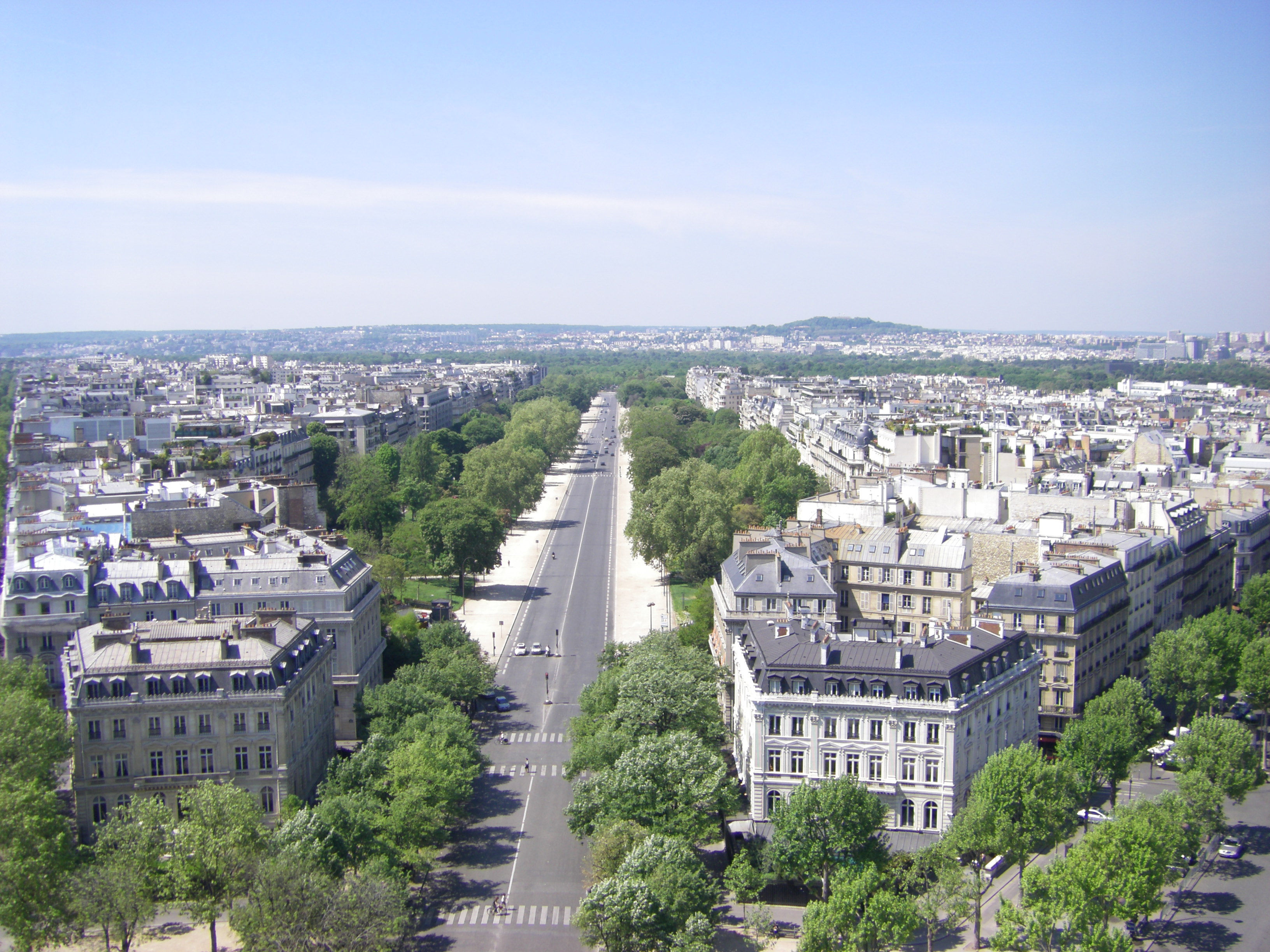
Gestapo Headquarters (Avenue Foch)
Nazi secret police headquarters and interrogation center on Paris's most elegant residential avenue. Neighbors heard screams from the sixth floor; today the building shows no mark of what happened here.
Over the next few hours, we will walk through Paris as it existed during four years of Nazi occupation and the painful complexities that defined this period. The streets we will traverse tell stories of resistance and collaboration, of ordinary people making impossible choices, and of how a city endured under foreign military rule. This tour does not offer simple narratives of good versus evil, but rather an honest reckoning with how occupation transformed Paris and its people.
We begin at sites of German power and control, then move through locations of active resistance and the suffering of those targeted for persecution and death. We will encounter memorials that honor the deported, museums that document underground struggle, and finally the place where Paris was declared free. These locations carry the weight of history and the names of real people whose lives were forever changed.
As we move through these spaces, we ask you to consider how ordinary people responded to extraordinary circumstances, and what this history might teach us about courage, complicity, memory, and the fragility of freedom.
Stand here on Avenue Foch and look at number 84. It's a residential building like any other—tall, pale stone, handsome in the understated way of the 16th arrondissement. Well-maintained. Respectable. That's precisely what made it useful.
When the Germans occupied Paris in 1940, they didn't hide their terror in dungeons or camps at the city's edges. They embedded it here, on one of Paris's most elegant avenues, in buildings where families lived, where servants worked, where neighbors watched from their windows. This is the headquarters of the SD—the Sicherheitsdienst, the intelligence and counter-intelligence service of the SS. It operated openly, but its true work happened behind closed doors.
In the blocks surrounding this spot, the Gestapo and their collaborators rented multiple buildings. They used them as interrogation centers. The sixth floor of 84 Avenue Foch was converted into torture rooms and cells. And here is what haunts the geography of this place: the neighbors heard the screams. Through the walls, through the windows, across the elegant boulevard, the sound of torture drifted into the apartments of ordinary Parisians. They lived with the knowledge of what was happening above their heads.
Think about that proximity for a moment. Oppression didn't announce itself in Paris. It moved in as a neighbor.
On this sixth floor, they interrogated Allied agents and captured resistance fighters. We know some of their names because they became famous, or because their deaths were documented. Violette Szabo. Diana Rowden. Frank Pickersgill. They were SOE—Special Operations Executive—sent from Britain to coordinate with French resistance networks. The Gestapo extracted what they could through torture, then killed them.
We also know Jean Moulin was brought here. He was arrested in Lyon in June 1943 and transferred to Paris. Klaus Barbie—the "Butcher of Lyon"—and a German interrogator named Ernst Misselwitz questioned him here, beating him so severely that Moulin died of his injuries on July 8, 1943. He was officially 43 years old. He had already become a symbol of unified resistance.
There is another story from this building that reveals the psychology of the place. A man named Brossolette was held here. After two and a half days of interrogation, he recovered enough consciousness to understand what was happening: he was breaking. He knew his colleagues' names, their networks, their safe houses. Rather than reveal them, he stood up in his cell on the sixth floor and threw himself out the window. He chose death over betrayal. That act of defiance is the only dignity that survives in this building.
When you walk past 84 Avenue Foch today, there is no plague. There is no memorial. There is no sign. The building operates as a museum now, preserved in its terrible beauty. The absence of commemoration is itself worth studying: a decision not to mark the past, to let the building stand as it is, ordinary and elegant, concealing what it contains.
This is how repression embeds itself in civilization. Not in darkness, but in daylight, on expensive real estate, behind polished windows. The geography of terror is also the geography of Paris itself—indistinguishable from it, inseparable from it, waiting for us to look closely and remember.
Vel' d'Hiv Memorial Site
That is stop one, in the walk itself. The remaining 9 stops, the map and the route between them open with one free account.
Continue the walkThe written walk is free.
Thank you! Your report has been submitted.
Report an issue
Help us improve by reporting any issues you notice.