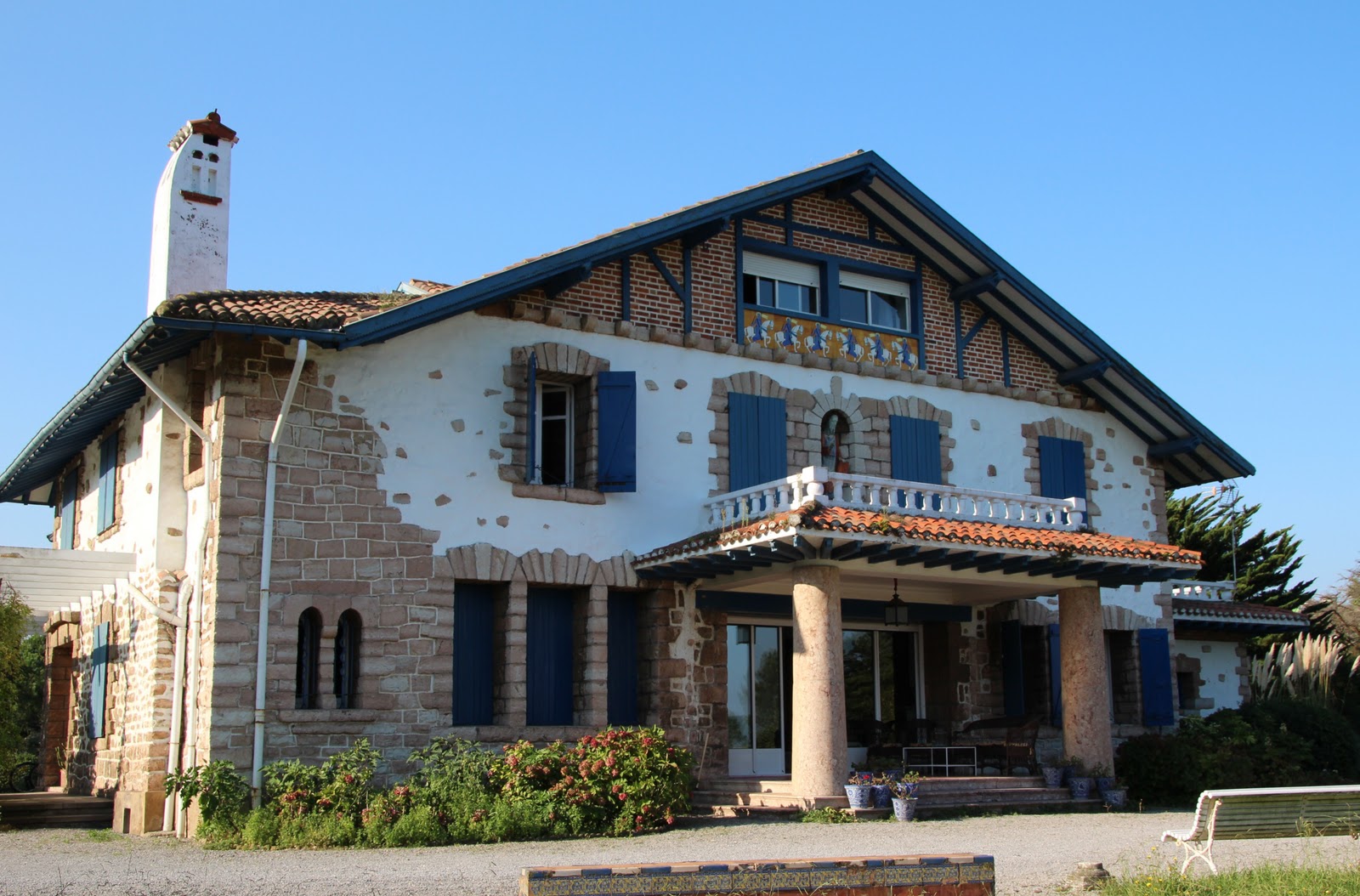
Espacio Zuloaga & Ermita de Santiago
The painter Ignacio Zuloaga's riverside estate at the mouth of the Urola, built between 1910 and 1921 on the grounds of the old Santiago monastery, where a small fishing town keeps works by El Greco, Goya, Zurbaran and Rodin. Beside it stands the medieval Ermita de Santiago, a pilgrims' chapel on the Camino de Santiago del Norte where travellers once waited for the ferryman across the estuary.
Welcome to Zumaia, and welcome to the very edge of it. We're standing at the mouth of the Urola River, where the water finishes its journey down from the mountains and finally gives itself up to the Cantabrian Sea. On one side of you, the tidal marshes breathe in and out with the sea; on the other, the gentle curve of Santiago beach. And tucked between them, behind these walls, is one of the most improbable things you'll find anywhere on this coast: a small Basque fishing town that quietly keeps paintings by El Greco, Goya and Zurbarán, and a sculpture by Rodin.
Let that sink in for a moment. This is not Madrid, not Paris. This is a town of a few thousand people that lived for centuries off cod, whaling and the tides. And yet here, at the river mouth, hang masterpieces that half the great museums of Europe would love to own. How on earth did they end up here?
The answer has a name: Ignacio Zuloaga. Born in the Basque Country in 1870, Zuloaga became one of the most celebrated painters of his age, a man who moved through Paris at the turn of the twentieth century as a friend and equal of Rodin, of Toulouse-Lautrec, of Monet, Manet, even the young Picasso. His portraits of Spanish bullfighters, gypsies and dark-eyed beauties made him famous from London to New York. He could have built his refuge anywhere in the world. He chose this river mouth in Zumaia.
Between 1910 and 1921, Zuloaga bought up this stretch of dune and marsh, on the grounds of an old monastery dedicated to Santiago, and built the estate you see before you as his summer home and studio. Look at where he placed it. Not up in the town, not behind stone walls, but right down here where the light comes off the water twice over, once from the sky and once bouncing up off the sea. Painters chase light the way sailors chase wind, and Zuloaga understood that this particular corner of the coast had a quality of light worth building a life around.
Inside, the collection he and his family assembled is astonishing. Alongside his own canvases hang works by El Greco, Goya, Zurbarán and Rodin, gathered together with pieces collected by his wife, Valentine Dethomas, and treasures inherited from his father, Plácido, himself a master metalworker. It's a family collection, really, three generations of taste and travel, brought home to a fishing town. The museum is seasonal, so depending on when you're visiting you may or may not be able to step inside today, but simply knowing what sits behind these walls changes how you see the whole place.
Now turn your attention to the small stone chapel beside the estate, because it's older than the painter, older than the collection, older than almost anything else you'll see today. This is the Ermita de Santiago, the Hermitage of Saint James. It was built in the medieval period on a sand dune along the right bank of the estuary, and the earliest written record of it dates back to the early fifteenth century. Notice the details on its facade, the round oculus and the pointed, twin-arched ogival window, small clues that give away just how ancient this little building is.
Here's the part I love. This chapel wasn't only a place of prayer. It was a waypoint on the Camino de Santiago del Norte, the coastal pilgrim road to Santiago de Compostela, which still runs right past where you're standing. In the days before bridges, pilgrims and travellers coming along the coast from Getaria would arrive here, at the water's edge, and there was no way across the estuary except by boat. So they would shelter at the Ermita de Santiago and wait, sometimes for hours, for the ferryman to row them over to the town on the far shore. Imagine them: dusty, footsore, murmuring prayers to Saint James, watching the tide and the light on the water, waiting for a small boat. For six hundred years this humble chapel has stood at exactly the point where the land road meets the sea and has to pause.
And when Zuloaga arrived in the early twentieth century, he didn't tear it down or push it aside. He bought the old hermitage and its sexton's house along with the dune, and he wove them into his estate. He even gave the chapel a second life as art. Since 2012 the Ermita has permanently displayed two remarkable polychrome sculptures, a Christ on the Cross by Julio Beobide and a Sorrowful Mother, the Dolorosa, by Quintín Torre, both of them painted, coloured by Zuloaga's own hand. So the painter of Parisian salons ended up bent over a wooden crucifix in a medieval pilgrims' chapel by the sea, adding his colour to it. That's Zumaia for you, high art and folk faith, side by side, both of them facing the water.
Because that's the thread I want you to carry with you as we walk. Everything here in Zumaia was shaped by two things, stone and sea, and by the meeting of the two. The sea gave the fishermen their living and the pilgrims their obstacle. The stone gave them shelter, a chapel, a town, eventually palaces. And that same sea, that same generous, silvery light off the estuary, is exactly what drew Zuloaga and his masterpieces to this precise spot. The water didn't just feed this town. It made it beautiful enough to draw the artists too.
Take one last look out toward the sea before we move on, and let me plant a seed for where this walk is going to end. That very same sea and that very same light that Zuloaga fell in love with here has been doing something else along this coast, patiently, for millions of years. Just a short way to the northwest, out of sight for now, the waves have sliced clean through the cliffs and laid bare a wall of tilted rock, a great striped record of deep time. The sea that inspired the painter is the same sea that carved those cliffs, and at the very end of our walk we'll stand at their feet and read, in a single thin line of clay, the day the dinosaurs died.
But that's deep time, and we'll get there. For now we're still in human time, in the story of the people who lived and worked and prayed at the water's edge. So let's leave the painter to his light and follow the river a little further, toward the harbour and the memory of a fisherman who became a hero.
Monumento a Aita Mari
That is stop one, in the walk itself. The remaining 7 stops, the map and the route between them open with one free account.
Continue the walkThe written walk is free.
Thank you! Your report has been submitted.
Report an issue
Help us improve by reporting any issues you notice.