Gran Vía & the Art Deco Mile
Madrid · Spain

Gran Vía & the Art Deco Mile

Madrid, Spain
96
Duration (min)
4.1
Distance (km)
9
Stops
Easy
Difficulty

Description

Walk Madrid's most ambitious boulevard to understand how the city demolished its medieval past to build a 20th-century showcase of Art Deco, Beaux-Arts, and rationalist architecture.

Highlights

Edificio Metrópolis: Gran Vía's most photographed Beaux-Arts corner Edificio Carrión: the Art Deco masterpiece with the Schweppes sign Malasaña: street art rebellion against institutional architecture Palacio de Longoria: a hidden Art Nouveau jewel in Chueca
Tour Stops

Edificio Metrópolis
0

Edificio Metrópolis

5 min

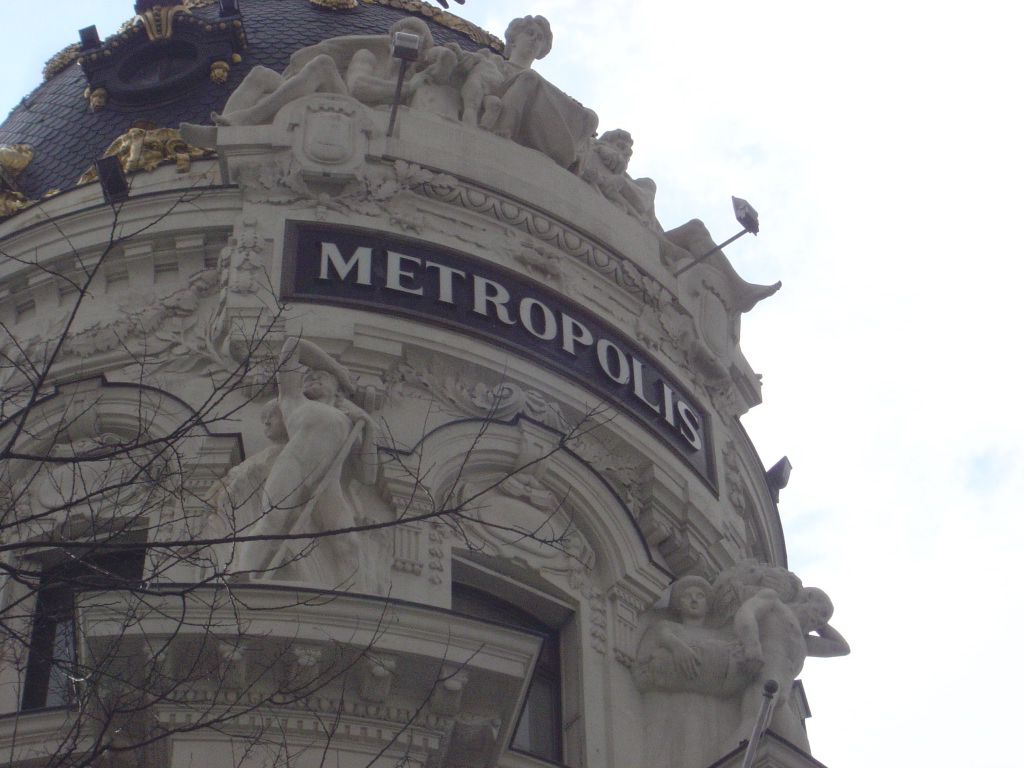
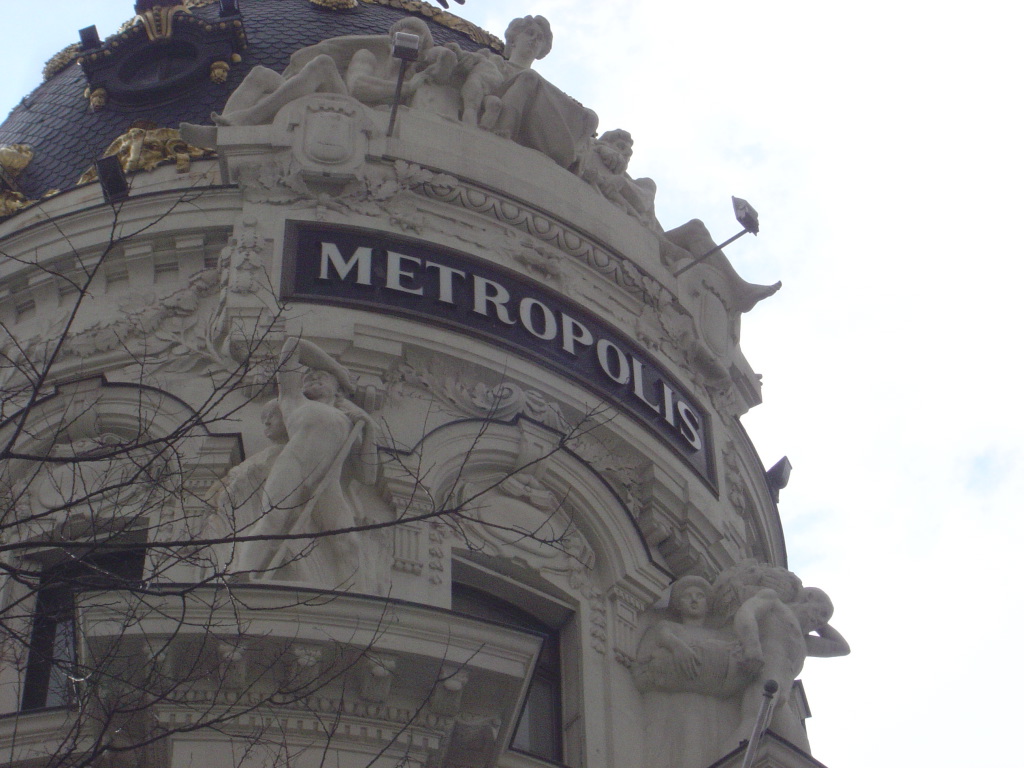
The tour begins at Gran Vía's most photographed building — a 1911 Beaux-Arts masterpiece crowned by a Winged Victory figure, originally built for an insurance company that wanted the most beautiful corner in Madrid.
Edificio Telefónica
1

Edificio Telefónica

5 min

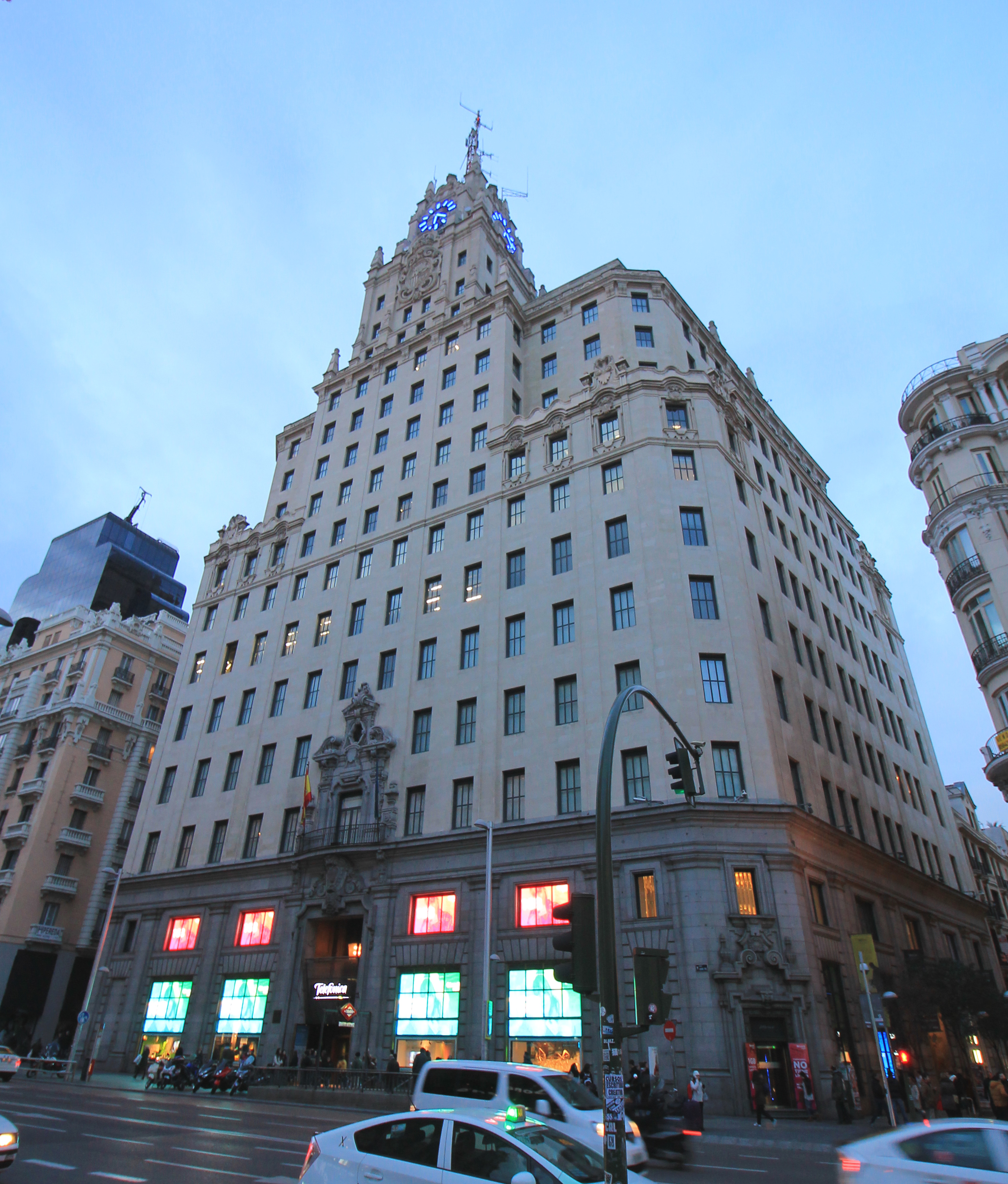
Spain's first skyscraper, completed in 1929, mixing Art Deco geometry with Baroque ornament — a building whose height made it both a symbol of modern ambition and a tragic reference point during the Spanish Civil War.
Palacio de la Prensa
2

Palacio de la Prensa

3 min

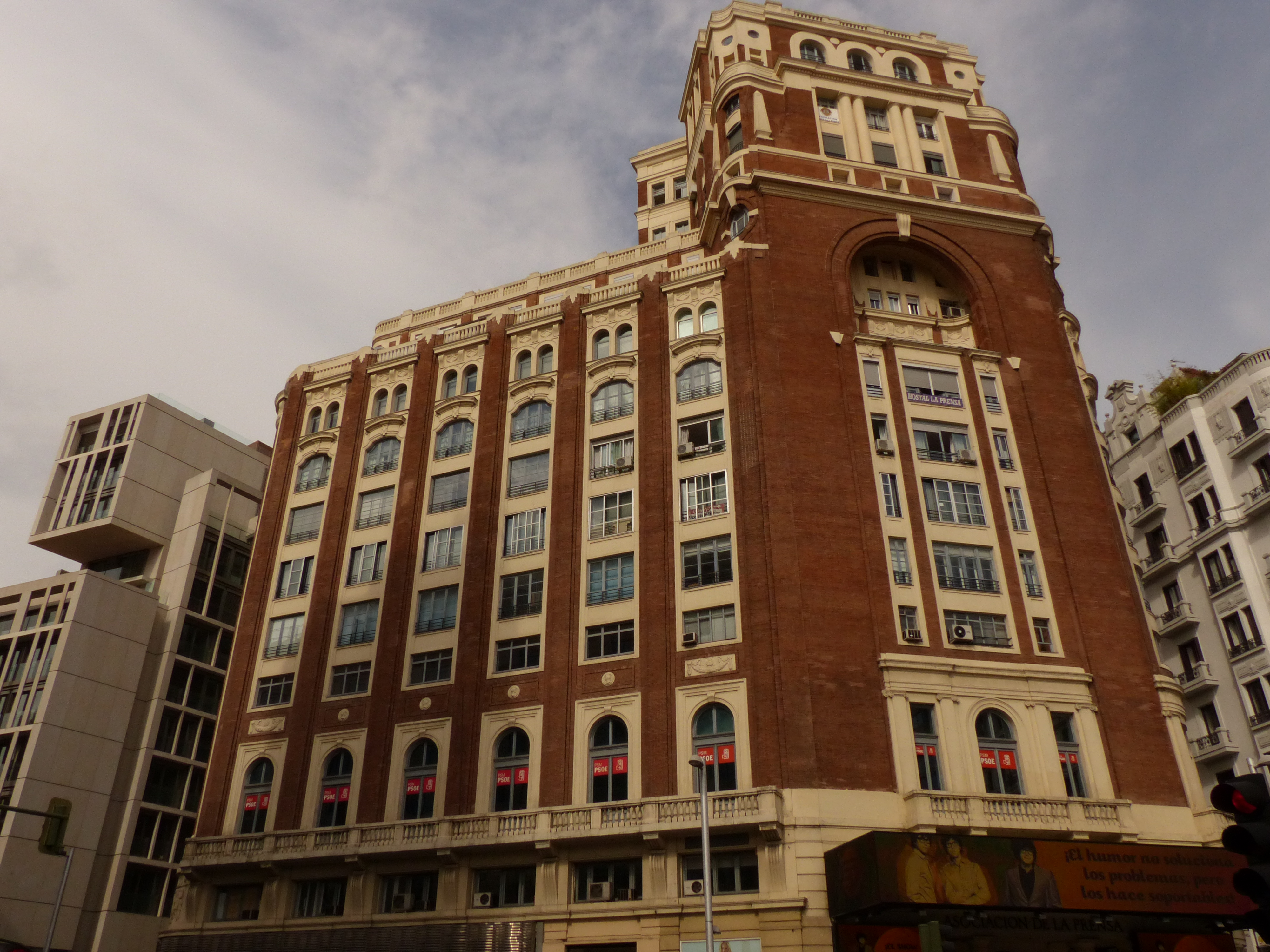
An Art Deco cinema palace completed in 1928 and built for the Madrid Press Association — designed to be a cultural landmark and entertainment temple where the city's elite would gather to experience the magic of cinema.
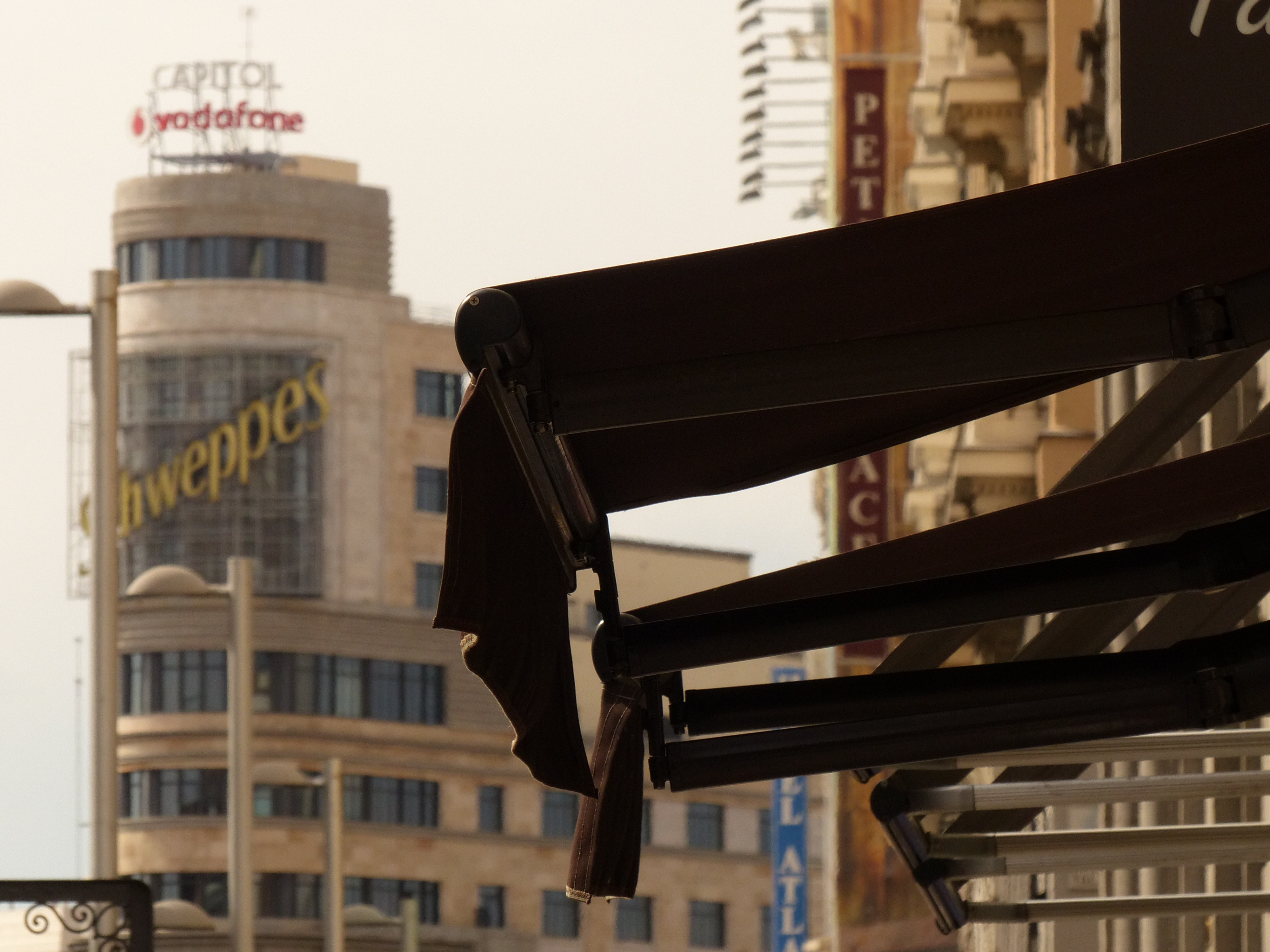
Edificio Carrión (Capitol)
3

Edificio Carrión (Capitol)

5 min

The 1933 Art Deco masterpiece crowned by the iconic Schweppes neon sign — Madrid's answer to New York's Times Square, and the building that defined Gran Vía's skyline.
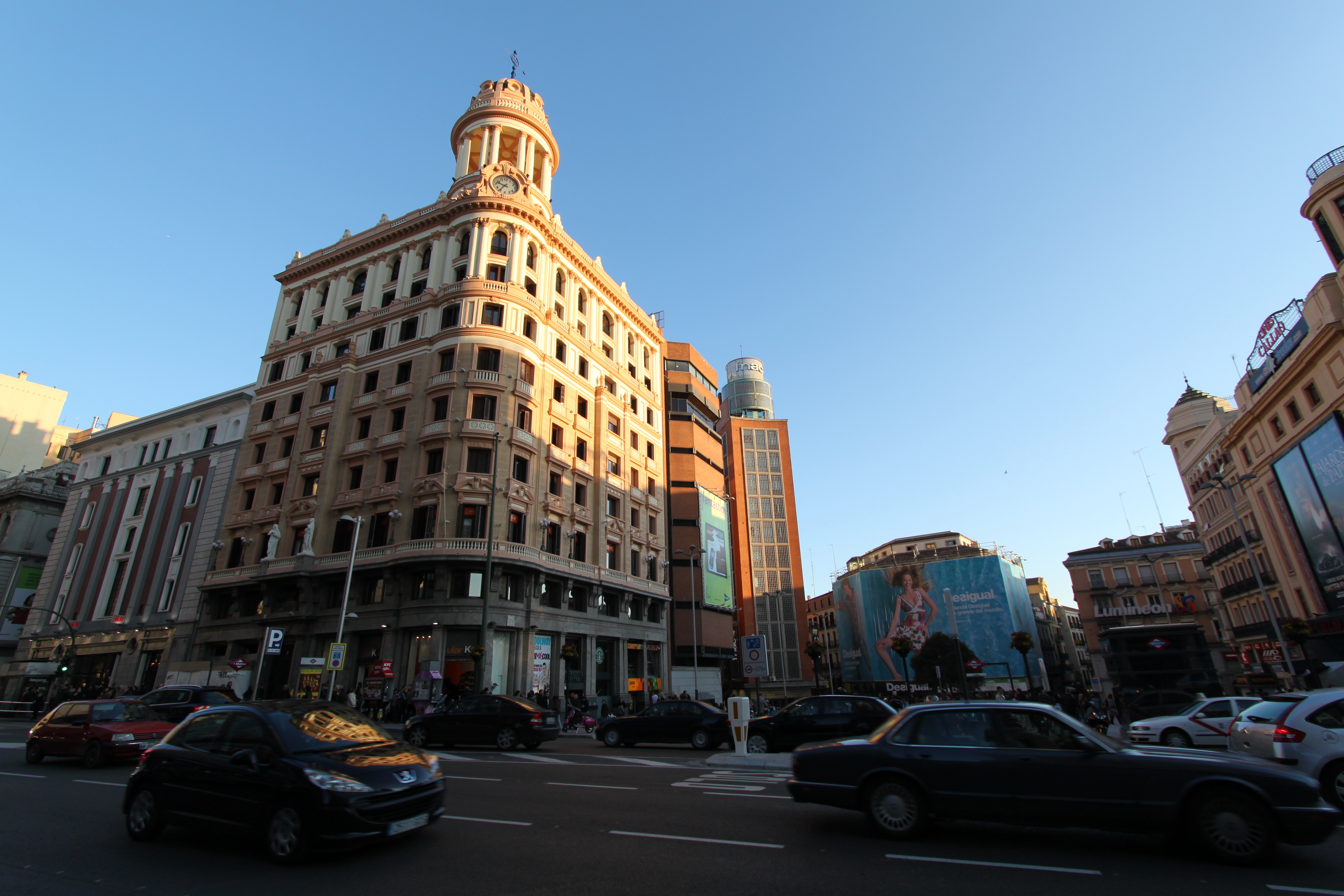
Plaza del Callao
4

Plaza del Callao

4 min

The crossroads where Gran Vía's three construction phases converge — a natural pause to absorb the full architectural sweep from 1910s revivalism to 1930s Art Deco rationalism.
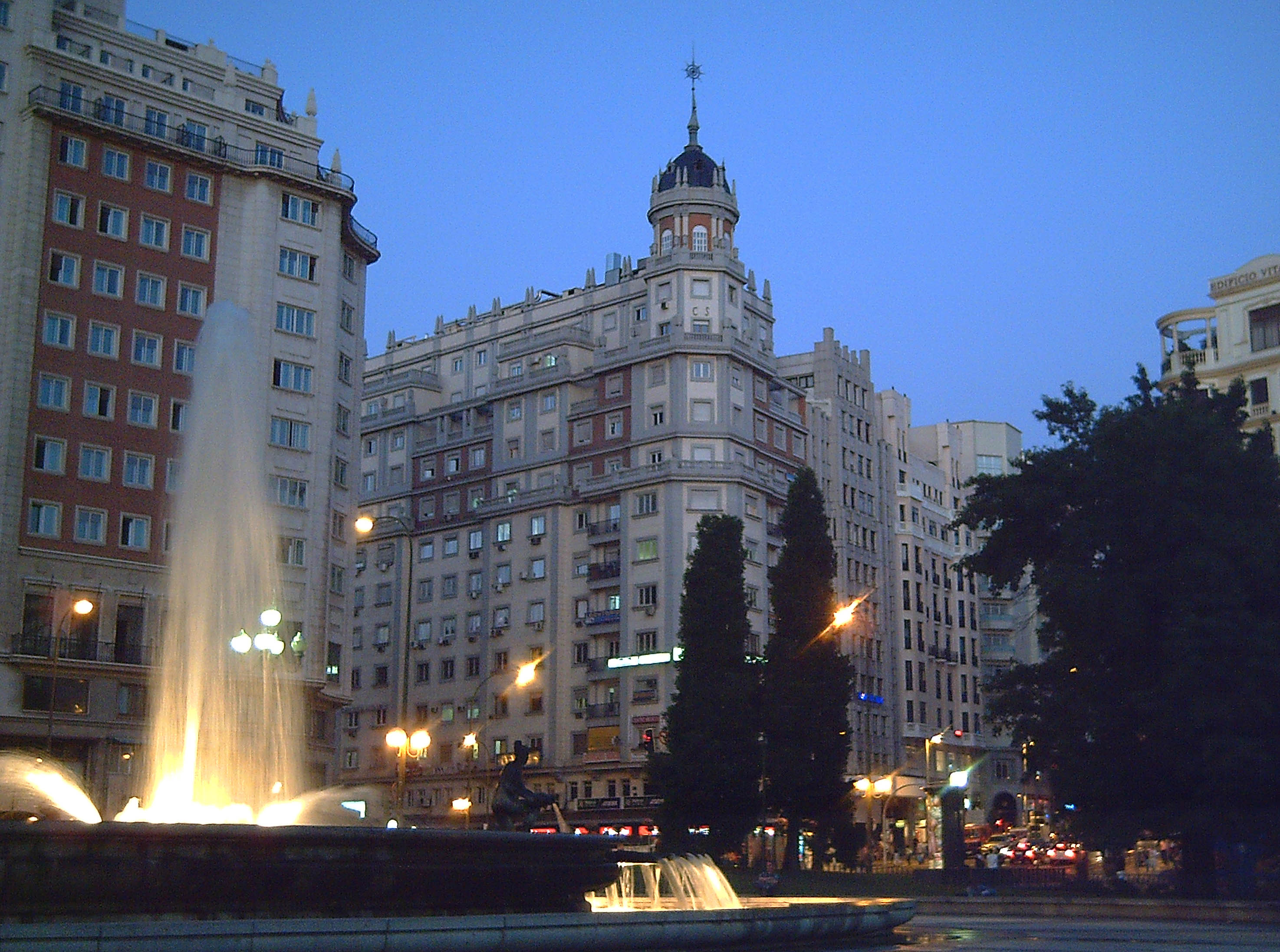
Plaza de España
5

Plaza de España

5 min

Where Gran Vía ends and Spain's first true skyscrapers rise — the Torre de Madrid and Edificio España, Franco-era monuments to modernization with recent renovations that reimagine the plaza for contemporary use.
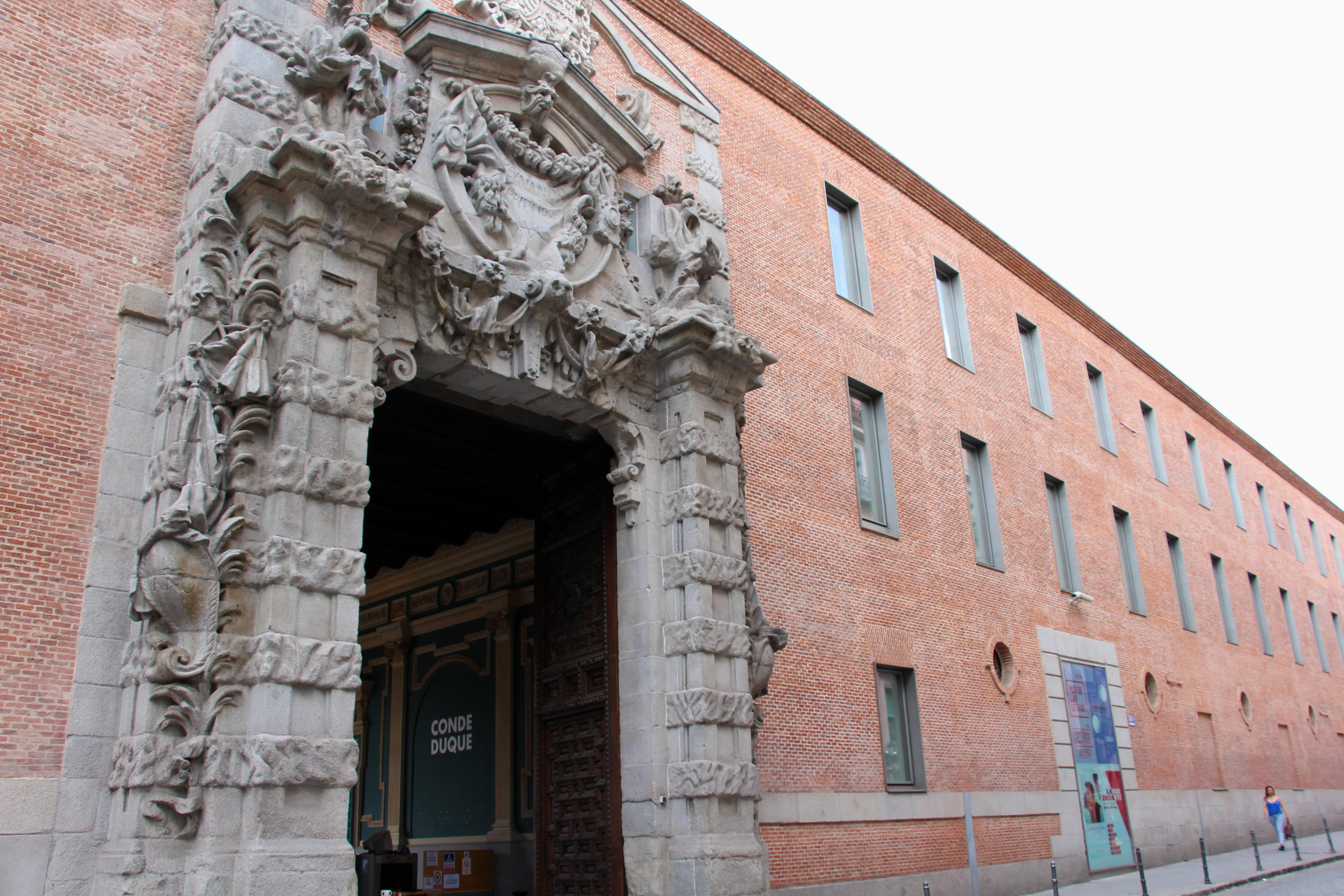
Centro Cultural Conde Duque
6

Centro Cultural Conde Duque

5 min

An 18th-century military barracks built in 1717 with a spectacular Baroque doorway by Pedro de Ribera, now a contemporary cultural centre — proof that Madrid's architectural ambition predated Gran Vía.
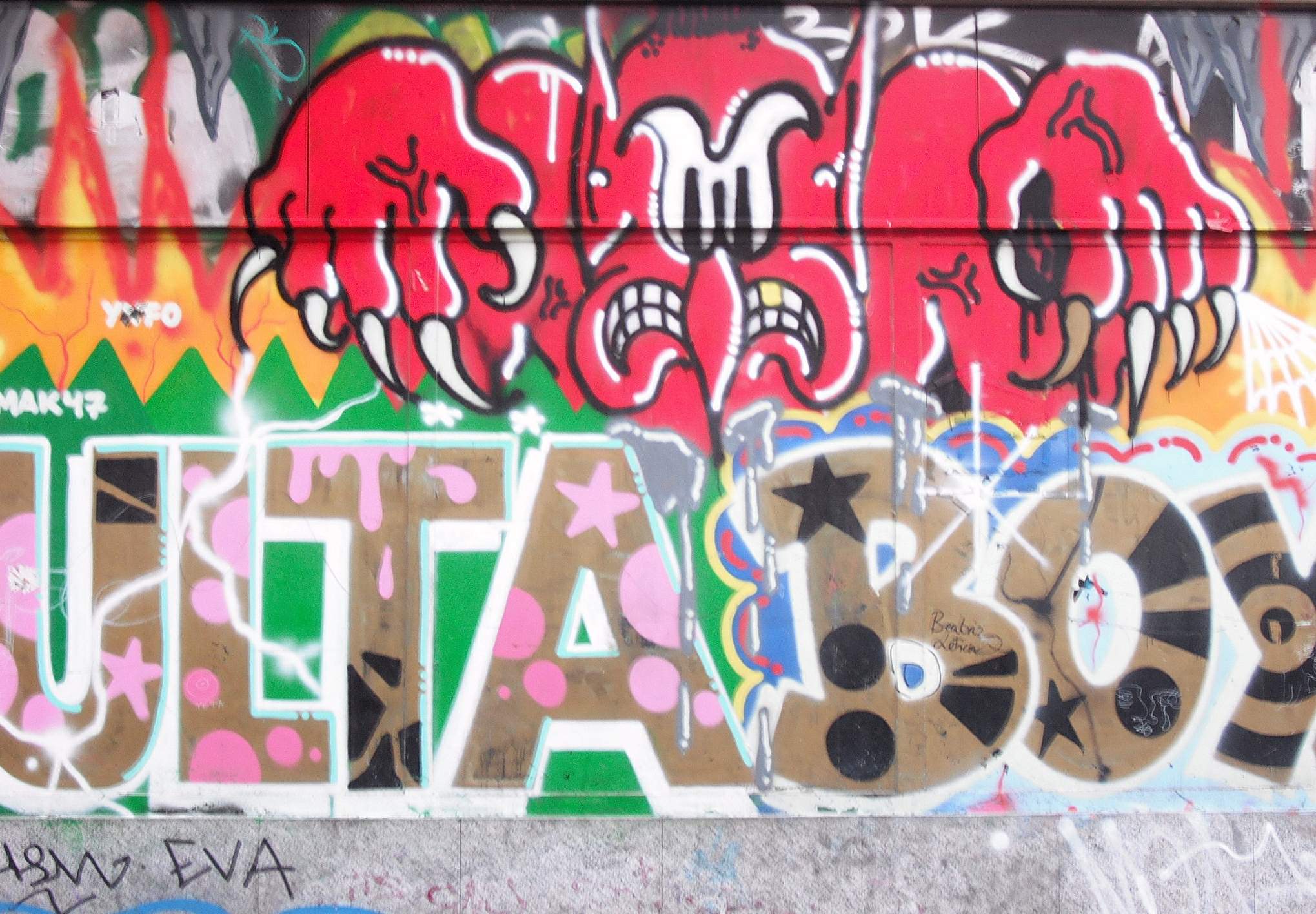
Malasaña Street Art
7

Malasaña Street Art

5 min

The living gallery of Malasaña's contemporary street art scene, where C215 stencils, the annual PINTA festival, and the creative energy of the Movida Madrileña offer a democratic, grassroots answer to Gran Vía's monumental ambition.
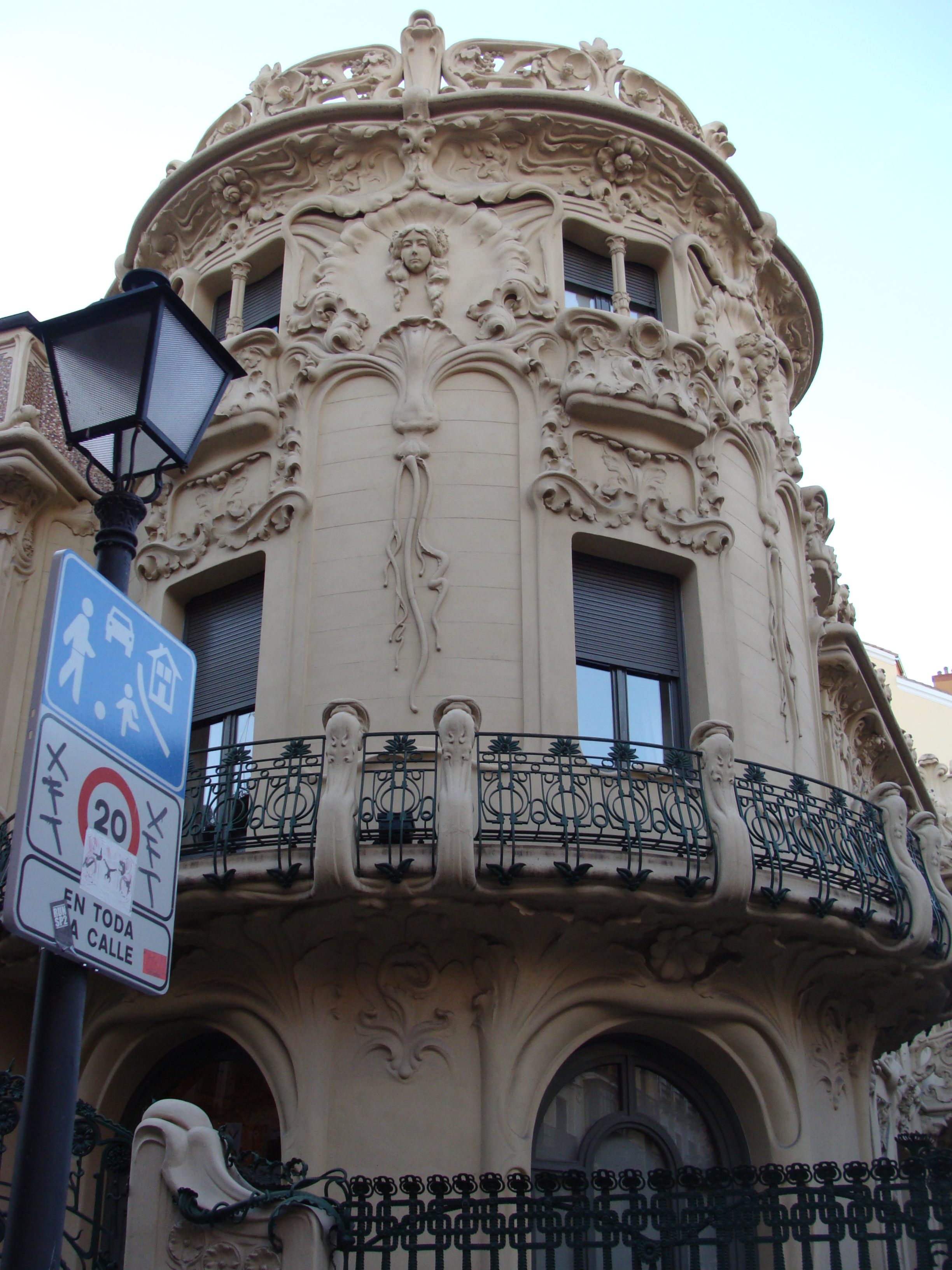
Palacio de Longoria
8

Palacio de Longoria

5 min

Madrid's finest Art Nouveau building (1904), with organic façades, an iron-and-glass dome, and a spectacular imperial staircase — hidden on a quiet Chueca street and predating Gran Vía by six years.

A Taste of the Tour

This is the real story from one stop on this walk — every stop has one.

Edificio Metrópolis

Welcome to Gran Vía—or as I like to think of it, Madrid's open-air museum of architectural ambition. You're standing at the Metrópolis corner, where a winged goddess has been surveying this boulevard since 1911, and trust me, she's seen some wild transformations. This street didn't always exist. In the early 1900s, the Spanish crown took a sledgehammer to centuries of medieval lanes and carved this magnificent avenue through the heart of the city. It was Madrid's declaration: we're modern now, and we're going to prove it with every building we throw up. Over the next few blocks and roughly 100 minutes, you're going to walk through a timeline of Spain's 20th-century dreams. Each decade added its own chapter—each building is basically a character in a long, dramatic novel about what "modernity" meant at that particular moment. Look up. Really look up. These buildings are in a competition for your attention, and they're not subtle about it. Some whisper elegance. Others shout grandeur. All of them want you to know they mattered. So let's go meet them. Look up. I mean really look up — that's what everyone does the first time they see this corner. The Edificio Metrópolis isn't just a building, it's a declaration. When you're standing here where Gran Vía meets Calle de Alcalá, you're standing at the exact moment Madrid decided to reinvent itself. Let's talk about what you're actually seeing. This is Beaux-Arts elegance at its most confident — that ornamental style born in Paris, refined in New York, and reimposed here in 1911. The building rises 45 meters across six floors, which made it the tallest thing in Madrid for a decade. Can you feel how it commands the intersection? It's not shy about its ambitions. The limestone facade is pale and clean, catching light beautifully throughout the day, and the proportions are almost mathematical in their balance. Look at how the building meets the street — it doesn't just plop down; it engages with the urban space around it. The French architects Jules and Raymond Février won an international design competition for this in 1906, and when it opened on January 21, 1911, it became the headquarters for La Unión y el Fénix, an insurance company. That name matters — "The Union and the Phoenix" — because the insurance business in early Madrid was all about betting on recovery. The company wanted their building to match that mythology. They didn't just want an office; they wanted a manifesto in stone. They wanted the most beautiful corner in Madrid, and frankly, they got it. The company understood that in the early 20th century, architecture was persuasion. It was how you told the world what you believed in. Now let's talk about that statue on top. See the Winged Victory figure crowning the dome? That's not the original, and there's a beautiful story here about Madrid changing without forgetting. When the building first opened, there was a bronze sculpture showing Ganymede atop a phoenix — yes, a phoenix, matching the company's name perfectly. That statue sat up there for over 60 years, becoming woven into Madrid's DNA, the silhouette you'd see from blocks away. Then in 1972, someone decided it was time for something new. The city wasn't rejecting the building — it was asking it to evolve. So in 1977, Spanish artist Federico Coullaut-Valera created the Winged Victory figure you see today. Same location, different mythology — but equally dramatic, equally iconic. It's a perfect metaphor for what we're going to see on this walk. This building marks the beginning of Gran Vía's story, and honestly, it marks the beginning of Madrid's modern story. Here's what you need to understand: before 1910, this intersection was medieval Madrid. Narrow streets, centuries-old patterns, a city organized around churches and plazas. Then someone looked at Paris, looked at New York, looked at what modern capitals were doing, and said: "We can do this. We can carve a grand boulevard through our heart." And they did. When you look at this corner, you're not just looking at a building — you're looking at the moment a medieval city decided to reinvent itself. You're looking at Spain's 20th-century dream taking physical form. Notice how the building wraps around the corner in a gentle curve, acknowledging both streets equally. That's intentional — the architects understood that a corner building has two public faces, and it needs to honor both. Every detail speaks the language of confidence: the ornamental stonework with its perfect geometry, the windows arranged in rhythmic progression, the dome itself, the stone garlands and cartouches that frame the facade. This is a building that refuses to apologize for wanting to be noticed. It announces itself. That's the energy we're going to follow for the rest of this walk. From this opening spectacle, we're about to accelerate through nearly a century of Spain's architectural ambitions. Each block of Gran Vía represents a different decade's dream of what modernity should look like. We'll see that dream get more daring, more ambitious, sometimes overreaching. But right here, at this corner, it's pure opening optimism. Gran Vía isn't just a street — it's a timeline. And we're starting at the moment before everything changed.

More Tours in Madrid

Nearby Cities

Back to Madrid Tours

Cookie Consent

We use cookies to analyse site traffic and improve your experience. You can choose to accept or reject analytics cookies. Learn more