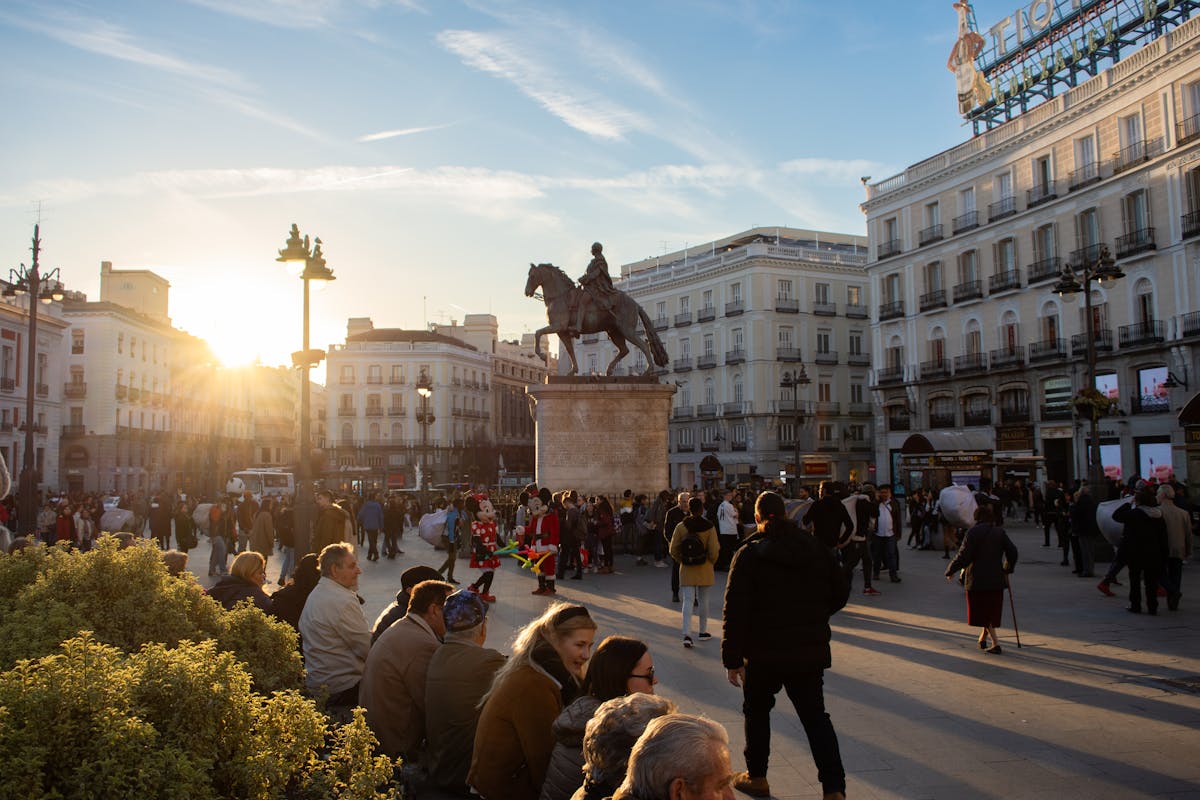
Madrid Highlights — From Habsburg Square to Egyptian Temple
Madrid · Spain

Madrid Highlights — From Habsburg Square to Egyptian Temple

Madrid, Spain
84
Duration (min)
3.2
Distance (km)
9
Stops
Easy
Difficulty

Description

A first-timer's essential walk connecting Madrid's most iconic landmarks, revealing how a small medieval fortress became Spain's grand capital. From Kilometre Zero through Habsburg squares and Bourbon palaces to an ancient Egyptian temple at sunset.

Highlights

Puerta del Sol: where every road in Spain begins Plaza Mayor: 237 balconies of Habsburg theatre Palacio Real: 3,418 rooms of Bourbon ambition Templo de Debod: a 2,200-year-old Egyptian surprise

Tour Stops

Puerta del Sol — Kilometre Zero
0

Puerta del Sol — Kilometre Zero

5 min

Madrid's symbolic geographic heart and the starting point of all Spanish roads, dominated by the iconic bear and strawberry tree statue and the famous New Year's Eve clock.
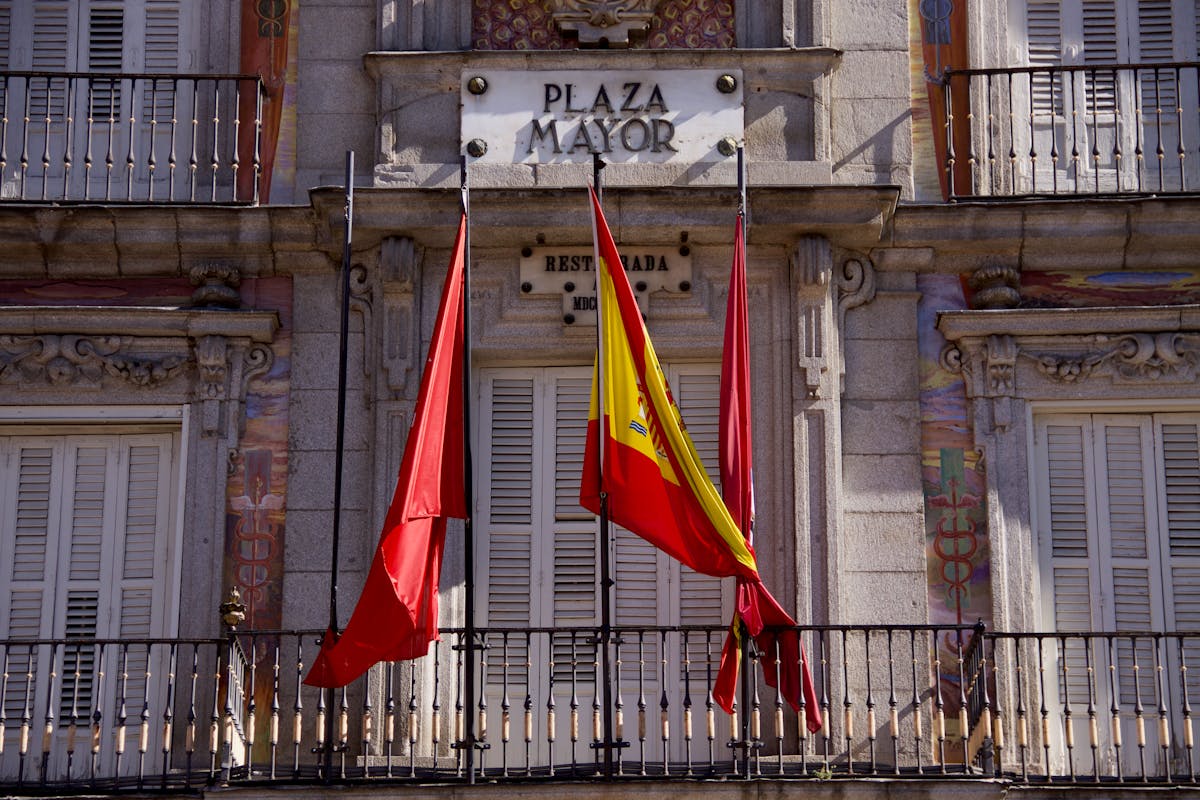
Plaza Mayor
1

Plaza Mayor

5 min

A monumental Habsburg baroque square (129m x 94m) built between 1617-1619 as the city's ceremonial stage for royal pageants, bullfights, and spectacles, now the vibrant heart of daily Madrid life.
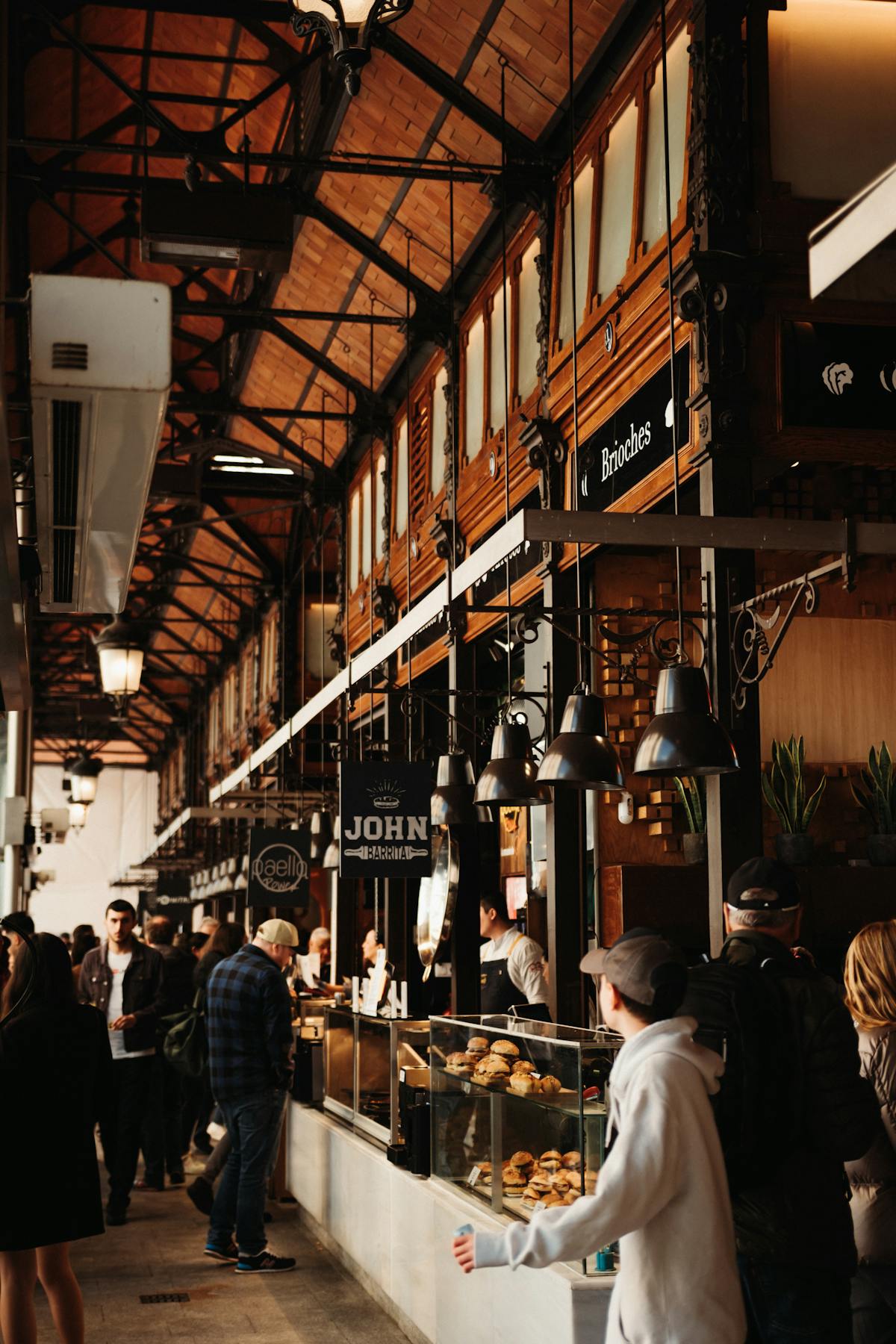
Mercado de San Miguel
2

Mercado de San Miguel

4 min

A beautifully restored 1916 iron and glass market building that transformed an unhealthy open-air market into Madrid's premier gourmet showcase, where locals and tourists gather for wine, tapas, and contemporary Spanish food culture.
Plaza de la Villa
3

Plaza de la Villa

4 min

One of Madrid's oldest corners, where three centuries of architecture — Gothic, Renaissance, and Baroque — face each other across a single intimate square that served as the city's civic heart before Plaza Mayor overshadowed it.
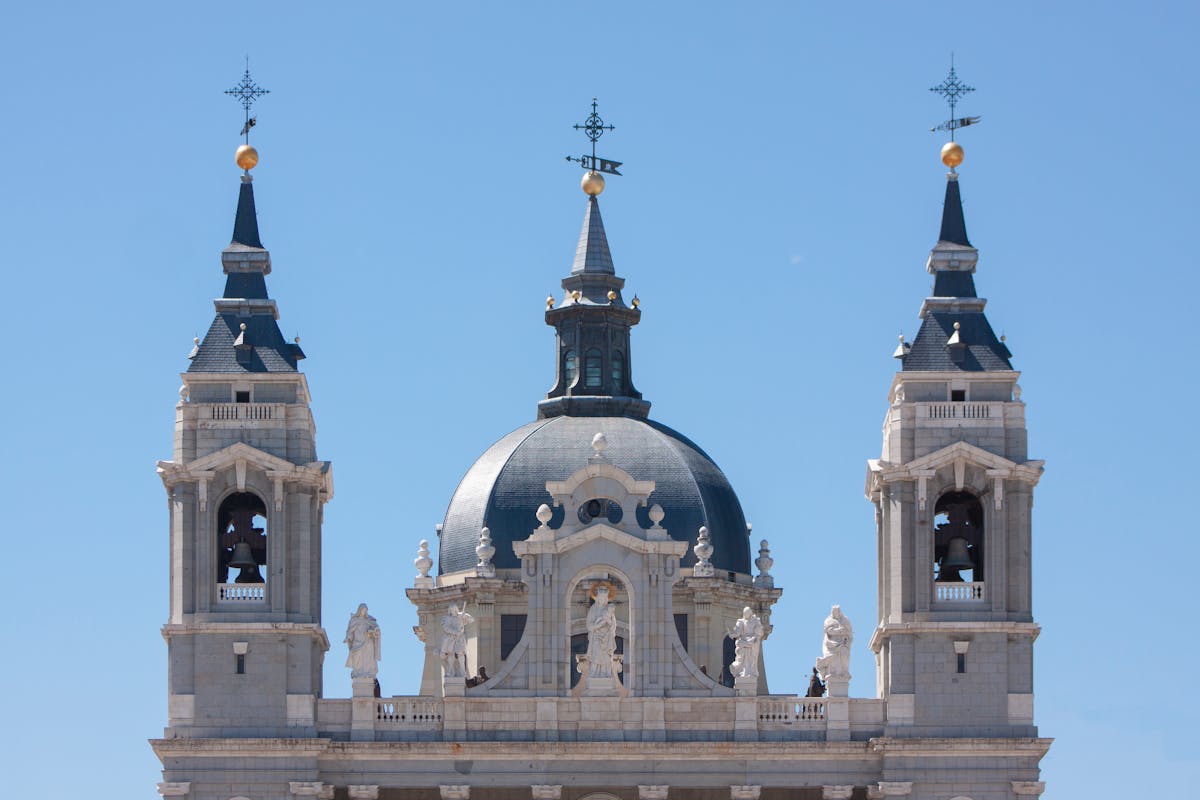
Cathedral de la Almudena
4

Cathedral de la Almudena

4 min

Madrid's cathedral took 110 years to complete (1883–1993), mixing Neo-Romanesque, Gothic, and Baroque styles — a patchwork that mirrors the city's own evolution and reveals how secular concerns often superseded religious ones in Madrid's priorities.
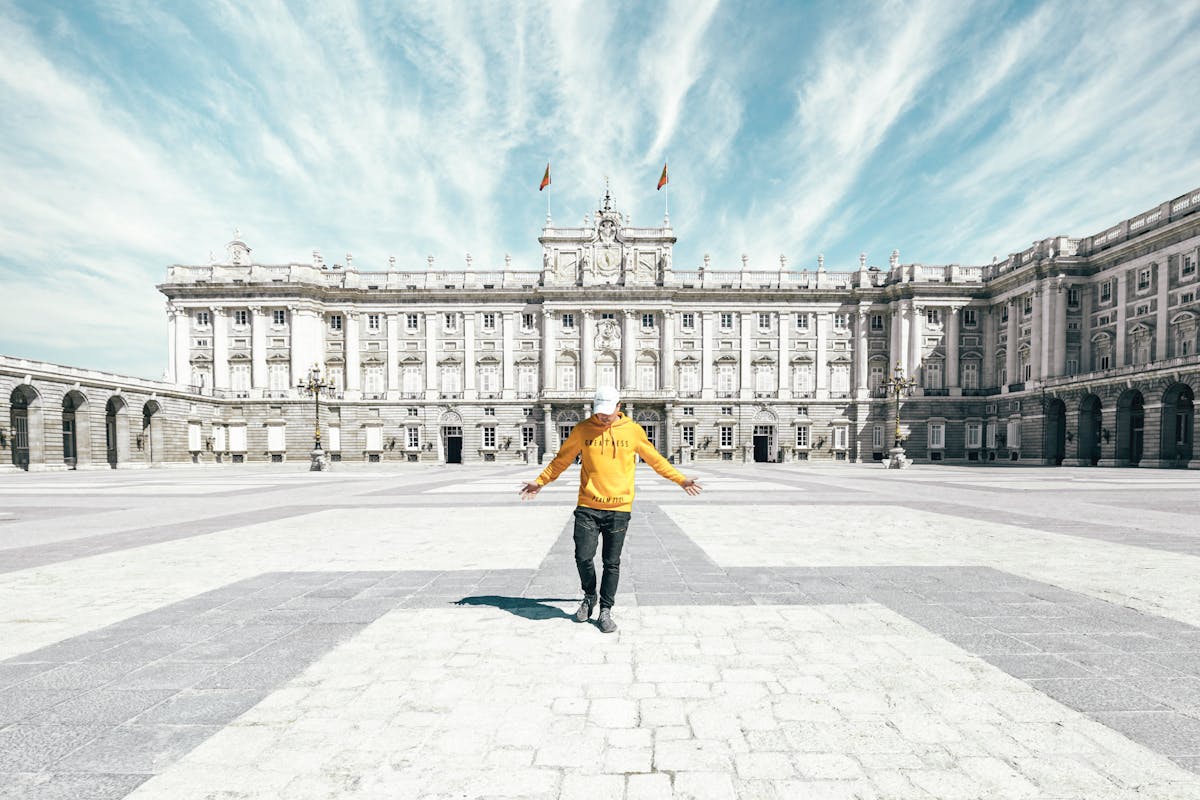
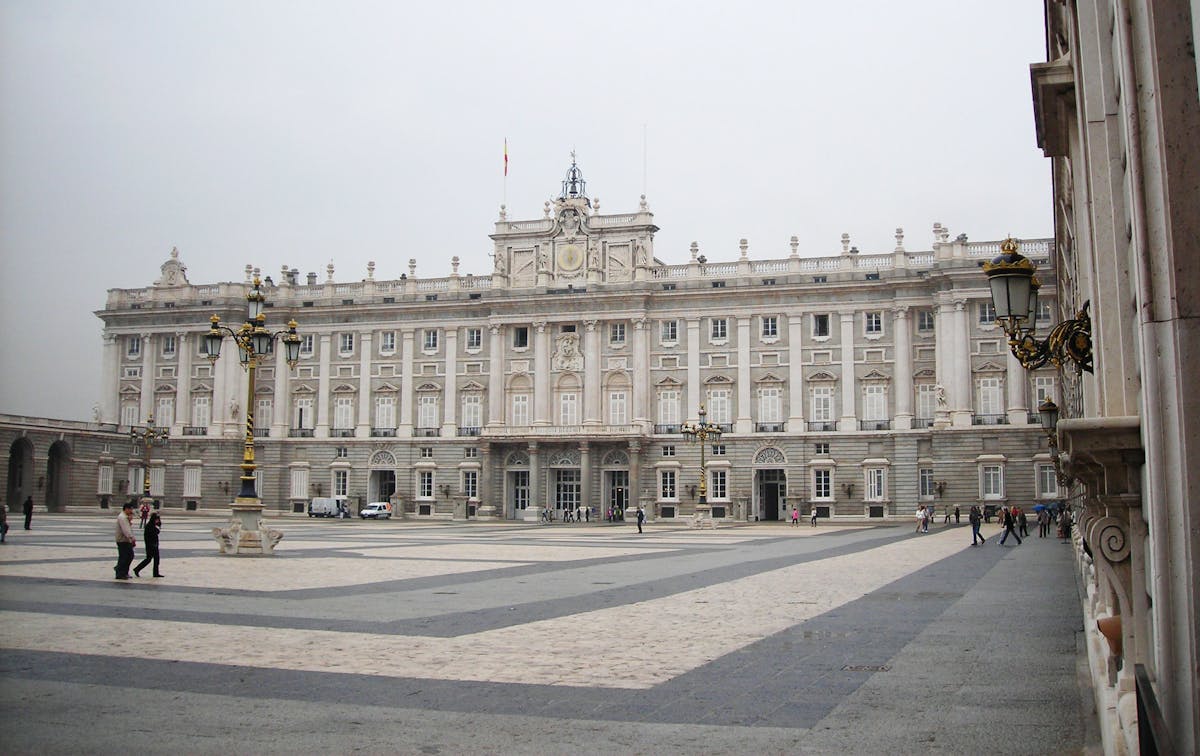
Palacio Real
5

Palacio Real

6 min

The largest royal palace in Western Europe, built by the Bourbons after a fire destroyed the Habsburg alcázar in 1734 — 3,418 rooms of stone and gilt that transformed Madrid from a fortress-town into a European power.
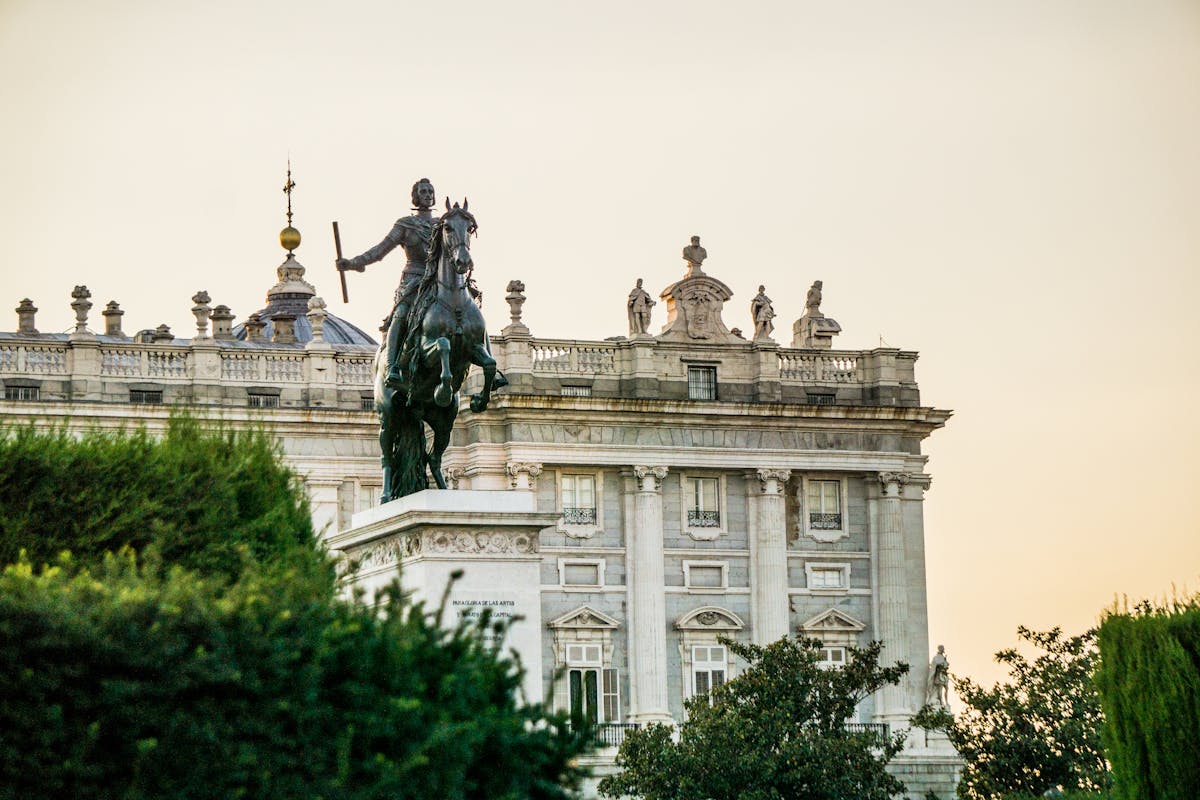
Plaza de Oriente
6

Plaza de Oriente

4 min

An elegant square born from demolition—Joseph Bonaparte razed a medieval block in 1808 to give the Royal Palace a grand vista, now lined with twenty statues of Spanish kings that were originally too heavy for the palace roof.
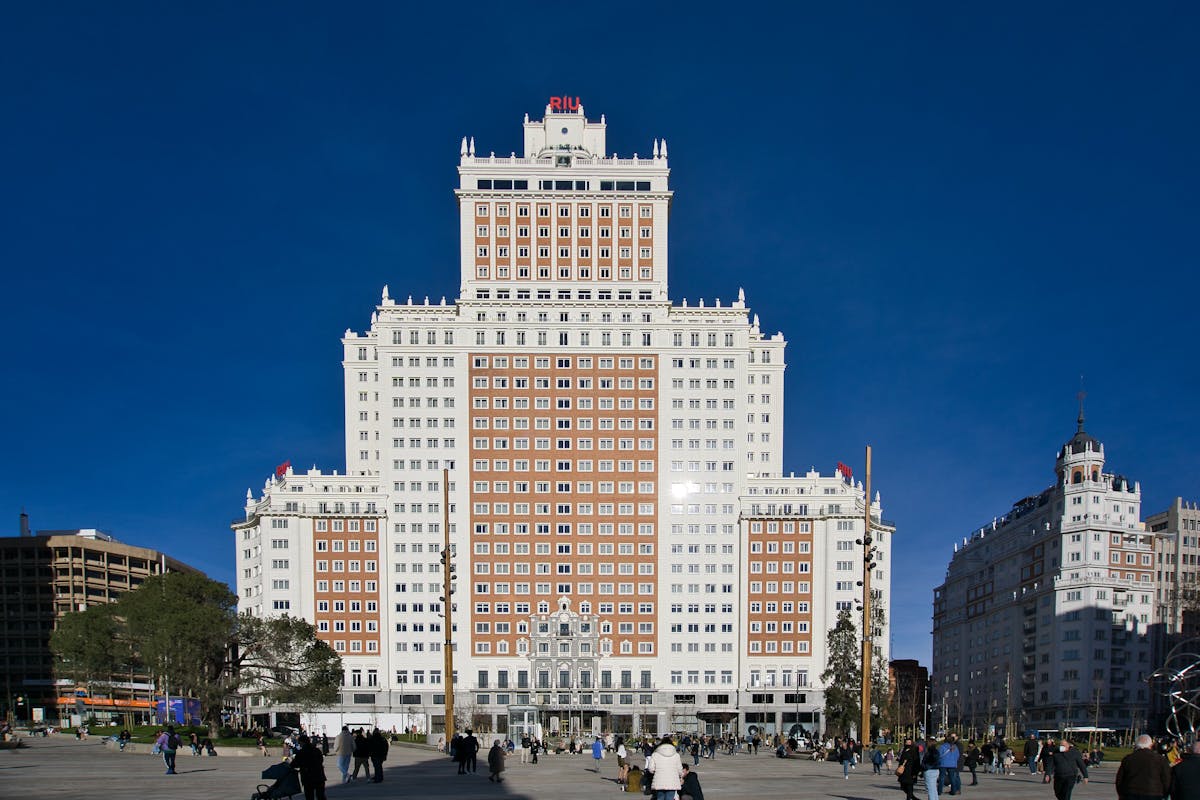
Plaza de España
7

Plaza de España

4 min

A vast square flanked by Madrid's first skyscrapers, the 1957 Torre de Madrid and the Edificio España, crowned with a monument to Miguel de Cervantes that shows a city continuously reinventing itself.
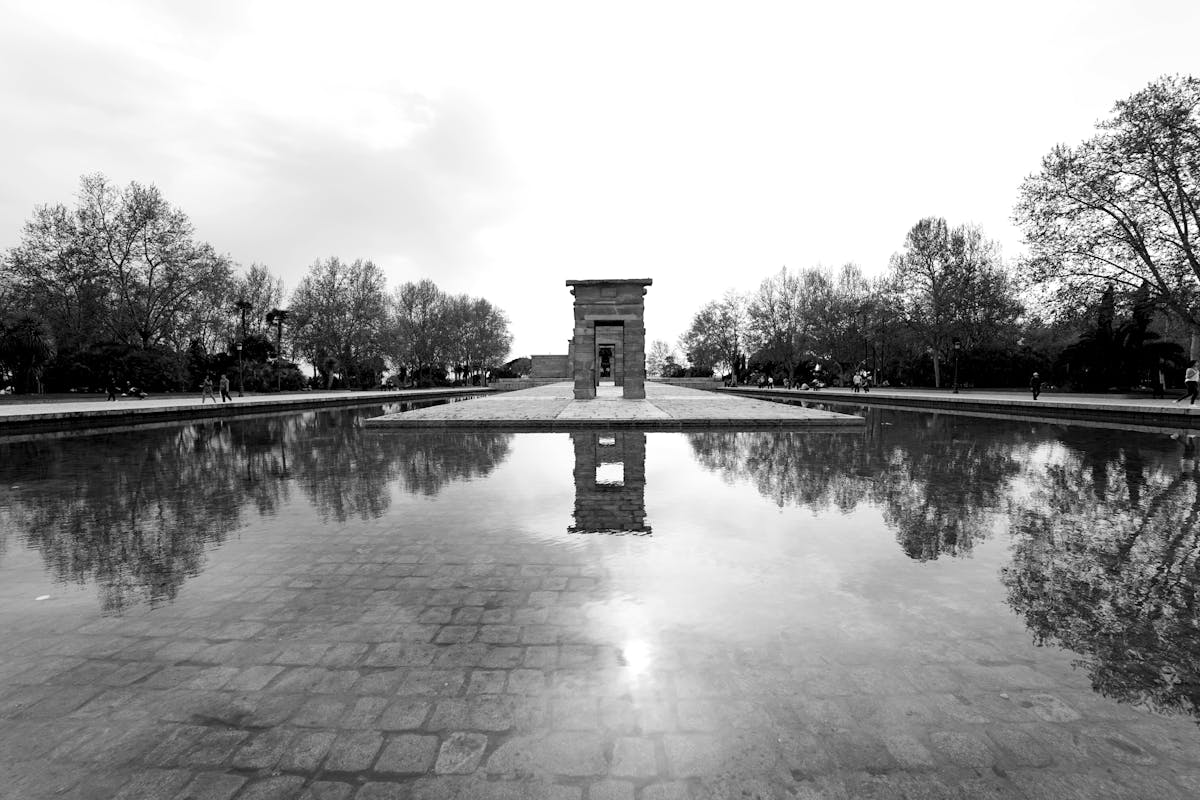
Templo de Debod
8

Templo de Debod

5 min

A 2,200-year-old Egyptian temple, dismantled stone by stone and shipped to Madrid in 1972 as a gift from Egypt for helping save Nubian monuments from the Aswan Dam—now Madrid's most magical sunset spot.

A Taste of the Tour

This is the real story from one stop on this walk — every stop has one.

Puerta del Sol — Kilometre Zero

Welcome to Puerta del Sol — the absolute heart of Spain. You're standing on Kilometre Zero, and literally every road in this country radiates out from where your feet are right now. Pretty wild, right? But here's the thing: a thousand years ago, this spot was just a scrappy Moorish fortress, a defensive wall defending a small outpost. Then something extraordinary happened. The Habsburgs arrived. Then the Bourbons. And slowly, almost by accident, this fortress town became Madrid — one of Europe's grandest capitals. Over the next two hours, we're going to walk that transformation. You'll see where emperors plotted, where revolutions sparked, where art became immortal. We'll move from royal palaces to hidden convents to an Egyptian temple that somehow ended up in a Madrid park. It's the story of ambition, power, culture, and the wild unpredictability of history. The best part? You don't need a time machine. It's all right here, layered into these streets. So let's go. Introduction Welcome to the nerve centre of Spain. You're standing at Puerta del Sol, which literally translates to "Gate of the Sun," and this square is about as close as you can get to the actual beating heart of the country. Look down at your feet—notice that bronze plaque right here? That's Kilometre Zero, the exact point from which every single national road in Spain radiates outward. When King Charles III wanted to reorganize his kingdom in the 18th century, he needed a symbolic centre, and he chose this spot. All the major routes connecting Madrid to the rest of Spain begin right here. Pretty cool, isn't it? Now, look over there—the real star of this square. That's El Oso y El Madroño, the Bear and the Strawberry Tree, Madrid's most iconic symbol. It weighs 20 tonnes and sits like a guardian of the city. But here's the thing that gets me every time I show visitors: the statue wasn't actually installed until 1967, though the bear and the arbutus tree have been Madrid's emblem since the Middle Ages. According to legend, the city's original name was "Ursaria"—literally, land of bears—because these forests were absolutely teeming with them back in the day. That arbutus tree you see the bear munching on? Madroño in Spanish. The two together tell the story of Madrid before it became Spain's capital, when it was just a fortress town carved out of wilderness. Look at this square itself. The transformation you're seeing happened in the 1800s. Between 1857 and 1862, they tore down buildings, reorganized the space, and created what you see now—a grand plaza with traffic radiating in every direction, lined with shops and cafes and always, always packed with people. This is Madrid at its most alive. You'll see tourists posing with the bear statue, local office workers cutting through on their way to lunch, protesters gathering for their causes, street musicians, vendors. This square is the stage where the city performs itself every single day. But let me tell you the real reason this square gets under your skin—it's because of New Year's Eve. Every December 31st, about a million people flood into Puerta del Sol and the surrounding streets. As midnight approaches, the clock tower in the northwest corner of the square—that historic building with the Roman numerals—starts to chime. You have to eat twelve grapes, one for each chime, and if you manage to swallow all twelve before the clock stops, legend says you'll have good luck for the whole next year. It's chaotic, joyful, impossible, and absolutely unmissable if you're here on that night. That clock has been keeping the city's rhythm since 1856. This is where our story begins, in the bustle and energy of modern Madrid. But stand here and imagine it differently. Four hundred years ago, this was the edge of a small Moorish fortress town. Now it's the centre of Spain, where everything radiates outward. And as we walk deeper into the old quarters around us, we're going to see exactly how Madrid transformed itself from that fortress into something grand. The Bourbon kings had plans for this city that would make it rival any capital in Europe. But that comes later. For now, you're at the centre—the physical, symbolic, spiritual centre of a nation. Take a moment and feel the energy of it.

More Tours in Madrid

Nearby Cities

Back to Madrid Tours

Cookie Consent

We use cookies to analyse site traffic and improve your experience. You can choose to accept or reject analytics cookies. Learn more