From Smokestacks to Street Art: Poblenou's Reinvention
Barcelona · Spain

From Smokestacks to Street Art: Poblenou's Reinvention

Barcelona, Spain
100
Duration (min)
4.3
Distance (km)
8
Stops
Easy
Difficulty

Description

Explore how Barcelona's former industrial powerhouse — once called the Manchester of Catalonia — reinvented itself as one of Europe's most exciting creative neighbourhoods, from reclaimed beaches to street art on factory walls.

Highlights

The Kiss of Death sculpture in Poblenou Cemetery Palo Alto creative compound in a former factory Large-scale street art murals on industrial walls The tension between old Poblenou and the @22 tech district
Tour Stops

Bogatell Beach
0

Bogatell Beach

3 min

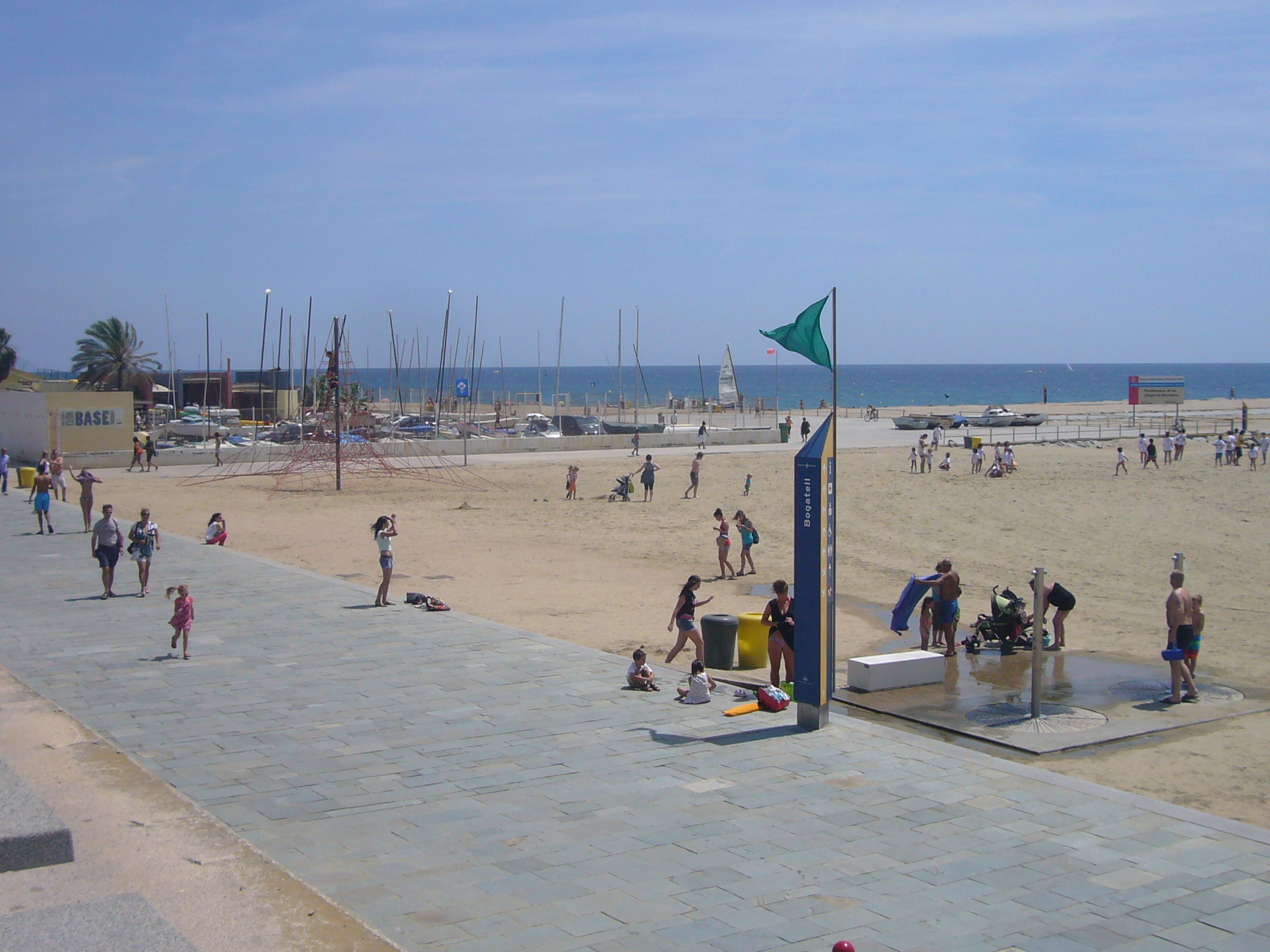
Barcelona's newly created waterfront beach, built on reclaimed industrial land during the 1992 Olympics. A transformation from polluted wasteland to public leisure space that defines the entire Poblenou story.
Poblenou Cemetery
1

Poblenou Cemetery

4 min

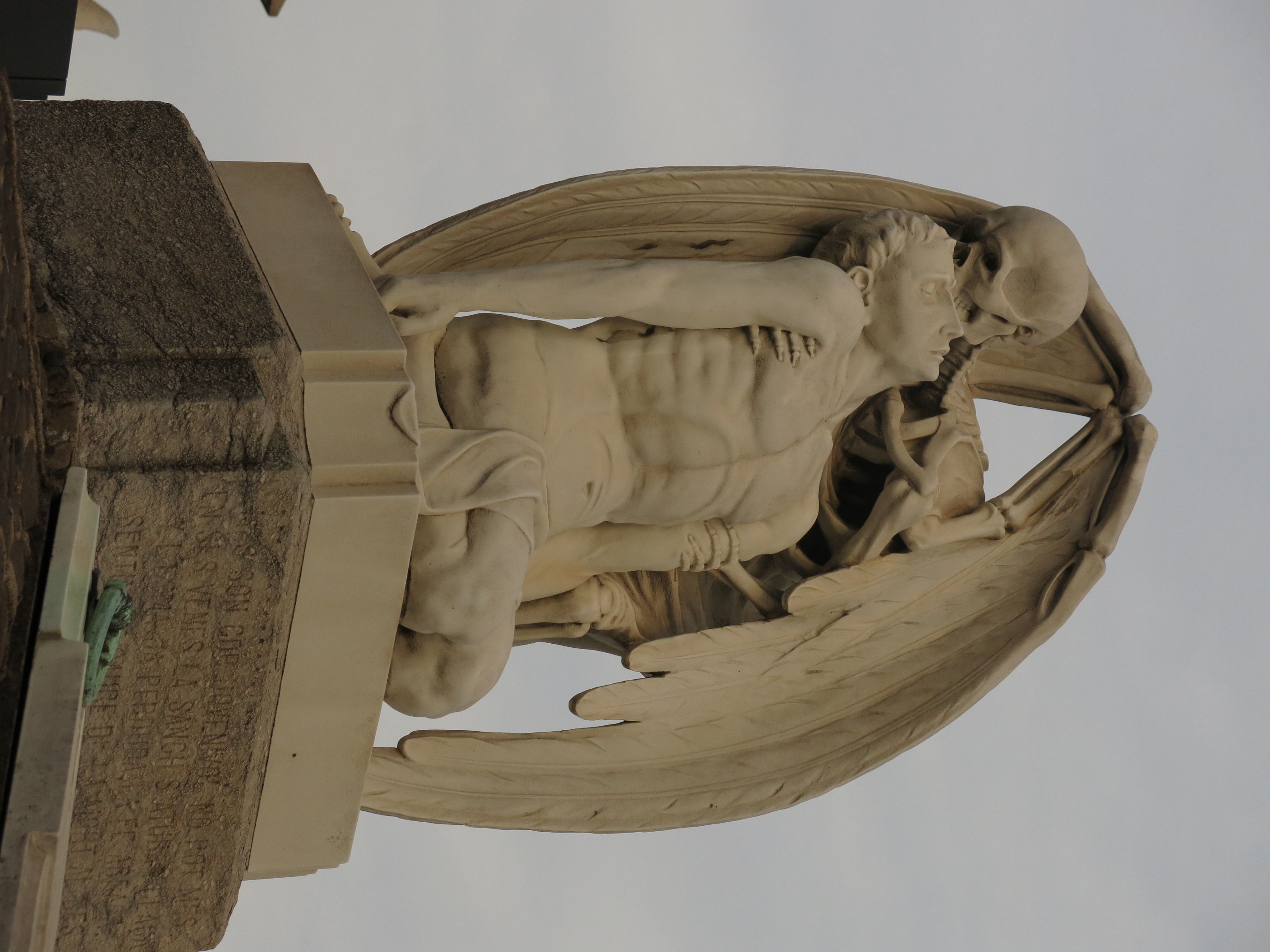
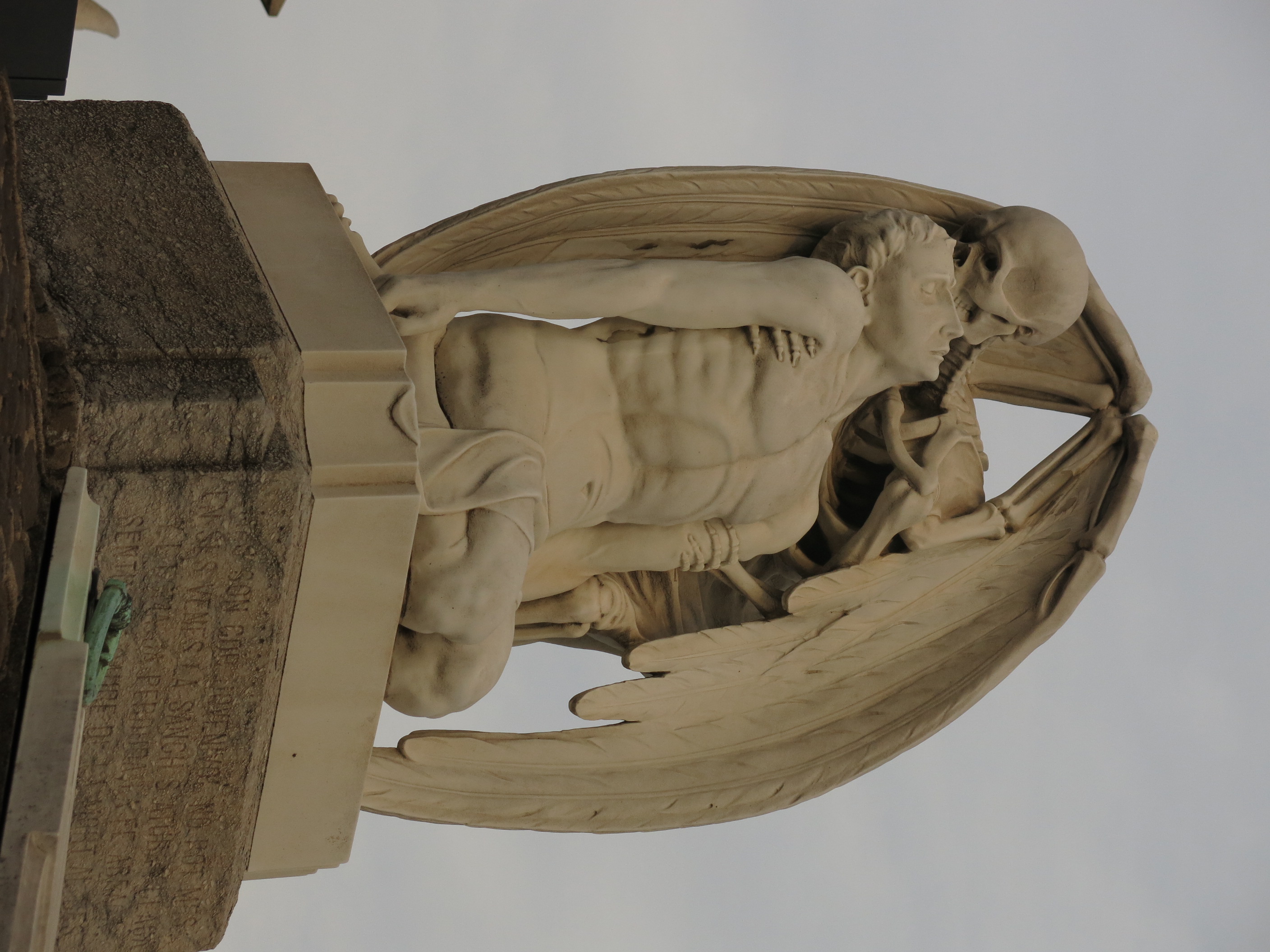
One of Barcelona's most overlooked cemeteries, featuring the 1930 Kiss of Death sculpture by Jaume Barba. A neoclassical space where industrialists and workers rest side by side, their marble monuments telling stories of wealth, loss, and mortality.
Rambla del Poblenou
2

Rambla del Poblenou

3 min

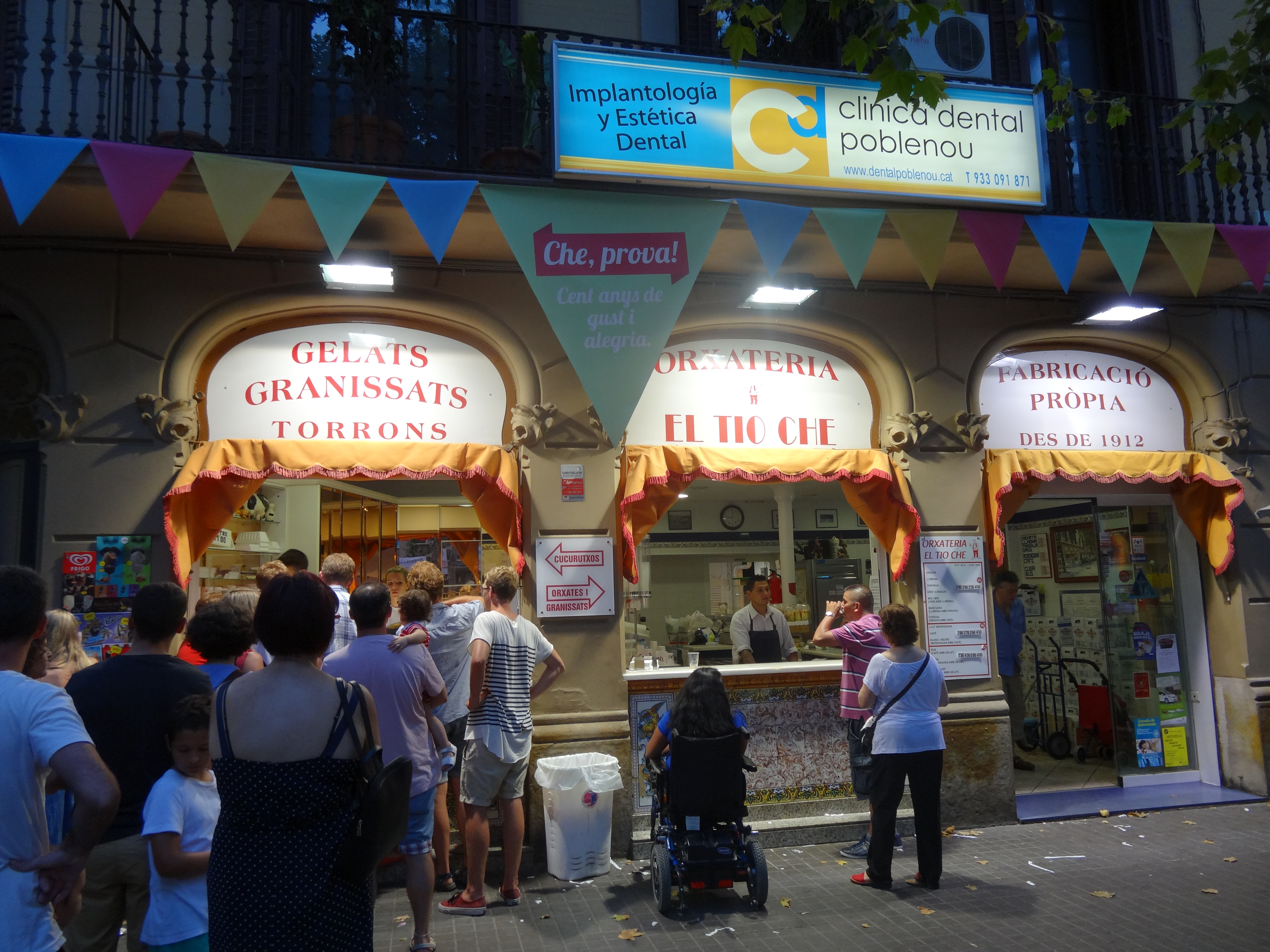
A tree-lined boulevard stretching one kilometre from Gran Via to Bogatell Beach, dating to 1853. The social and commercial heart of the neighbourhood since the 19th century, lined with cafés, shops, and modernist buildings.
Plaça de Prim
3

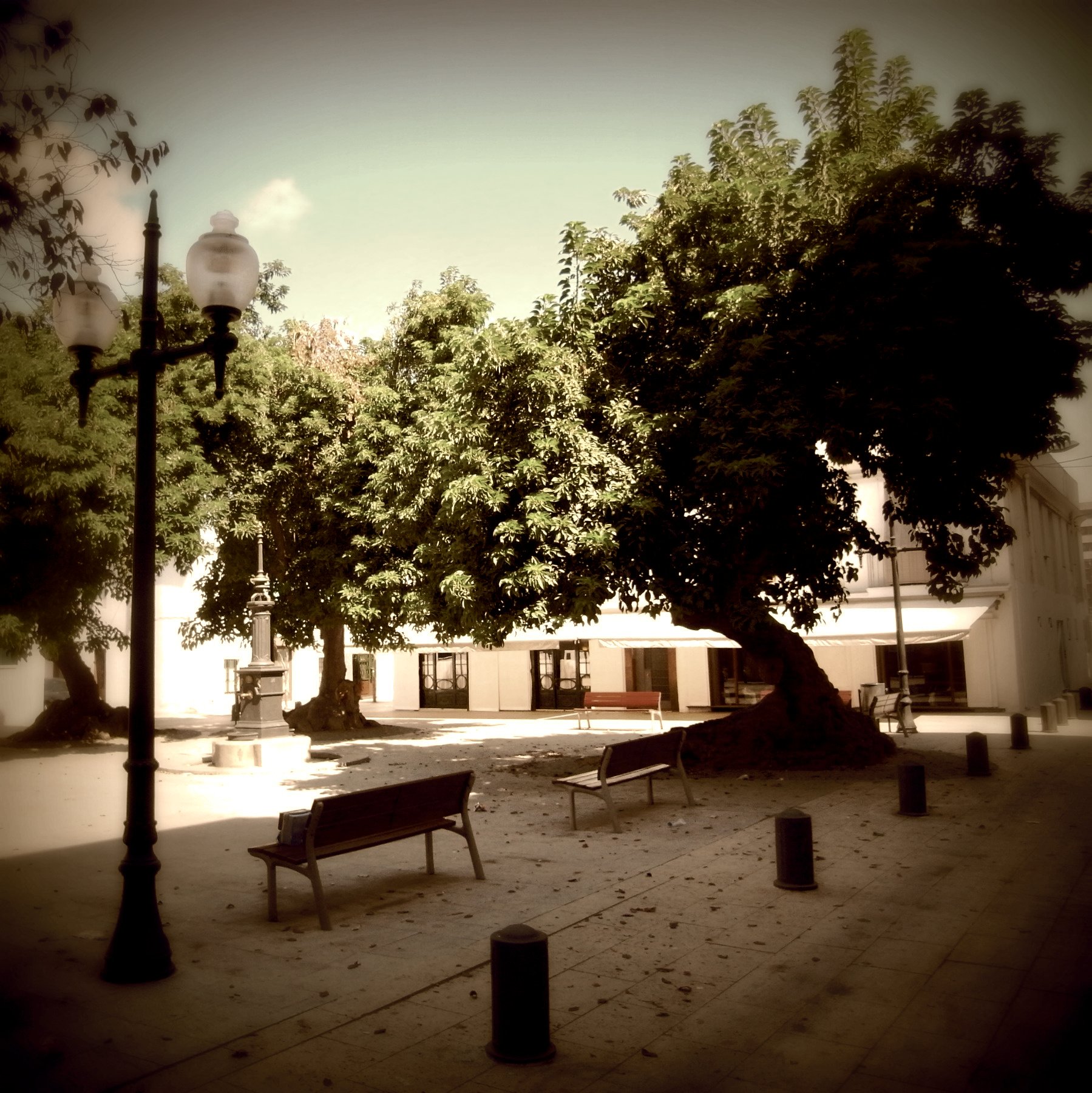
Plaça de Prim

3 min

The historic heart of Poblenou, built in 1851 as a gathering place for fishermen and factory workers. Named after General Prim after his death in 1870, the square represents the neighbourhood's working-class roots.
Palo Alto
4

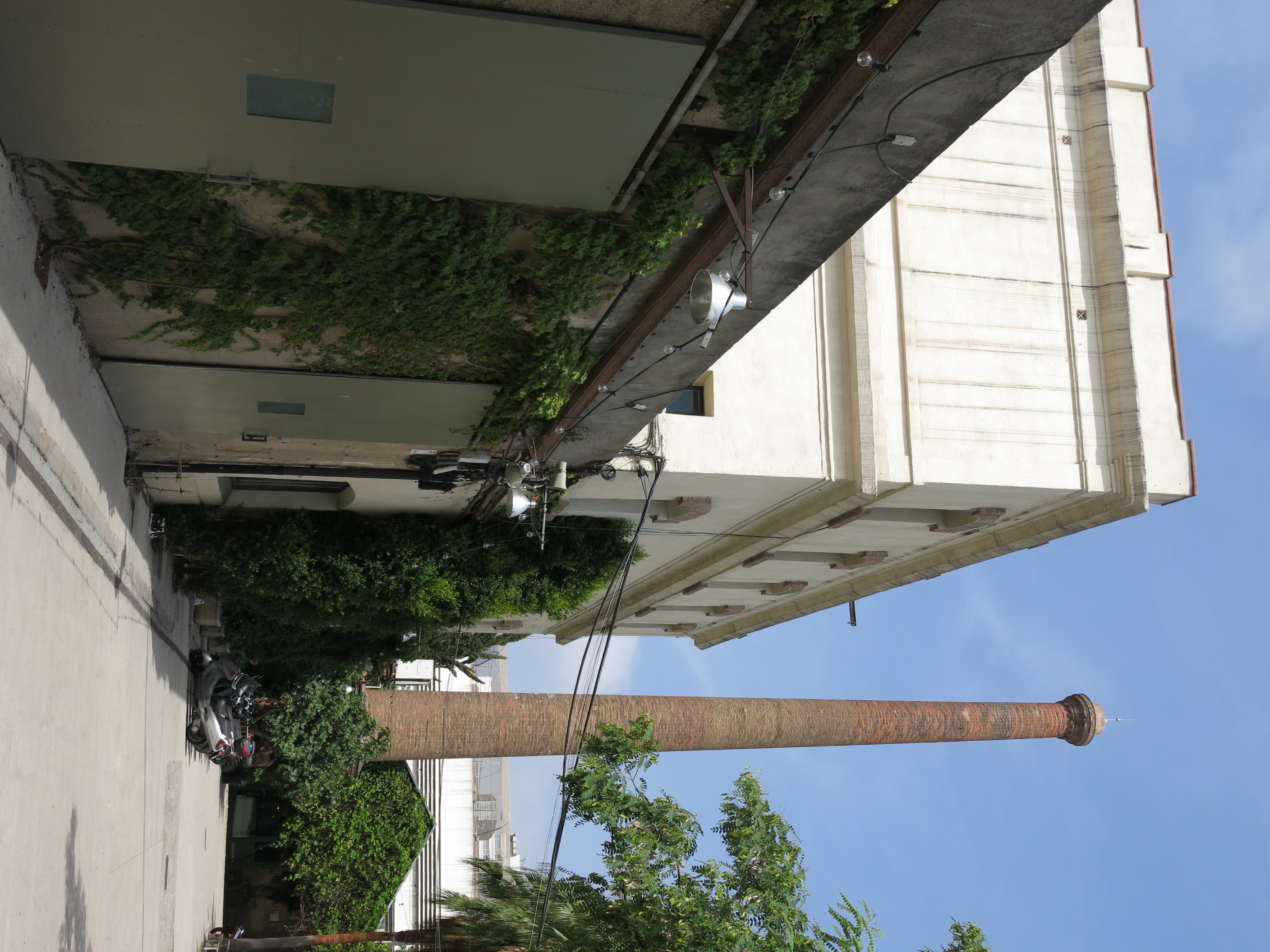
Palo Alto

3 min

A creative compound built from the bones of the Gal i Puigsech factory. Now home to 19 design studios, artist workshops, and the monthly Palo Alto Market.
Poblenou Street Art Zone
5

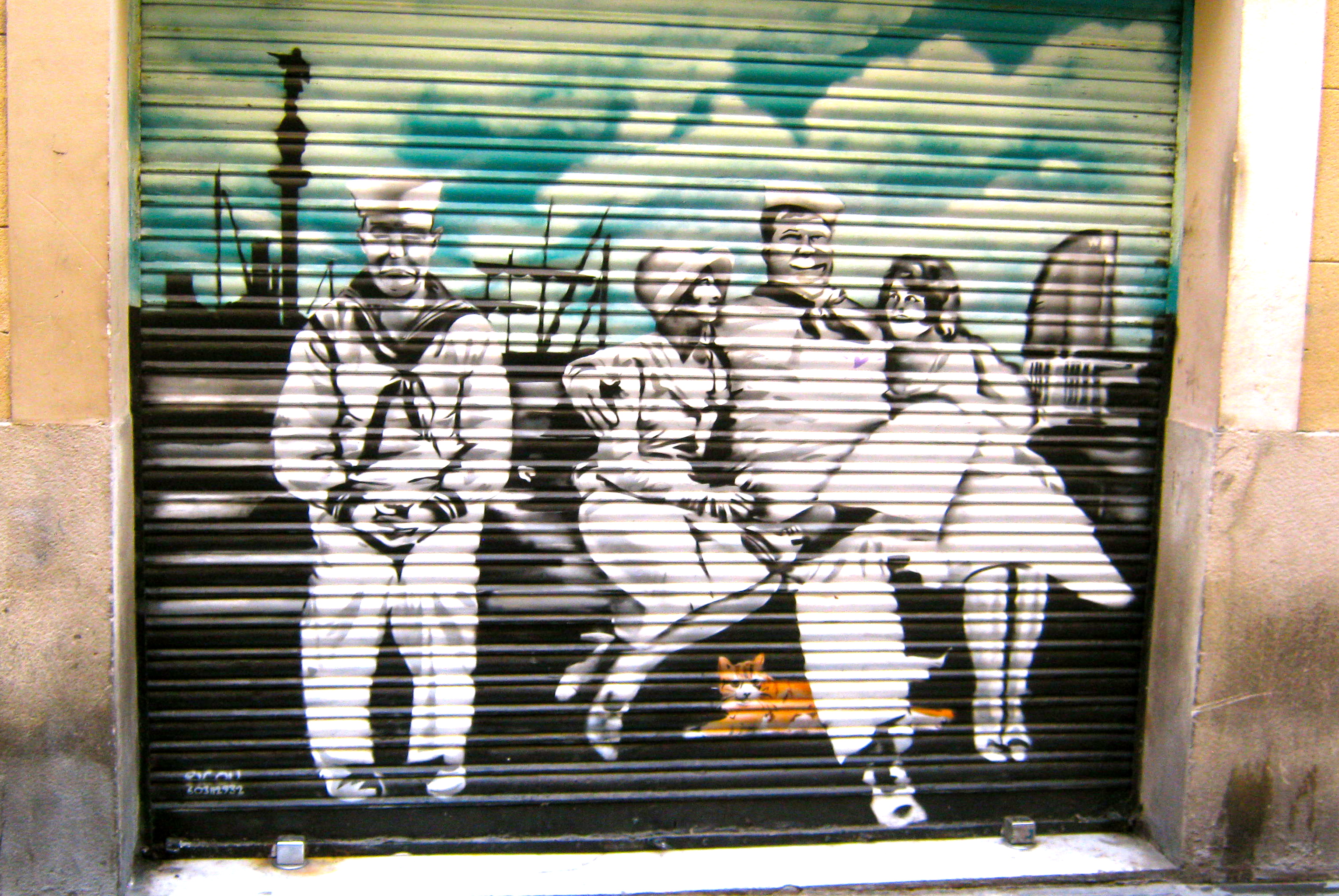
Poblenou Street Art Zone

5 min

Old factory walls transformed into an open-air gallery. Large-scale murals by international and local artists coat the industrial facades, making Poblenou Barcelona's street art capital.
Can Felipa
6

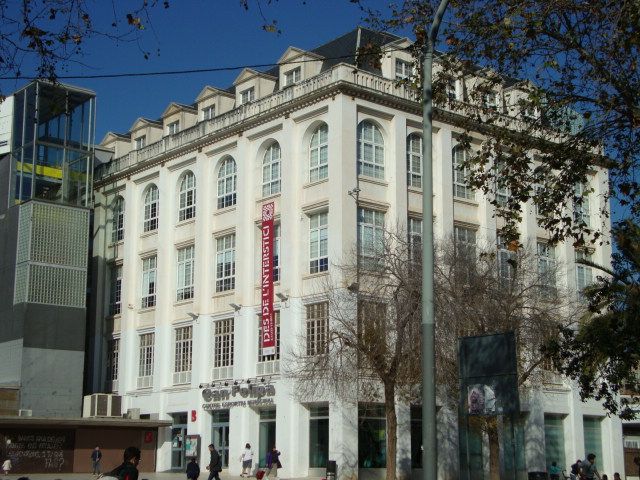
Can Felipa

3 min

A converted textile factory from 1885 on Carrer Pallars, now a civic cultural centre with a library, gym, and exhibition space. A perfect model of adaptive reuse.
@22 District
7

@22 District

3 min

Barcelona's ambitious plan to convert 200 hectares of industrial land into an innovation hub. Glass towers rising amid the old factories. The contested future of Poblenou.

A Taste of the Tour

This is the real story from one stop on this walk — every stop has one.

Bogatell Beach

You're about to walk through the most unlikely transformation in Barcelona. Not the Gothic Quarter's medieval charm or the Eixample's Art Nouveau elegance — those were always beautiful. This is different. Thirty years ago, Poblenou was industrial wreckage. Abandoned factories. Polluted beaches. The kind of place taxi drivers warned you about. They used to call it the Manchester of Catalonia — and they meant it as a compliment. For over a century, from roughly 1850 to 1960, this neighbourhood was the engine room of Spanish industry. Textile mills, metalworks, chemical plants — at its peak, Poblenou had more factories per square metre than anywhere else in the country. The chimneys were so thick they blocked the view of the sea. Then the factories closed. One by one, then all at once. Poblenou went quiet. Buildings emptied. Walls crumbled. And for a couple of decades, it just sat here — waiting. What happened next is the story we're walking through today. Artists moved into the abandoned spaces. Designers set up studios in former warehouses. The 1992 Olympics cleaned up the waterfront. And now Barcelona's city government is trying to turn it into a tech hub — which sounds great until you meet the people being displaced by it. This tour covers about four kilometres in eight stops, and every single one of them asks the same question: what happens when a neighbourhood reinvents itself, and who gets to decide what it becomes? You're standing on what used to be the industrial wastelands of Catalan Manchester. Right here, where you're looking at swimmers and beach umbrellas, there were factories pumping smoke into the sky. This water — it was brown. Polluted. Completely cut off from the city by a railway line that ran along the coast, literally separating the neighbourhood from the sea. Then 1992 happened. The Olympics. And Barcelona decided to do something radical: they reinvented the entire waterfront. They didn't just clean up the beach. They buried the railway tracks underground. They demolished the factories. They excavated enough earth from the construction sites to literally build a new coastline, importing sand to create Bogatell, Nova Icària, and Mar Bella beaches — three miles of sand where industrial ruin used to be. The Mapfre towers and Hotel Arts rose from the rubble. The Olympic Port transformed the water itself. But here's what matters: they didn't erase what came before. Walk through Poblenou — you'll still see the chimneys. The old stone walls. The converted factories now housing art galleries and design studios. Because the Olympics didn't destroy Poblenou's story, it interrupted it. And what happens next — that's what you're here to understand. Stand here. Feel this water. It's public now. That's the first clue that a neighbourhood refused to let its past become its ending.

More Tours in Barcelona

Nearby Cities

Back to Barcelona Tours

Cookie Consent

We use cookies to analyse site traffic and improve your experience. You can choose to accept or reject analytics cookies. Learn more