Dublin Essentials: College Green to the GPO
Dublin · Ireland

Dublin Essentials: College Green to the GPO

Dublin, Ireland
150
Duration (min)
4.2
Distance (km)
11
Stops
Easy
Difficulty

Description

Dublin's icons in one unforgettable loop: from Trinity College's cobbles up Grafton Street's busker-lined spine, through Georgian squares and a 700-year-old castle, past a Viking king's cathedral and Temple Bar's cobbled lanes, across the Ha'penny Bridge to the bullet-scarred portico where a republic was proclaimed. The perfect first walk in the city — every stop is a place where Dublin decided what it wanted to be.

Highlights

Trinity College's Front Arch and the campanile superstition students still obey The 1916 ceasefire at St Stephen's Green — both sides pausing fire so the groundsman could feed the ducks Dublin Castle's handover after 700 years of British rule — and Michael Collins' seven-minutes-late legend Christ Church Cathedral, founded by a Viking king around 1030, with its mummified cat and rat Bullet holes from Easter Week still visible on the O'Connell Monument and the GPO's columns
Tour Stops

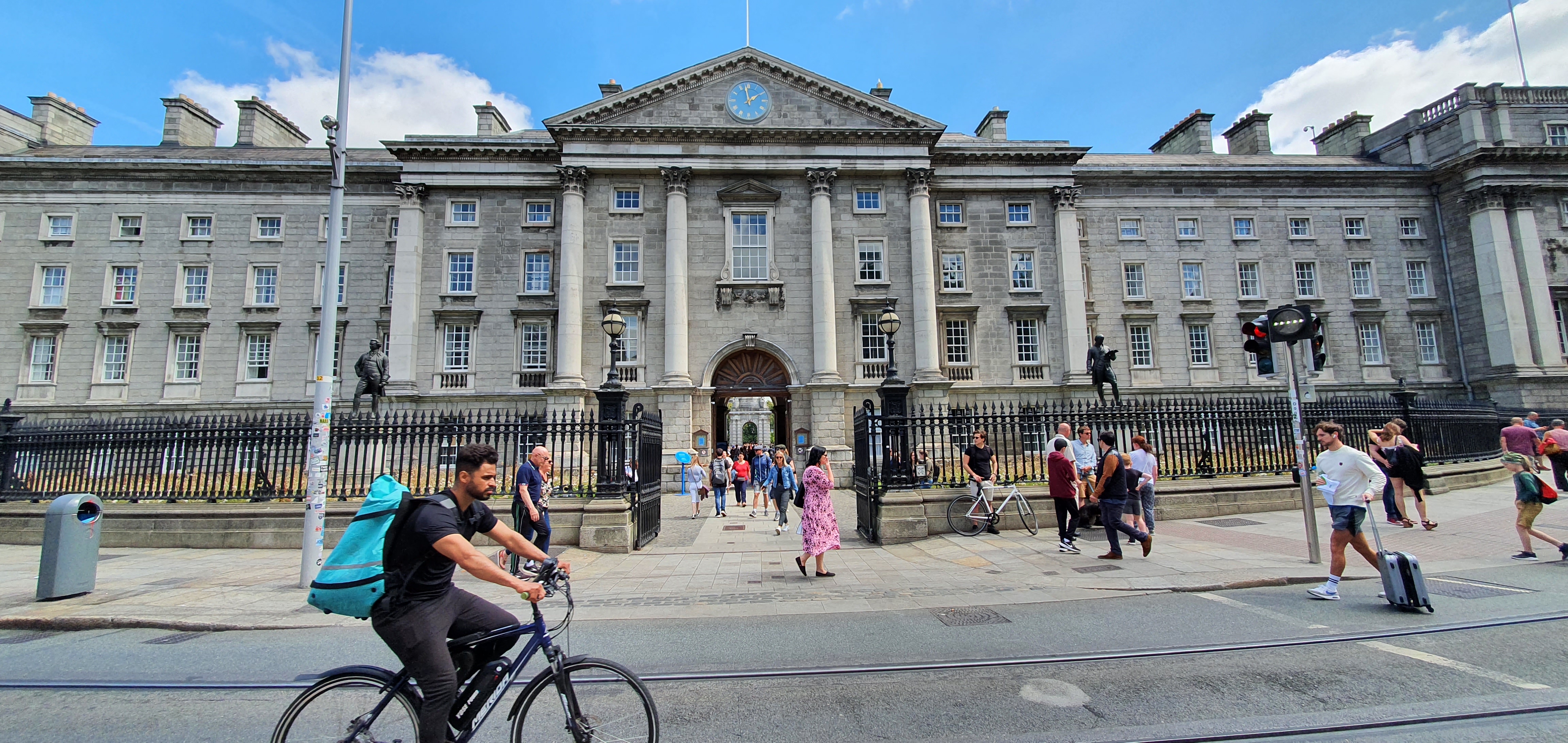
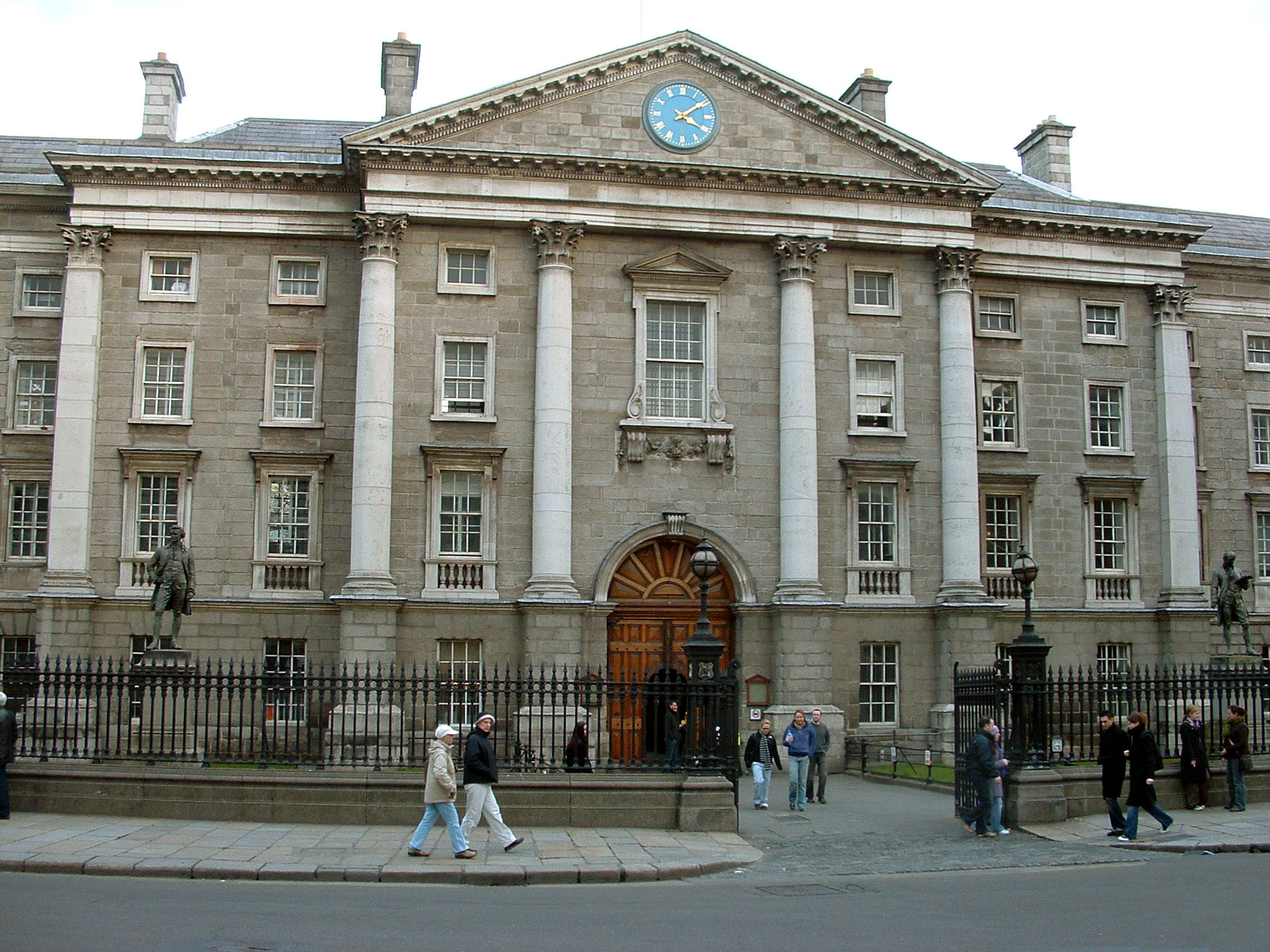
Trinity College Front Arch
0

Trinity College Front Arch

5 min

Founded in 1592 by Elizabeth I on the site of a confiscated monastery, Trinity College is Ireland's oldest university, and its Front Arch is the threshold where the noise of College Green gives way to the cobbled calm of Parliament Square.
Molly Malone Statue
1

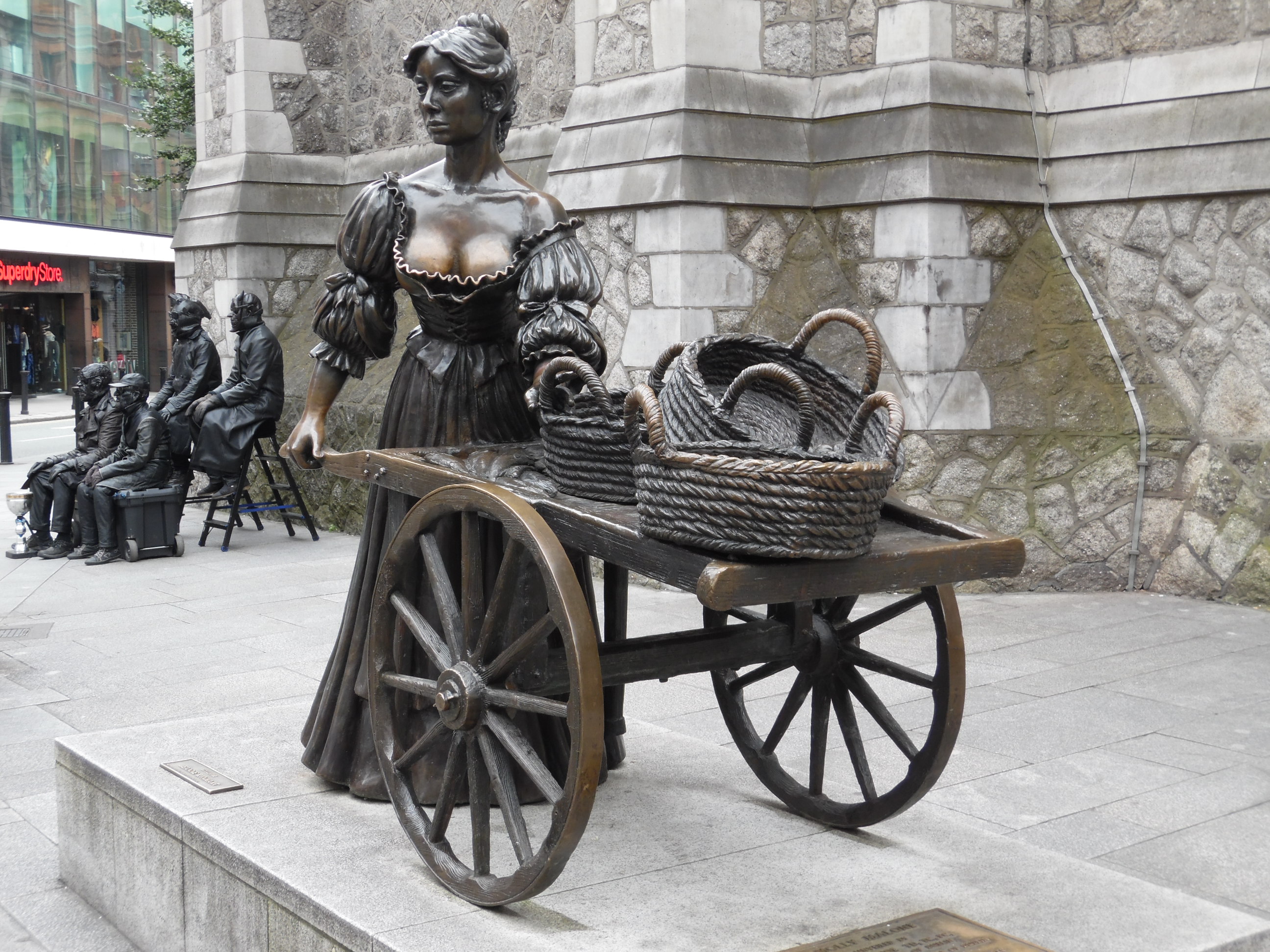
Molly Malone Statue

5 min

Jeanne Rynhart's 1988 bronze of the fictional fishmonger from 'Cockles and Mussels', Dublin's unofficial anthem, moved from Grafton Street to Suffolk Street in 2014 and affectionately nicknamed 'the Tart with the Cart'.
Grafton Street
2

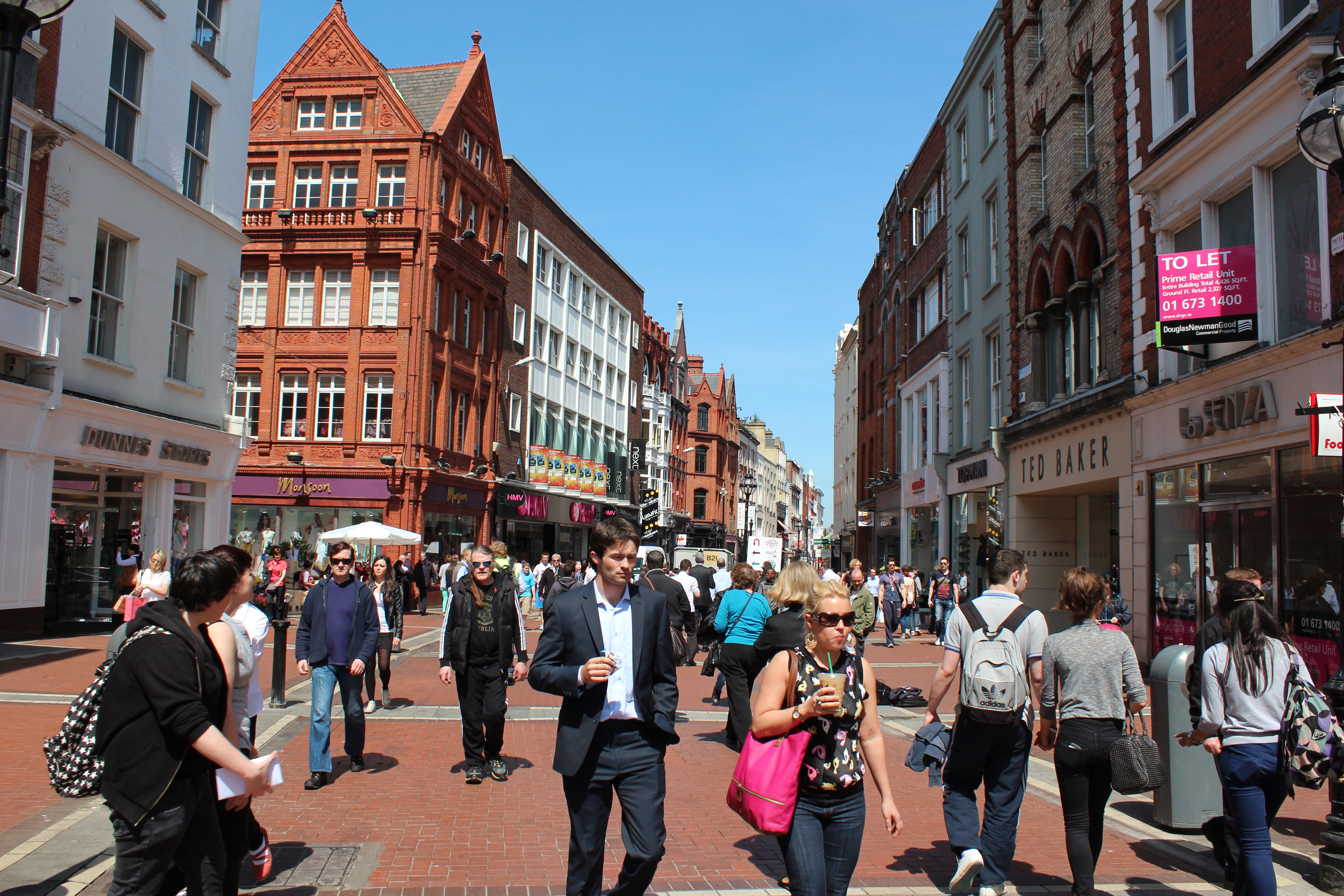
Grafton Street

5 min

Grafton Street is Dublin's pedestrianized shopping spine, famous for its busking tradition that launched careers from Glen Hansard to Bono, its landmark Bewley's Oriental Café of 1927, and retail rents among the highest in Europe.
St Stephen's Green — Fusiliers' Arch
3

St Stephen's Green — Fusiliers' Arch

5 min

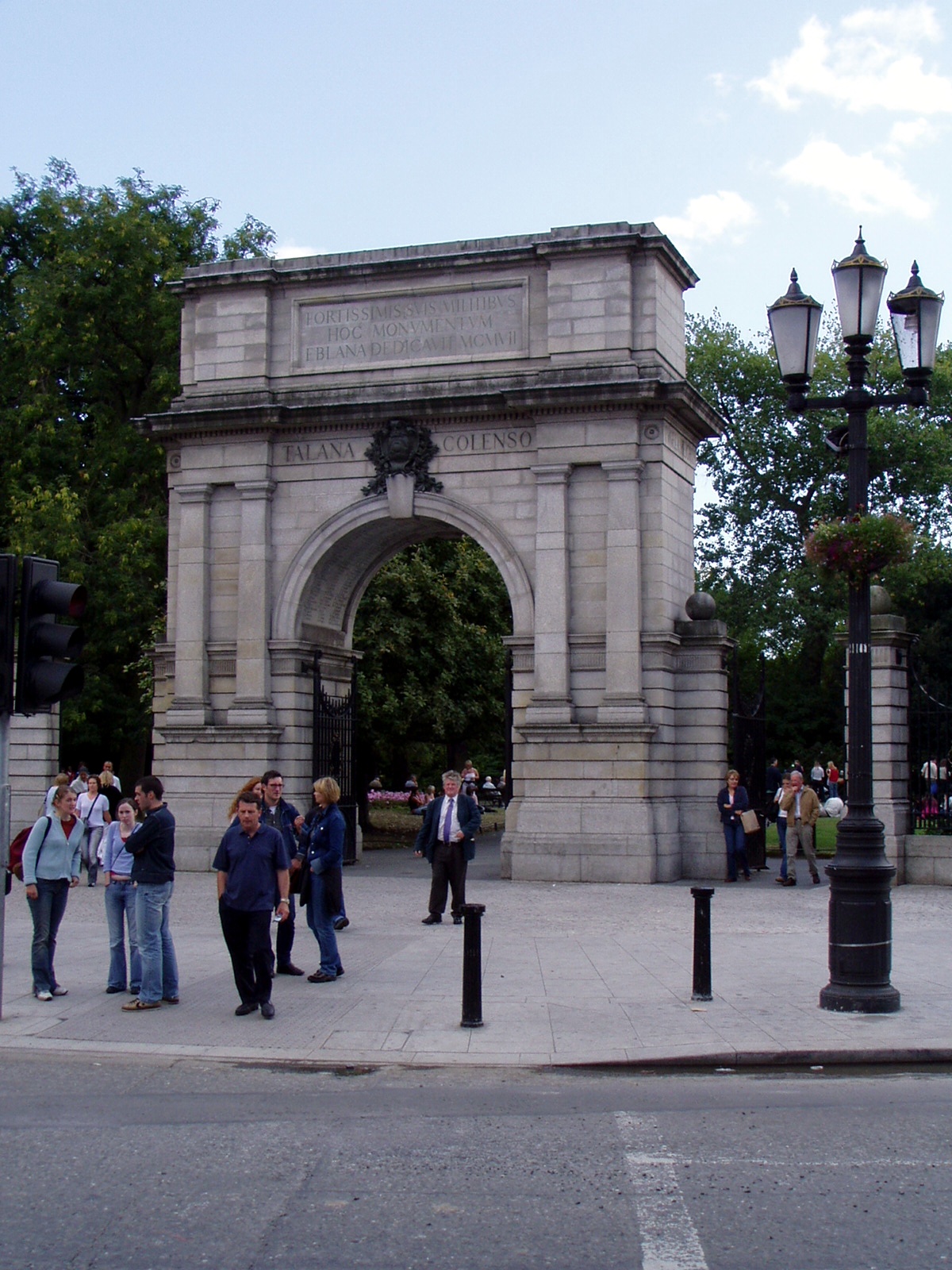
The Fusiliers' Arch (1907), nicknamed 'Traitors' Gate' by nationalists, commemorates Royal Dublin Fusiliers killed in the Boer War, and still bears bullet marks from 1916, when the Irish Citizen Army under Mallin and Markievicz dug trenches in the Green before retreating from Shelbourne machine-gun fire. During that battle, both sides paused fire daily so groundsman James Kearney could feed the ducks.
Merrion Square
4

Merrion Square

5 min

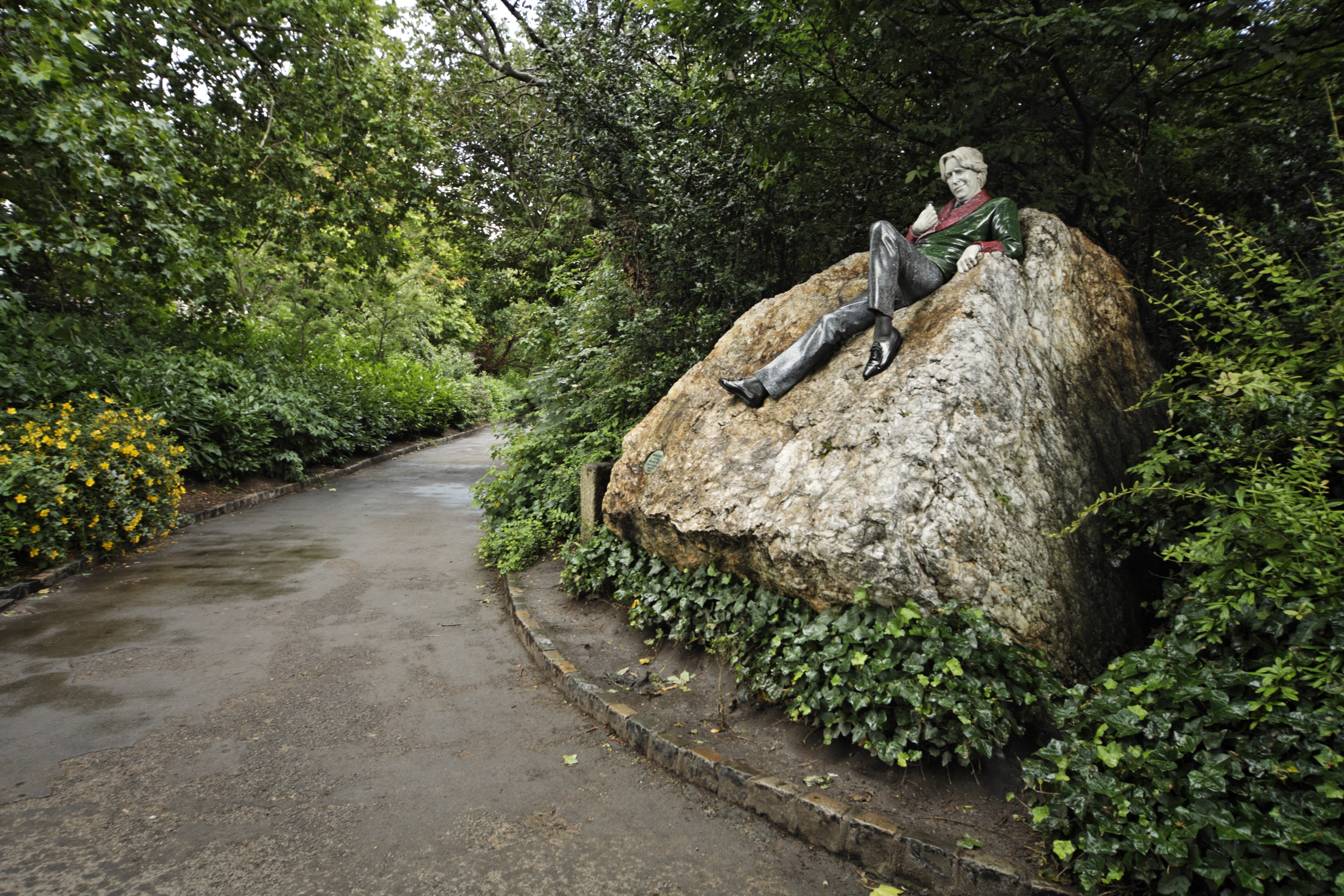
Dublin's finest Georgian square, laid out from 1762, famous for its uniform brick terraces, colourful painted doors, and Oscar Wilde's childhood home at No. 1. Its lawns also hosted Famine soup kitchens in 1847.
Dublin Castle
5

Dublin Castle

5 min

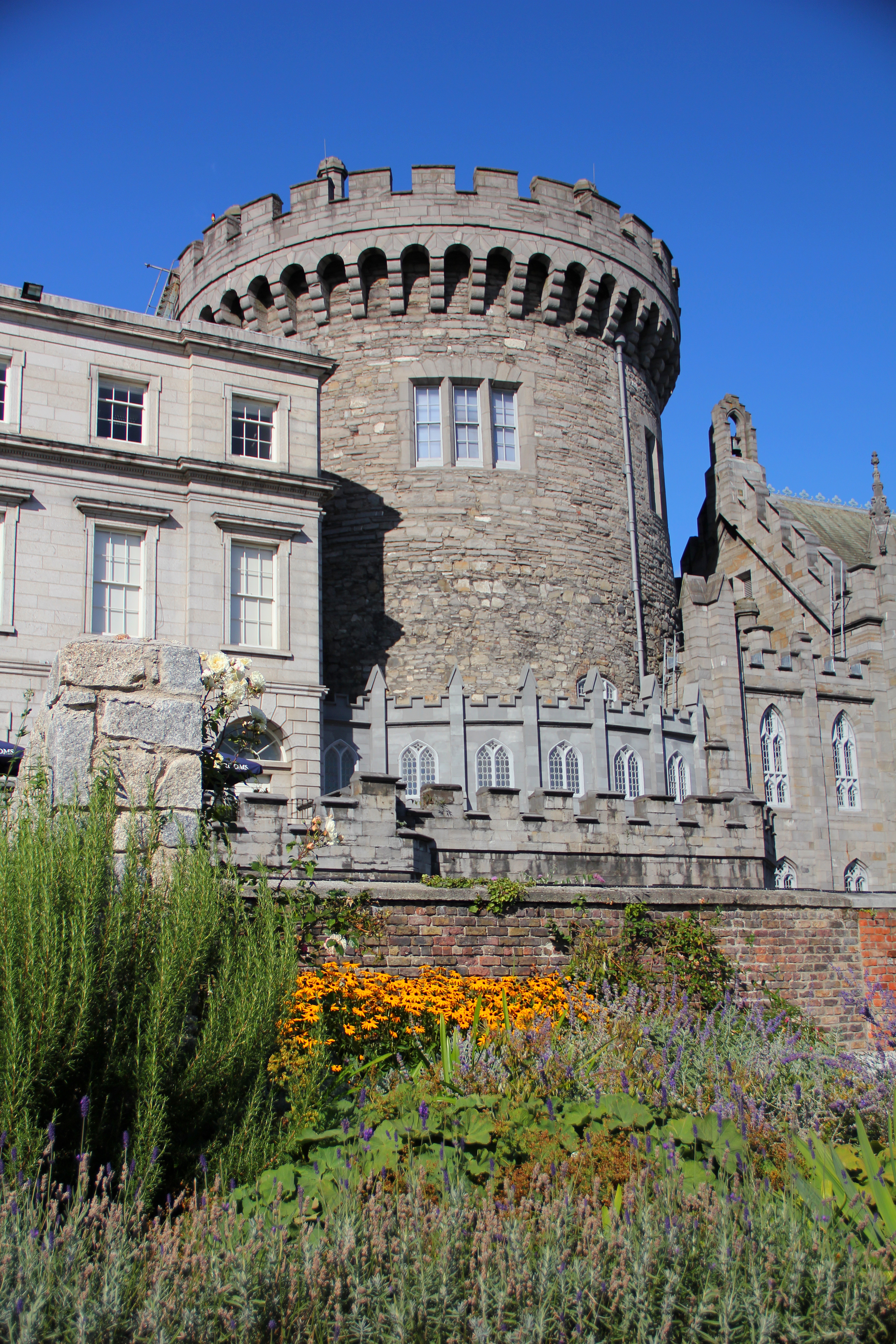
Dublin Castle was the seat of English and British rule in Ireland from 1204 until January 1922, when it was handed over to Michael Collins and the new Irish government. Its Record Tower survives from the medieval fortress, and the black pool (dubh linn) beneath its gardens gave the city its name.
Christ Church Cathedral
6

Christ Church Cathedral

5 min

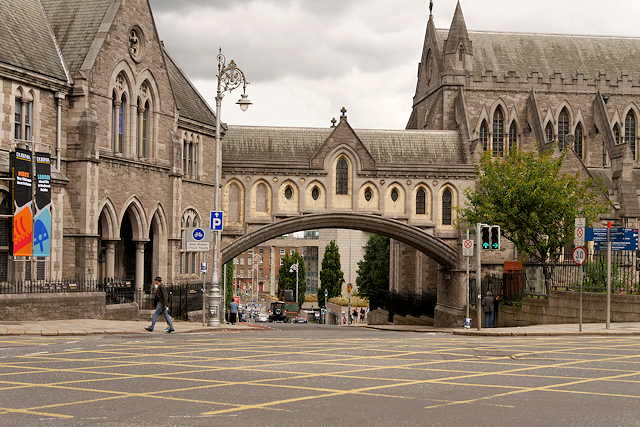
Founded around 1030 by Sitriuc Silkbeard, Dublin's Viking king, and rebuilt in stone by Strongbow and the Normans, Christ Church is the city's oldest building in continuous use. Beneath it runs a vast 12th-century crypt, home to a mummified cat and rat immortalised by James Joyce.
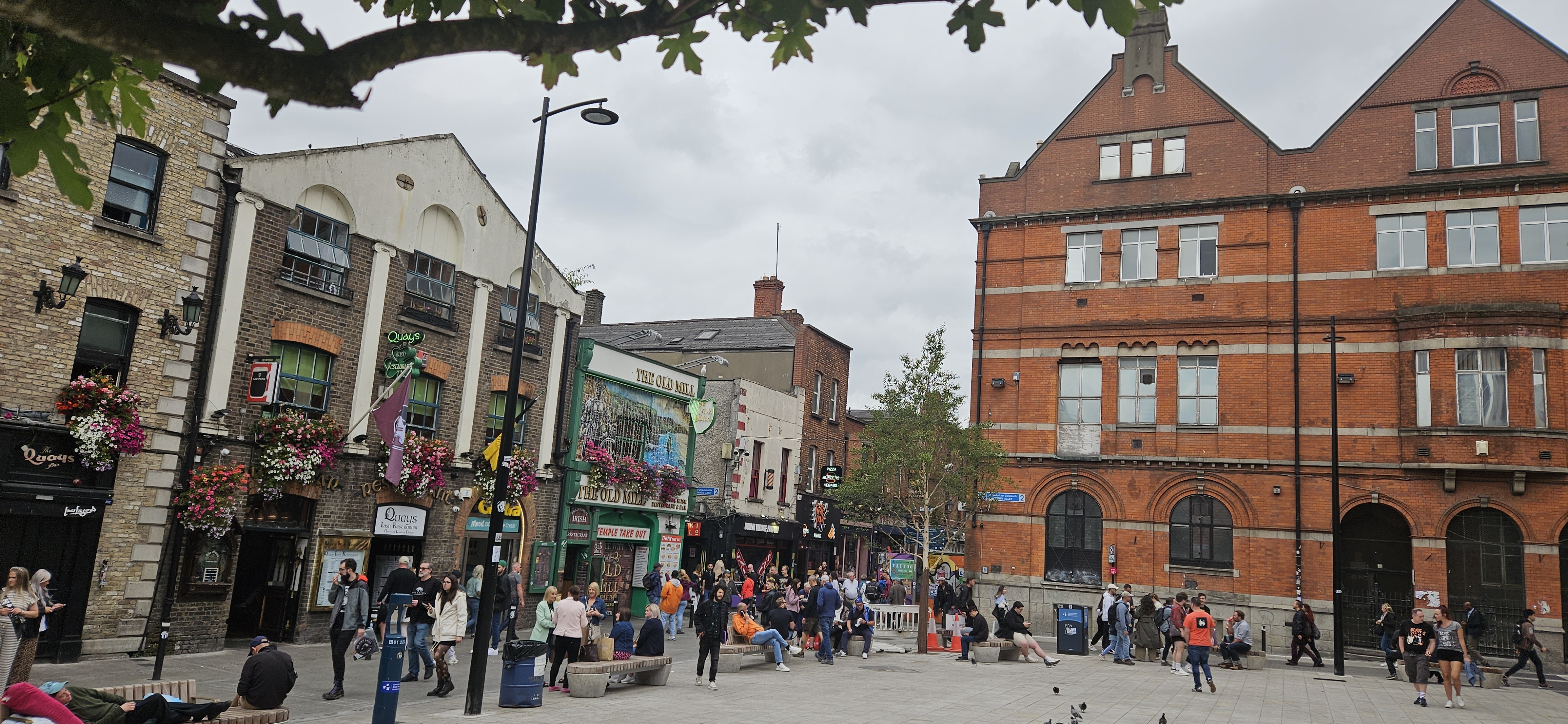
Temple Bar Square
7

Temple Bar Square

5 min

Temple Bar Square is the heart of Dublin's cobbled cultural quarter, a riverside district of galleries, studios and pubs that survived a 1980s plan to flatten it for a bus depot. Its name comes from the Temple family, seventeenth-century landowners, and the old riverside walkway known as a 'bar'.
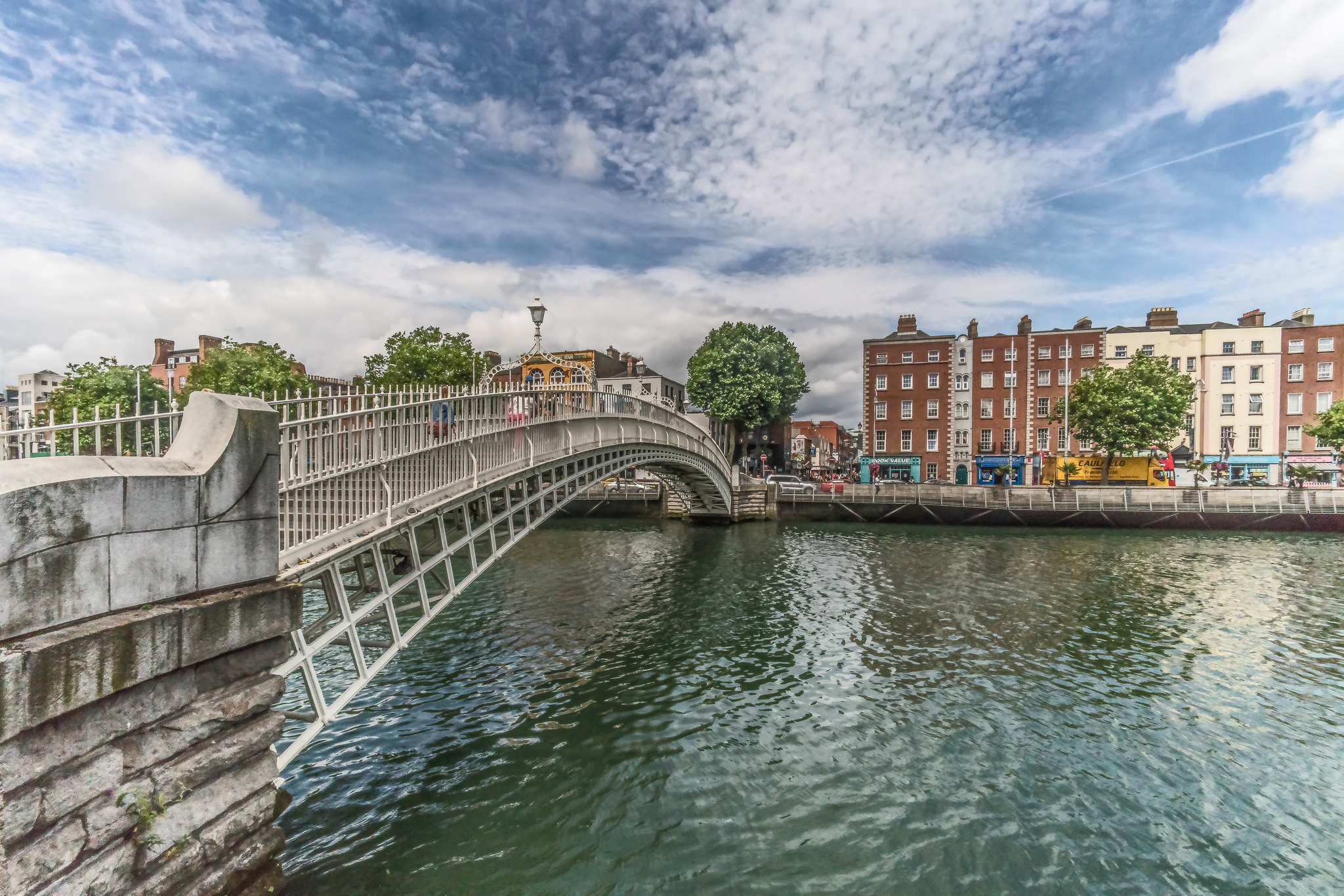
Ha'penny Bridge
8

Ha'penny Bridge

5 min

The elegant cast-iron pedestrian bridge of 1816, named for the half-penny toll charged to cross it until 1919. Officially the Liffey Bridge, it remains Dublin's most photographed river crossing, carrying some 30,000 walkers a day.
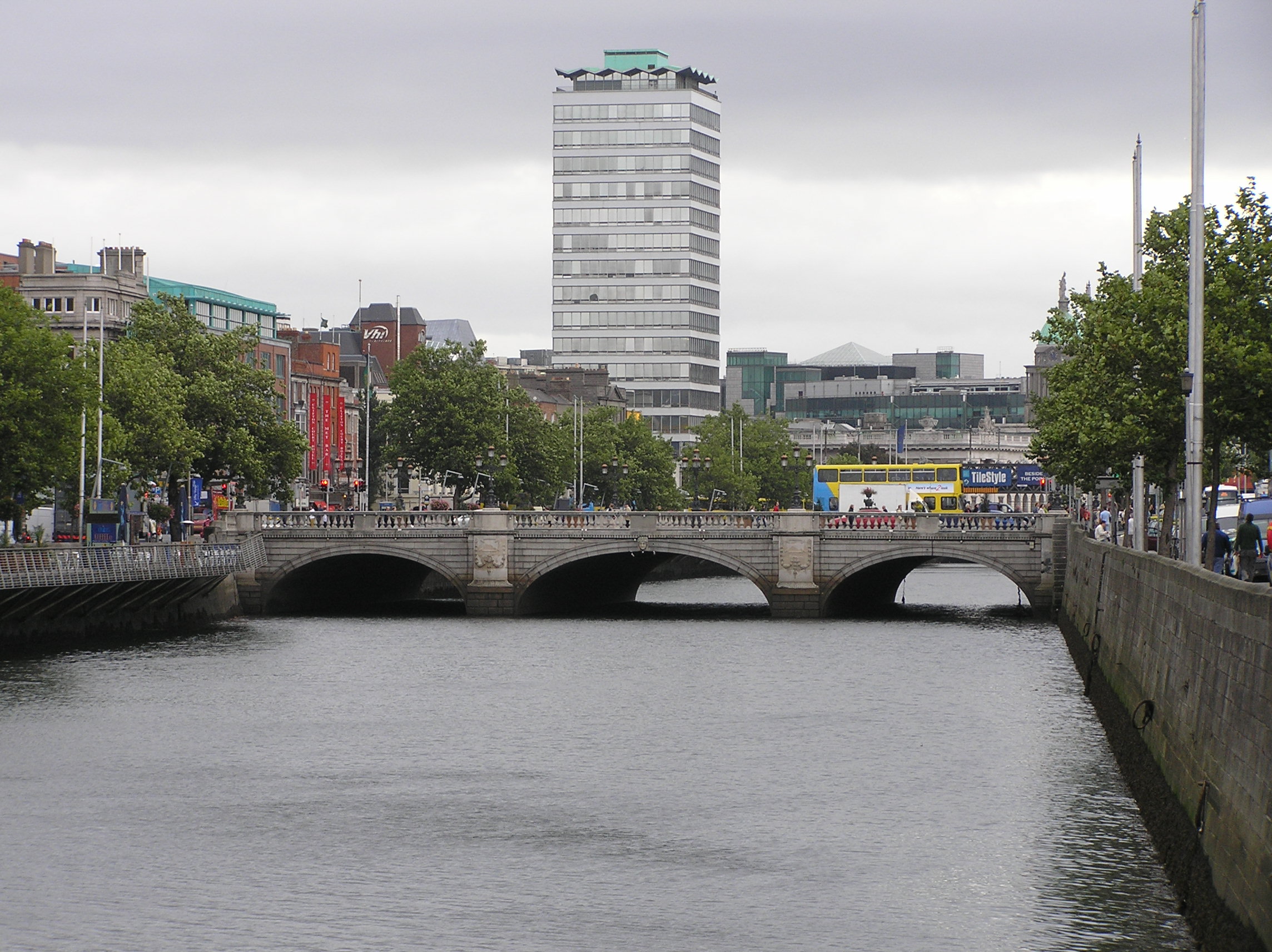
O'Connell Bridge & Monument
9

O'Connell Bridge & Monument

5 min

O'Connell Bridge, rebuilt in 1880 from Gandon's Carlisle Bridge, is famously about as wide as it is long, and leads to John Henry Foley's 1882 monument to Daniel O'Connell, whose winged Victories still carry bullet holes from Easter Week 1916.
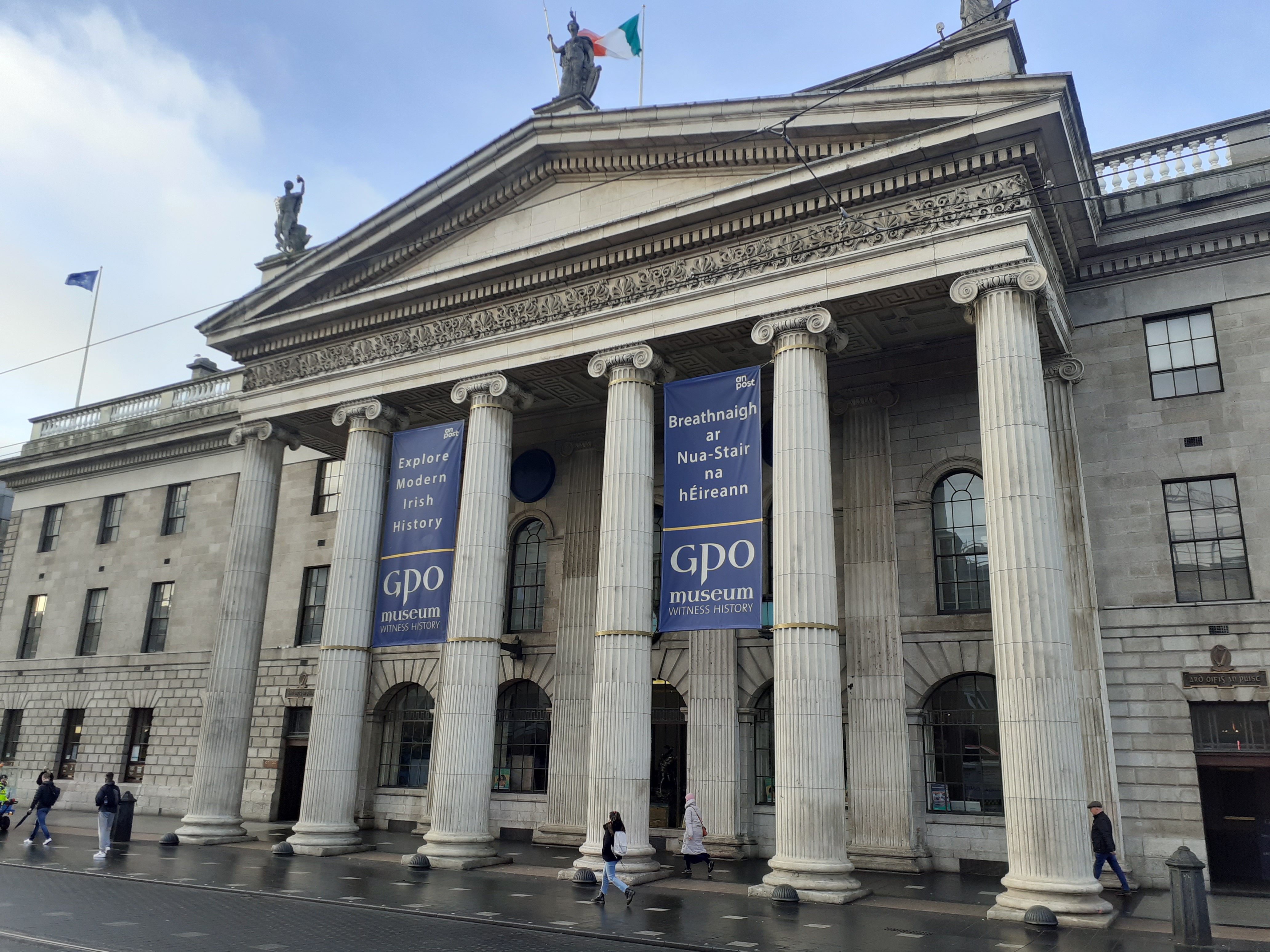
The GPO & the Spire
10

The GPO & the Spire

5 min

The 1818 General Post Office served as headquarters of the 1916 Easter Rising, where Patrick Pearse proclaimed the Irish Republic beneath a portico still scarred by bullets. Beside it rises the Spire, a 120-metre stainless-steel needle on the site of Nelson's Pillar.

A Taste of the Tour

This is the real story from one stop on this walk — every stop has one.

Trinity College Front Arch

Welcome to Dublin, and fair play to you — you've started in the right place. This is College Green, the city's front room: banks that used to be parliaments, trams sliding past, students and seagulls arguing over territory. If Dublin ever wanted to impress a visitor, this is where it would stand you. Which is exactly why we're here. Over the next couple of hours we'll cover eleven stops and a bit over four kilometres, and here's the thread to hold on to: every stop on this walk is a place where Dublin decided what it wanted to be. A university. A market street. A park. A castle. A cathedral. A bridge. And at the very end, a post office — which sounds like the flattest finale in the history of walking tours, until you learn what happened under its columns one Easter Monday. That story waits at the far end of O'Connell Street. We'll earn it first. So — every good story starts with a threshold, and Dublin's is right in front of you. Stand back from the traffic for a second and look at the long grey face of Trinity College — the pale eighteenth-century front, the blue clock above the entrance, and the two bronze gentlemen flanking the gate: Edmund Burke on the left, Oliver Goldsmith on the right, both graduates, both looking politely unimpressed by the buses. This is College Green, and for four centuries this spot has been Dublin's front hall — the place where the city greets you, sizes you up, and decides whether to let you in. Now walk through the Front Arch, and do it slowly, because this is one of the best free special effects in Dublin. You pass under Regent House through a dim, timber-vaulted passage — worn flagstones, wooden doors thick enough for a castle — and the roar of College Green simply switches off. Ten steps, and you're standing on the cobbles of Parliament Square: green lawns, grey stone, and a quiet so sudden it feels arranged. Students here call the entire world outside the gate 'town', as if this arch were a border crossing. In a way, it always was. Trinity was founded in 1592 under Elizabeth I, on land taken from the dissolved monastery of All Hallows. And let's be honest about the original job description: this was not built as a gift to the Irish. It was a fortress of the Protestant Reformation, a university meant to train loyal clergy and administrators, and to stop young Irishmen from drifting off to Catholic universities in France and Spain. Elizabeth wanted an Ireland that thought in English, prayed Protestant, and answered to London. Trinity was the machine built to produce it. Which brings us to the iron underneath the elegance. For its first two centuries, Catholics — the overwhelming majority of this island — were effectively shut out: they couldn't take degrees here until 1793, and fellowships and scholarships stayed closed to them far longer. Then comes the twist nobody expects. When the British restrictions finally fell away, the Catholic Church built its own wall: for much of the twentieth century, the Archbishop of Dublin declared it a mortal sin for a Catholic to study at Trinity without his written permission. That ban wasn't lifted until 1970. Within living memory, a Dubliner needed a bishop's note to walk through the gate you just strolled through with an ice cream. Ahead of you in the square stands the Campanile, the granite bell tower raised in 1853, planted almost exactly where the old monastery church once stood — so the bell still rings over holy ground, whether anyone planned it that way or not. And here is the superstition every student lives by: never walk beneath it while the bell tolls, or you'll fail your exams. Watch for a moment and you'll see it working — a tide of students parting neatly around the tower like water around a rock, while tourists wander straight underneath, cheerfully flunking degrees they never enrolled in. Graduates pass under it on graduation day, when it's finally safe. The roll-call of people who came through this gate is absurd for one small campus: Jonathan Swift, who went on to skewer an empire with a pen; Burke and Goldsmith, the two lads out front; Oscar Wilde, whom you'll meet properly later on this walk; and Samuel Beckett, who also played first-class cricket for the university — making him the only Nobel Prize winner to appear in Wisden, cricket's bible. Behind those walls sits the Book of Kells, the 1,200-year-old illuminated gospel book that may be the most beautiful object in Ireland. A word to the wise: don't just wander up — book a timed ticket online, days ahead in summer, or you'll spend your morning studying the back of someone's rain jacket. Our Literary Dublin tour gives the book, and the breathtaking Long Room library above it, the slow attention they deserve; today we tip our hat and move on. Because here is what this walk is really about: every stop on it is a place where Dublin decided what it wanted to be. Right here, in 1592, someone decided Dublin should be an English, Protestant capital — and built a university to enforce it. The city took that university and, over four stubborn centuries, made it thoroughly Irish anyway. Watch for that pattern all day — power builds something to control Dublin, and Dublin quietly repurposes it — because this walk ends at another institution across the river, a post office of all things, where Dublin's long argument about what it wanted to be finally caught fire.

Nearby Cities

Back to Dublin Tours

Cookie Consent

We use cookies to analyse site traffic and improve your experience. You can choose to accept or reject analytics cookies. Learn more