Bermeo: The Fishermen's Capital
Bermeo · Spain

Bermeo: The Fishermen's Capital

Bermeo, Spain
85
Duration (min)
1.3
Distance (km)
9
Stops
Medium
Difficulty

Description

Bermeo is the great fishing town of the Basque Country, and this loop reads its thousand-year seafaring story in stone. Climb from the tiered, colour-washed old harbour through the last surviving gate and tower of a medieval capital of Biscay, up to a clifftop of whalers and a lost cathedral, then back down to the whaling galleon and the tuna fleet that still work the sea today.

Highlights

The Puerto Viejo — Bermeo's tiered, brightly painted old fishermen's harbour The Torre Ercilla and its Fishermen's Museum, the last of thirty medieval towers Santa Eufemia, the oath-church where kings swore to uphold Biscay's fueros The Atalaya clifftop — a whaling mural and the ghost of a lost Gothic cathedral The Aita Guria whaling galleon beside today's 'Tuna World Capital' fleet
Tour Stops

Puerto Viejo (Portu Zaharra)
1

Puerto Viejo (Portu Zaharra)

9 min

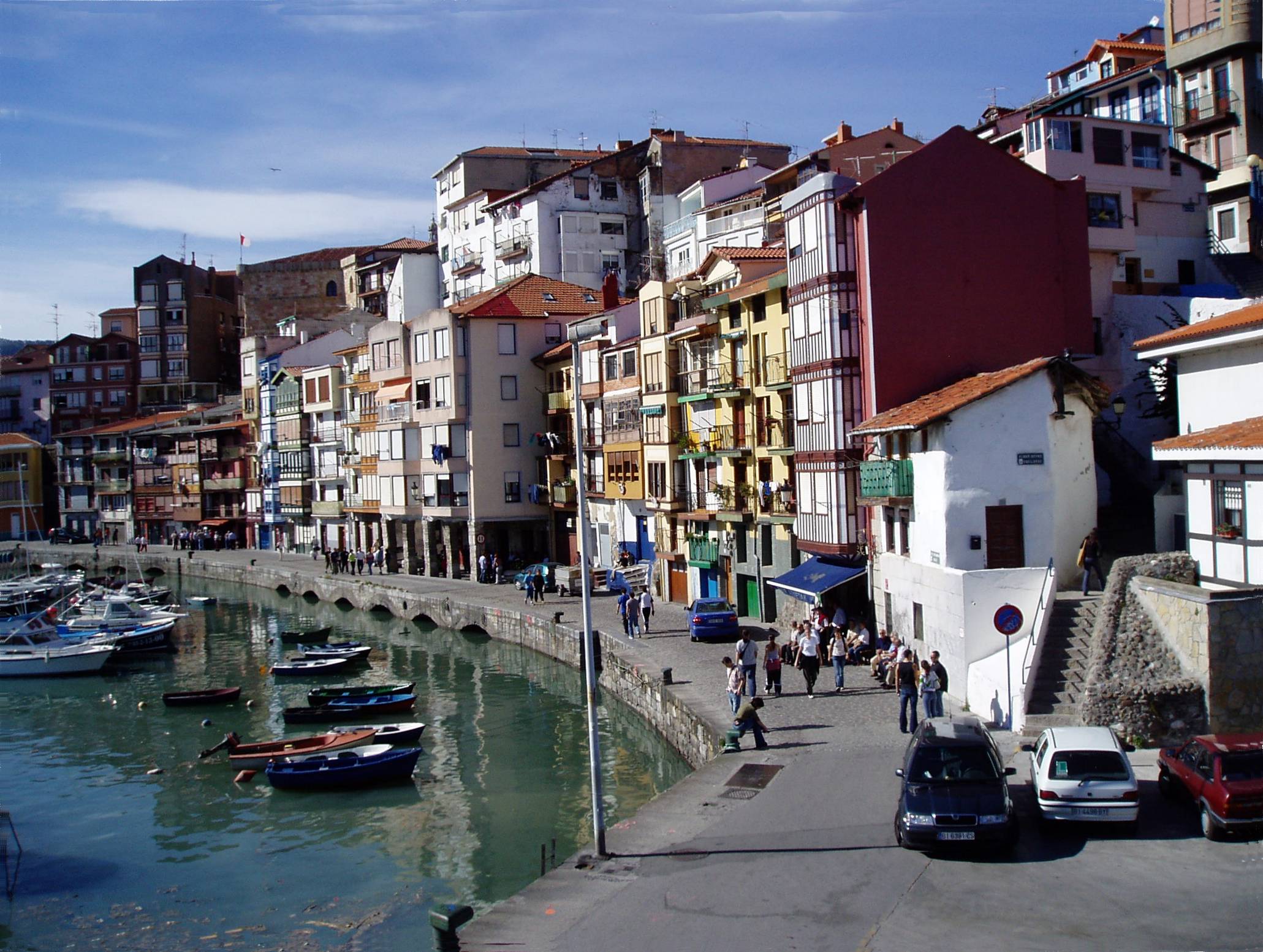
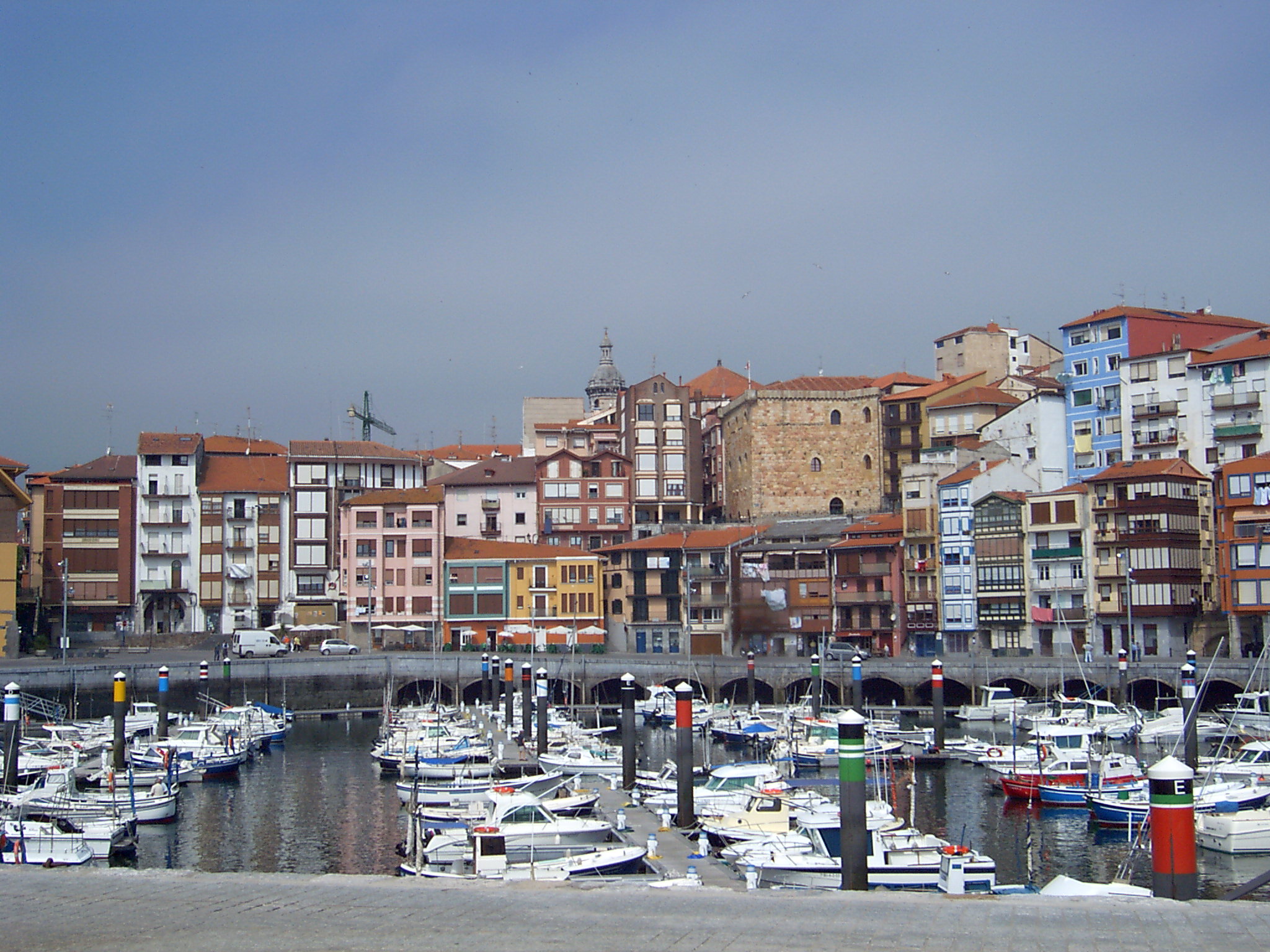
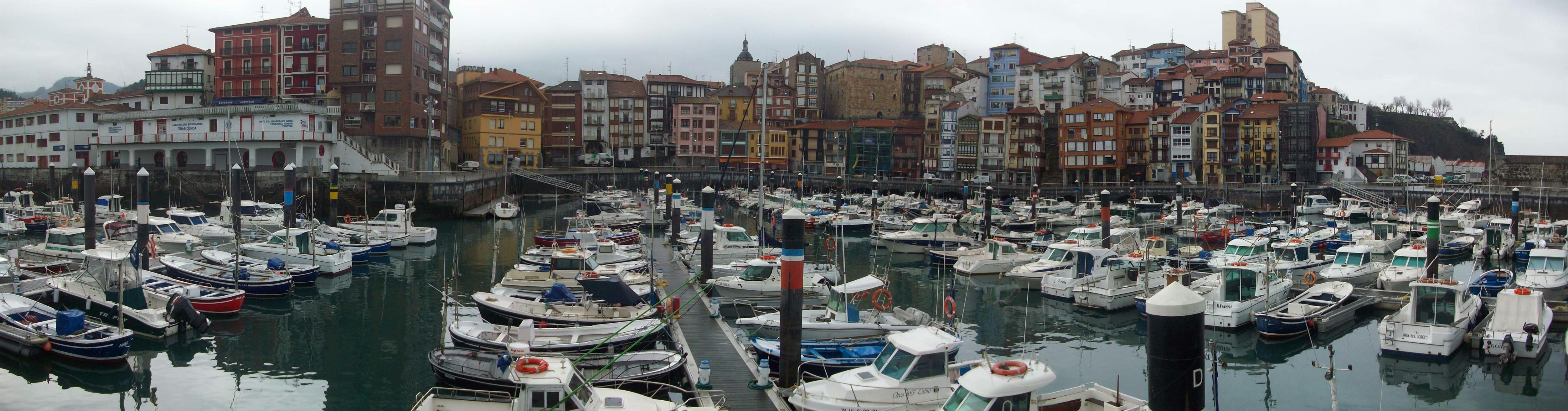
The postcard heart of Bermeo, a small medieval harbour ringed by tall, brightly-painted fishermen's houses stacked up the rock. It holds Biscay's oldest fountain, the 16th-century Tres Cantos, and quay sculptures honouring the town's arrantzales.
Portal de San Juan
2

Portal de San Juan

6 min

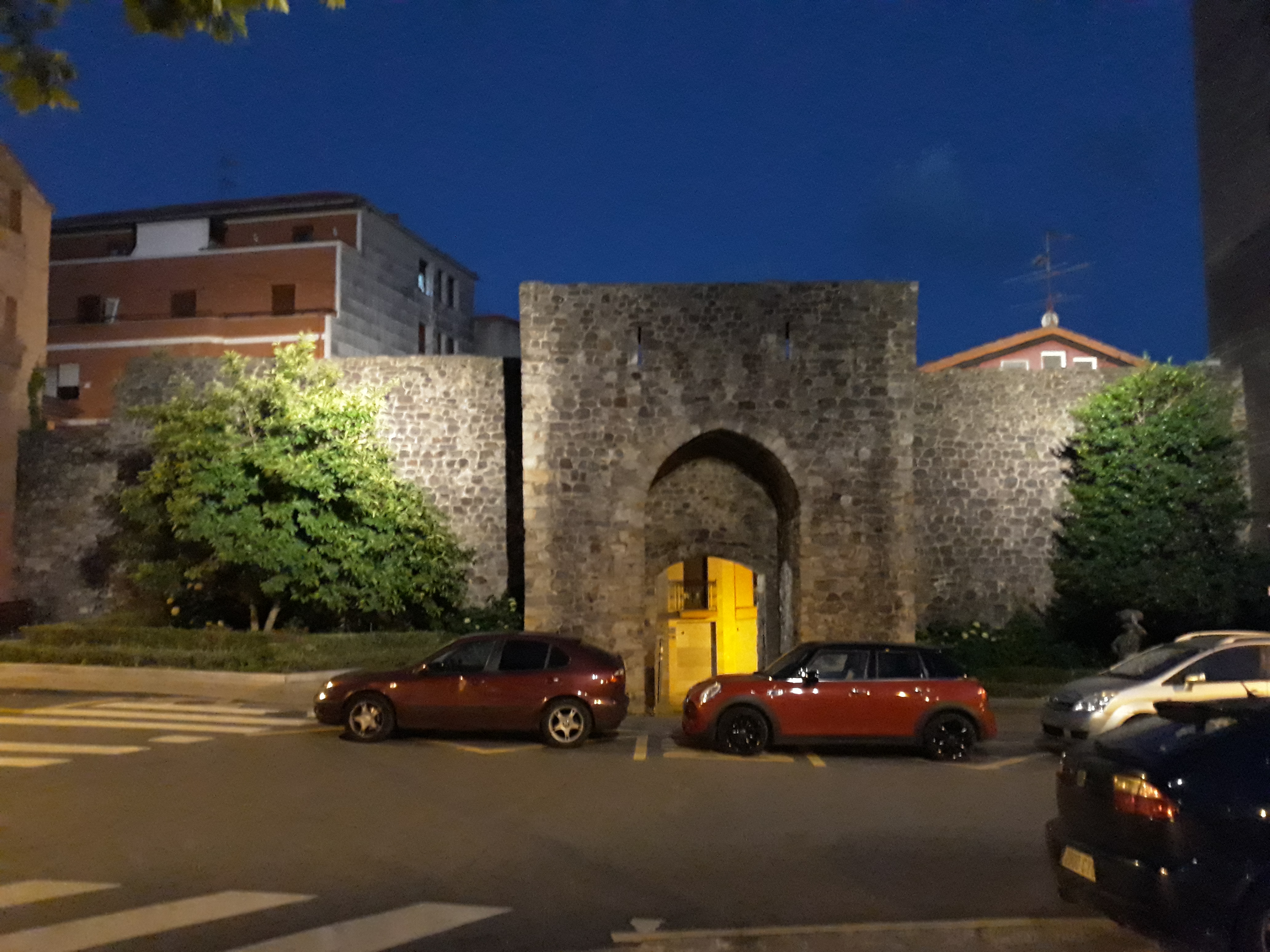
The last surviving gate of Bermeo's 14th-century walls: of seven gates and thirty tower-houses, only this ogival arch remains. It is the emblematic threshold into the old town, and its name links Bermeo to the island hermitage of San Juan de Gaztelugatxe.
Torre Ercilla — Arrantzaleen Museoa
3

Torre Ercilla — Arrantzaleen Museoa

8 min

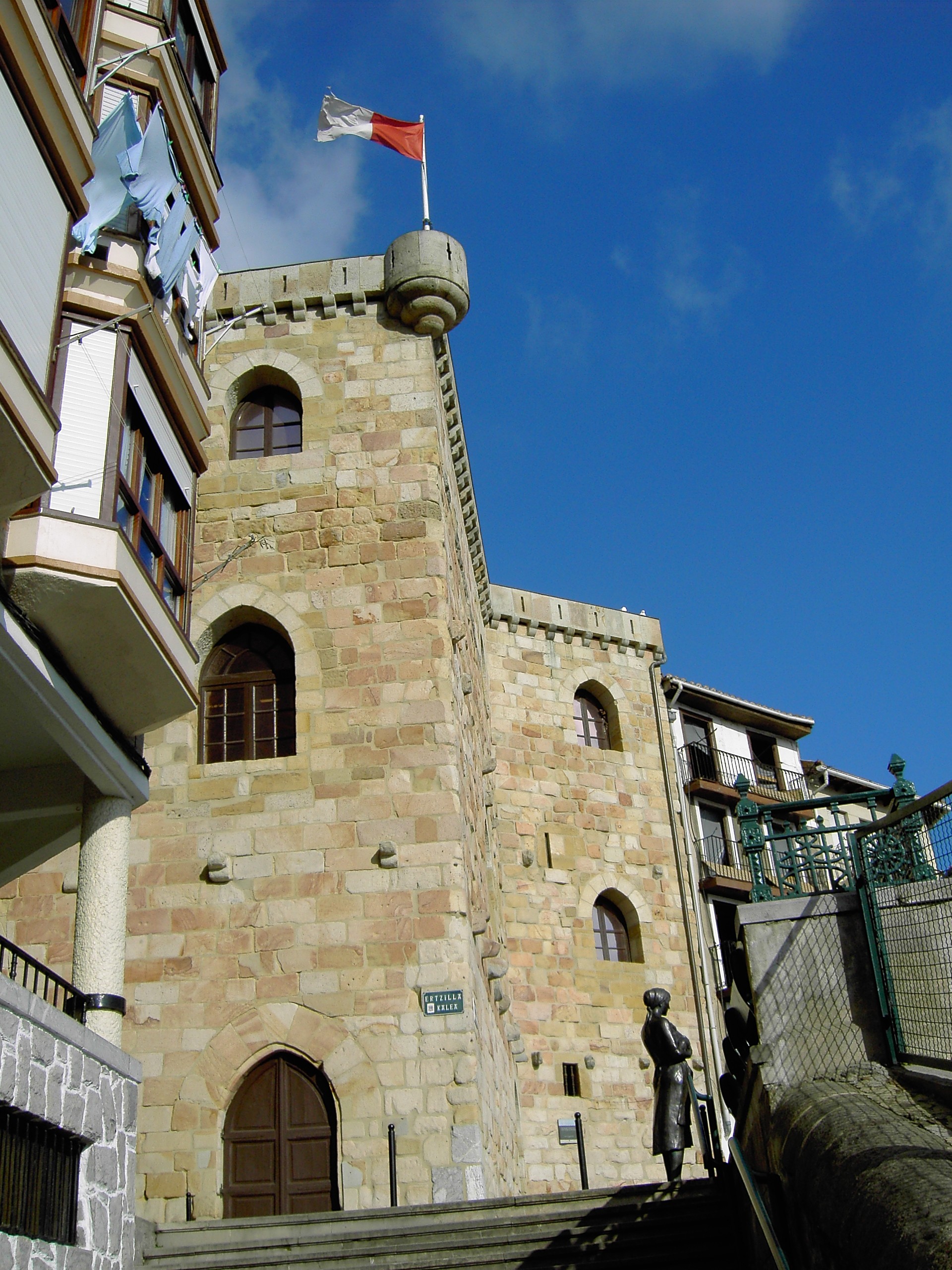
The sole survivor of Bermeo's roughly thirty medieval tower-houses, this late-15th-century Gothic tower built by the Ercilla merchant family now holds the Arrantzaleen Museoa, the Fishermen's Museum — one of very few in the world devoted to the life of the Basque fisherman.
Mirador de Gaztelu
4

Mirador de Gaztelu

6 min

A railing-side viewpoint above the Puerto Viejo where all three of Bermeo's harbours — old, fishing and commercial — line up in a single glance, looking out to Izaro island and along the coast toward San Juan de Gaztelugatxe. It is the tour's one spot to see the sea as the town's spine whole, and to tell the fishermen's sea-faith before the bonito season.
Iglesia de Santa Eufemia
5

Iglesia de Santa Eufemia

8 min

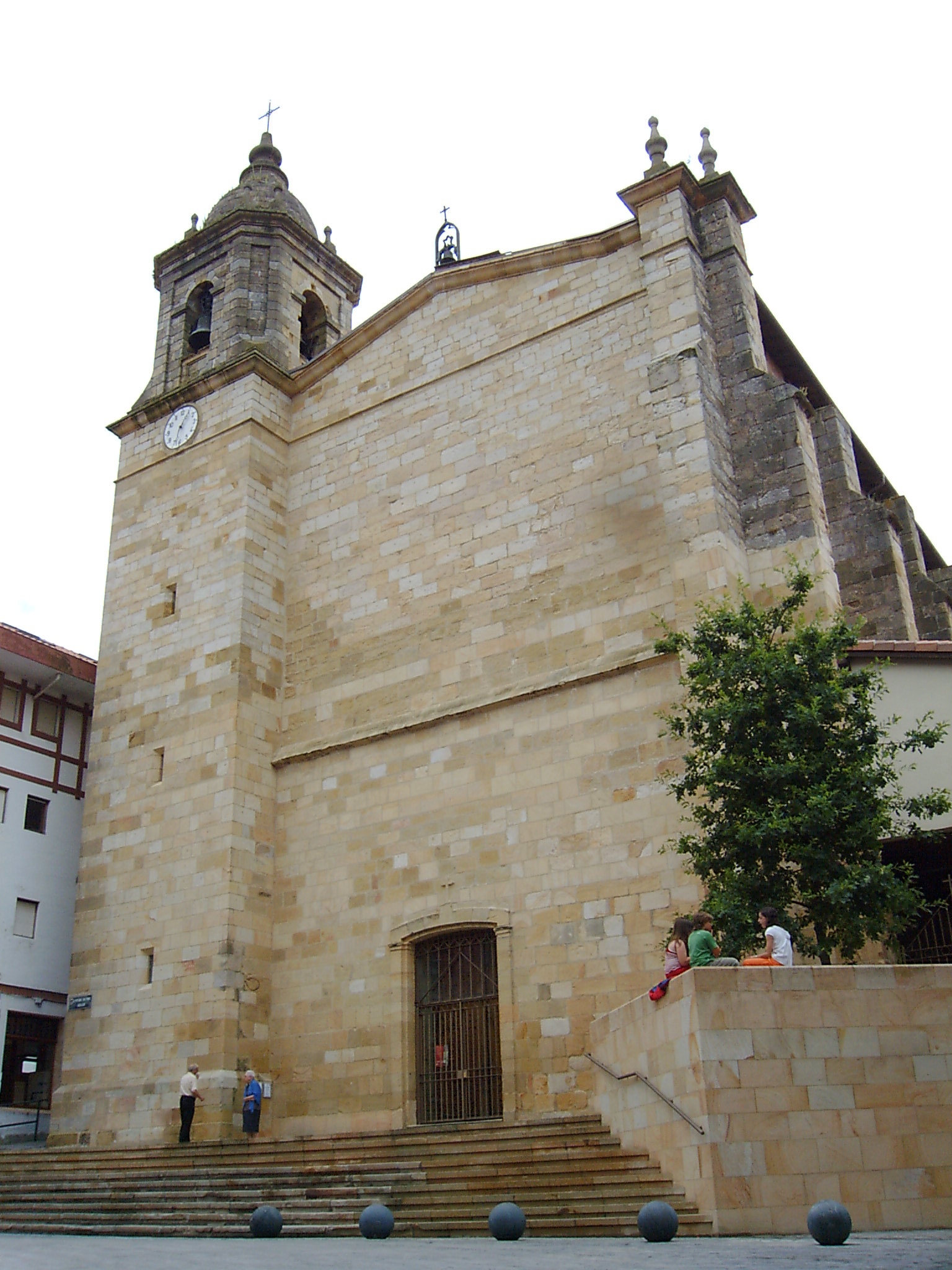
Bermeo's oldest church, a 13th-century late-Gothic temple famous as an iglesia juradera, or oath-church, where the Lords of Biscay and the Kings of Castile swore to uphold the fueros. That ceremony is what marked Bermeo as the capital of Biscay, a title it held from 1476 to 1602.
Parque de la Atalaya
6

Parque de la Atalaya

7 min

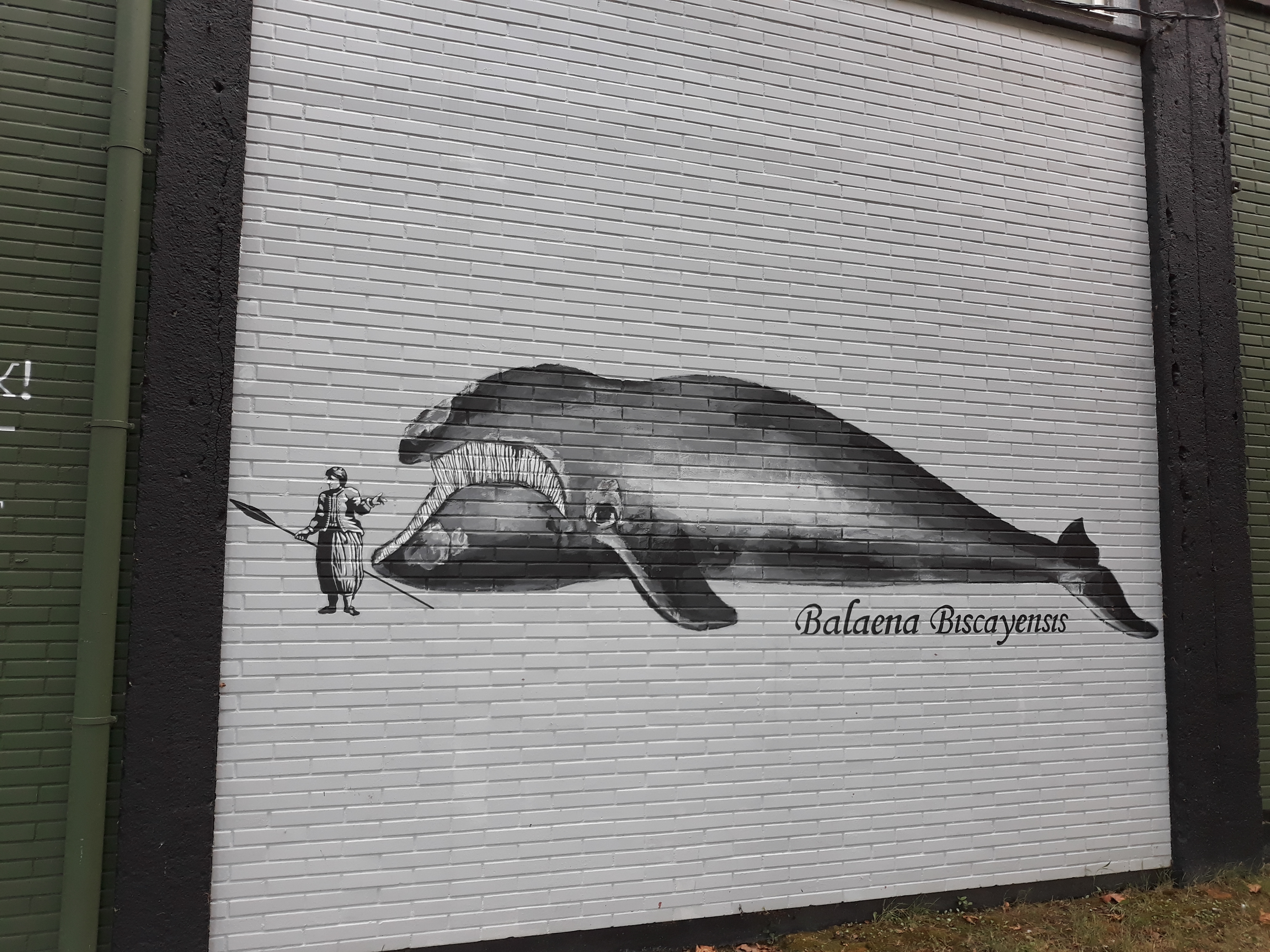
The clifftop park above Bermeo, where a 60-metre mural of fifteen images tells the town's medieval whaling story and the bay opens toward the islet of Izaro. It stands on the site of Santa Maria de la Atalaya, a vast Gothic church around 90 metres long that presided over the town from the cliff until it was demolished in 1782-83.
Plaza Sabino Arana & Santa María
7

Plaza Sabino Arana & Santa María

6 min

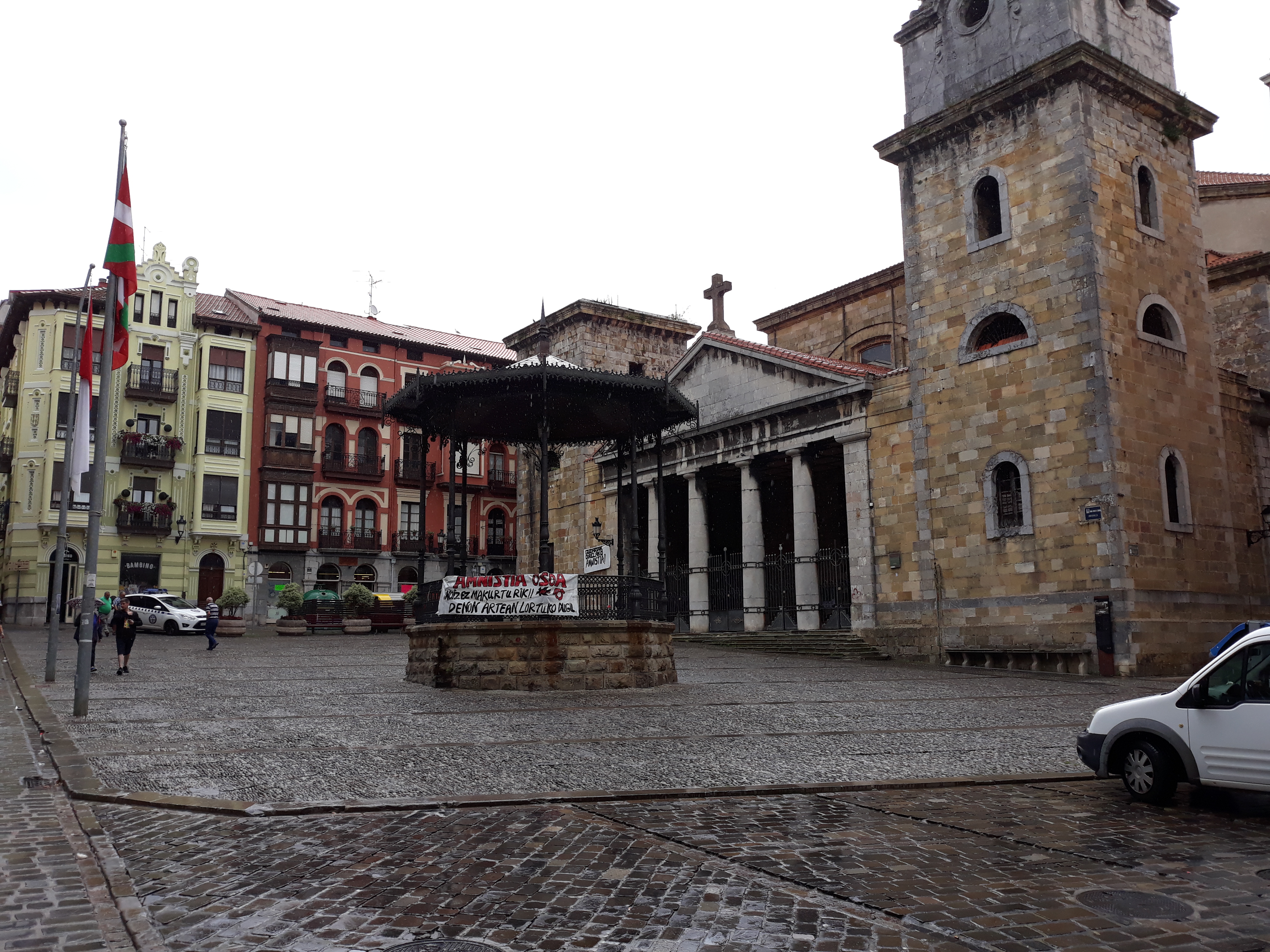
Plaza Sabino Arana is Bermeo's civic heart, framed by its bandstand and Baroque town hall, and dominated by the great neoclassical church of Santa Maria (Andra Mari). Built in the mid-1800s, this church inherited the parish role of the enormous Gothic Santa Maria de la Atalaya that once presided over the clifftop until its demolition in 1782-83.
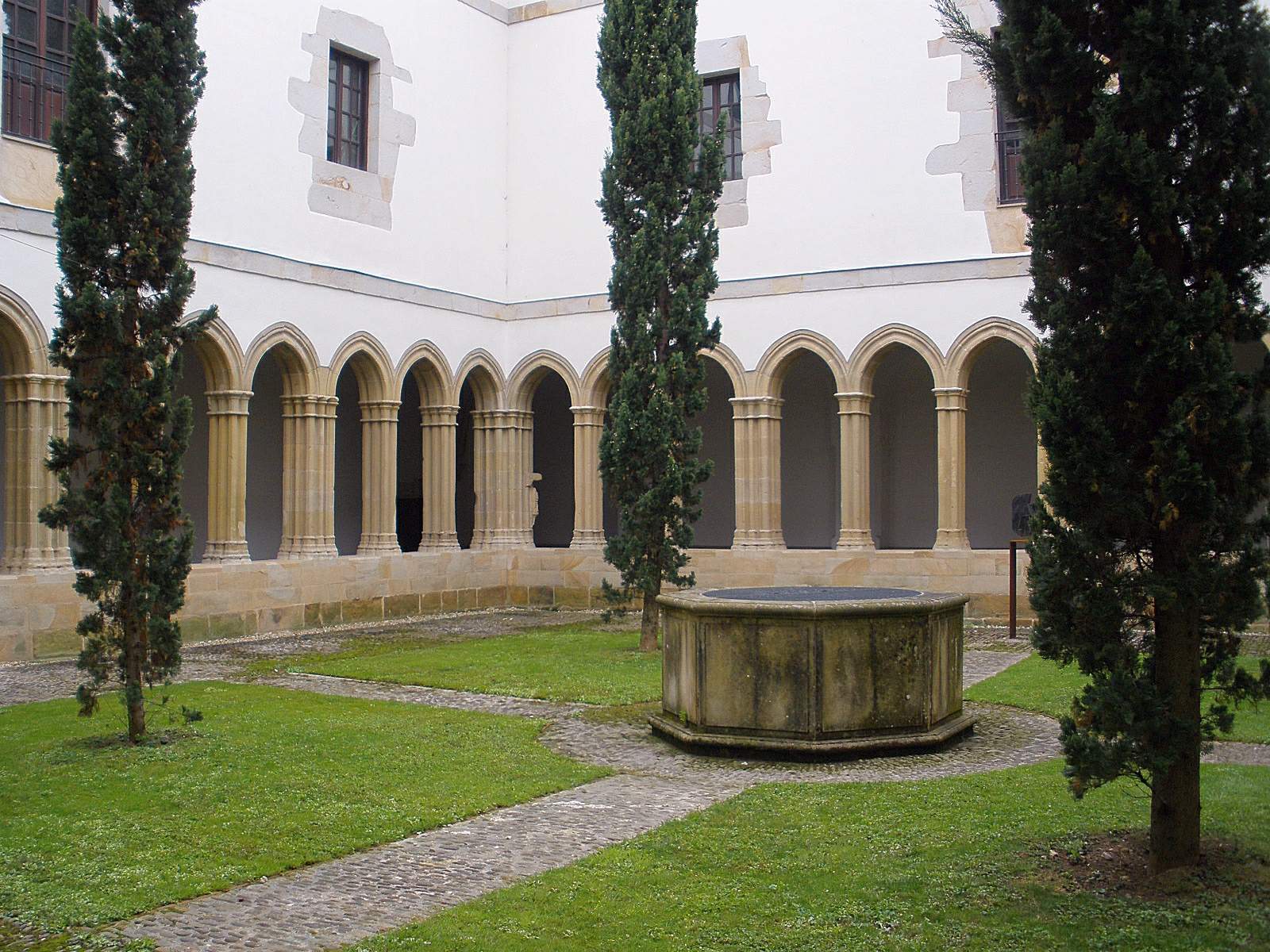
Claustro de San Francisco
8

Claustro de San Francisco

7 min

The 14th-century Convento de San Francisco holds the oldest cloister in Biscay, built just outside the medieval walls because the mendicant friars could not fit inside the crowded town. Its pointed arches and carved corbels of praying friars later sheltered a market until the floods of 1983.
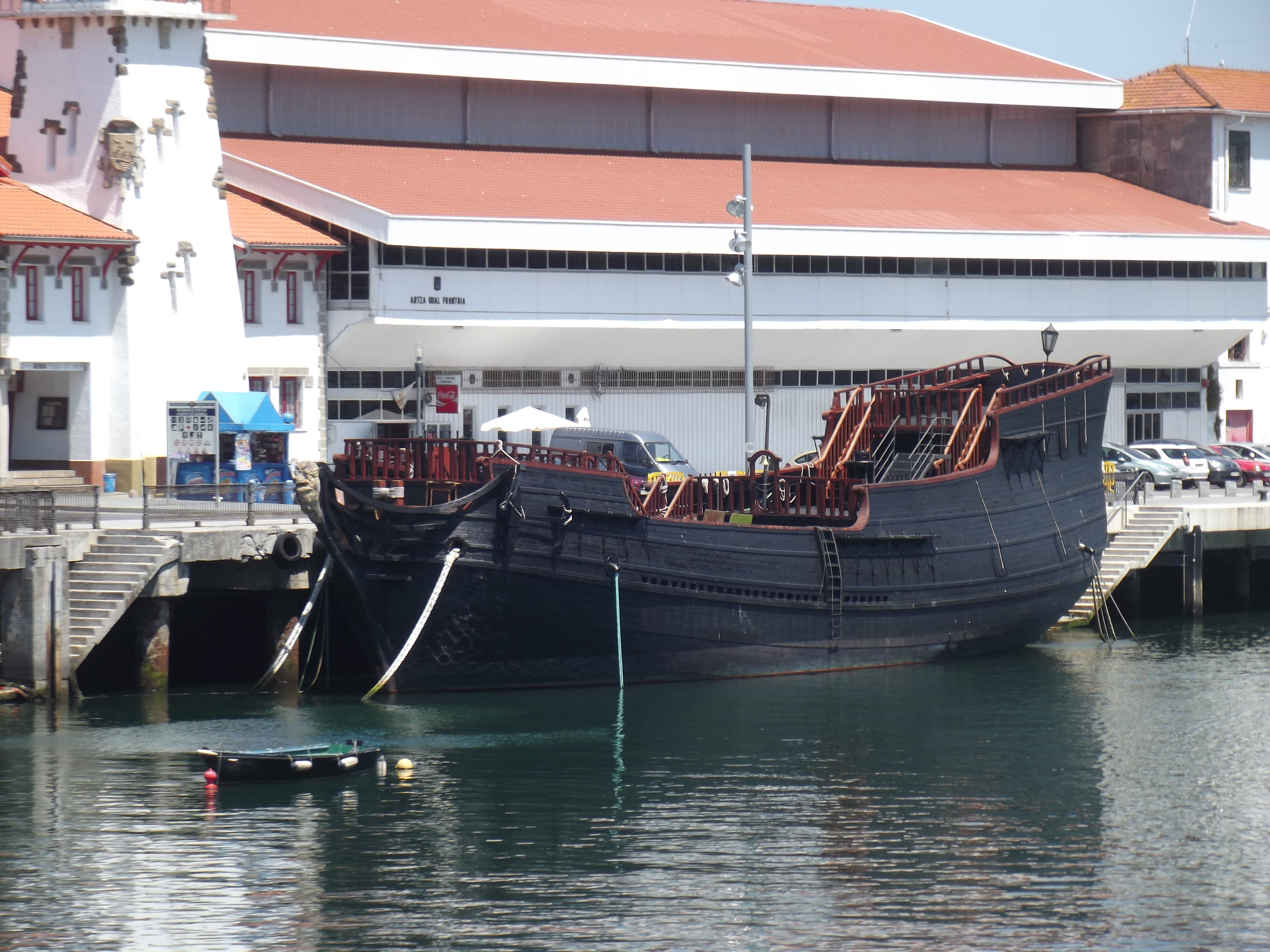
Aita Guria & the Lamera Waterfront
9

Aita Guria & the Lamera Waterfront

8 min

On the Lamera seafront stands the Aita Guria, a full-scale replica of a triple-masted 17th-century Basque whaling galleon, now a whaling interpretation centre. Beyond it lies the New Port and the modern tuna and anchovy fleet that makes Bermeo the self-styled 'Tuna World Capital' and keeps the town alive today.

A Taste of the Tour

This is the real story from one stop on this walk — every stop has one.

Puerto Viejo (Portu Zaharra)

Welcome to Bermeo, and welcome to the Puerto Viejo, the old port the locals call Portu Zaharra. Stand here a moment and just take it in. There is no better place in the whole town to begin, because this little horseshoe of water is where everything started, and honestly, it is still the most beautiful corner we have. Look up at those houses climbing the rock in front of you, tall and narrow, painted every colour you can name, blue, ochre, deep red, green, stacked one on top of another like they are all leaning in to watch the boats. That is not a decorator's idea. Those are fishermen's houses, arrantzale houses, built tall and thin because there was never enough flat ground down here by the water, so families went up instead of out. Here is the thing I want you to carry with you for the next hour or so, because it explains this entire town. The sea made Bermeo. Not helped it along, not gave it a nice living, made it. Every stone we will look at today, every tower and church and quay, was built by people who lived from this water, and had done for a thousand years before you and I turned up. Over the next couple of hours we are going to climb up out of this harbour, past the one medieval gate and the one tower left of a walled town that once had seven gates and thirty towers. We will stand at a viewpoint where you can see three ports at once, we will step into the church where the kings of Castile swore to respect Basque law, the oath that made little Bermeo the capital of all Biscay. We will hear about whalers, and we will finish back down by the water beside a wooden galleon, next to the boats that still go out today. But it all begins right here, with the smell of salt and diesel and the sound of rope against metal. Now look down at the water. Notice how small and how sheltered this basin is, tucked in behind the rock so the swell can't reach it. That is exactly why the first fishermen chose this spot. For centuries this was the working port, the place where the boats came in heavy with hake and anchovy and tuna, where the whole town came down to unload and mend nets and haggle over the catch. The bigger commercial harbour you may have seen on your way in is modern. This one is medieval, and when you stand here you are standing where Bermeo has stood since the Middle Ages. Let me show you something most visitors walk straight past. Somewhere along this old quay, tucked into the stonework, is a fountain called the Tres Cantos, the three-sided fountain. It doesn't look like much, and that is exactly why it is a treasure. It was built in the sixteenth century, and it is the oldest fountain in all of Biscay. Think about what that meant for a fishing town. Fresh water. Before a boat could leave for days out on the Bay of Biscay, it needed water, and this is where they filled the barrels, the fishing boats and the merchant ships alike. The townspeople drew their drinking water here too, for hundreds of years. Look for the two carved shields on it, one is the coat of arms of Bermeo, and the other is the shield of the Lordship of Biscay, the old dominion this town once led. A humble little fountain, and yet it carries the arms of a whole province. That tells you something about how important Bermeo once was, and we will come back to that story higher up the hill. Now let your eye travel around the quay to the sculptures, because they are not decoration either, they are the town telling you who it is. There is a striking one you can hardly miss, a great curling wave of rusted steel that rises up several metres tall. It is called Olatua, which simply means the wave in Basque, and it was made by Néstor Basterretxea, a local artist, one of the great Basque sculptors. Stand in front of it and feel how it moves, how a cold sheet of steel somehow becomes water rearing up. And then look for another figure, quieter, more human, a fisherman coming home. That one is called Itzulera, the return, or the returning fisherman, by the sculptor Castor Solano. I always find that one the most moving of the two, because for a fishing family the return was everything. The Bay of Biscay is one of the roughest stretches of water in Europe. Men went out, and not all of them came back. A sculpture of a fisherman returning home is not sentimental here. It is a prayer in bronze, a thank you to the sea for giving them back. And that word, arrantzale, is one I want you to know, because you will hear me say it all day. Arrantzale is the Basque word for fisherman, and in Bermeo it is not a job, it is an identity, a whole way of living. It shaped how these houses were built, how the streets curl and climb, how the year was divided by which fish were running, when to sail and when the storms would keep you home. It shaped the faith too, because when your husband or your son is out in that bay, you pray, and Bermeo has always prayed hard. The grit and the faith of the arrantzales is the soul of this place, and you will feel it in every stop we make. Stand here for one more second and look out past the mouth of the harbour to the open sea. That same water, that exact same sea you are looking at right now, is where we are going to end our walk in a little while, down at the working port, where the modern tuna boats tie up beside a full-size wooden whaling galleon. I mention it now because I want you to notice something over the course of the morning. We are going to climb up through a thousand years of history, medieval walls and oath-churches and clifftop chapels, and at the very end we are going to come back down to the water, and it will be the same sea. Still here. Still feeding the town. The boats are made of fibreglass now instead of oak, they hunt tuna where their ancestors hunted whales, but they still sail out of Bermeo and they still come home to it, exactly the way the arrantzale in that sculpture is coming home. A thousand years, and the sea is still the one that decides. So take a good long look at the Puerto Viejo. Photograph those coloured houses, everybody does, and they are right to. But now you know they are not just pretty. They are the front row of a town that turned its whole life to face the water. When you are ready, we will turn our backs on the harbour for a moment and head up towards the old town, to the one gate that survived from medieval Bermeo, the Portal de San Juan. Follow me, and mind the cobbles, they get slippery when the sea mist comes in.

Nearby Cities

Back to Bermeo Tours

Cookie Consent

We use cookies to analyse site traffic and improve your experience. You can choose to accept or reject analytics cookies. Learn more