Asakusa: The Temple That Burned and Came Back in Concrete
Tokyo · Japan

Asakusa: The Temple That Burned and Came Back in Concrete

Tokyo, Japan
90
Duration (min)
2.2
Distance (km)
10
Stops
Easy
Difficulty

Description

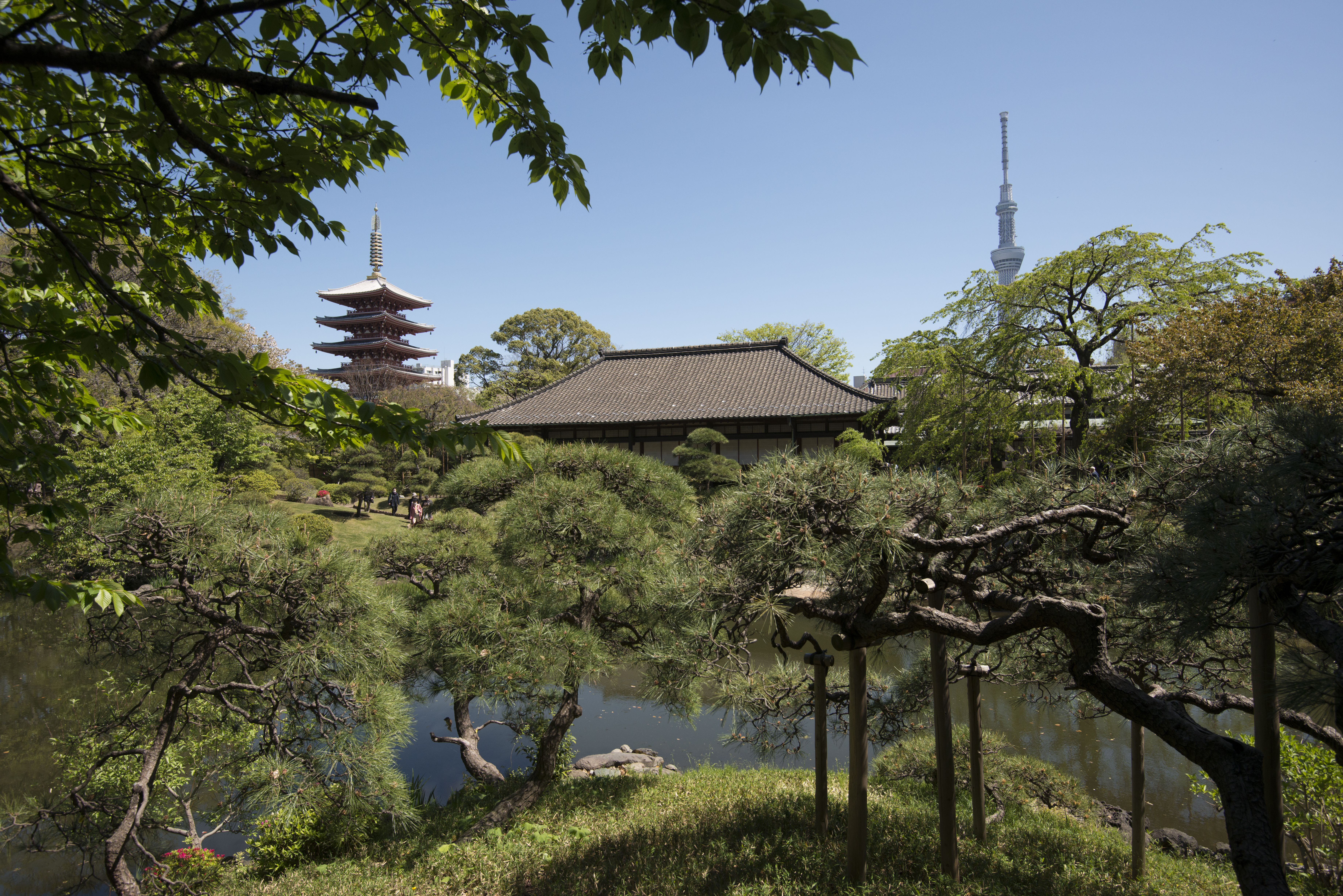
Asakusa is the oldest place in Tokyo and almost none of it is old. The Thunder Gate everyone photographs dates from 1960; the great hall behind it is reinforced concrete poured in 1958, after the firebombs of March 1945 took the building that had stood there since 645. This compact walk through the Sensoji precinct tells you plainly what is a replica and what is not, finds the one building here that genuinely survived, and ends on the river where a 634-metre tower makes the same argument for the whole city.

Highlights

The Thunder Gate that wasn't there for 95 years — and the Panasonic founder who paid to put it back in 1960 Sensoji's main hall, rebuilt in 1958 in concrete because concrete doesn't burn, and the ginkgo in the precinct that regrew inside its own scorched trunk Asakusa Shrine, 1649 — the one building on this walk that came through both the 1923 earthquake and the 1945 firestorm A lane of perfect Edo shopfronts that was actually designed in 2005, and was a black market before that Giant straw sandals woven by 800 villagers in Yamagata, hanging on the back of a 1964 concrete gate
Tour Stops

Kaminarimon
1

Kaminarimon

5 min

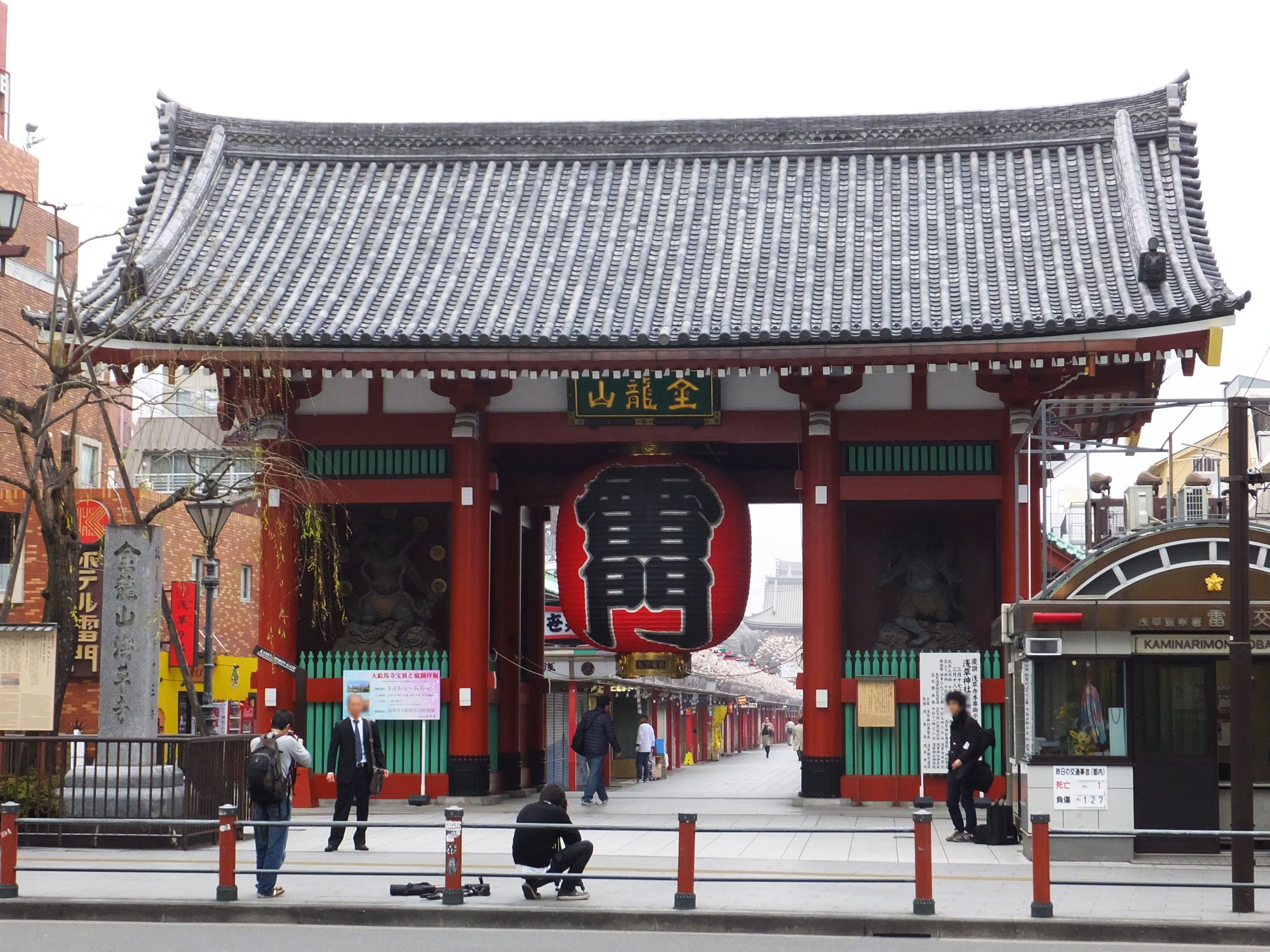
Kaminarimon, the crimson-lanterned gate everyone photographs on the way into Sensoji, is not an Edo-era relic but a 1960 reconstruction funded by Panasonic founder Matsushita Konosuke, built after the original gate burned down in 1865 and stood absent for ninety-five years.
Asakusa Culture Tourist Information Center
2

Asakusa Culture Tourist Information Center

5 min

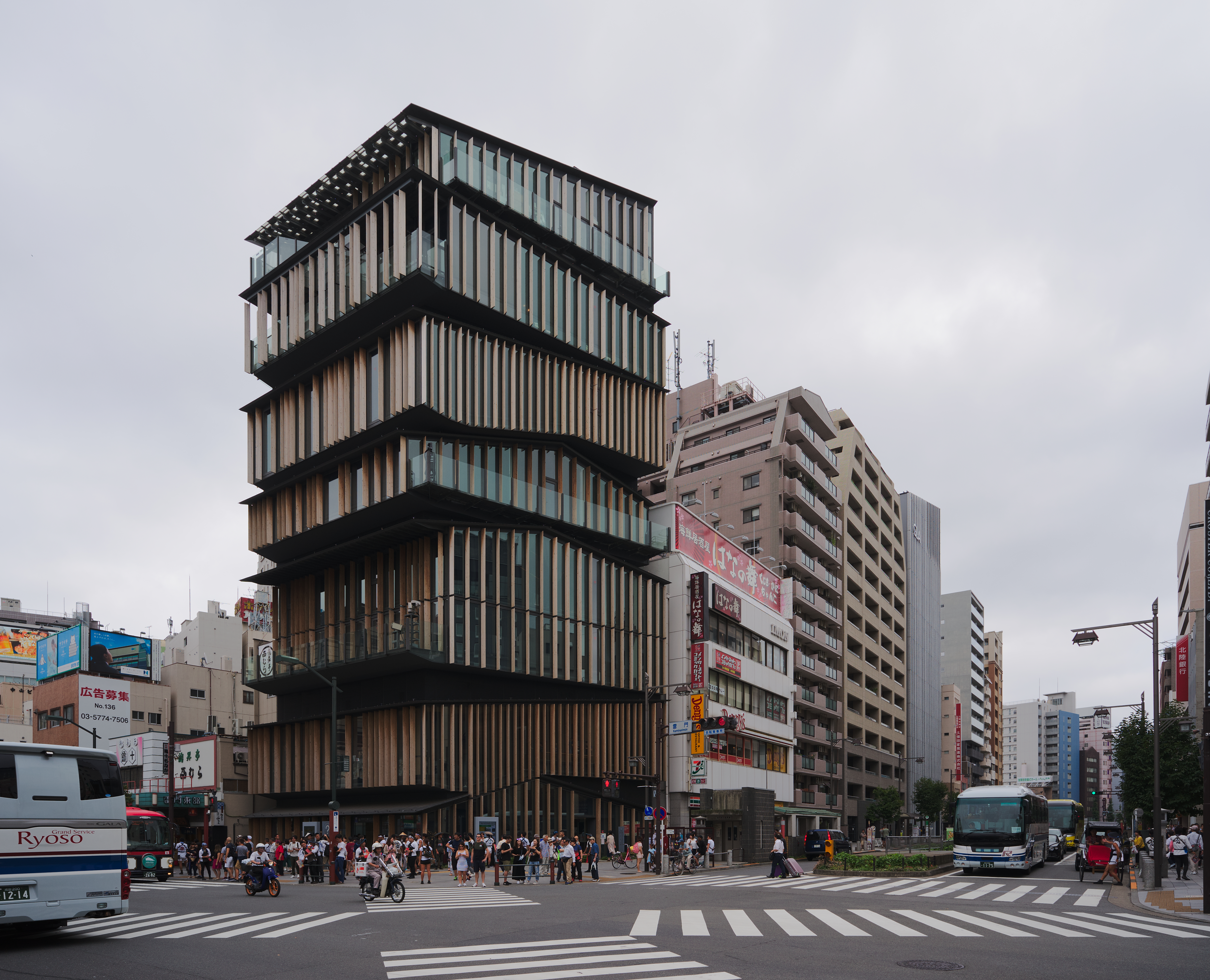
Directly opposite Kaminarimon, Kengo Kuma's 2012 tourist center stacks seven pitched-roof volumes on top of a corner that held a plainer information building from 1985, and its free eighth-floor terrace is the only wide-angle lookout on this walk.
Nakamise-dori
3

Nakamise-dori

5 min

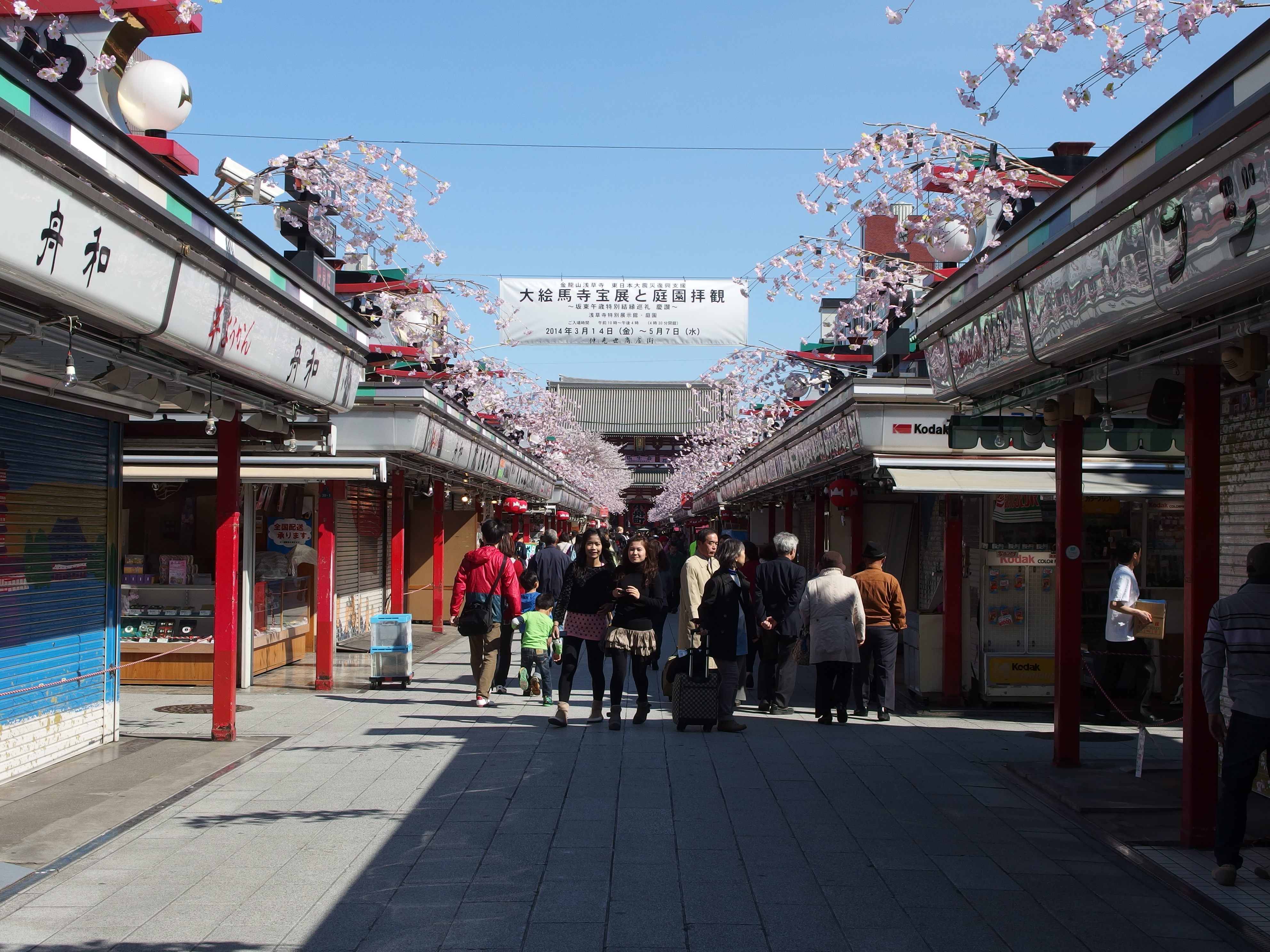
Nakamise-dori is the covered stall-lined approach to Sensoji's main hall, first established in the late 1600s when local residents were granted trading rights in exchange for sweeping the temple grounds. The street itself has since been rebuilt in brick (1885) and then concrete (1925), so today's stalls are far newer than the shopkeeping tradition they house.
Denboin-dori
4

Denboin-dori

5 min

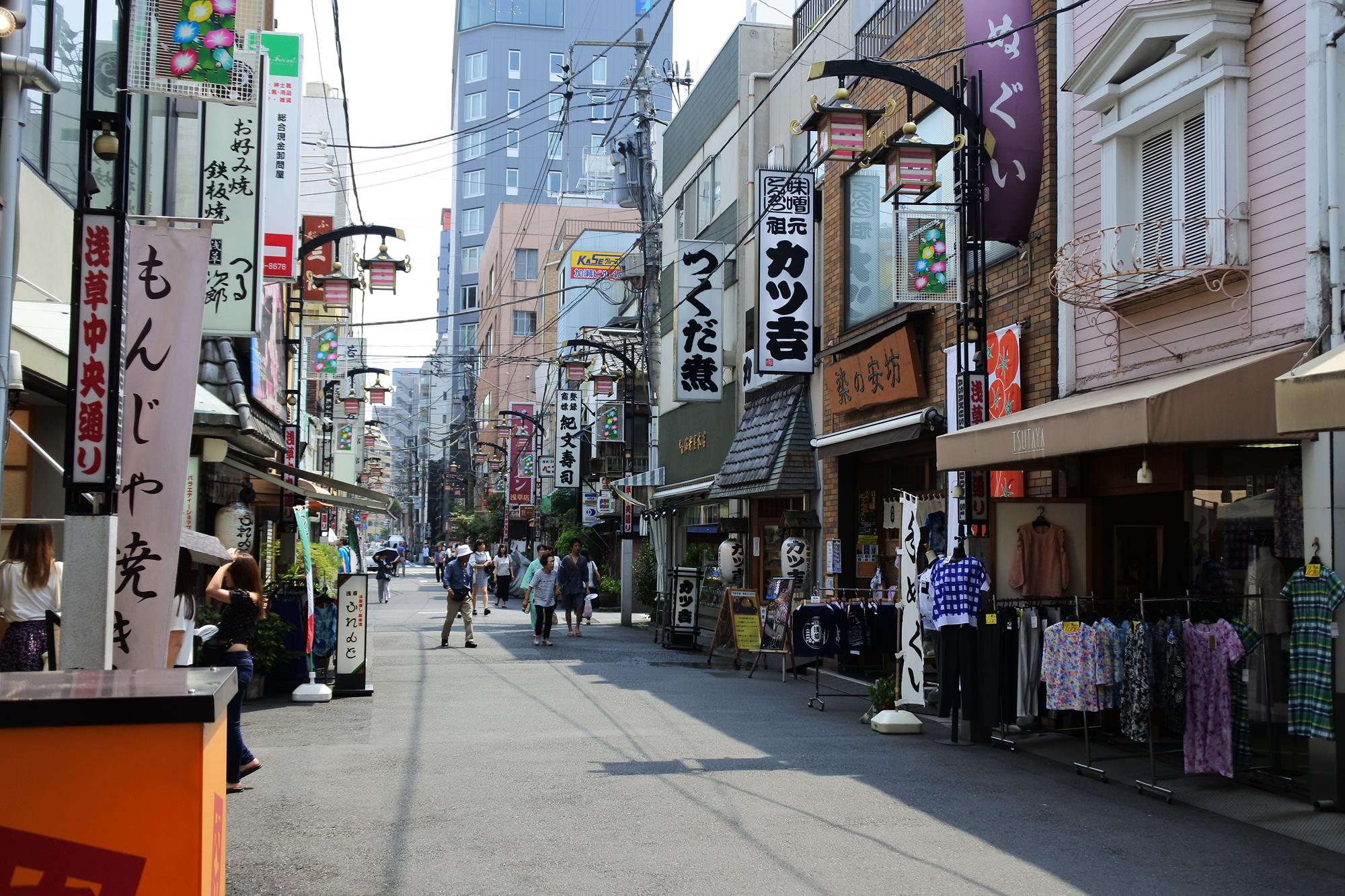
A side lane behind Sensoji dressed in coordinated Edo-period shopfronts and rooftop thief statues, the result of a 2005 city-backed redesign of what had been a plain postwar shopping street.
Hozomon
5

Hozomon

5 min

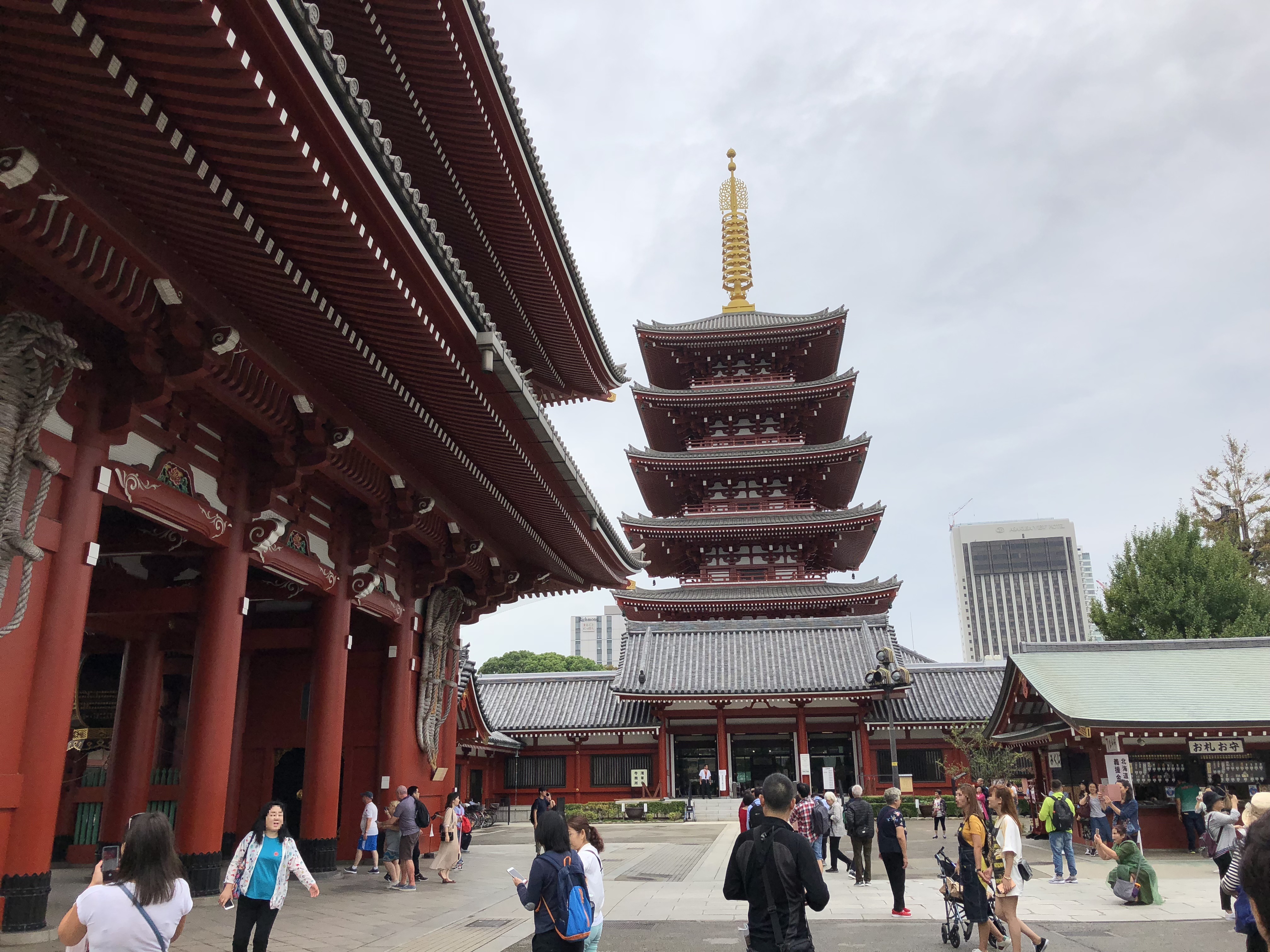
The inner gate is a 1964 reinforced-concrete reconstruction funded by Hotel New Otani founder Otani Yonetaro, its upper floor storing Sensoji's treasured sutras (a National Treasure copy of the Lotus Sutra among them) and its rear wall hung with giant straw sandals rewoven roughly every decade by villagers in Yamagata.
Sensoji main hall
6

Sensoji main hall

5 min

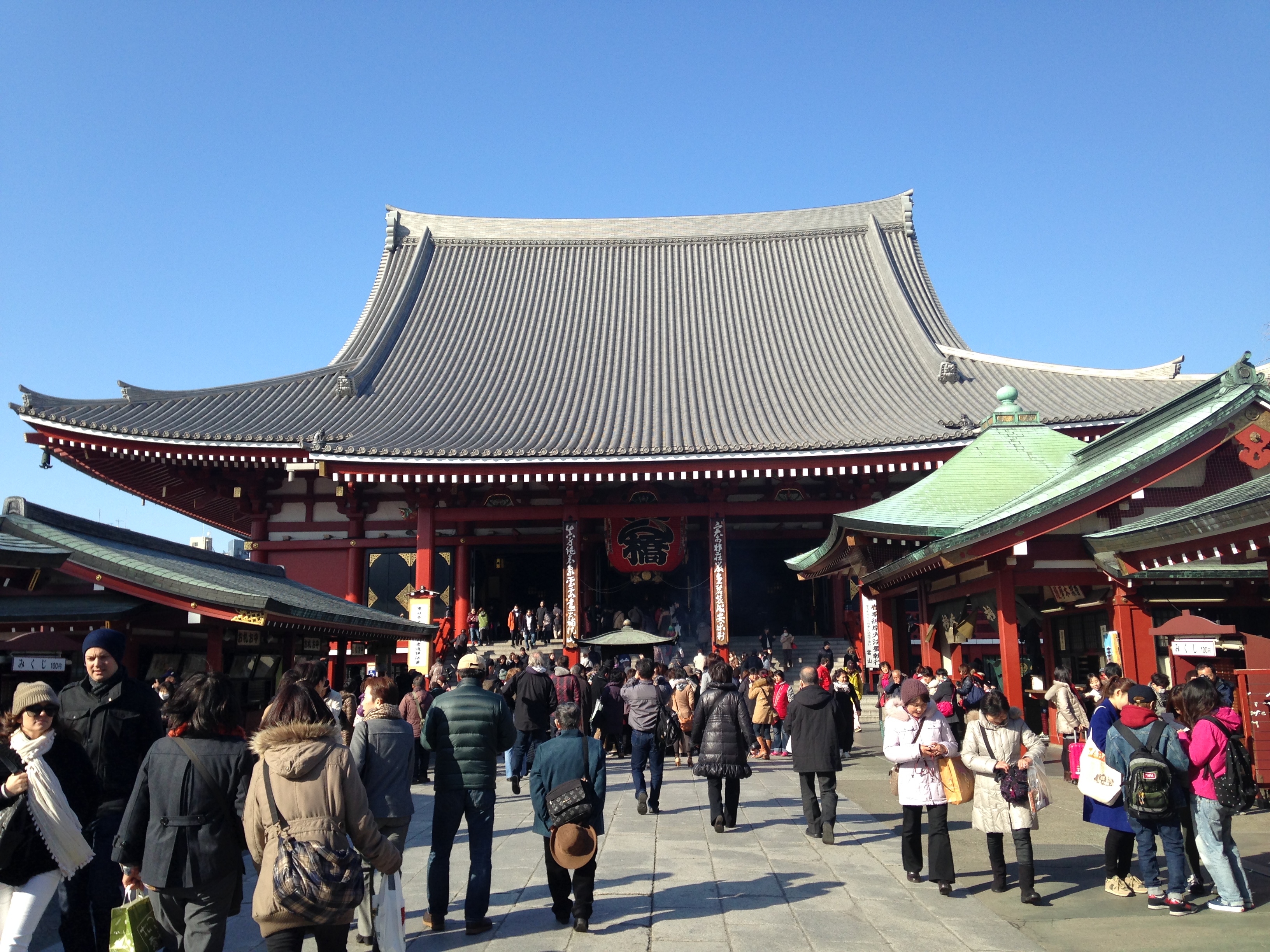
The current main hall dates only from 1958, rebuilt in reinforced concrete after the wooden original — founded in 645 to house a Kannon statue two fishermen netted from the Sumida in 628 — burned in the firebombing of 10 March 1945.
Sensoji five-storey pagoda
7

Sensoji five-storey pagoda

5 min

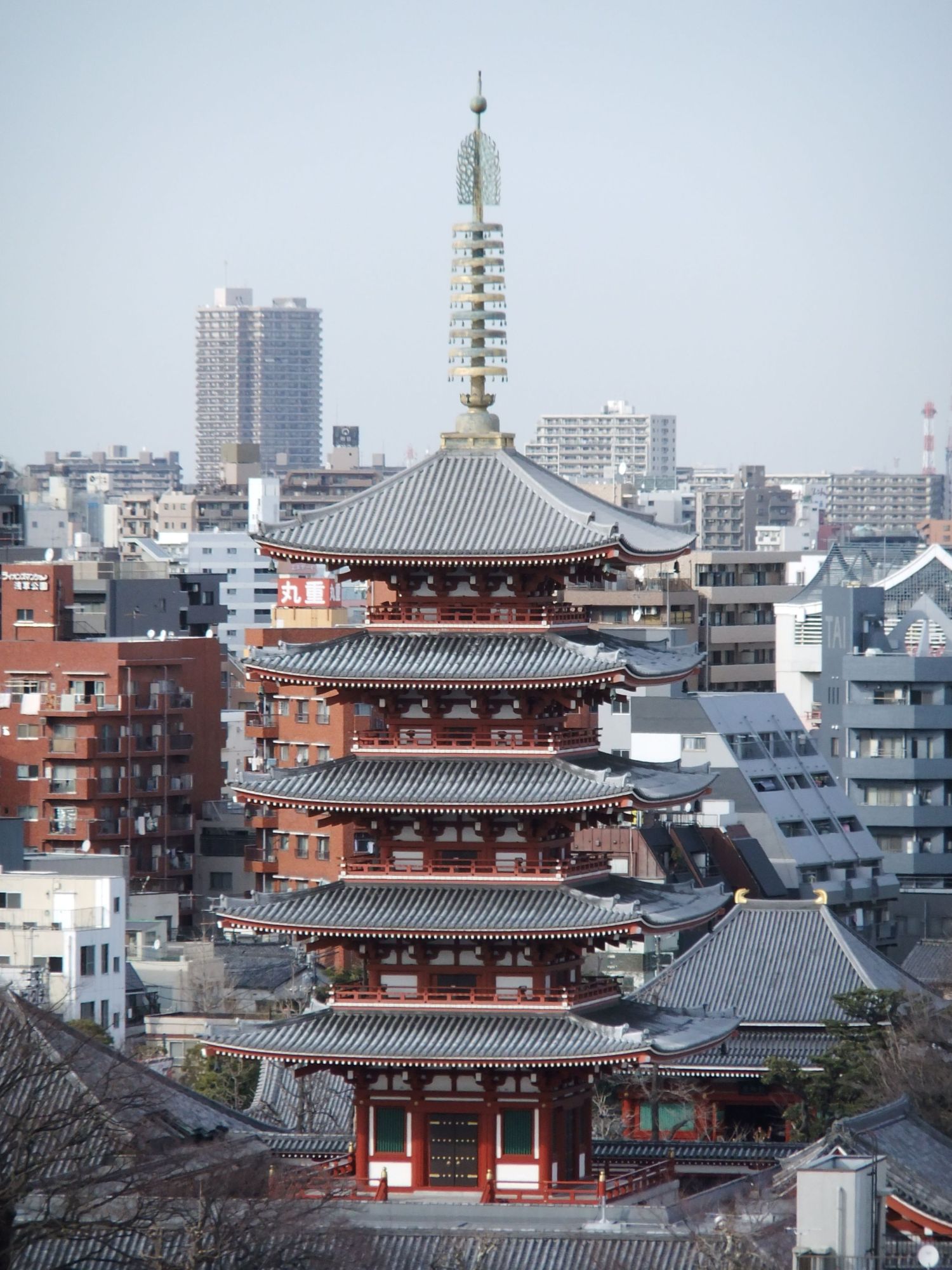
Sensoji's five-storey pagoda was rebuilt in 1973 in steel and reinforced concrete and now stands on the west side of the precinct, opposite where its predecessor stood. Its top tier enshrines a Buddha relic given by a temple in Sri Lanka, and its lower floors serve as a columbarium closed to visitors.
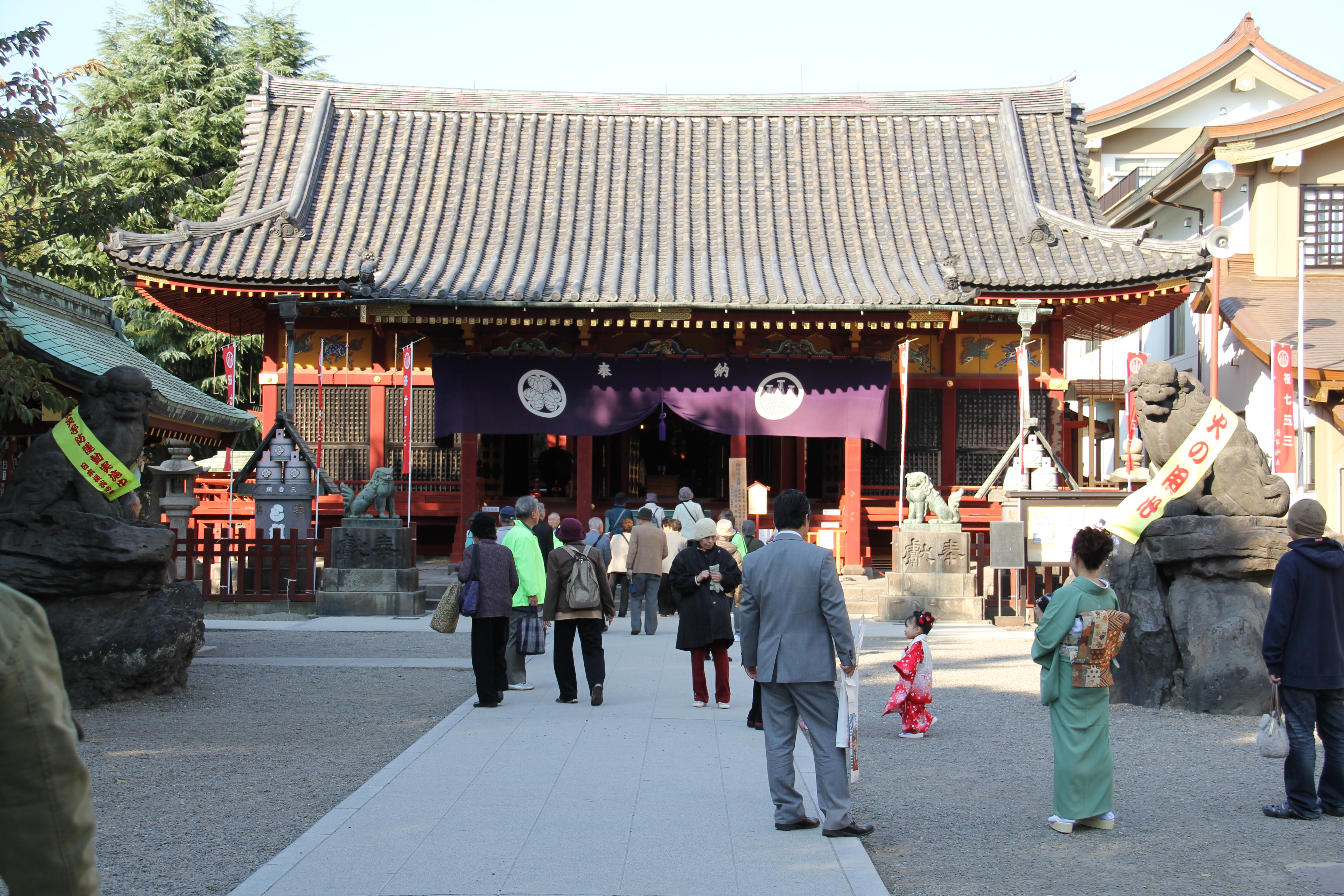
Asakusa Shrine (Sanja-sama)
8

Asakusa Shrine (Sanja-sama)

5 min

Built in 1649 under the third Tokugawa shogun, Iemitsu, in the gongen-zukuri style, Asakusa Shrine is the one structure on this walk that survived both the 1923 Great Kanto Earthquake and the 1945 firebombing intact, and is a designated Important Cultural Property. It hosts the Sanja Matsuri each May, when roughly a hundred mikoshi carried by Asakusa's neighborhood associations fill the surrounding streets.
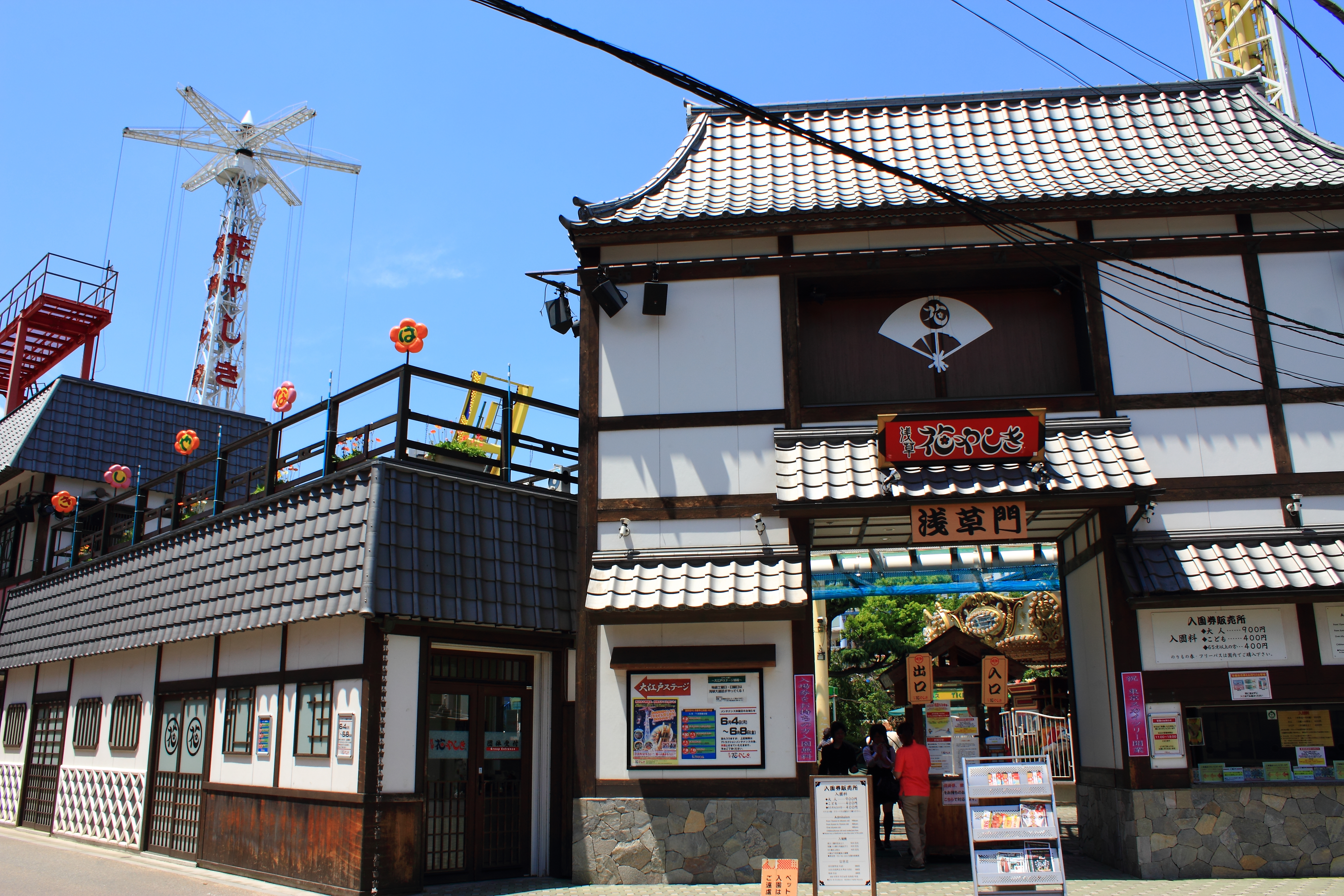
Hanayashiki (exterior)
9

Hanayashiki (exterior)

5 min

Opened in 1853 as a flower garden and later reborn as Japan's oldest amusement park, Hanayashiki's entrance lane fronts a 1953 roller coaster, still Japan's oldest operating, that runs over the rooftops of the park's own buildings.
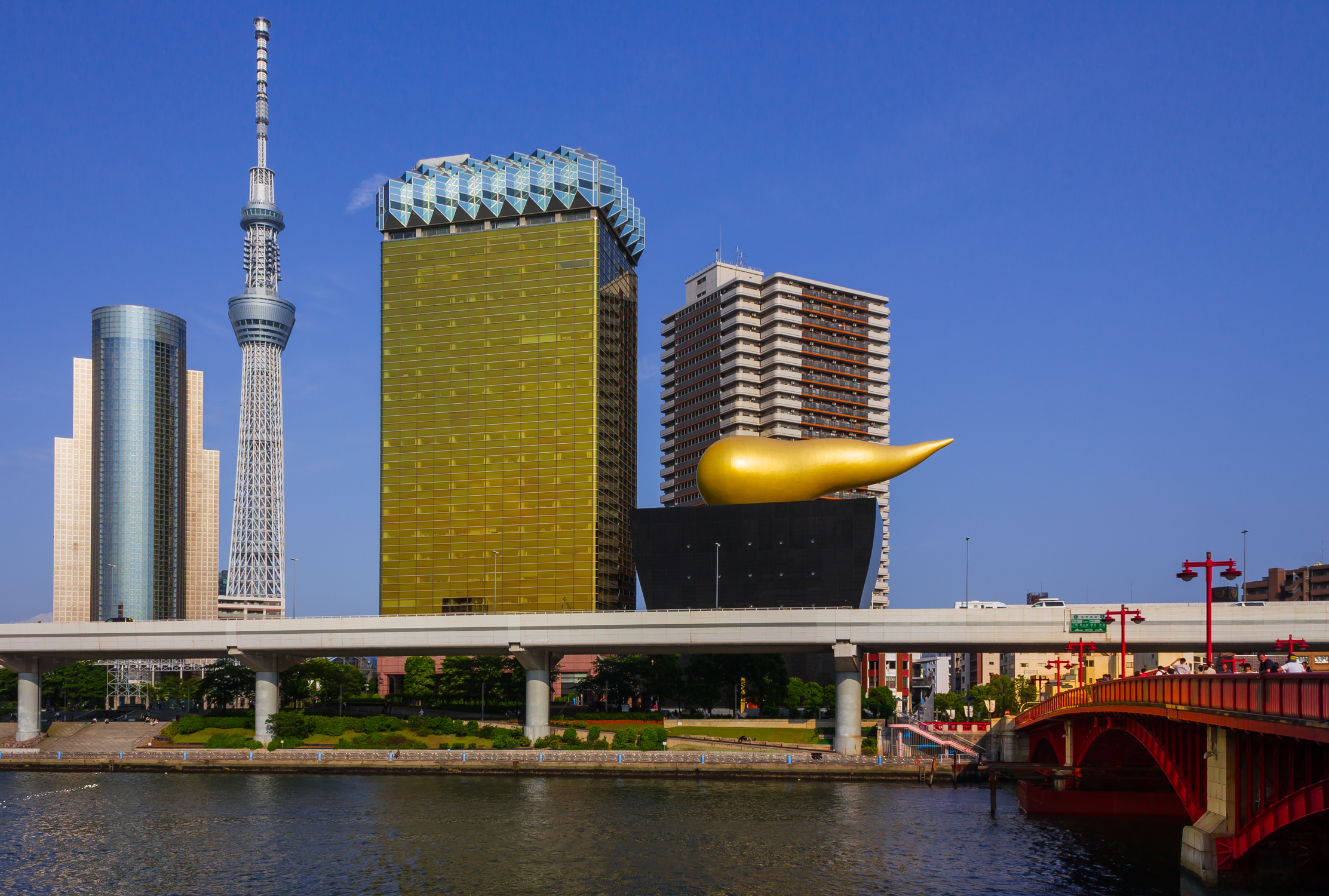
Azuma-bashi and the Sumida riverside
10

Azuma-bashi and the Sumida riverside

5 min

Azuma-bashi bridge over the Sumida River, where the walk ends looking across the water at two more rebuilt Tokyo icons: Philippe Starck's 1989 golden "flame" atop the Asahi Beer Hall and the 634-metre Tokyo Skytree, completed in 2012.

A Taste of the Tour

This is the real story from one stop on this walk — every stop has one.

Kaminarimon

You are standing under Kaminarimon, the Thunder Gate, where a wall of tourists is already funneling toward the giant red lantern and the smoke rising off the incense burner beyond it. This walk starts right here and never wanders far — ten stops, under a mile and a half, about ninety minutes, all inside one dense pocket of Asakusa built around Senso-ji, the temple Tokyo calls its oldest. That claim is true, and it is also slightly beside the point. Nearly everything you are about to see has been rebuilt at least once, in wood and then in concrete, after fires, an earthquake, and a war that flattened this district along with most of the city around it. This walk will not pretend otherwise. At every stop you will get a plain answer to the question that actually matters here: is this old, or is this a faithful copy of something old? Exactly one building on this route is genuinely, physically what it looks like. You will find out which, and why the other nine still deserve your attention, before you are back at this same gate. For now, walk toward the smoke. Stand back for a second and look at what everyone is photographing. The giant red lantern, the black gate, the two furious statues glaring out of their niches — this is the single most photographed object in Tokyo, the picture that says "old Japan" better than almost anything else in the city. Now here is the whole tour in one sentence: this gate is from 1960. Not "restored in 1960." Built in 1960. The Kaminarimon that stood before it burned down in a fire in 1865, and for the next ninety-five years — nearly a full century, longer than most of the people reading this have been alive twice over — there was no Thunder Gate here at all. No gate, no lantern, nothing to photograph. Generations of Tokyoites walked up to Sensoji through a gap where a gate used to be, the way you'd walk past a missing tooth. If your grandparents' grandparents visited Asakusa, they didn't pass under this gate, because it didn't exist. The man who ended that ninety-five-year gap was Matsushita Konosuke, the founder of the company you now know as Panasonic. In 1960 he fell seriously ill, made his way to Sensoji to pray for his recovery, and got better. Grateful, he funded the gate's reconstruction — the project broke ground in 1959 and the new Kaminarimon was unveiled on 3 May 1960. Look at the base of the great lantern as you pass beneath it: there's still a plaque there carrying an old, abbreviated form of his company's name, Matsushita Denki. A twentieth-century electronics fortune is the reason you have anything to photograph here at all. That lantern above your head is worth a proper look, not just a glance. It weighs around 700 kilograms, and it doesn't last forever — Sensoji has it taken down and replaced roughly once a decade, so the one glowing red overhead right now is very possibly newer than your phone. And it hides a detail almost nobody looks for: stand directly underneath it and tilt your head back, and carved into the wooden base is a dragon, coiled and looking straight down at you. Temple legend says a golden-scaled dragon rose from the river the night this temple was born — one more guardian, hidden in plain sight above thousands of oblivious heads every single day. The two statues glaring at you from their wooden cages are gods, not decoration. On your right as you face the gate from the street is Fujin, god of wind, with a bag of wind slung over his shoulder. On the left is Raijin, god of thunder, ringed with drums. Both are older than they look and younger than they look at the same time: the originals were caught in that same 1865 fire and survived it as little more than scorched heads, restored and remounted only when Matsushita's money rebuilt the gate around them in 1960. So here's the deal this tour is making with you, right at the start, before you've taken a single step down the shopping street ahead. Almost nothing you're about to see in Asakusa is old. Almost everything is ancient. Those are two different claims, and I'm going to keep the difference honest at every stop — what burned, what got rebuilt, in what year, in what material. There's exactly one building on this route that really is what it looks like, untouched since long before any of this, and it isn't the gate you're standing under right now. You'll find out which one it is later. For now, walk on through — Kaminarimon means "step this way," even if it's only meant that since 1960.

More Tours in Tokyo

Nearby Cities

Back to Tokyo Tours

Cookie Consent

We use cookies to analyse site traffic and improve your experience. You can choose to accept or reject analytics cookies. Learn more