Tokyo · Japan
Ginza and Tsukiji: Bricktown, Bubble and the Fish Market
Tokyo, Japan
A clock tower that chimed through the firebombing and spent seven postwar years as an American military department store Chuo-dori, where nothing of Meiji Bricktown survives except the width of the street — and the land-price record that followed Kabuki-za, rebuilt five times, now underwritten by the rent from the 29-storey tower built over its auditorium Tsukiji Hongwanji, a Buddhist temple built in Indian stone by an architect who went looking for where Buddhism started The outer market that never moved — the wholesale auction left for Toyosu in October 2018, and this did not
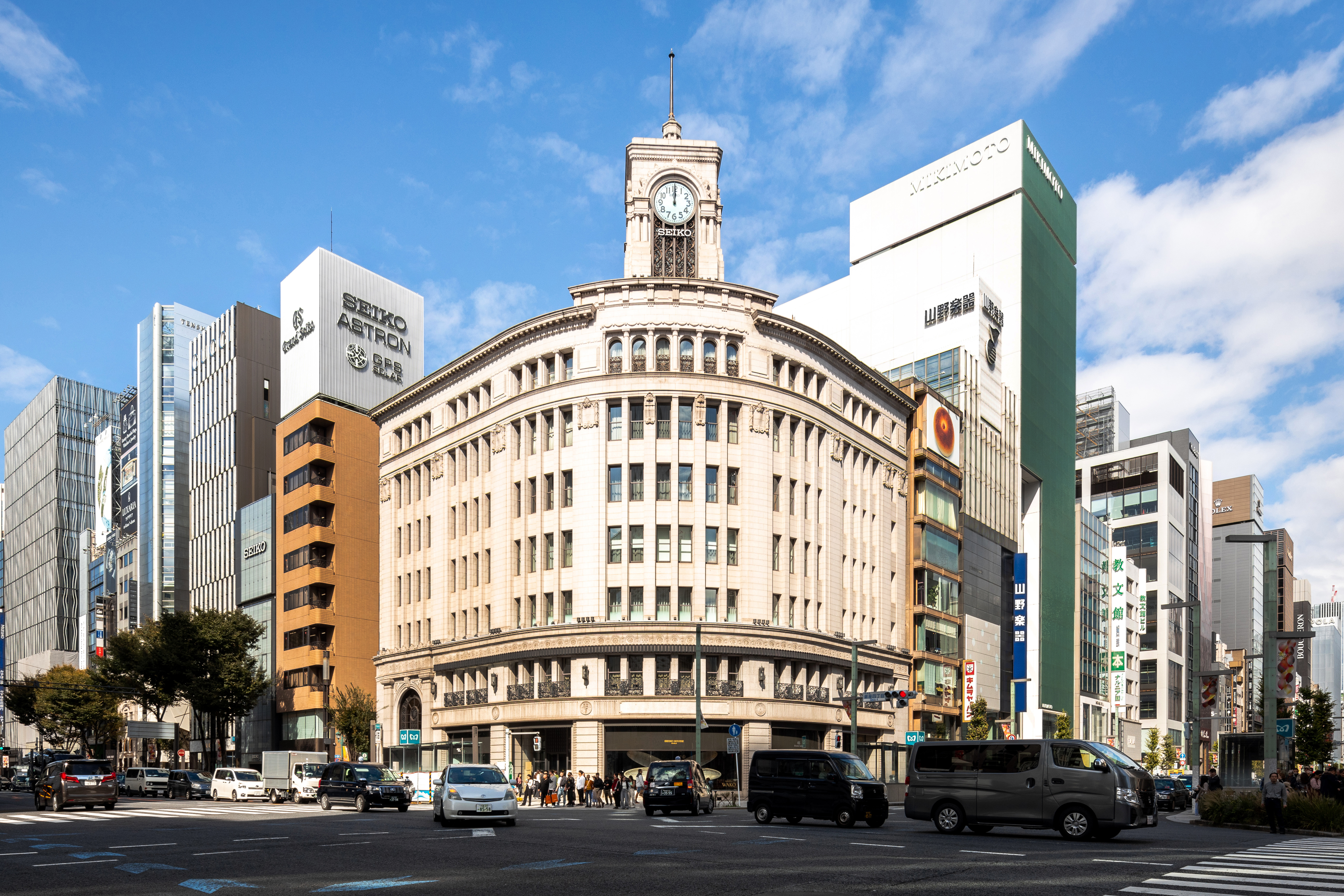
A curved granite building on the Ginza 4-chome crossing carries a clock tower that has kept time here since 1894, survived the 1945 firebombing, and served as the US military's Tokyo PX during the Occupation before reopening as Wako in 1952.
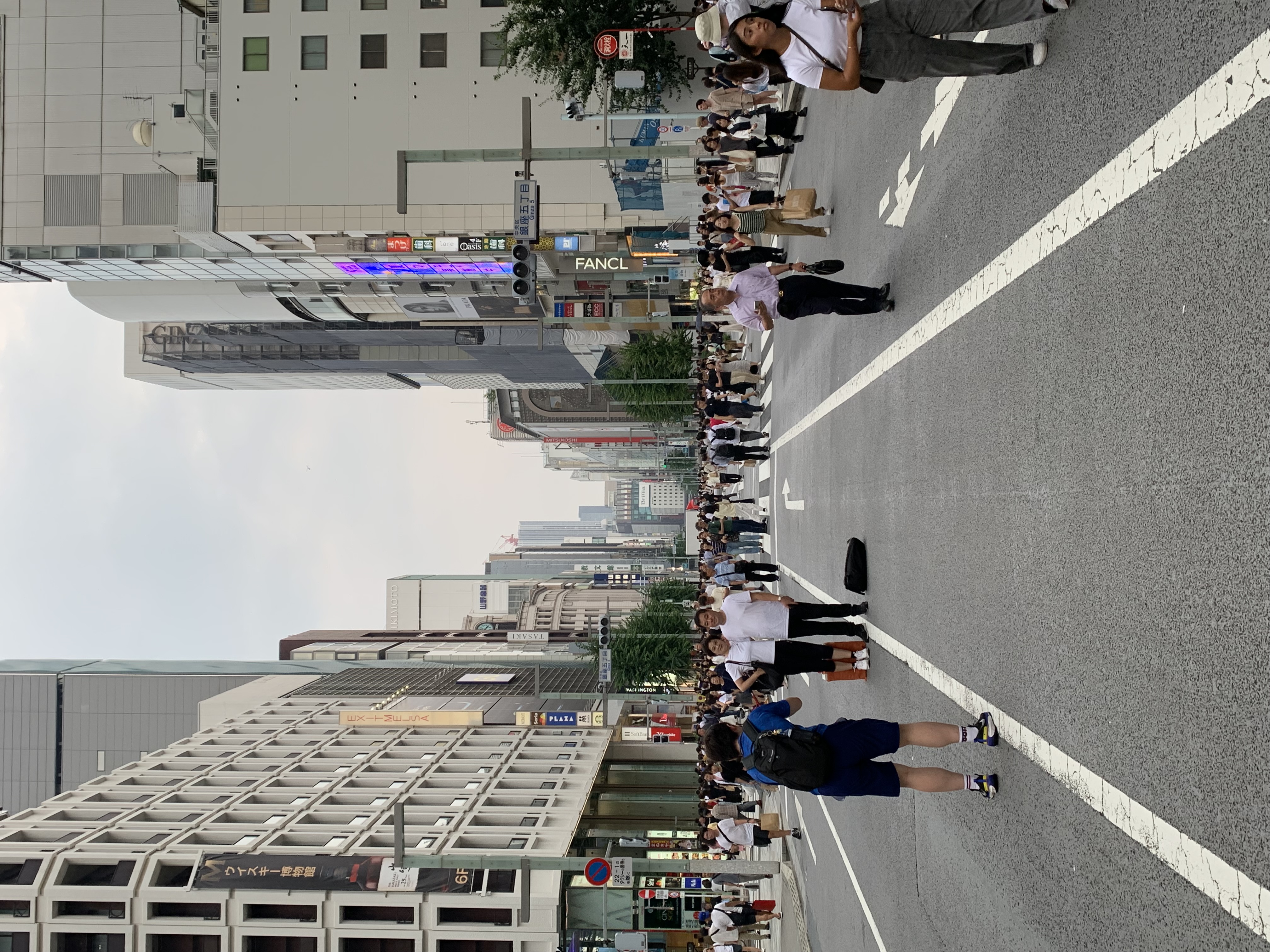
The Meiji government hired British engineer Thomas Waters to rebuild this street in fireproof brick after an 1872 fire, explicitly to impress foreign diplomats; almost none of that brick survives, but the street's width and pavements do, and the same ground later set a record for the most expensive land in Japan.
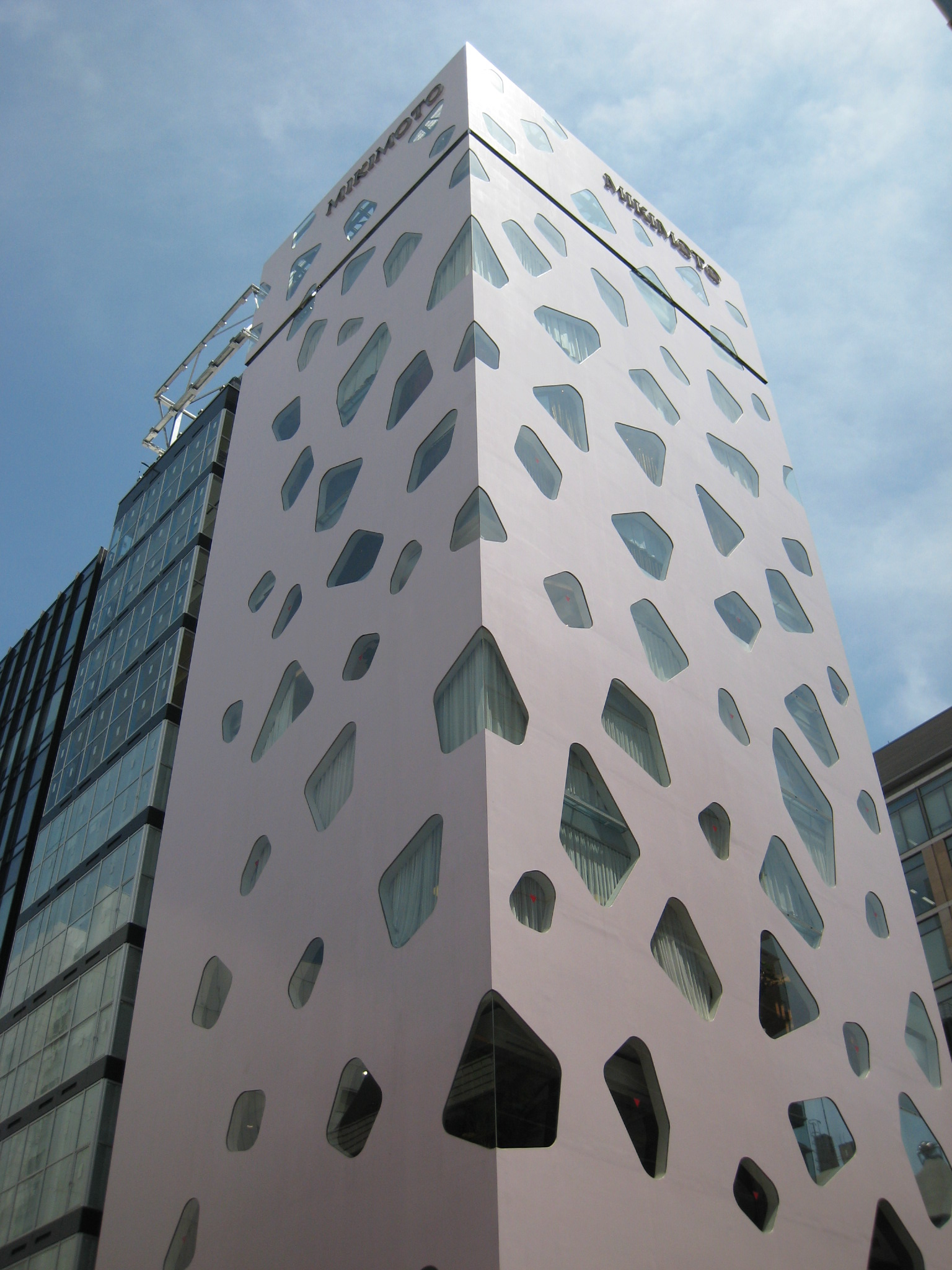
Mikimoto Ginza 2, completed by Toyo Ito in 2005, is a nine-story flagship whose steel-and-concrete sandwich walls carry the entire structural load, letting the pink, pearl-luster facade be punched with irregular windows and freeing the interior of columns. It was built for Mikimoto, the company founded by Kokichi Mikimoto, who produced the world's first cultured pearl in 1893.
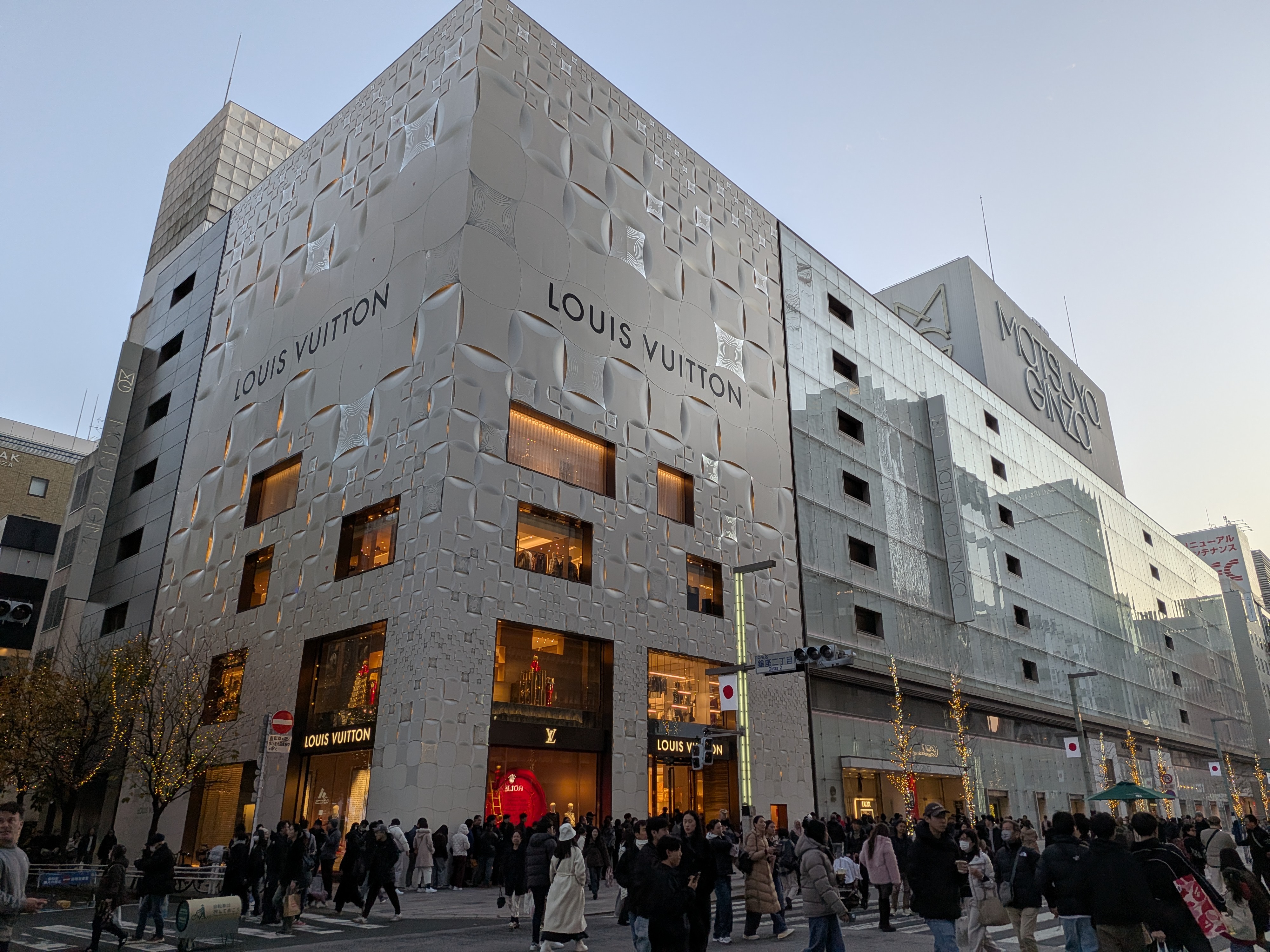
Louis Vuitton's Ginza Namiki flagship was rebuilt in 2021 by Jun Aoki, with interiors by Peter Marino, wrapping the building in a rippling, dichroic-film glass facade that shifts colour depending on the viewing angle.
A shrine barely bigger than a garden shed, wedged into Sangen Alley off Azuma-dori a block from Chuo-dori, re-founded after a run of postwar fires that locals attributed to an older Inari shrine having been built over. It is still tended today with resist-dyed offering flags and dishes of salt and rice.
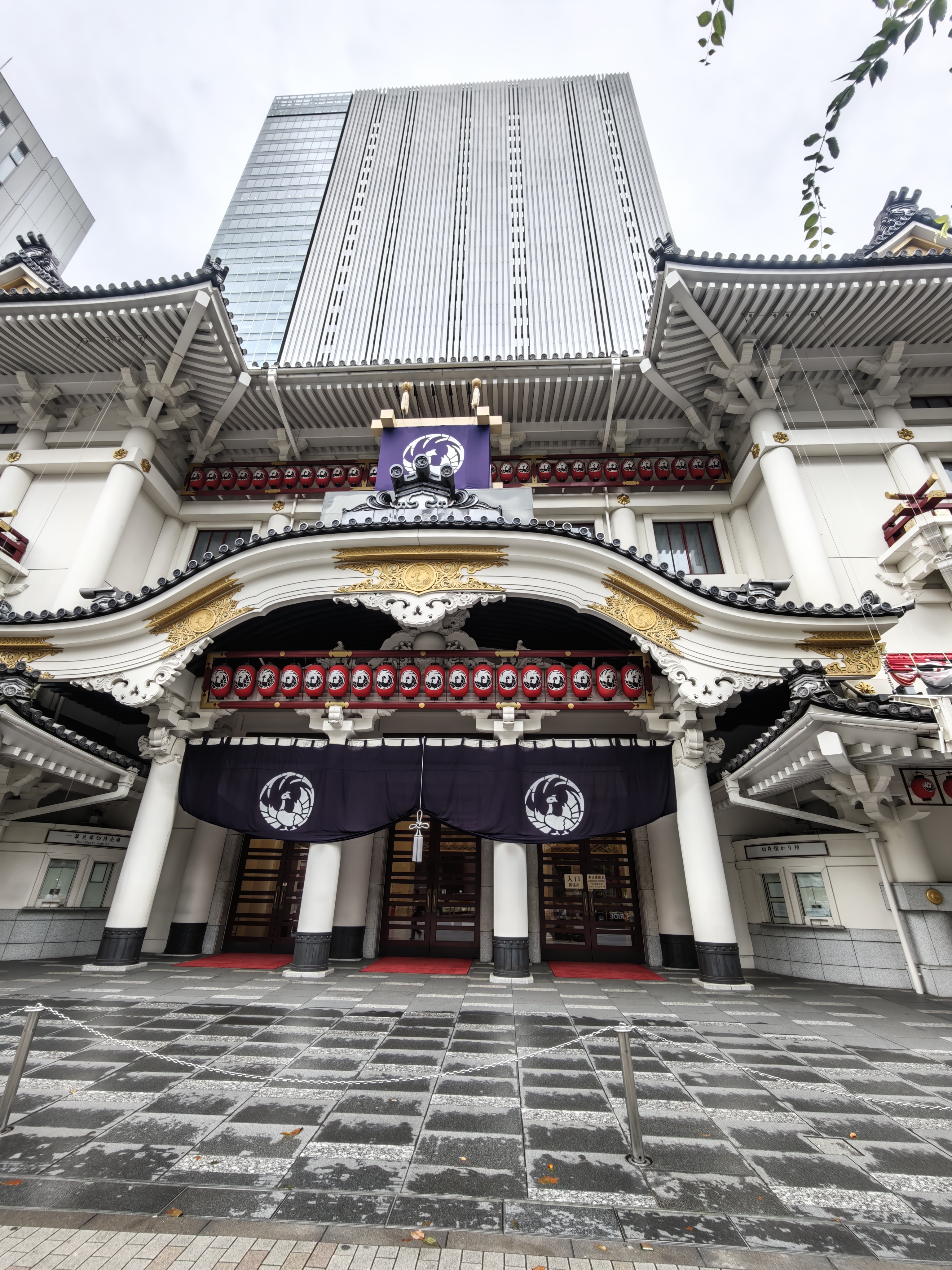
Kabuki-za, Ginza's kabuki theatre, has stood on this site since 1889 and been rebuilt four times since — after a 1921 electrical fire, the 1923 Great Kanto earthquake, and a 1945 air raid — before its current 2013 incarnation, designed by Kengo Kuma, was built beneath a 29-storey office tower whose rent keeps the theatre solvent.
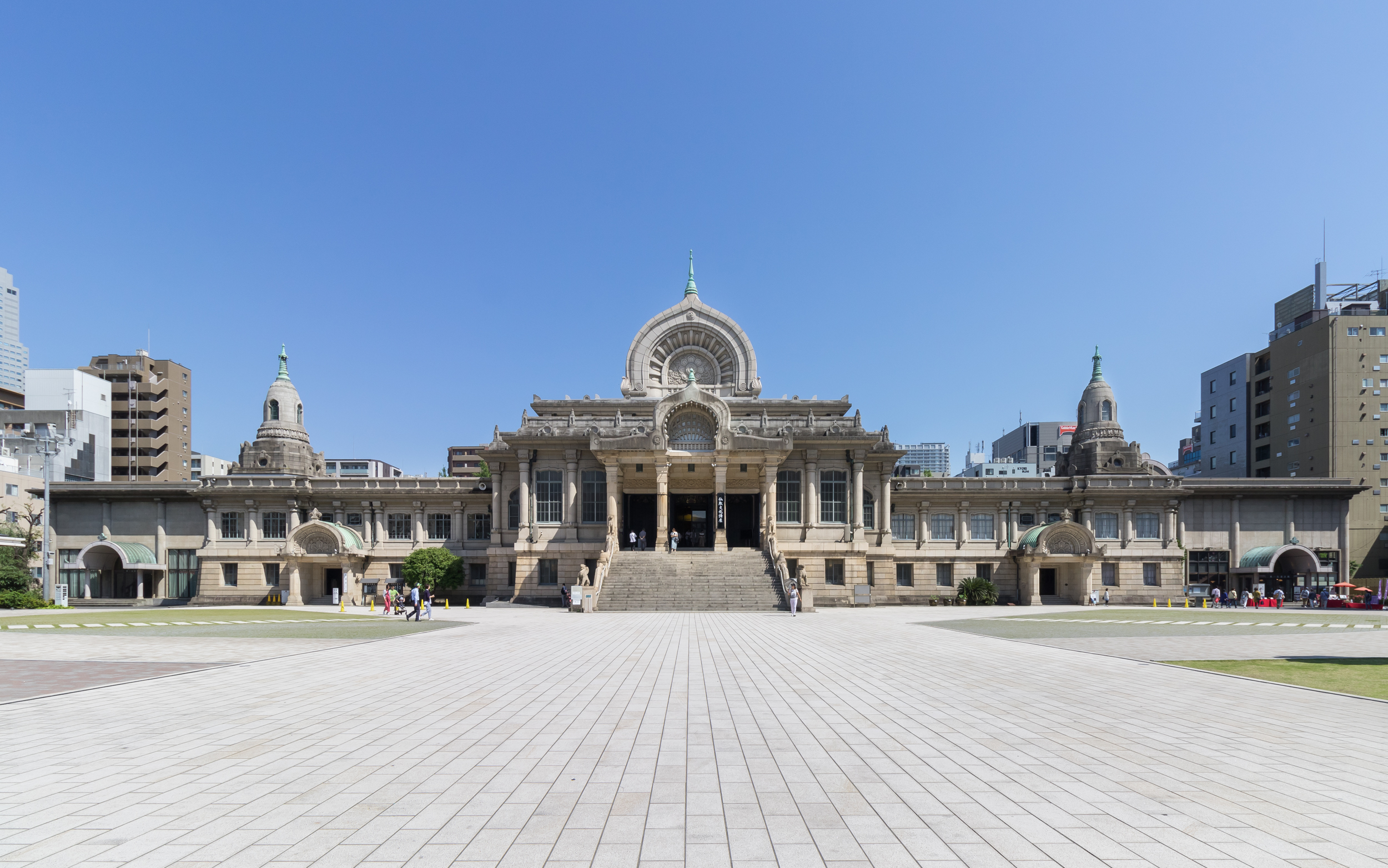
Tsukiji Hongwanji is a 1934 Buddhist temple designed by architect Ito Chuta in stone and reinforced concrete after the 1923 Great Kanto earthquake destroyed its wooden predecessor, its Indian-influenced dome and arches expressing his belief that a temple should look to Buddhism's origins in India rather than its transmission through China. Founded in 1617 and rebuilt after the 1657 Meireki fire on land reclaimed from Edo Bay, the temple gave the surrounding district its name, Tsukiji, meaning "reclaimed land."
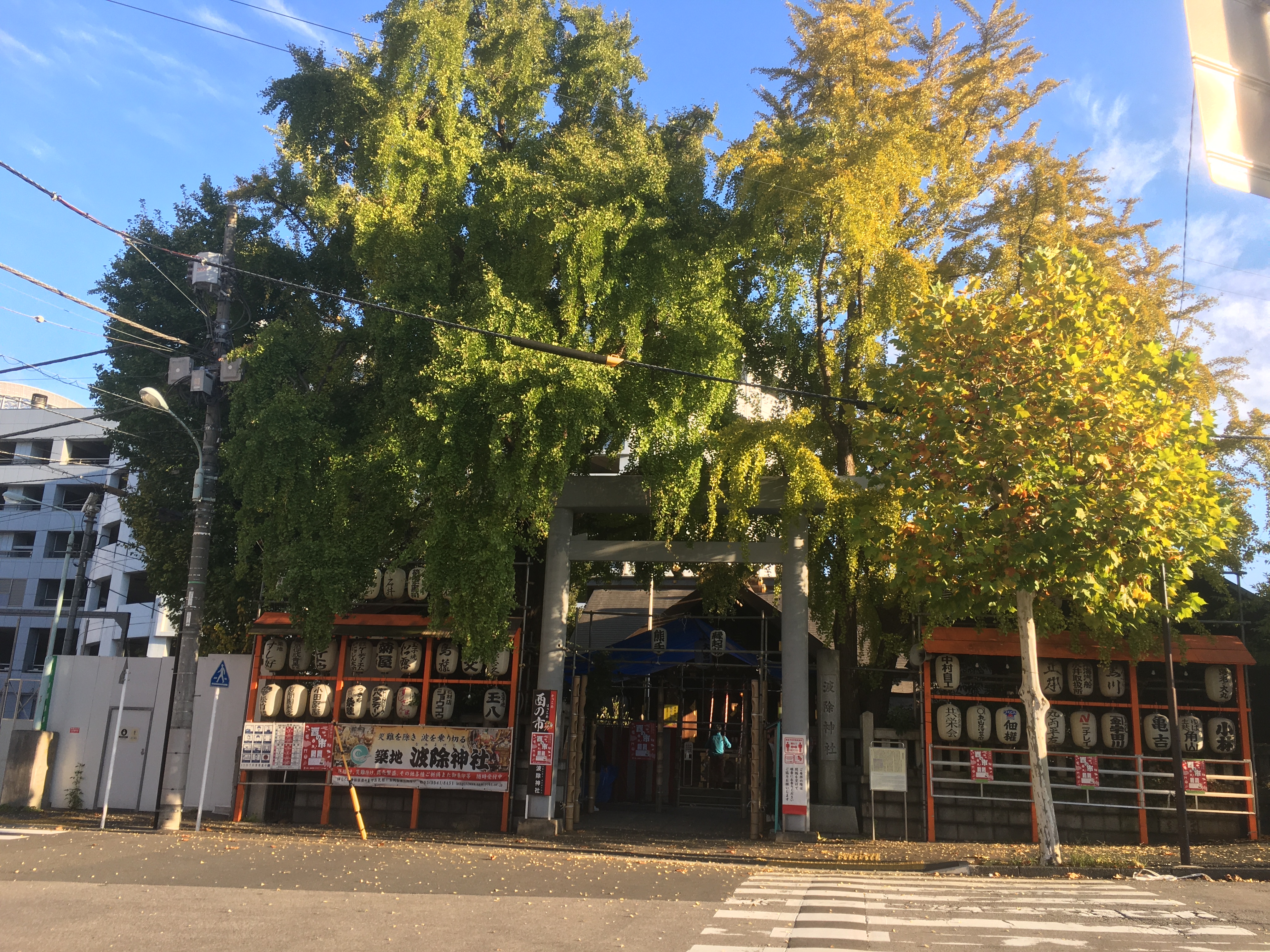
Namiyoke Inari Shrine is Tsukiji's own "wave-protection" shrine, founded in 1659 after a stalled land reclamation was said to be calmed by its construction. Its courtyard holds memorial stones donated by the fish and produce trades, for sushi, shrimp, kelp, clams and even eggs, and its two giant lion heads are paraded through the neighbourhood every June in the Tsukiji Shishi Matsuri.
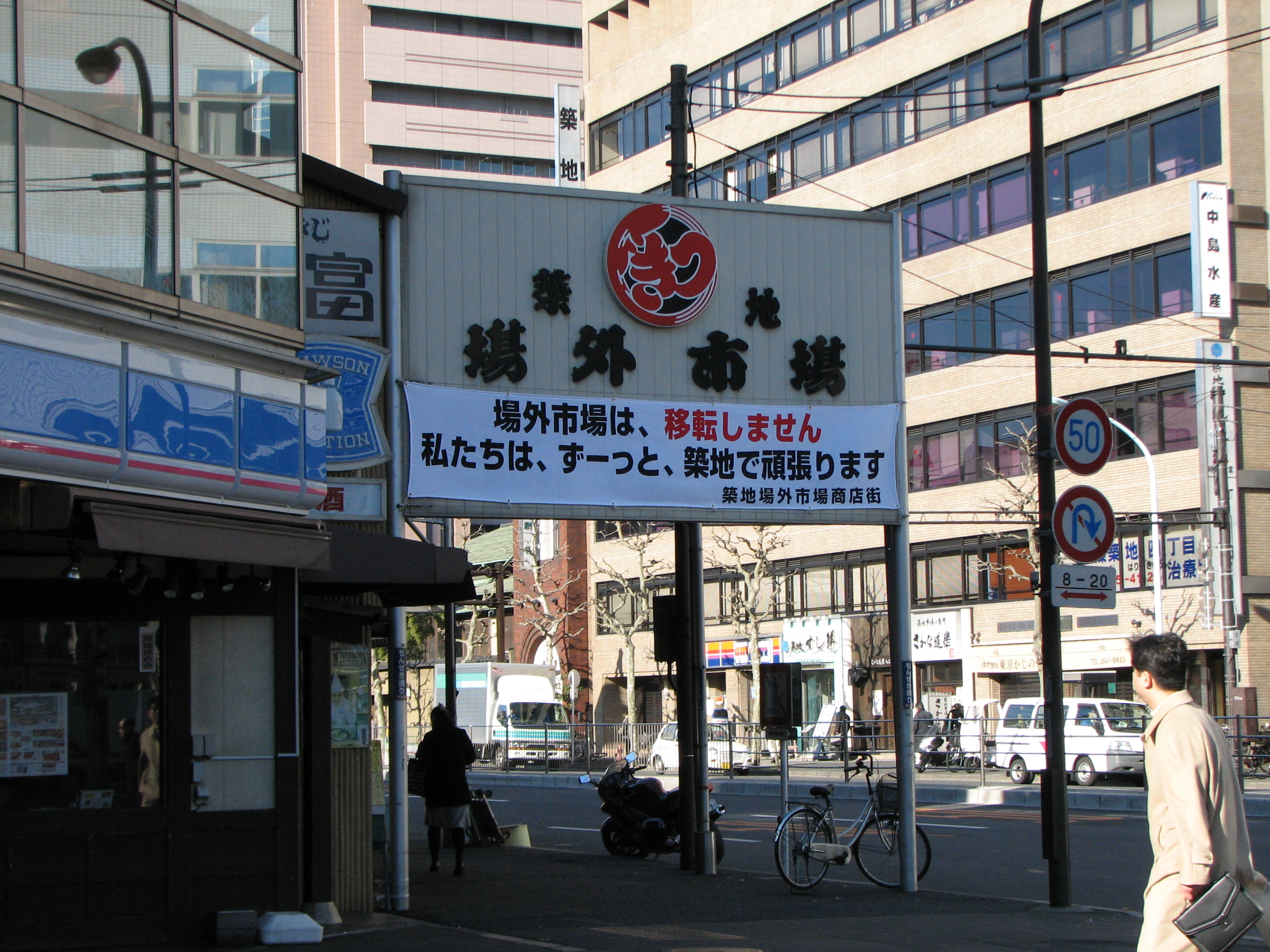
Roughly 400 shops and stalls that have sold fish, knives and street food since the fish trade moved here after the 1923 earthquake; the wholesale tuna auction moved to Toyosu in October 2018, but this retail market stayed exactly where it was.
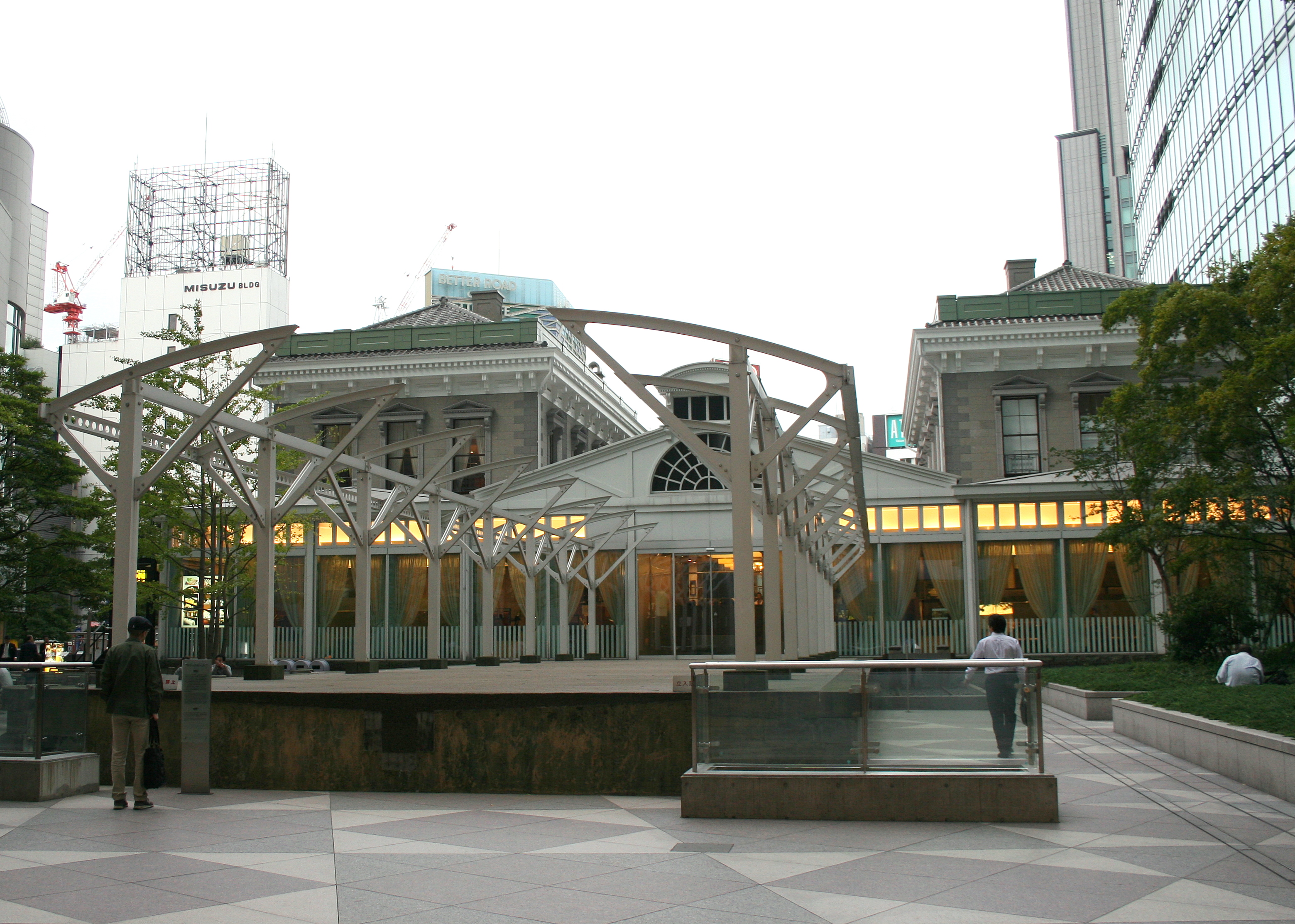
Old Shimbashi Station is a 2003 reconstruction of Japan's first railway terminus, built to the original exterior design on the exact site where the Shimbashi-Yokohama line opened in 1872, after a 1991 excavation uncovered the original platform and station foundations.
This is the real story from one stop on this walk — every stop has one.
Asakusa is the oldest place in Tokyo and almost none of it is old. The Thunder Gate everyone photographs dates from…
Kiyosumi-Shirakawa is sold as a coffee district because old timber warehouses supposedly suited roasters. That causal…
Kagurazaka is sold as Tokyo's Little Paris and as a warren of geisha alleys bent to hide discreet clients. This walk…
We use cookies to analyse site traffic and improve your experience. You can choose to accept or reject analytics cookies. Learn more


