Tokyo · Japan
Kagurazaka: The Hill That Outlived Its Trade
Tokyo, Japan
The Edo outer-moat checkpoint that put a temple town, and then a trade, on this exact slope Why 'Little Paris' does not survive checking — and the 1951 Sakakura Junzo building that actually does A main street whose one-way traffic reverses direction at noon, with the street closed to cars while it flips The bathhouse that measured the trade: two hundred geisha a day, and 22 stone steps The booking office still running the quarter — eighteen geisha now, 619 at its peak The famous 'hide-and-seek alley', and the honest answer about why it bends 1848 stone tigers that came through 1945 with the damage still on them A shrine that funded a Kengo Kuma rebuild by leasing its own land for seventy years
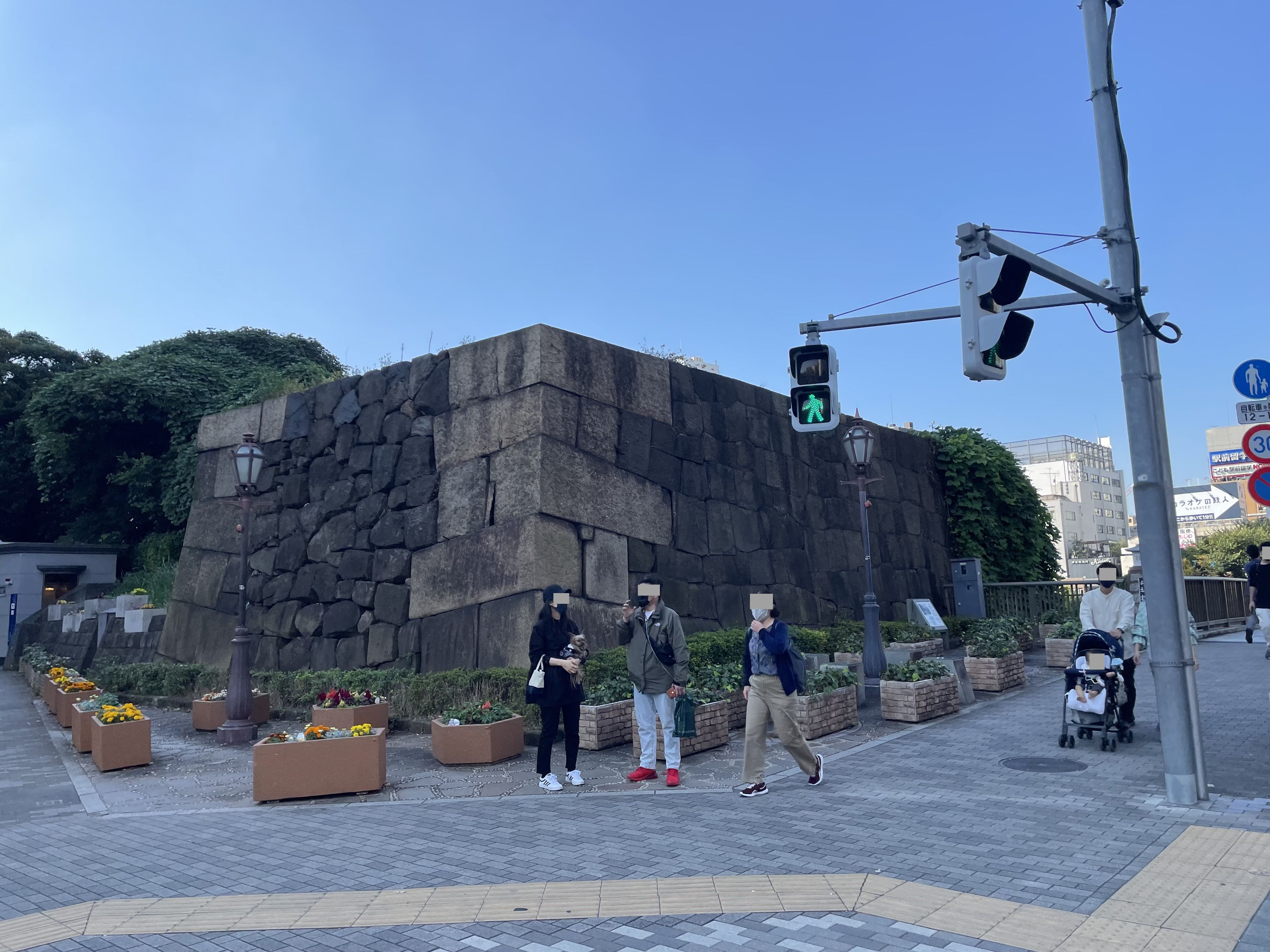
A pair of masugata stone walls flanking Waseda-dori beside Iidabashi station, all that is left above ground of Ushigome-mitsuke, a gated checkpoint on Edo Castle's outer moat built in 1636 by Hachisuka Tadateru of the Awa-Tokushima domain. The gate was pulled down in 1872 and most of its masonry in 1902; the surviving stonework is part of the nationally designated Edo Castle outer-moat site.
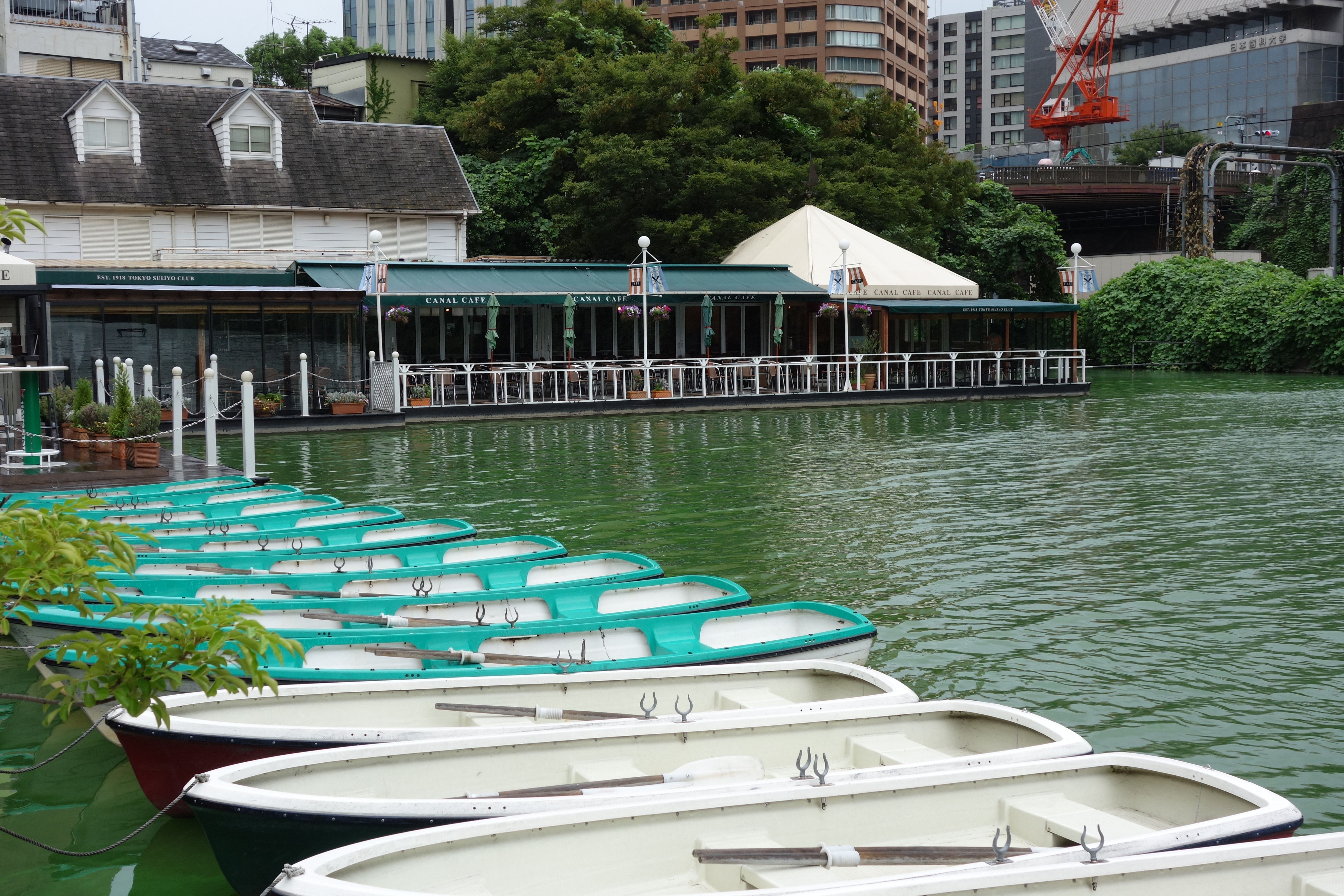
The Tokyo Suijo Club opened on Edo Castle's outer moat in 1918 and still rents rowing boats, making it the oldest surviving boathouse in Tokyo. It sits beside the vanished Kagura-gashi wharf, whose porters gave the neighbouring slope, Karuko-zaka, its name.
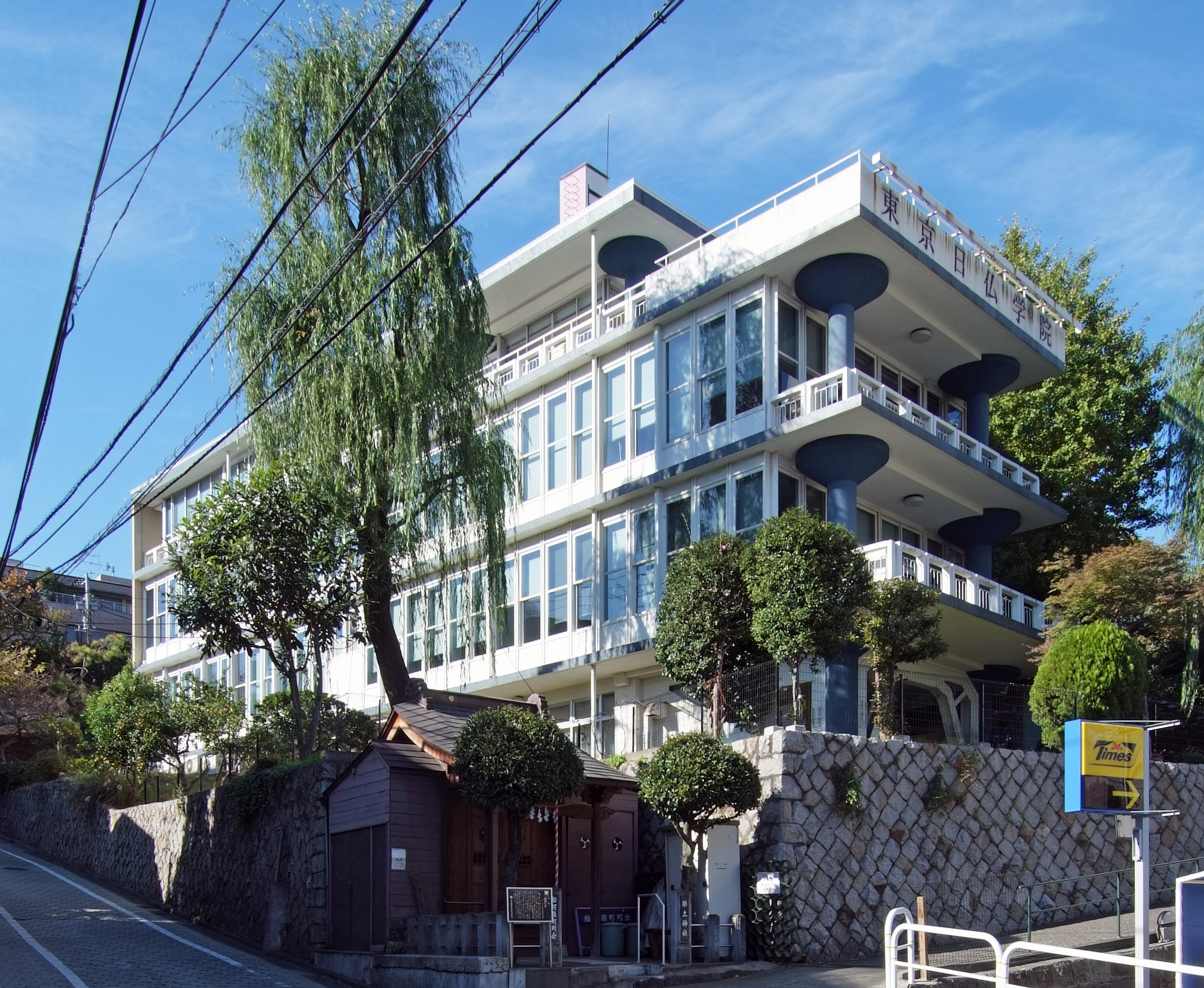
The real anchor of Kagurazaka's "Little Paris" story is this 1951 concrete building by Junzo Sakakura, who trained in Le Corbusier's Paris atelier; it opened as the Tokyo Institute of French Culture in 1952 and was selected by DOCOMOMO Japan in 2016 for features including a rare double-helix staircase. The French school usually cited instead stood in Fujimi, Chiyoda ward, across the moat, and left for Takinogawa in Kita ward in May 2012.
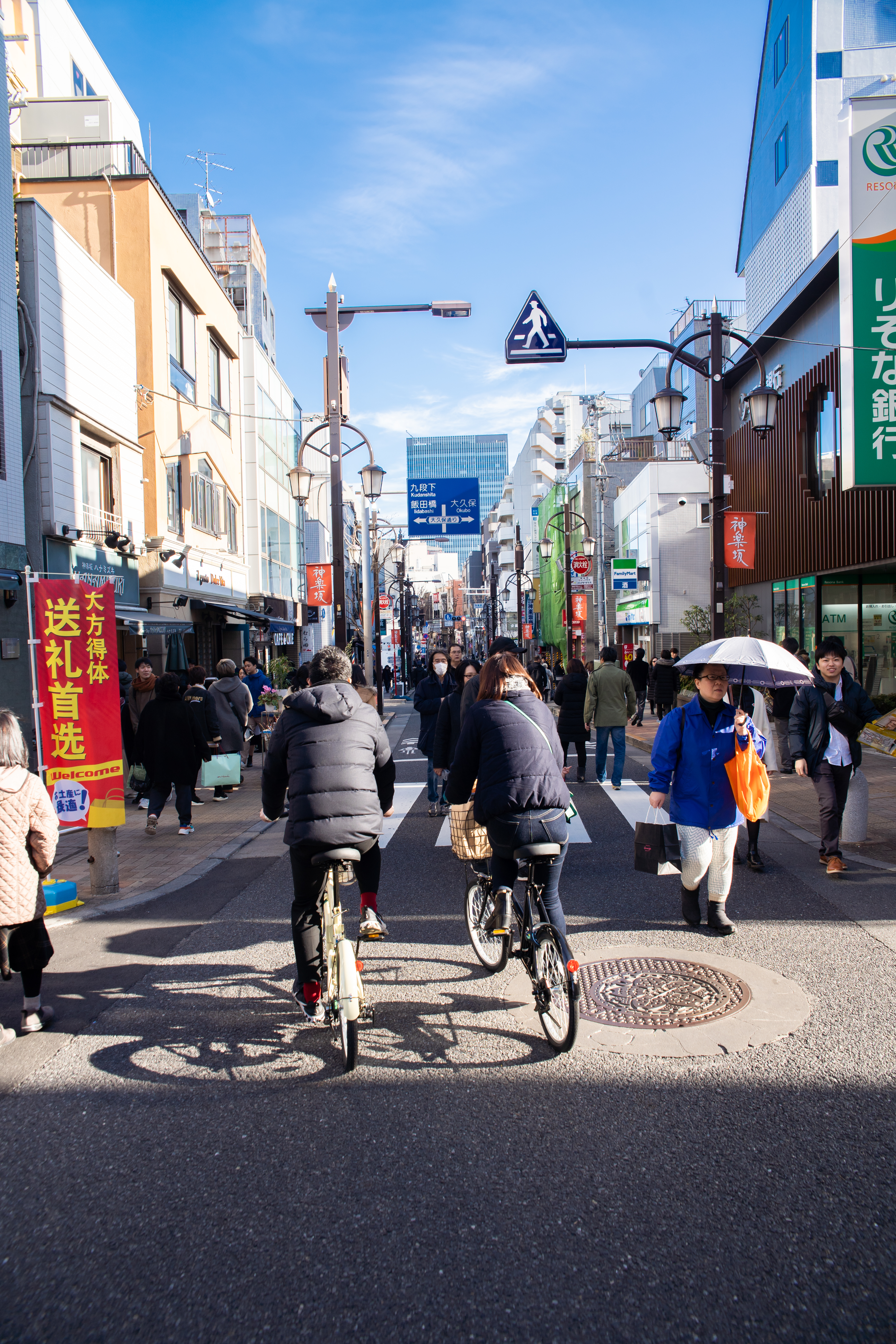
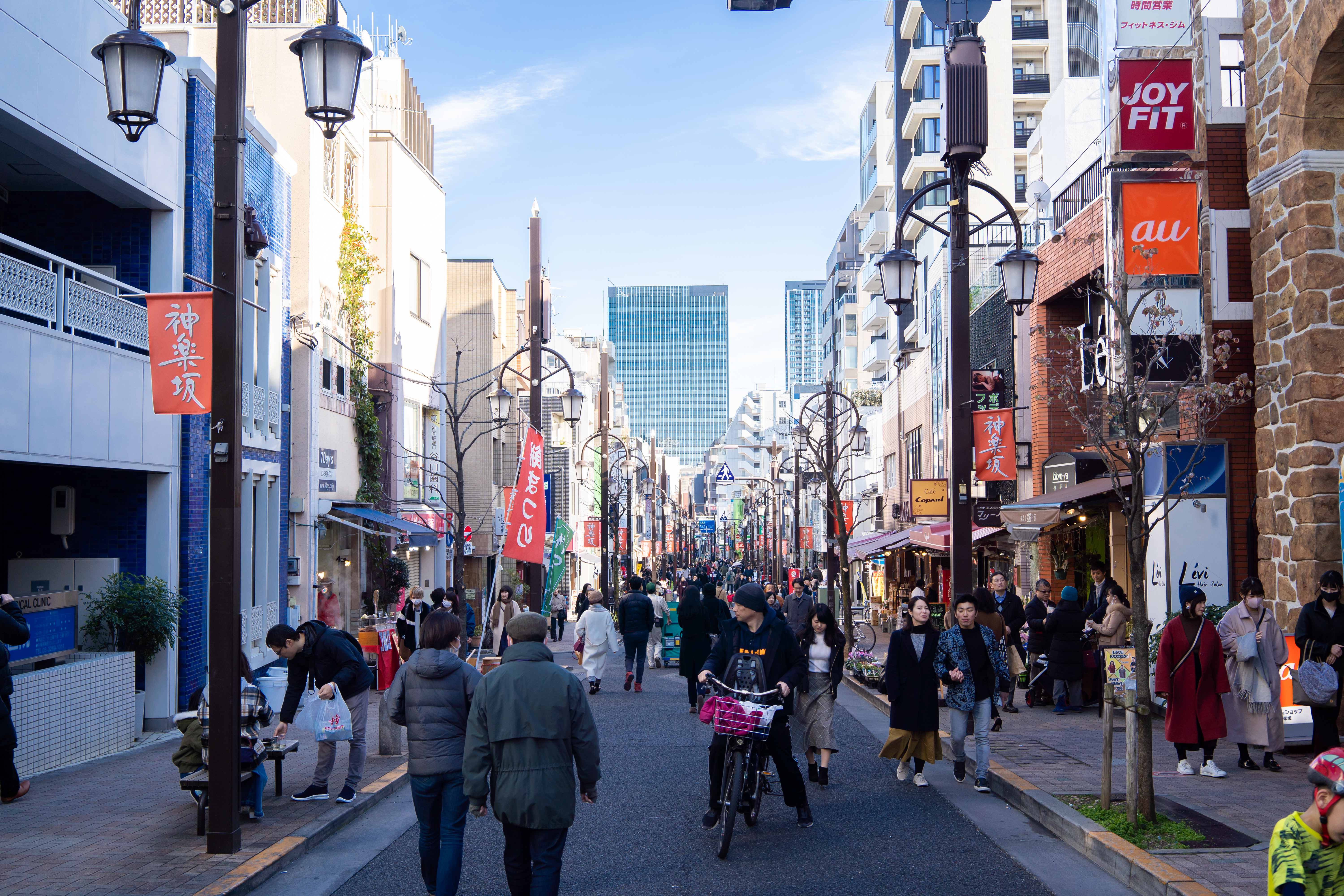
Kagurazaka-dori is one-way downhill from midnight until noon and one-way uphill from noon until midnight, with the street closed to cars entirely between twelve and one so the direction can flip. The slope climbs steadily for about two hundred and fifty metres from the moat to the temple on the crest.
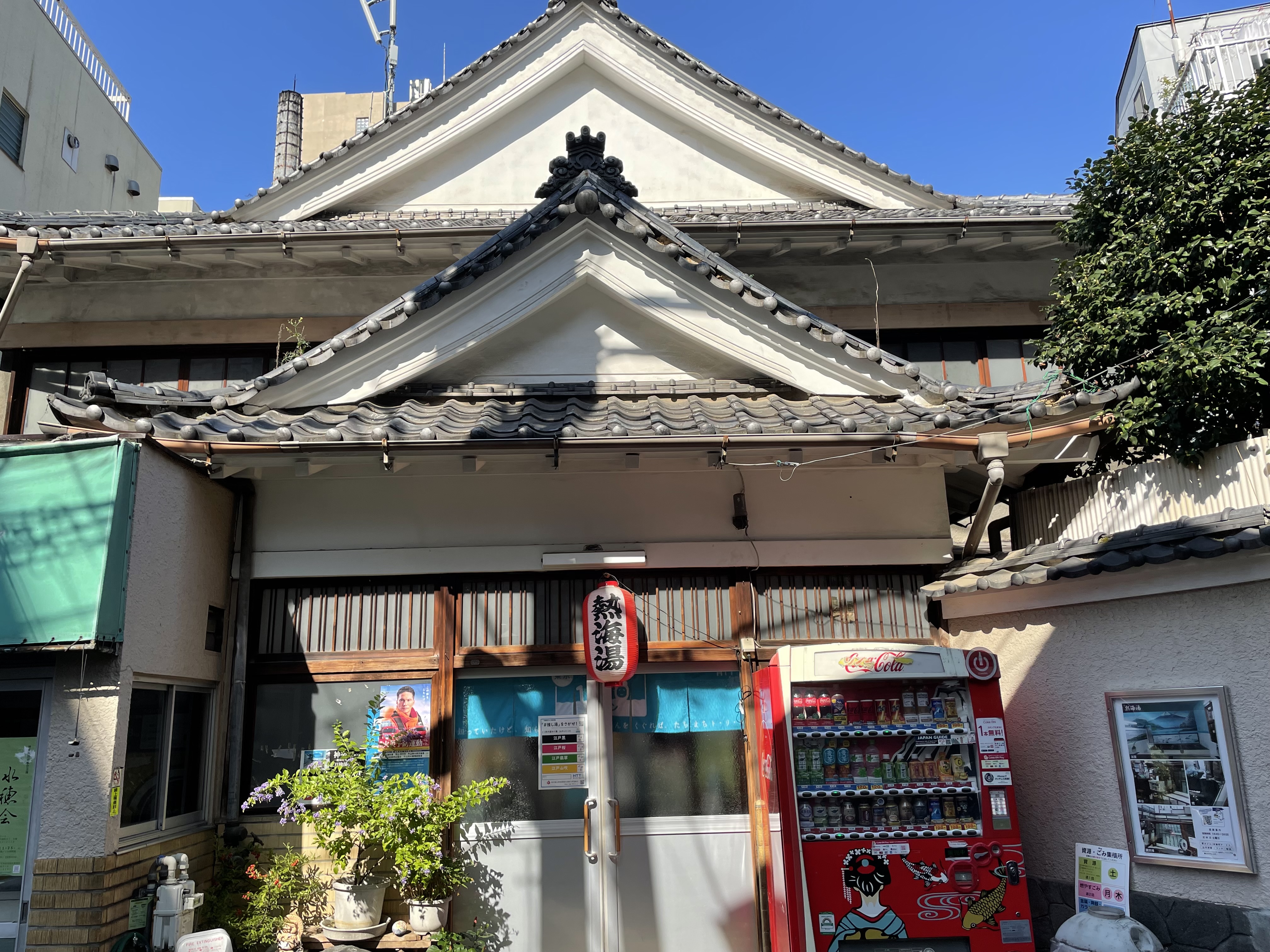
Atami-yu is a wood-fired neighbourhood bathhouse built in 1954, at the foot of a 22-step stone stair that drops about four metres down the edge of the Ushigome plateau. It still trades, still closes on Saturdays, and its owner has long told interviewers that at the bathhouse's busiest roughly two hundred geisha passed through it in a single day.
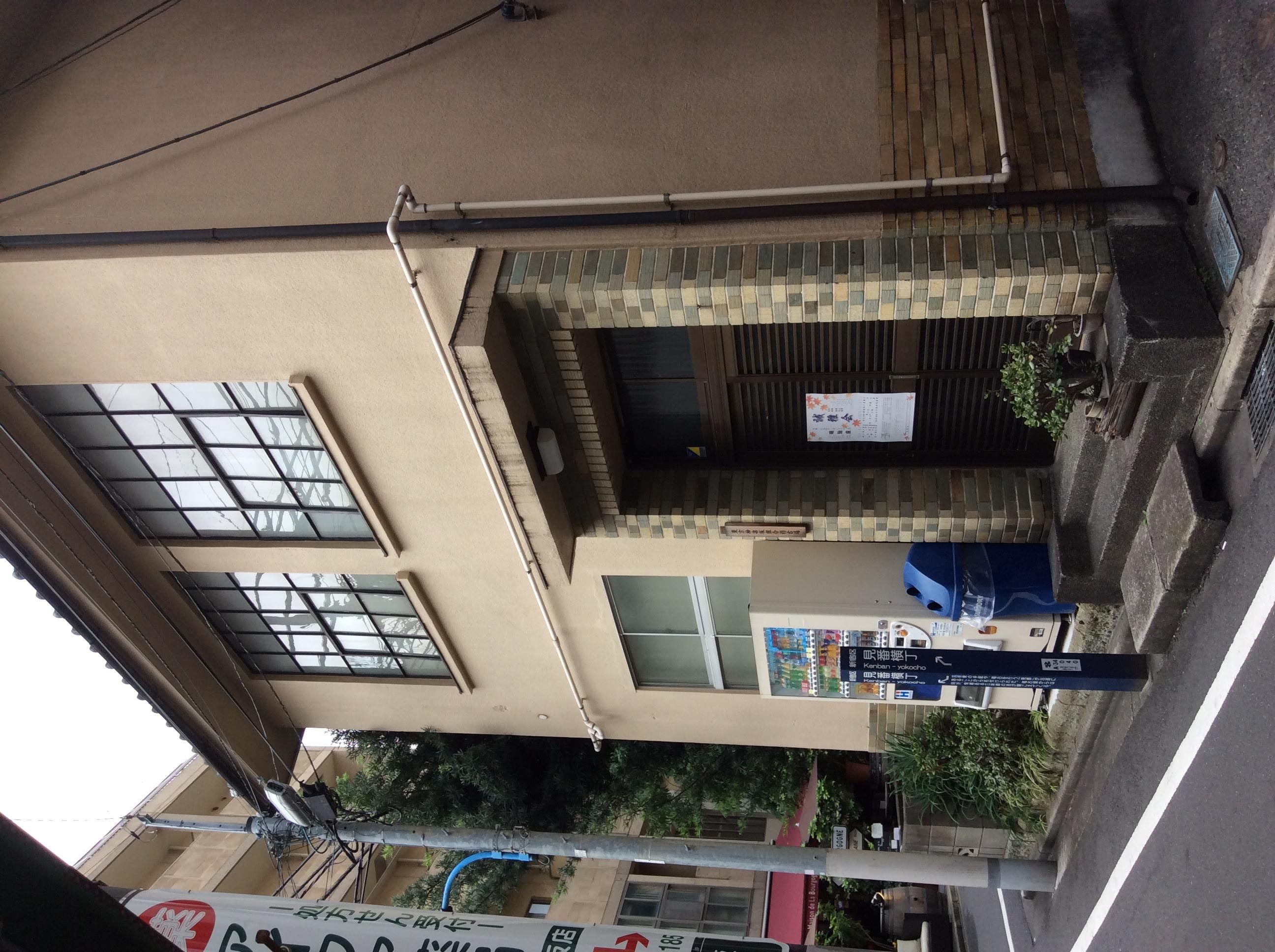
The administrative office of the Tokyo Kagurazaka Association, on the hundred-metre lane named after it, is where the district's bookings, fees and register have always been handled, and where its geisha still rehearse. It coordinates four ryotei and eighteen geisha as of December 2025, in a quarter that between the wars registered 619 geisha and 166 geisha houses.
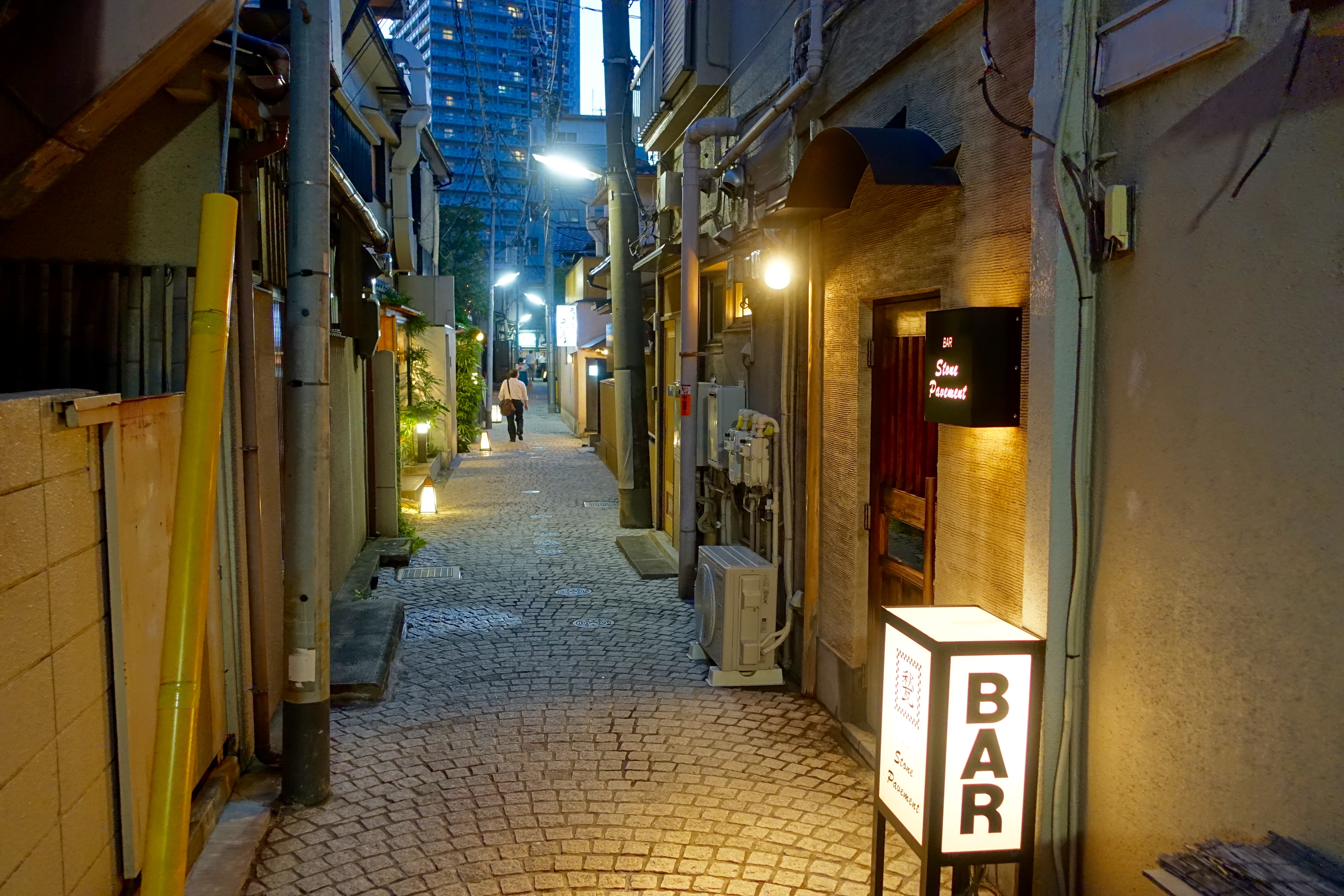
Kakurenbo Yokocho, "hide-and-seek alley", is a 2.7-metre stone-paved lane of black fences that doglegs between Kagurazaka Nakadori and Hyogo Yokocho, and which Shinjuku ward registers as three numbered segments because it refuses to run straight. Every source explains the bend as a way of losing a follower, always hedged as "it is said"; urban-form research instead attributes this lane network to inherited Edo plot divisions and the slope of the Ushigome plateau.
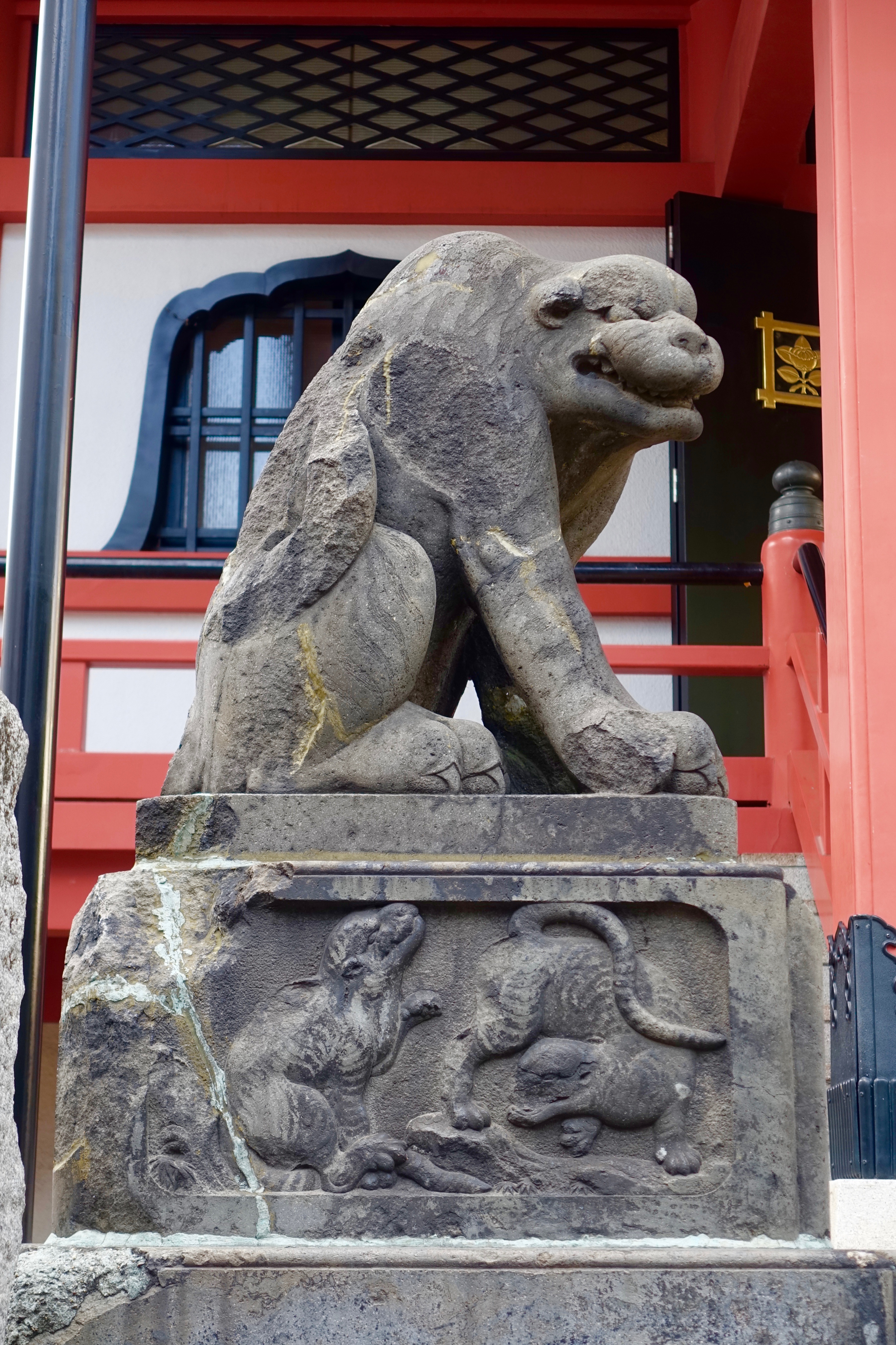
Zenkokuji, the Nichiren temple of Kagurazaka's Bishamonten, was founded in 1595 at Nihonbashi under Tokugawa Ieyasu's patronage and moved to this hillside in 1792-93, where the trade that grew at its gate became the district. Its 1848 stone tigers, guardians because the tiger is Bishamonten's messenger, survived the 1945 fire that destroyed the temple and still carry the damage.
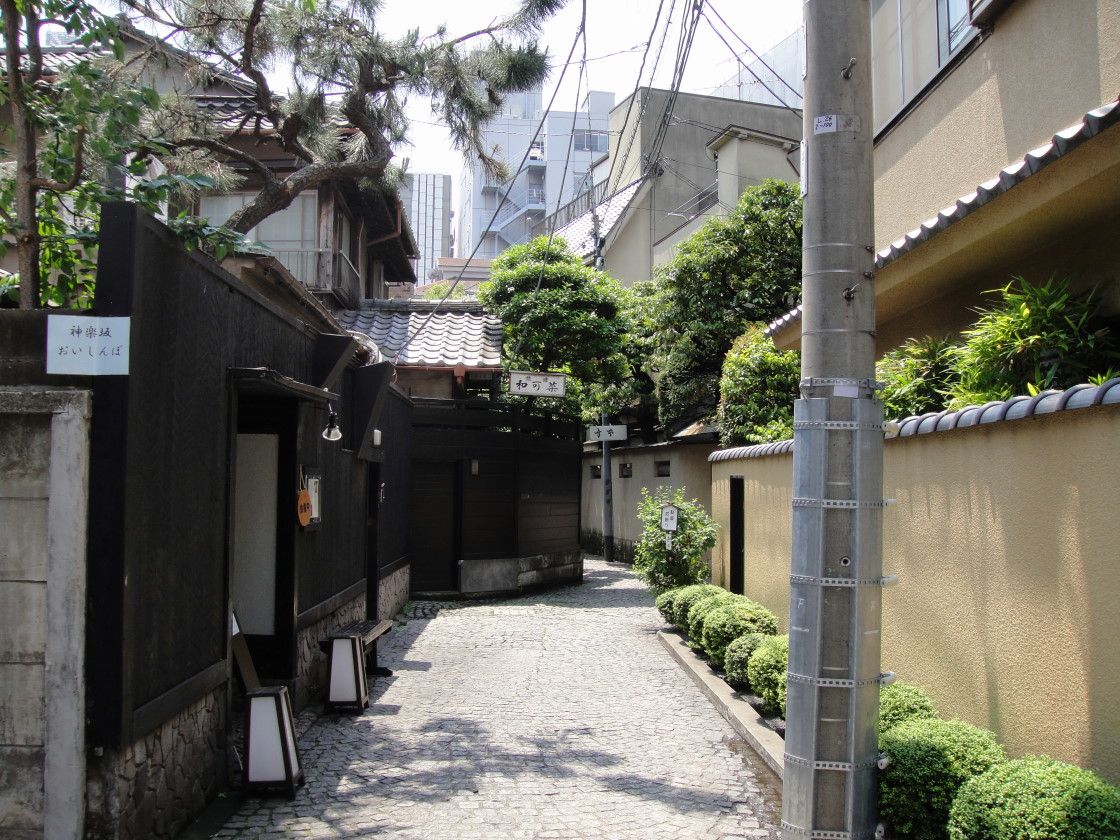
Hyogo Yokocho is a pedestrian stone-paved lane of black timber fencing running roughly a hundred metres north from the front of Zenkoku-ji, named for a Sengoku-period armoury and holding two confirmed surviving ryotei, Yukimoto and Hassen. It also holds the former Wakana, the five-room inn where film studios shut screenwriters away until they delivered, closed around 2015-2016 and restored by Kengo Kuma's office around 2023.
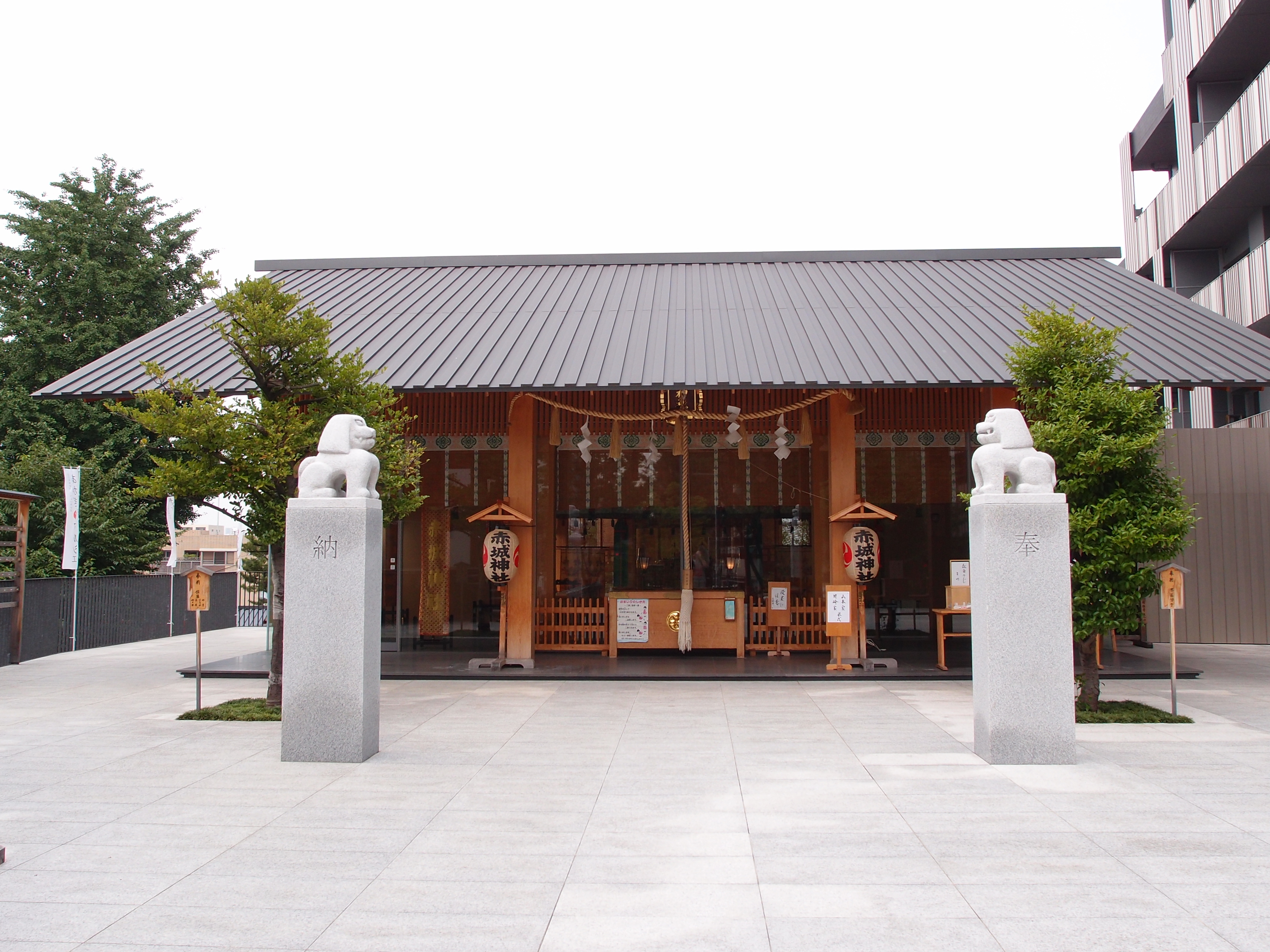
The tour's closing argument: a shrine founded around 1300 by the Ushigome clan and ranked among the three shrines of Edo in 1683, left after the war with a seismically inadequate hall and a closed kindergarten. It granted a seventy-year fixed-term leasehold on the kindergarten plot to Mitsui Fudosan Residential, and the proceeds paid for Kengo Kuma's glass-and-timber sanctuary, opened in September 2010.
This is the real story from one stop on this walk — every stop has one.
Asakusa is the oldest place in Tokyo and almost none of it is old. The Thunder Gate everyone photographs dates from…
Kiyosumi-Shirakawa is sold as a coffee district because old timber warehouses supposedly suited roasters. That causal…
Ginza is a street the Meiji government rebuilt in brick in 1872 purely so that foreign diplomats would see a modern…
We use cookies to analyse site traffic and improve your experience. You can choose to accept or reject analytics cookies. Learn more