The Architecture of Dreams: Barcelona's Modernisme
Barcelona · Spain

The Architecture of Dreams: Barcelona's Modernisme

Barcelona, Spain
150
Duration (min)
5.1
Distance (km)
8
Stops
Easy
Difficulty

Description

Follow three rival architects — Gaudi, Domenech i Montaner, and Puig i Cadafalch — as they competed to reimagine Barcelona through nature, colour, and radical innovation, producing some of the most extraordinary buildings on earth.

Highlights

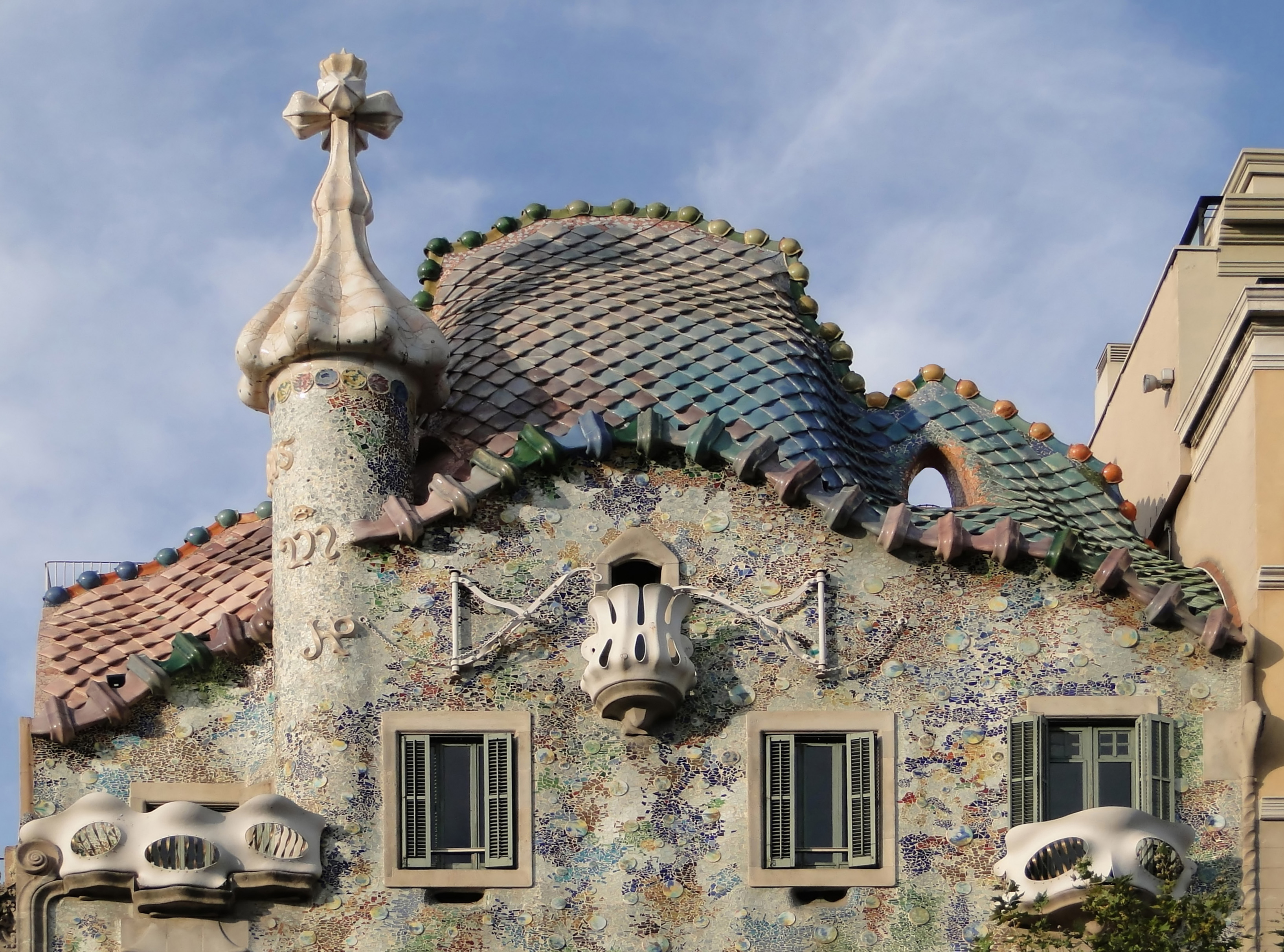
The Block of Discord: three masterpieces side by side Casa Batllo's dragon-spine roof and Sant Jordi symbolism La Sagrada Familia's forest of columns Hospital de Sant Pau: beauty designed to heal Gaudi's warrior chimneys on La Pedrera's rooftop
Tour Stops

Palau de la Música Catalana
0

Palau de la Música Catalana

5 min

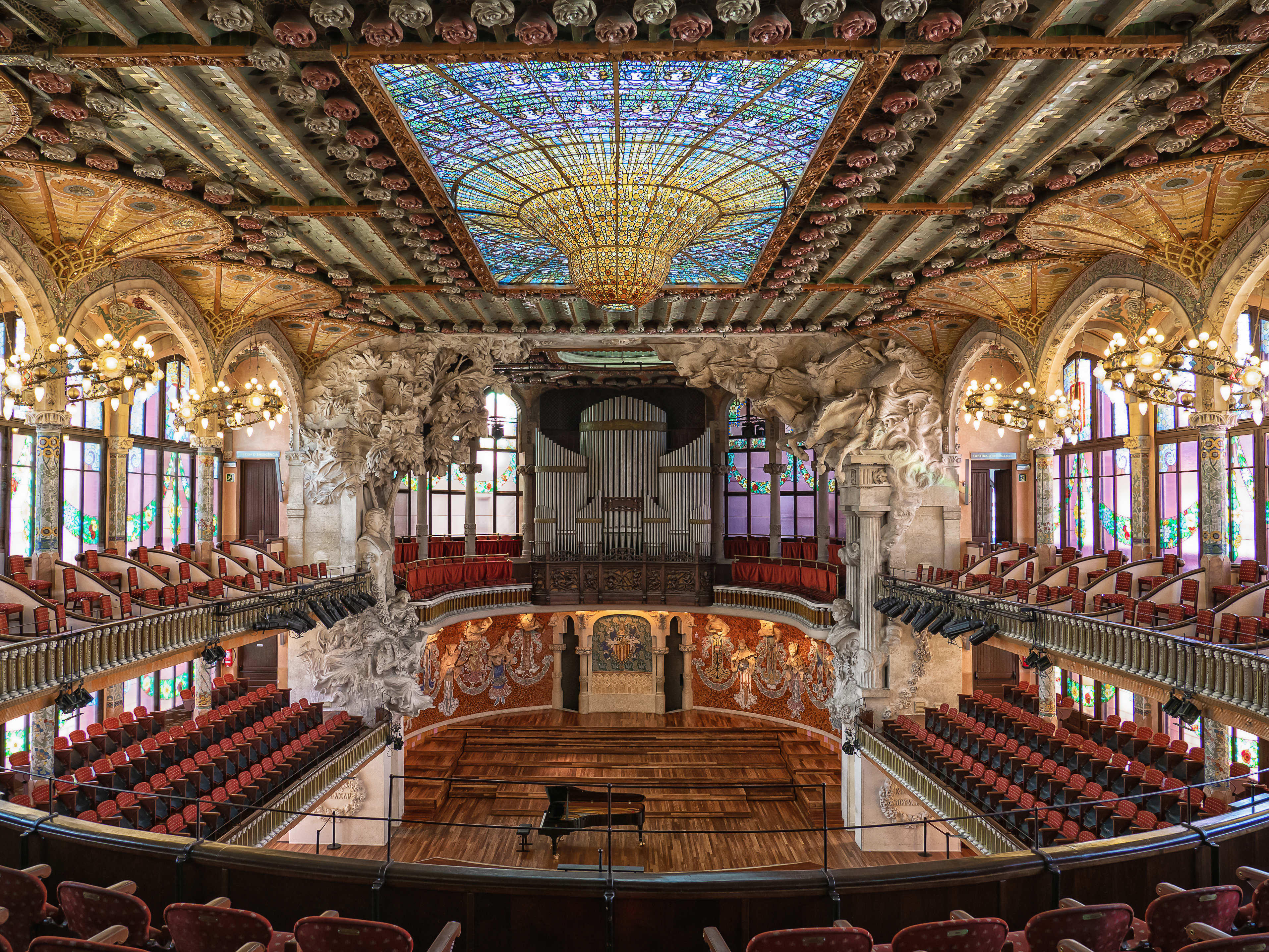
Domènech i Montaner's 1908 UNESCO-listed concert hall is the audacious centerpiece of Catalan Modernisme—a building that explodes with stained glass, sculpture, and ceramic mosaics.
Casa Calvet
1

Casa Calvet

3 min

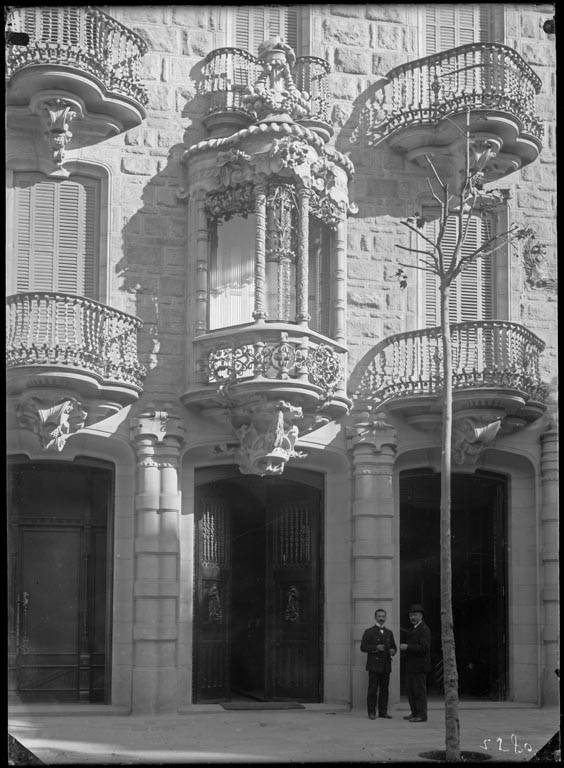
Gaudí's first building (1898-1900) and his most architecturally conservative work, yet still audacious enough to win Barcelona's first-ever architecture prize.
Casa Lleó Morera
2

Casa Lleó Morera

3 min

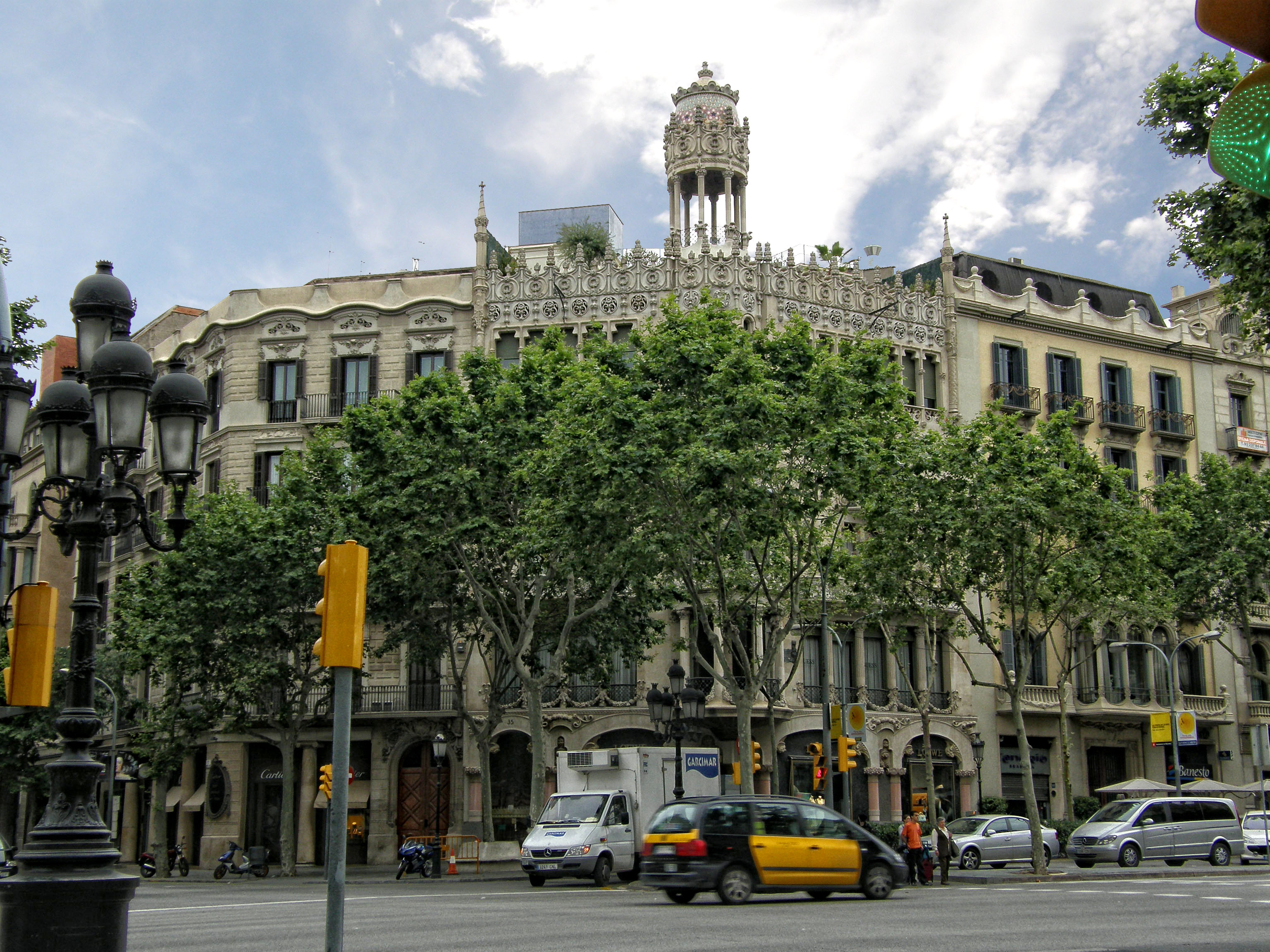
Lluís Domènech i Montaner's 1902-1906 modernist masterpiece featuring an ornate corner dome and floral mosaics. Part of the legendary Block of Discord trio on Passeig de Gràcia.
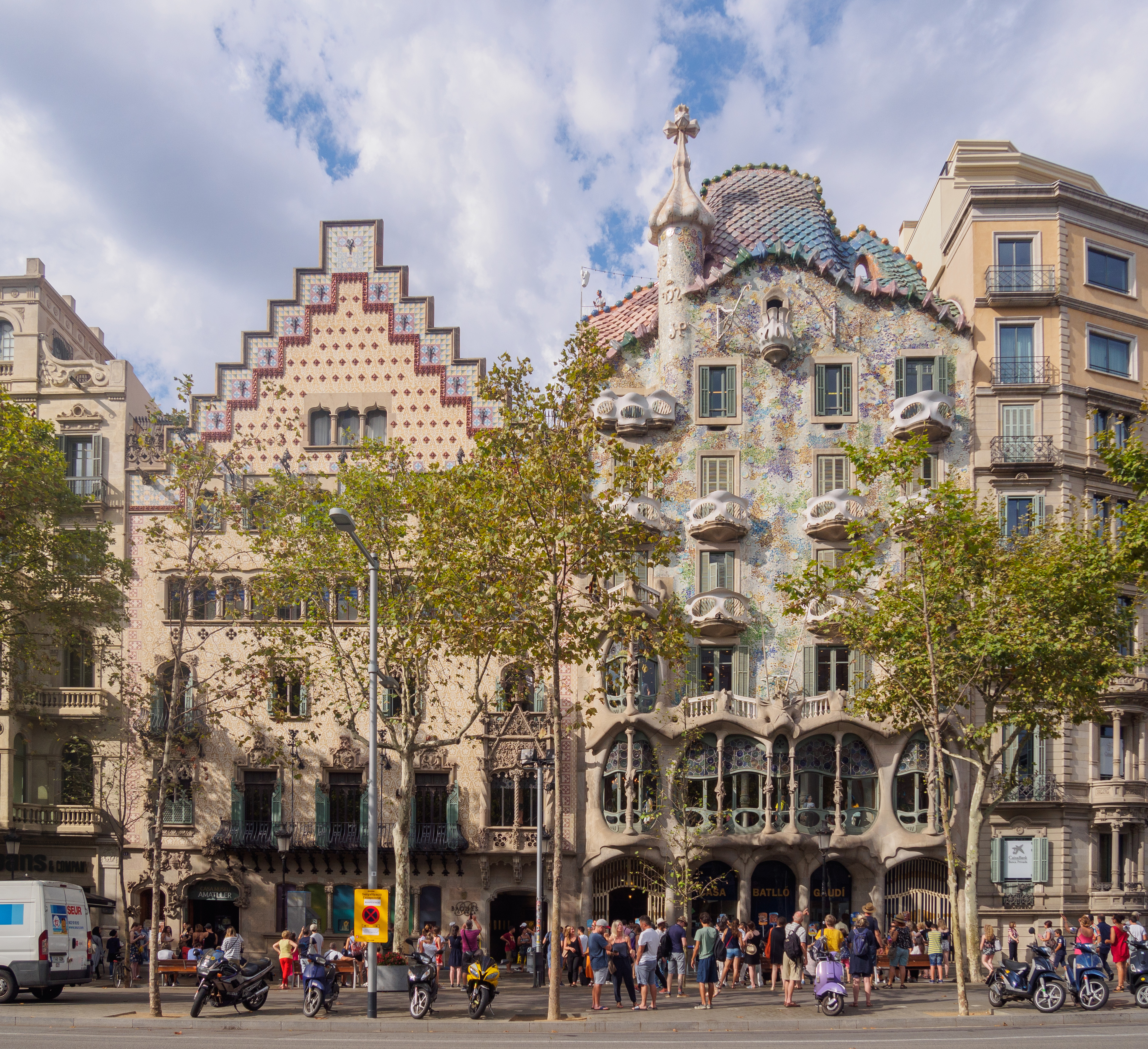
Casa Amatller
3

Casa Amatller

3 min

Josep Puig i Cadafalch's 1898-1900 design for chocolate magnate Antoni Amatller, featuring a distinctive Dutch-Flemish stepped gable and playful animal sculptures symbolizing chocolate production.
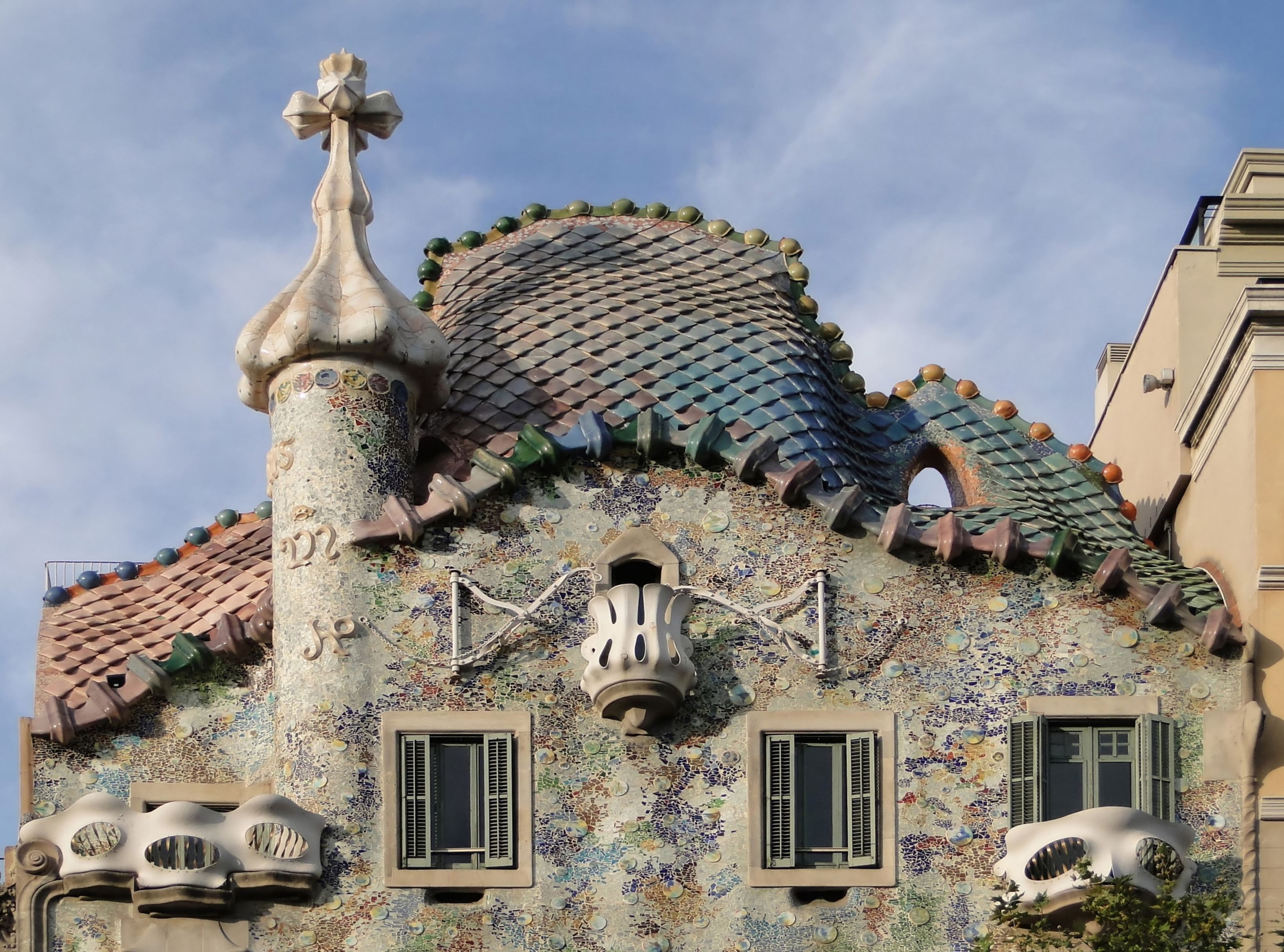
Casa Batlló
4

Casa Batlló

5 min

Gaudí's 1904-1906 renovation of a textile magnate's house transformed into an architectural dragon. The shimmering ceramic facade, bone-shaped balconies, and dragon-backed roof tell the legend of Sant Jordi slaying a dragon in stone, tile, and iron.
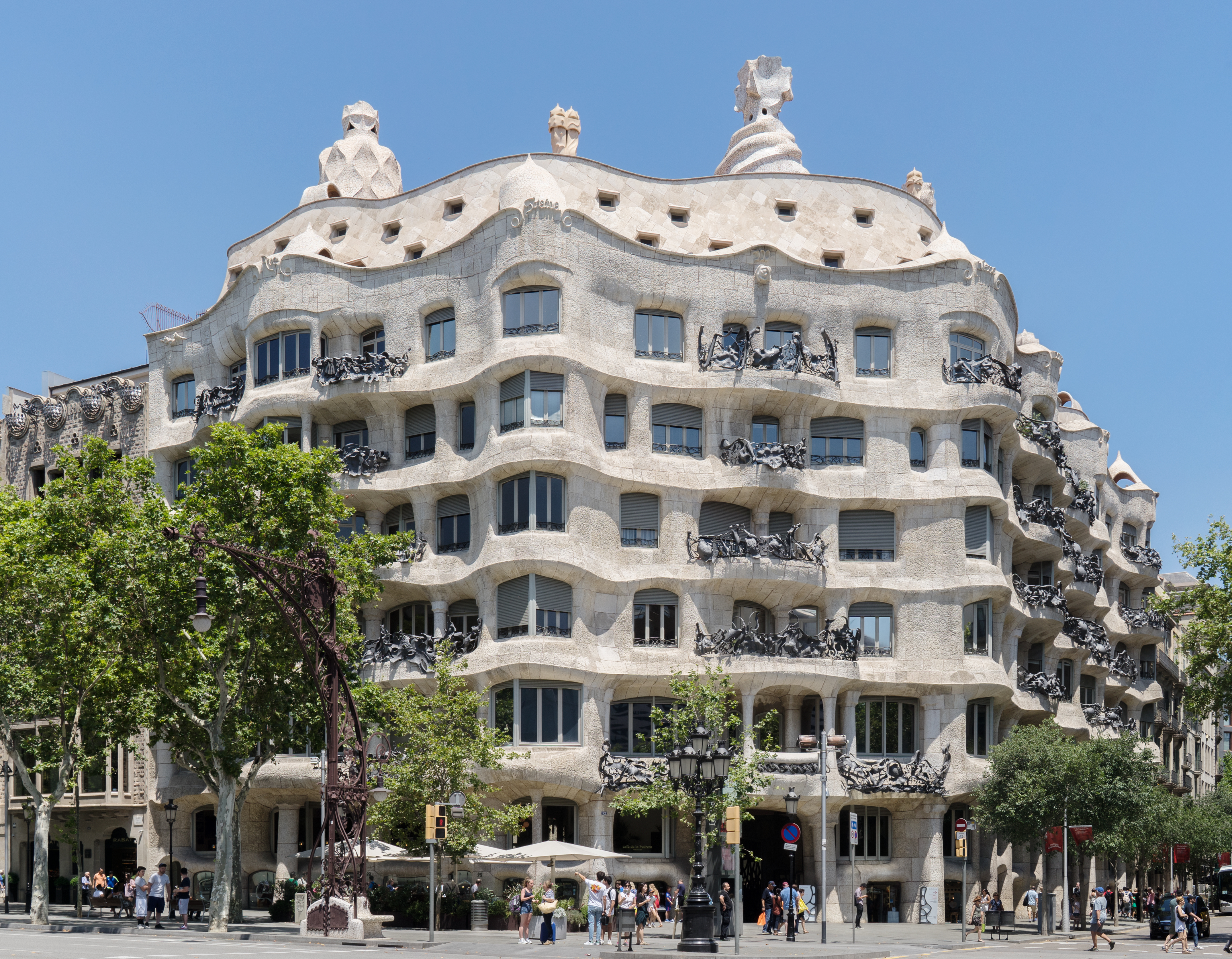
Casa Milà (La Pedrera)
5

Casa Milà (La Pedrera)

5 min

Gaudí's last secular building (1906-1912), a radical apartment block that shocked Barcelona so completely the neighbors demanded it be torn down. The stone quarry appearance earned it the nickname 'La Pedrera.'
La Sagrada Familia
6

La Sagrada Familia

7 min

Gaudí's unfinished basilica, under construction for 144 years. A masterpiece of structural innovation combining spiritual vision with revolutionary mathematics—the only part of the building Gaudí completed during his lifetime is the radiant Nativity facade, while the interior forest of organic columns and geometric innovations define his approach to sacred architecture.
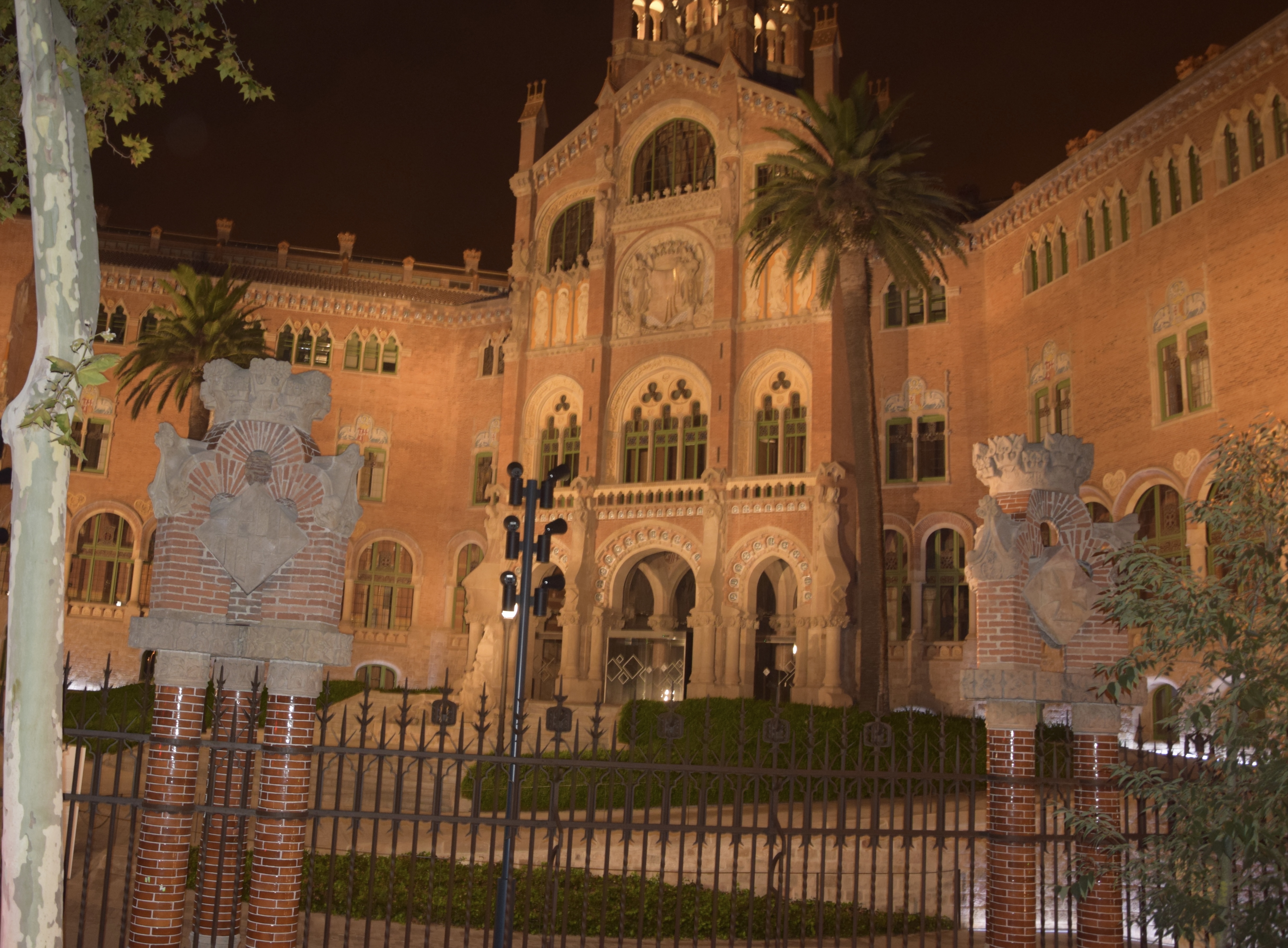
Hospital de Sant Pau
7

Hospital de Sant Pau

5 min

Lluís Domènech i Montaner's final masterpiece and the world's largest Art Nouveau complex. Twelve pavilions designed so patients could see gardens from every bed, connected by underground galleries and declared a UNESCO World Heritage Site in 1997.

A Taste of the Tour

This is the real story from one stop on this walk — every stop has one.

Palau de la Música Catalana

Between 1878 and 1910, three architects turned Barcelona into the most imaginative city in Europe. They weren't working together. They were competing. Fighting, really — in stone, ceramic, iron, and stained glass — to prove that their vision of the future was the right one. Antoni Gaudí looked at nature and saw geometry. Lluís Domènech i Montaner looked at craft and saw spectacle. Josep Puig i Cadafalch looked at history and saw reinvention. All three rejected the grey, straight-lined buildings of their time and said: we can do better. We can make buildings that feel alive. The movement they created — Modernisme, Catalonia's answer to Art Nouveau — produced some of the most extraordinary architecture on earth. Nine UNESCO World Heritage sites, scattered across this city like jewels thrown from a moving carriage. Over the next two and a half hours, we're going to visit eight of the finest, walking from a concert hall that explodes with colour to a hospital designed to heal through beauty. Ready? Let's start with an explosion. Okay, stop. Look up. Really look up. This is it. This is Modernisme at full volume. You're standing in front of the Palau de la Música Catalana, built in 1908 by Lluís Domènech i Montaner, and honestly, there's no gentle way to introduce you to this building—it demands your total attention. It's UNESCO-listed, it's radical, and it's about to spoil you for every other concert hall you'll ever see. Let me set the scene: between 1878 and 1910, Barcelona became the stage for an architectural revolution. Three architects—Gaudí, Domènech i Montaner, and Puig i Cadafalch—were basically in an arms race to see who could push Catalan identity furthest into stone, tile, and iron. Modernisme was their weapon. It wasn't Art Nouveau, though people confuse them. This was *Catalan* Modernisme, and it was militant. Nine buildings from this period are UNESCO sites. Nine. This is one of them. Now, Domènech i Montaner? He was the intellectual of the three. While Gaudí was dreaming in curves and Puig i Cadafalch was mixing Gothic and whimsy, Domènech was orchestrating every detail like a conductor—which is perfect, because this building was commissioned by the Orfeó Català, a choral society that wanted a temple for music and Catalan culture. Look at the facade. See those sculptural groups flanking the entrance? That's not decoration—that's *propaganda*. Those are musicians, angels, and symbolic figures celebrating Catalan song and identity. The entire front elevation is a manifesto carved in stone. The columns are encrusted with tilework and sculpture. Modernisme doesn't whisper—it shouts. But the real genius is what you can't fully see from here. Inside that building is an inverted dome of stained glass. An *inverted* dome. Imagine: you're sitting in the concert hall, and instead of looking up at a painted ceiling, you're flooded with natural light filtered through colored glass. By day, it's a kaleidoscope. By night, it glows from the outside like a lantern. It's 1908, and Domènech is basically inventing the modern concert experience. There's something deliciously ambitious about this building. The ceramic work is extraordinary—look at those cream and turquoise mosaics, the ornamental tiles that catch the light. Everything is handcrafted. The ironwork, the stained glass, the sculptural details—there's barely a square inch that hasn't been obsessed over. This is pre-industrial craftsmanship meeting modern ambition. Here's the gossip part: Domènech was the architect of choice for the Catalan bourgeoisie who were making money in textiles and industry. They wanted to spend it on something that would be *remembered*. The Orfeó Català wanted a building that said, "We are cultured. We are Catalan. We are *important.*" Mission accomplished. What's wild is that you can see Domènech's other philosophy in what you'll see at the end of our walk—the Hospital de Sant Pau. Same architect, different mission. He built this for music, for joy, for culture. His other masterpiece, which we'll end at, he built for healing. Same architectural language, completely different emotional register. But for now: this is your introduction to the three architects who remade Barcelona. This is where the movement shows its most confident, most celebratory face. Step inside if you can—the foyer alone is worth the price of admission. Or catch a concert. Hearing music in a space designed specifically for it, surrounded by all this beauty, is the whole point of Modernisme: life as art, everyday beauty as non-negotiable.

More Tours in Barcelona

Nearby Cities

Back to Barcelona Tours

Cookie Consent

We use cookies to analyse site traffic and improve your experience. You can choose to accept or reject analytics cookies. Learn more