Tokyo · Japan
Shinjuku: From Black Market to Skyscraper
Tokyo, Japan
Omoide Yokocho, the black-market lanes that survived every clearance Crossing the world's busiest station for free through the East-West passageway Why Japan could not build tall until 1963, and how these towers are engineered to sway rather than resist The reservoir under Nishi-Shinjuku, and the one hexagonal pavilion left from it The free 202-metre observation decks at Tange's city hall — the two towers do not share a schedule A district named in 1948 after a theatre that was never built Golden Gai, which survived by refusing to sell Taisoji's 5.5-metre statue of the judge of the dead, free, lit by a button A plaque in the pavement marking where Shinjuku literally began
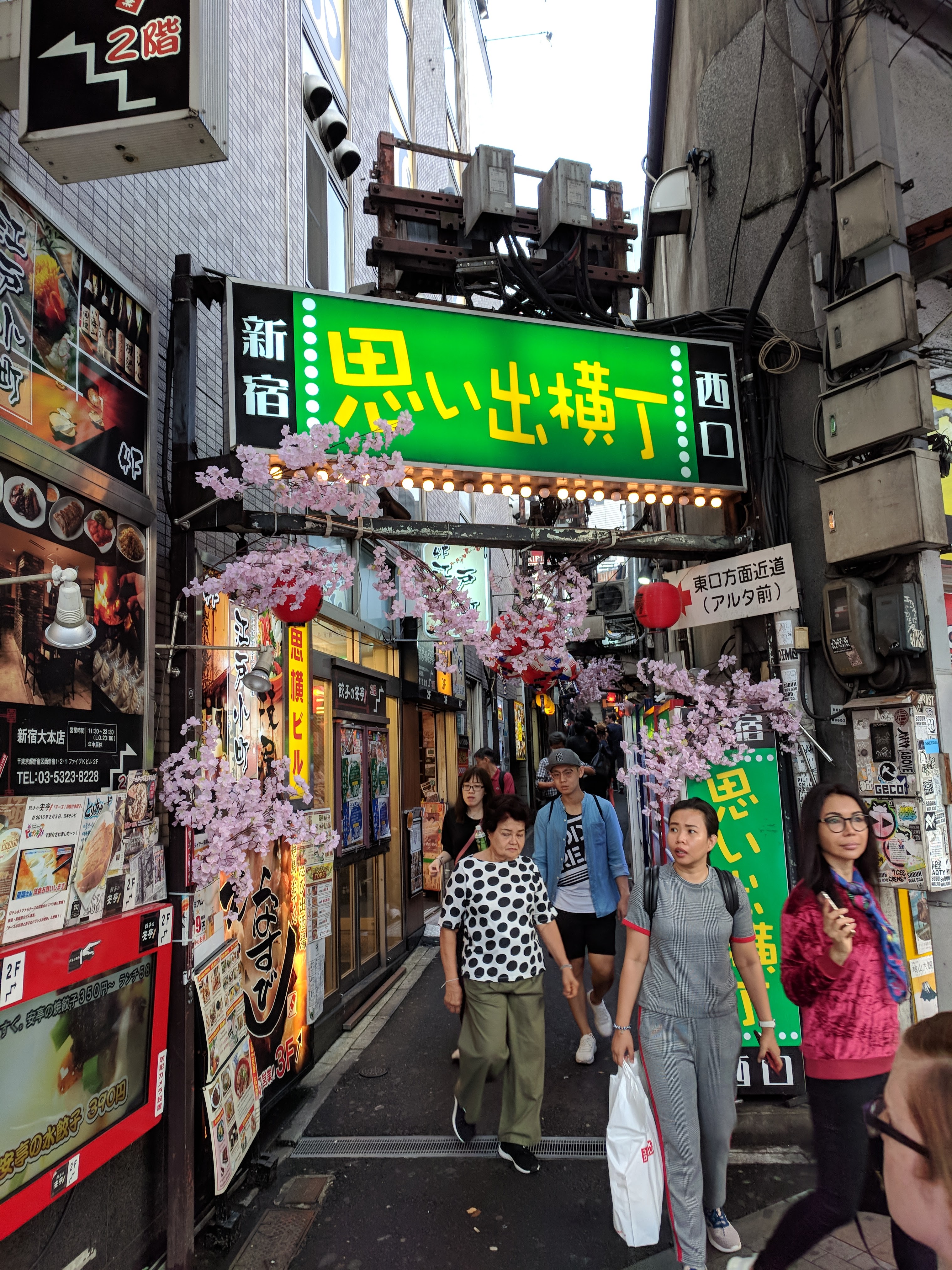
These narrow lanes of tiny bars beside the Shinjuku tracks descend directly from the open-air black market that formed here in 1946, and they are the one part of west Shinjuku that was never cleared away. Around seventy premises survive on a two-metre lane that a fire in 1999 burned twenty-eight shops out of.
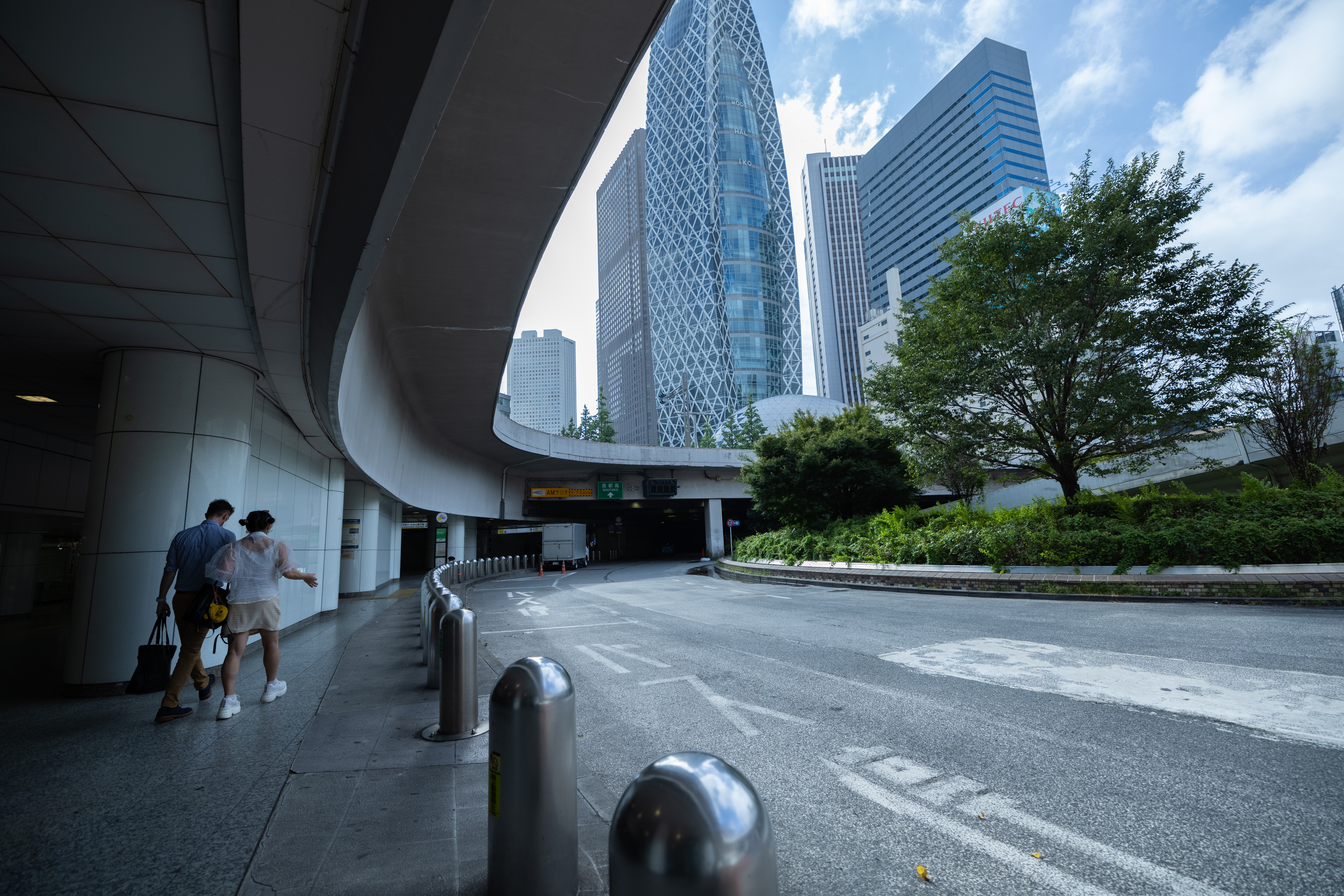
Shinjuku is the busiest railway station on earth - Guinness records an average of 2,704,703 passengers a day - and it is not one station but five operators' stations grown together, with over two hundred exits and no unified plan. Since July 2020 the East-West Free Passageway lets pedestrians cross straight under the tracks without a ticket, the route this walk uses.
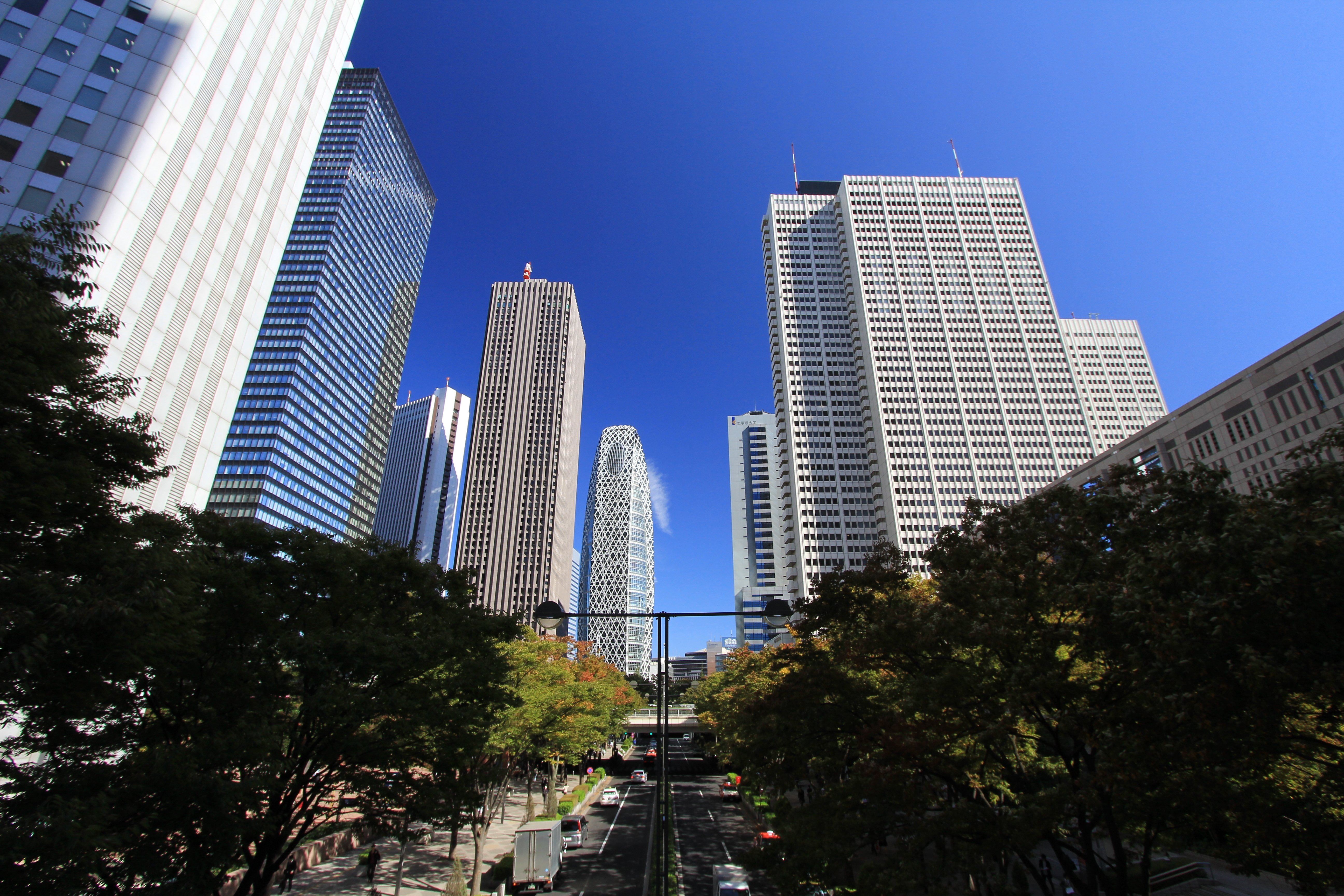
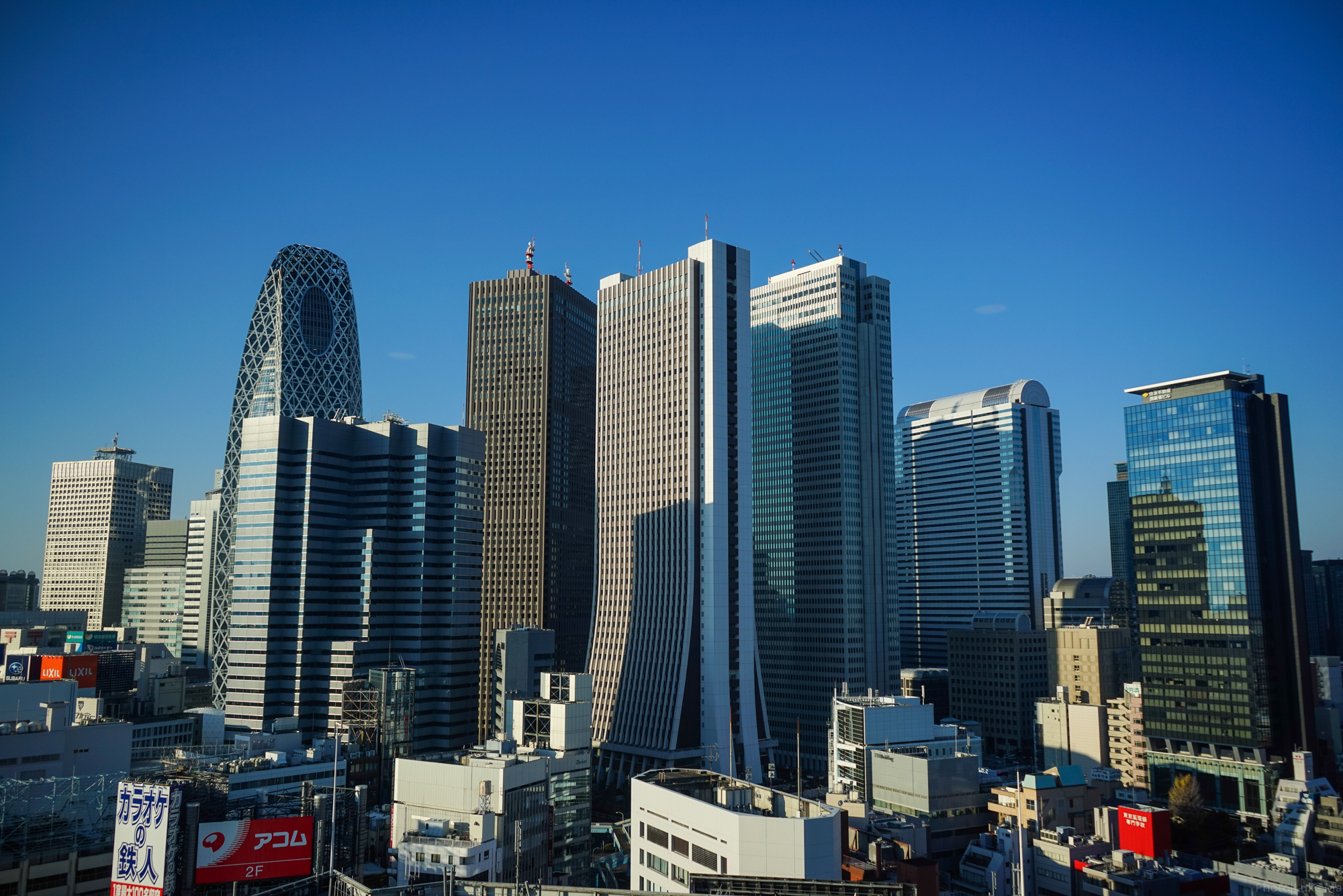
Japan's first cluster of true high-rises rose here after a 1963 law replaced the country's 31-metre absolute height limit with a floor-area-ratio system, beginning with the Keio Plaza Hotel in 1971. The towers are engineered to sway rather than resist, as footage from the 2011 Tohoku earthquake made visible.
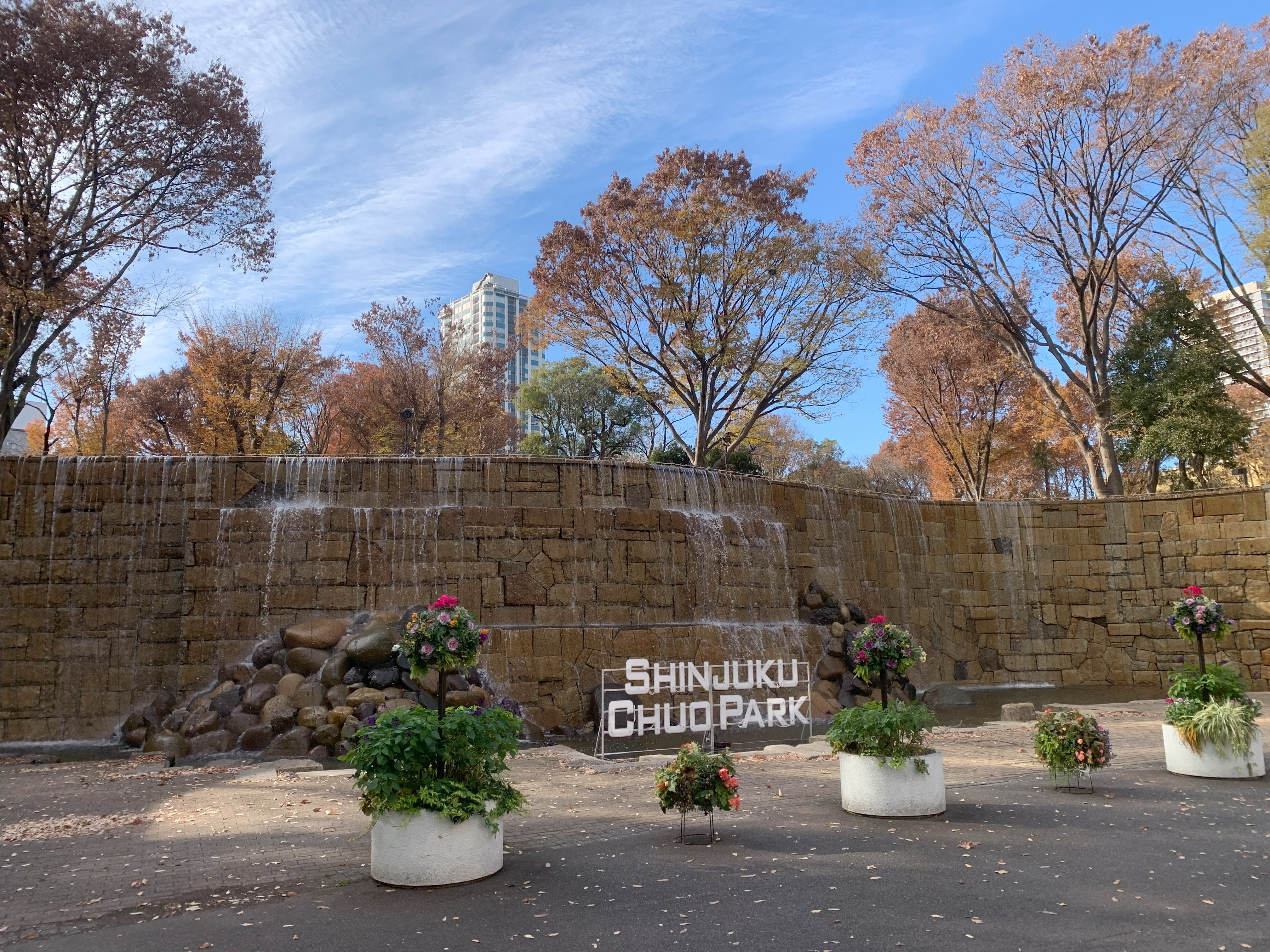
Shinjuku Chuo Park sits on part of the site of the Yodobashi Purification Plant, Japan's first modern waterworks, which began supplying central Tokyo in 1898 and was shut down on 31 March 1965. Its removal freed roughly 34 hectares of single-owner land, and the park opened in 1968; a hexagonal waterworks pavilion still stands on the Fujimidai mound inside it.
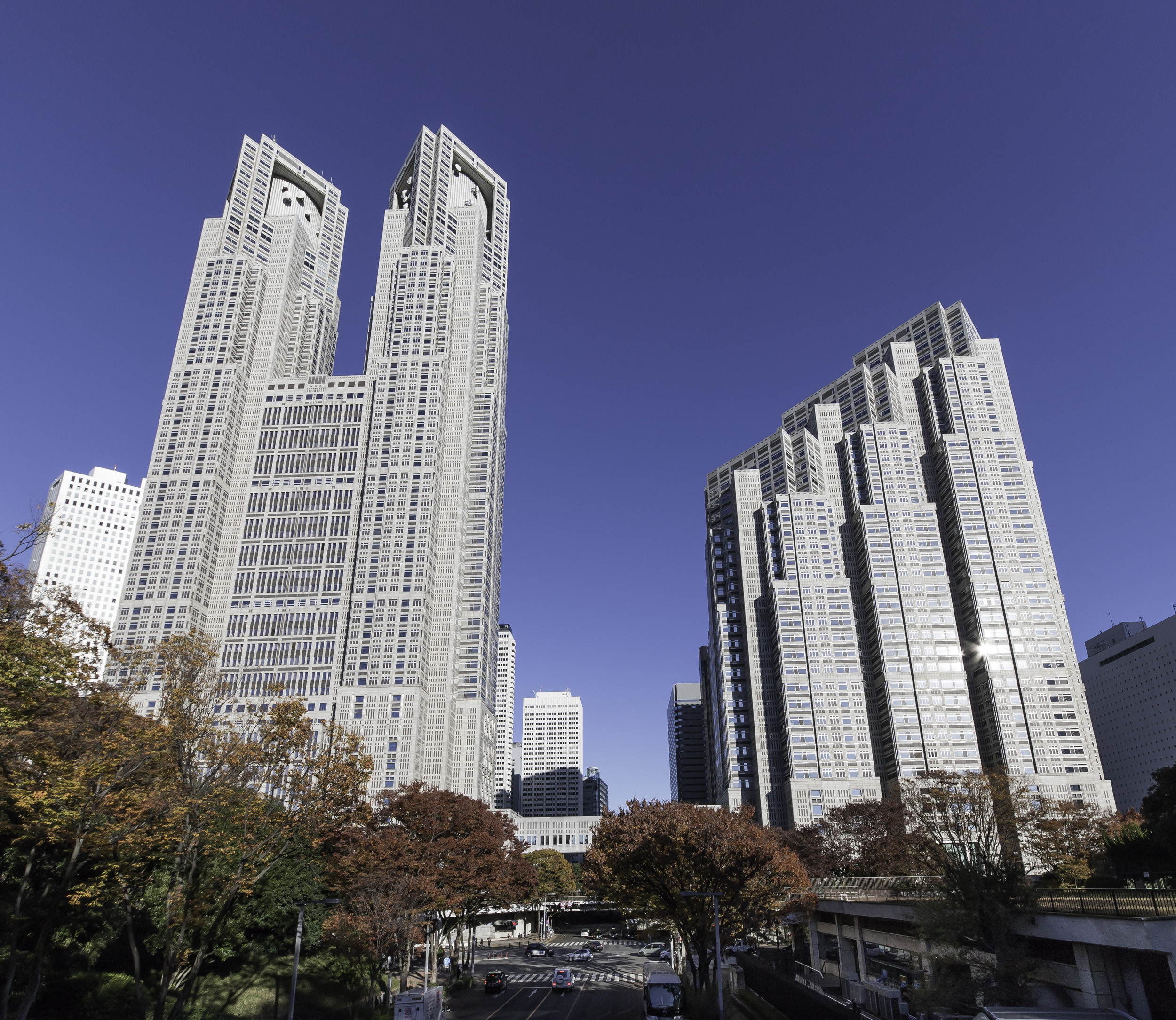
Kenzo Tange's twin-towered city hall, completed in 1990 and occupied in April 1991, moved Tokyo's metropolitan government from Marunouchi out to Nishi-Shinjuku. Both towers hold a free public observation deck on the 45th floor at 202 metres, each with its own opening hours and closing days.
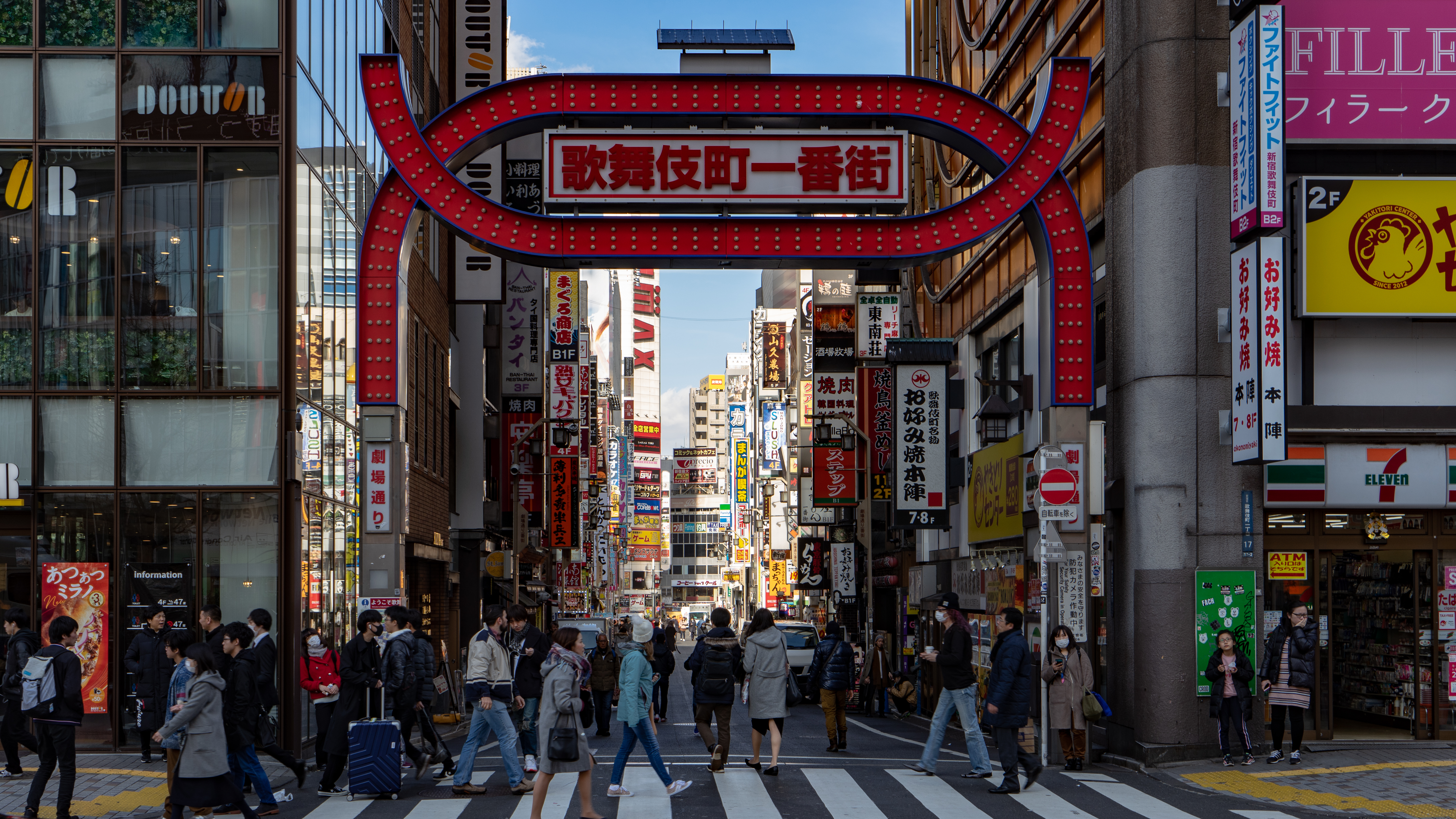
The red arch over Kabukicho Ichibangai marks a district named in 1948 after the Kikuza, a kabuki theatre planned for the firebombed lot behind it and never built. Occupation-era building restrictions and a bank-deposit freeze killed the funding, and the theatre's intended plot now holds the Shinjuku Toho Building.
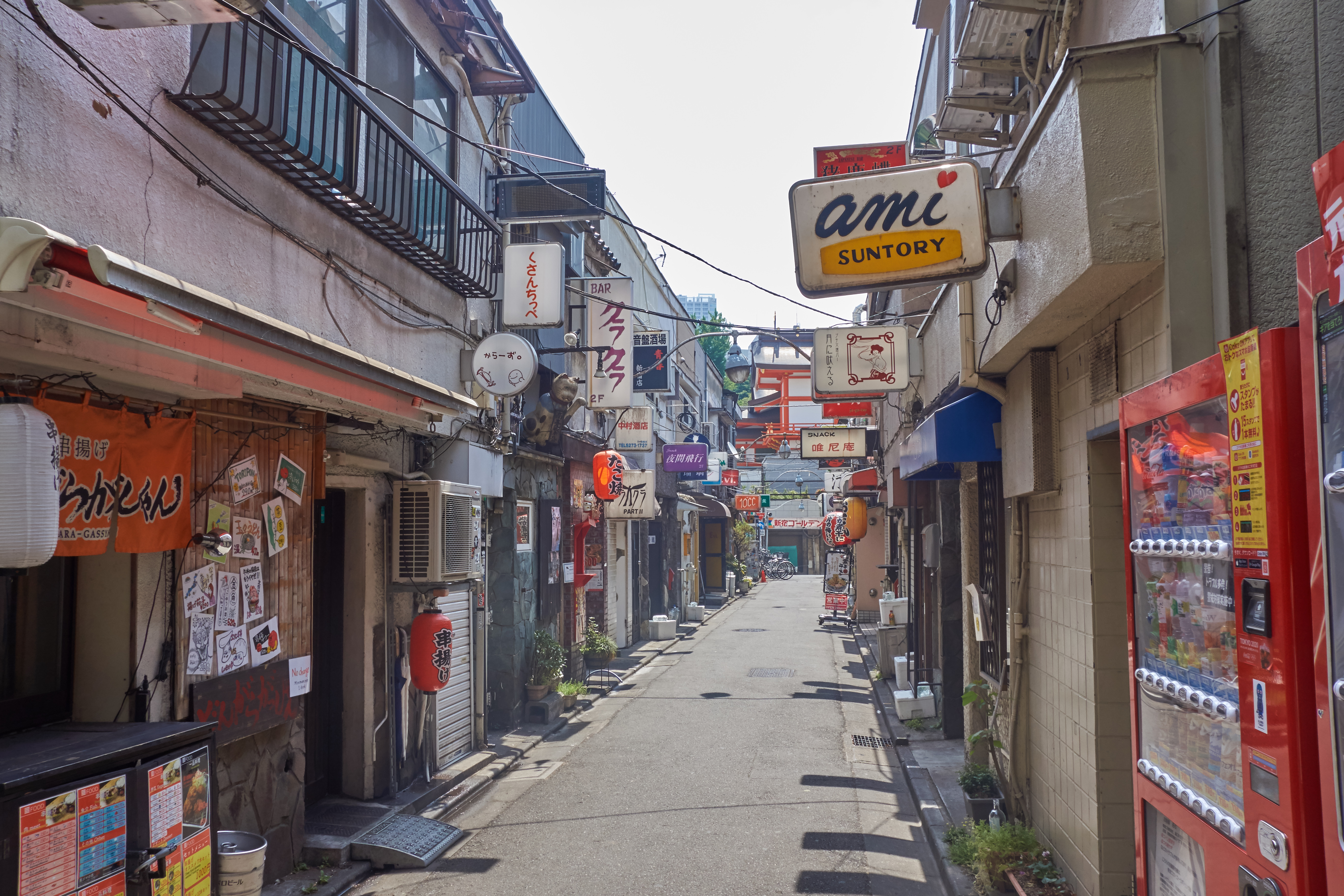
Six lanes of tiny two-storey bars that began as an unlicensed red-light quarter and converted to drinking dens after prostitution was outlawed in 1958. Their tenants organised against bubble-era land buyers and a run of arson attacks, and roughly 280 bars trade here today, after the district emptied to about 150 in the 1990s and refilled under a change to the lease law.
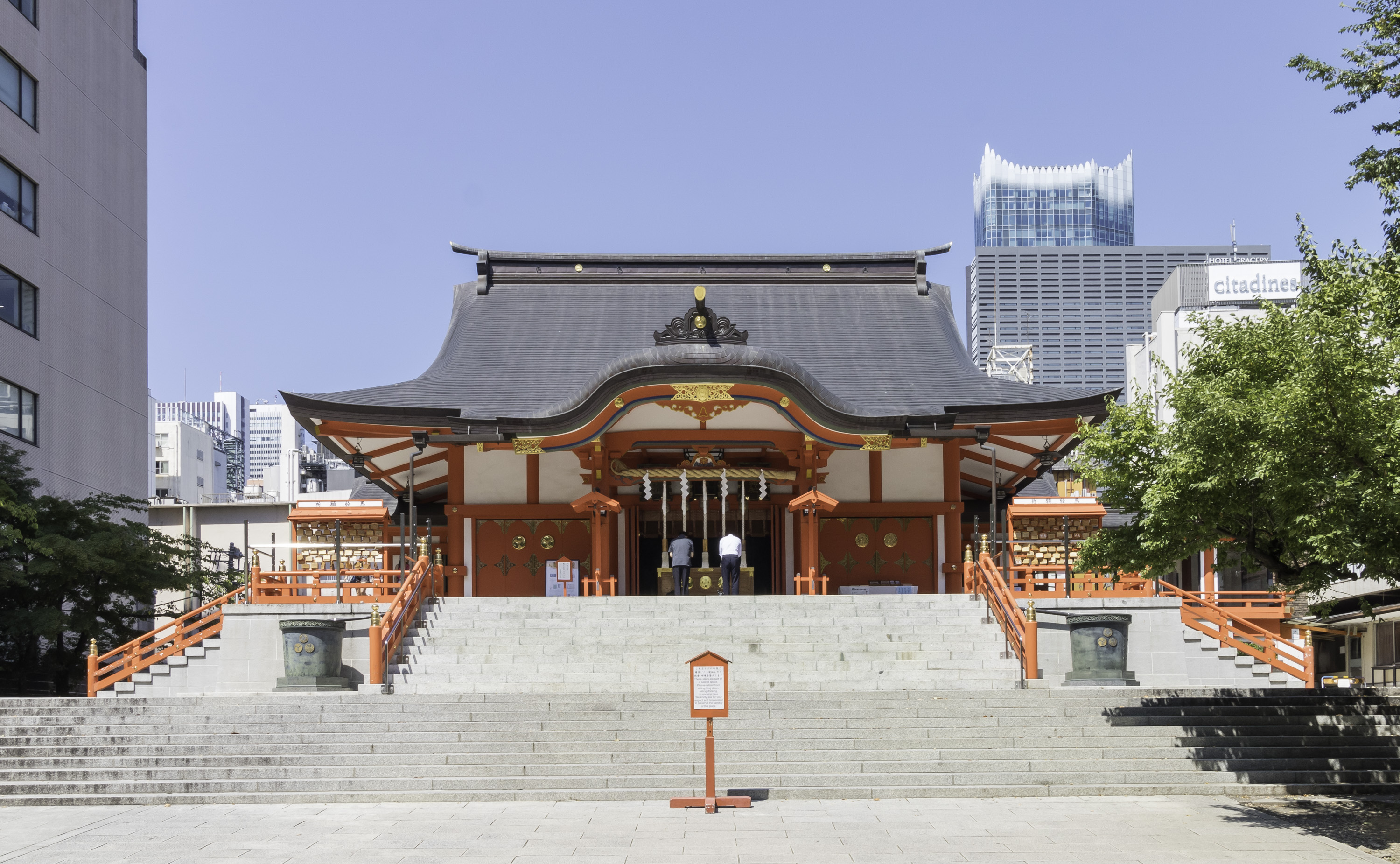
Hanazono Shrine has occupied this plot since the Kan'ei era of the 1620s-40s, when it was moved here after its original ground near today's Isetan store was absorbed into a shogunal retainer's estate, and it was given a corner of the Owari Tokugawa family's flower garden as replacement land. Guardian shrine of the district since Edo times, it now sits hemmed in by the buildings of the entertainment quarter, hosting the November Tori-no-Ichi rake fairs, Sunday antique markets and a sub-shrine to the performing arts.
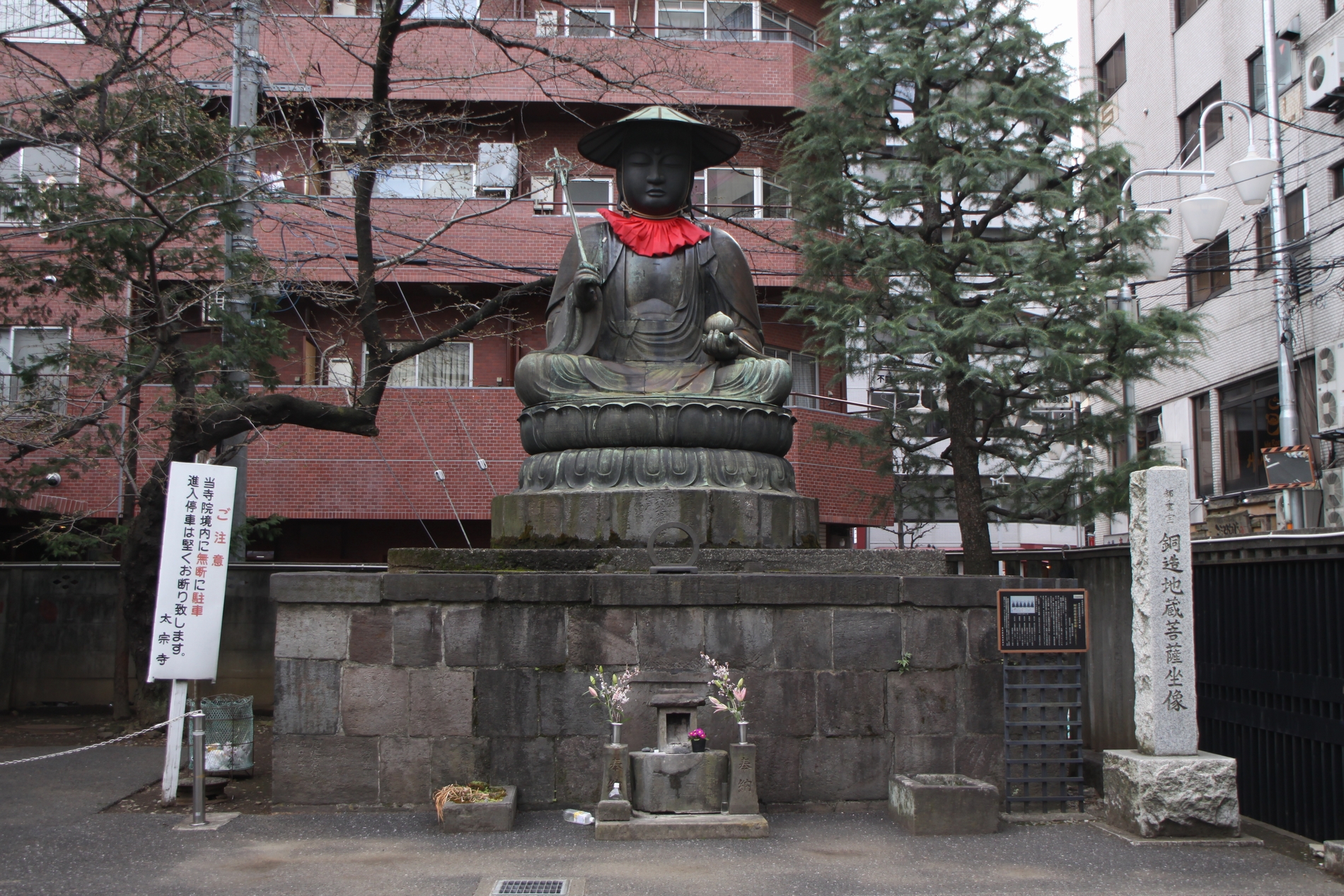
A working Jodo-sect temple on the old edge of Naito-Shinjuku, holding a 5.5-metre seated statue of Enma, the judge of the dead, lit by a button in a free hall, alongside a Datsueba statue and one of the Edo Six Jizo cast in 1712. It was the Naito family's burial ground and stood at the Koshu Highway entrance to the city.
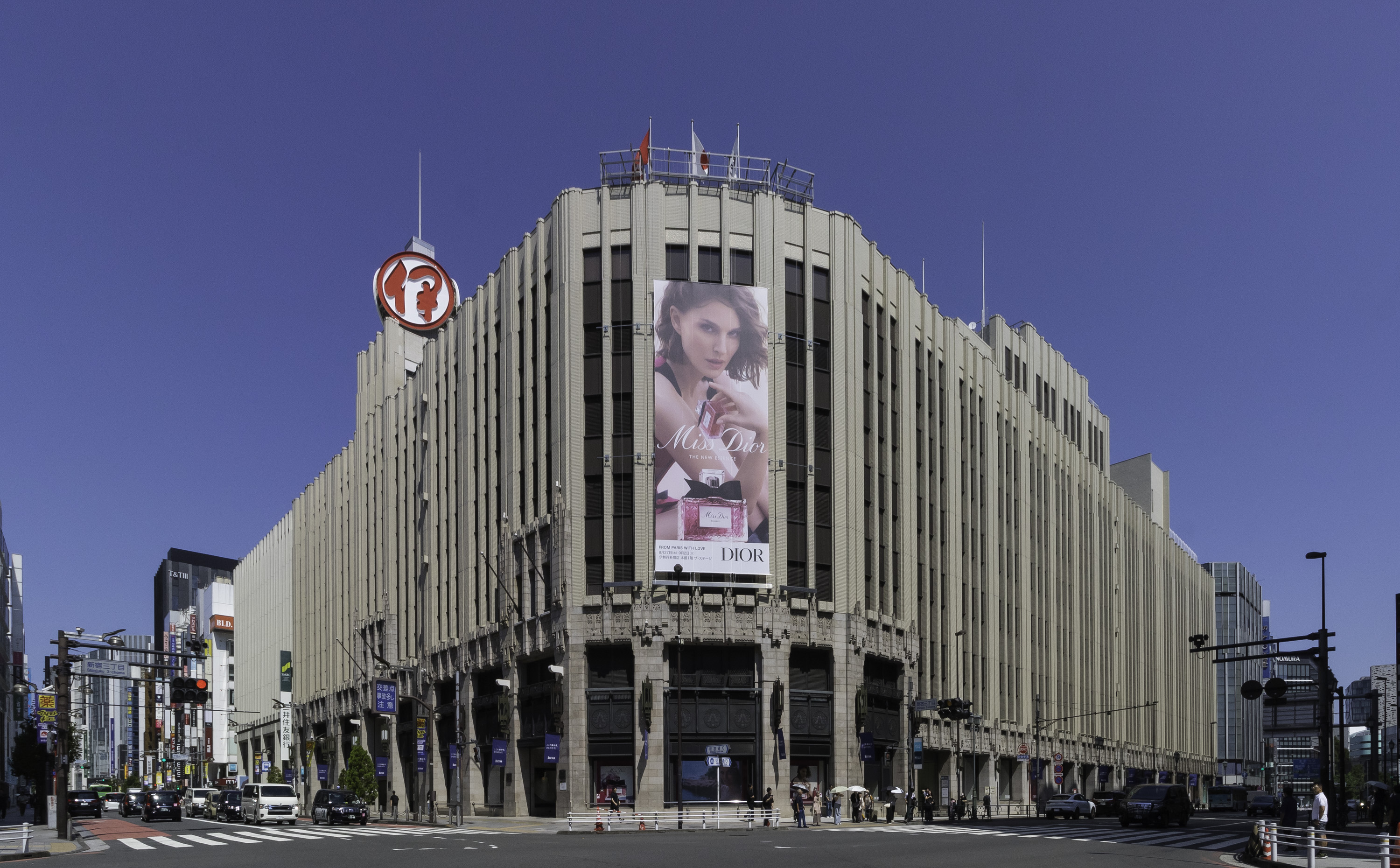
The Shinjuku 3-chome crossing is Oiwake, the fork where the Koshu Kaido and the Ome Kaido divided and where Naito-Shinjuku post town stood from 1699. The shogunate abolished the town in 1718 and left it closed for fifty-four years before reinstating it in 1772; a marker and a plate set into the pavement opposite Isetan record the spot.
This is the real story from one stop on this walk — every stop has one.
Asakusa is the oldest place in Tokyo and almost none of it is old. The Thunder Gate everyone photographs dates from…
Kiyosumi-Shirakawa is sold as a coffee district because old timber warehouses supposedly suited roasters. That causal…
Ginza is a street the Meiji government rebuilt in brick in 1872 purely so that foreign diplomats would see a modern…
We use cookies to analyse site traffic and improve your experience. You can choose to accept or reject analytics cookies. Learn more