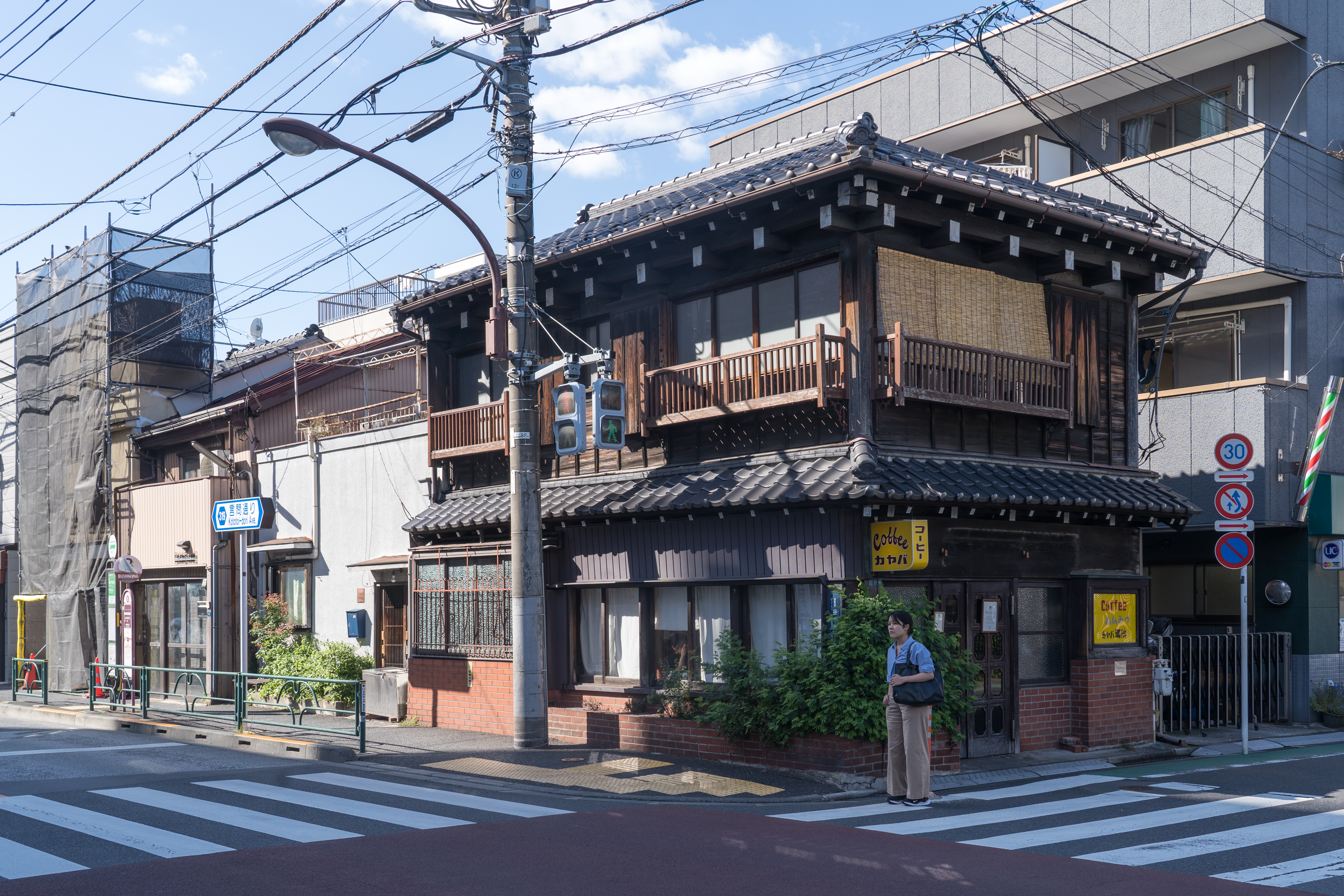
Tokyo · Japan
Yanaka: The Streets the Firebombs Missed
Tokyo, Japan
The bombing map read from the top of the sunset stairs — and an honest account of what did and didn't burn here A temple wall of rammed earth and roof tile, 37 metres of it, built so that fire could not climb it Tennoji's 1690 bronze Buddha, and the shogun-licensed lottery the temple once ran with an awl and a locked box The last shogun's grave — he handed back a country and spent the next 45 years taking photographs and riding a bicycle Nezu Shrine, standing complete since 1706, and its tunnel of vermilion gates
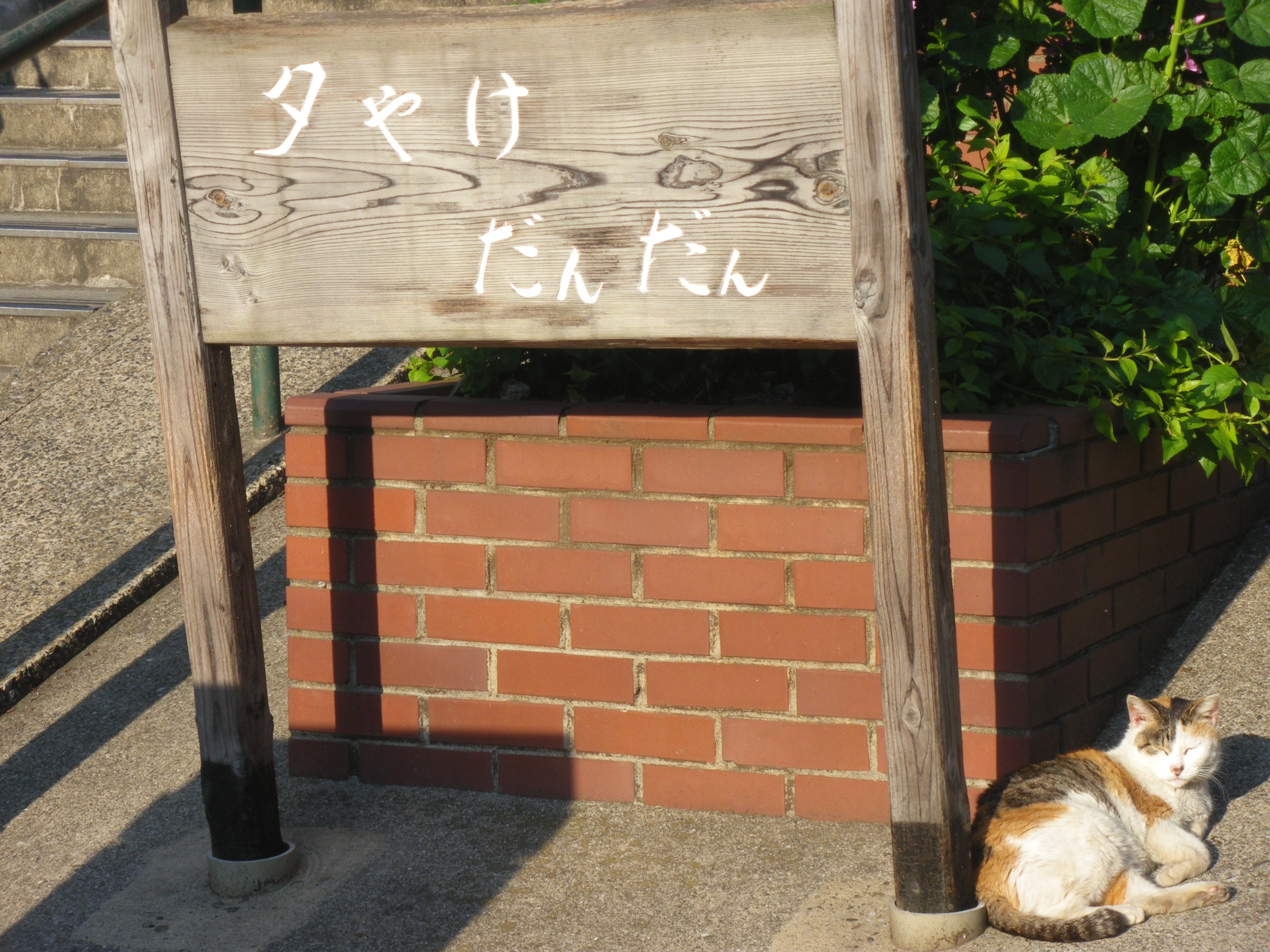
The tour opens at the top of the Yuyake Dandan, the "sunset steps" above Yanaka Ginza, named in a 1990 community newspaper contest, where the 10 March 1945 firebombing's targeting logic explains why this ridge of wood and tile still stands.
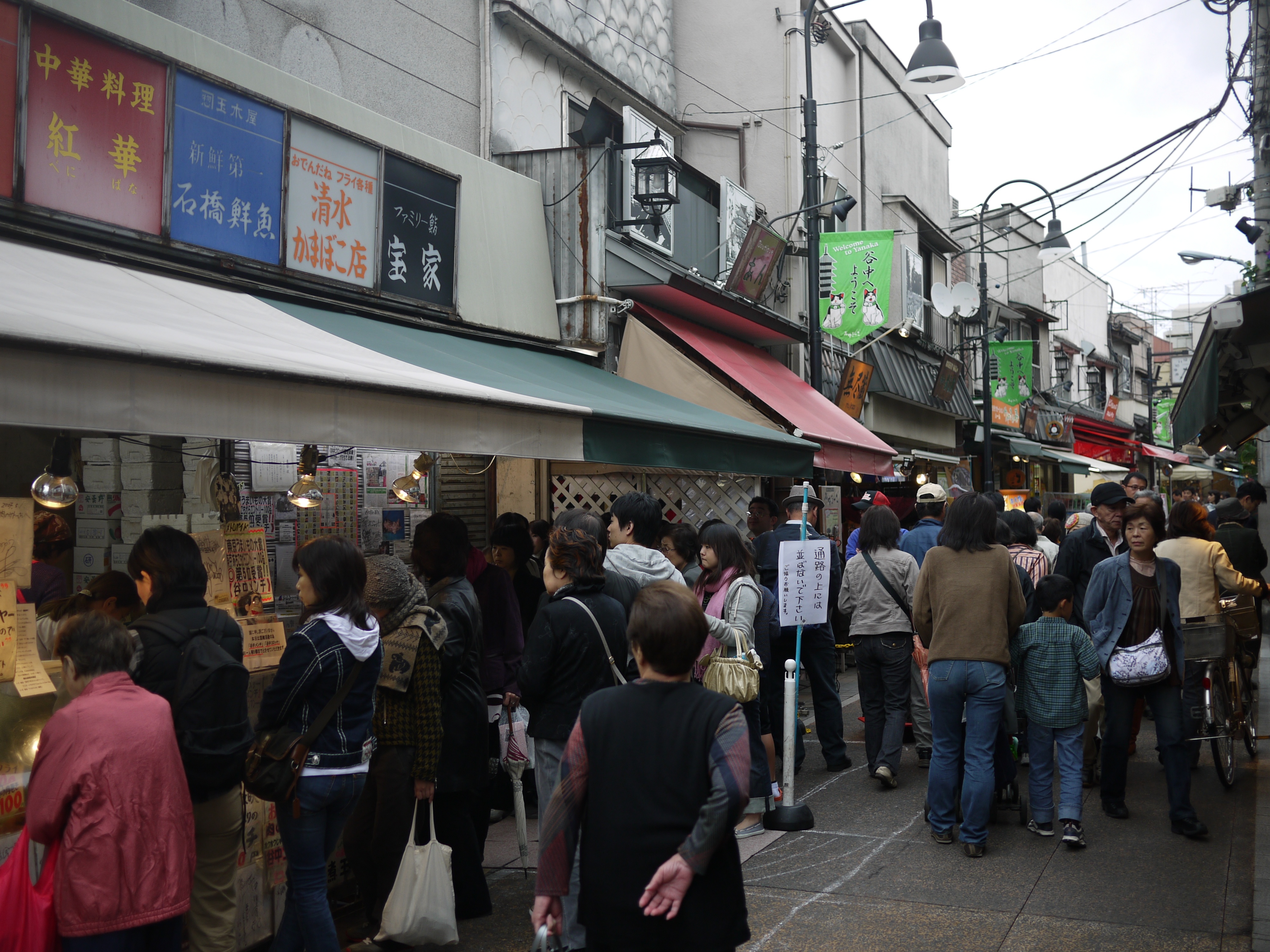
Yanaka Ginza is a roughly 170-metre shotengai of about 60 family-run shops that took shape in the immediate aftermath of the 1945 surrender, on lanes the war had left standing but empty. Nothing on the street itself is old; the families behind the counters, in many cases, are on their third or fourth generation.
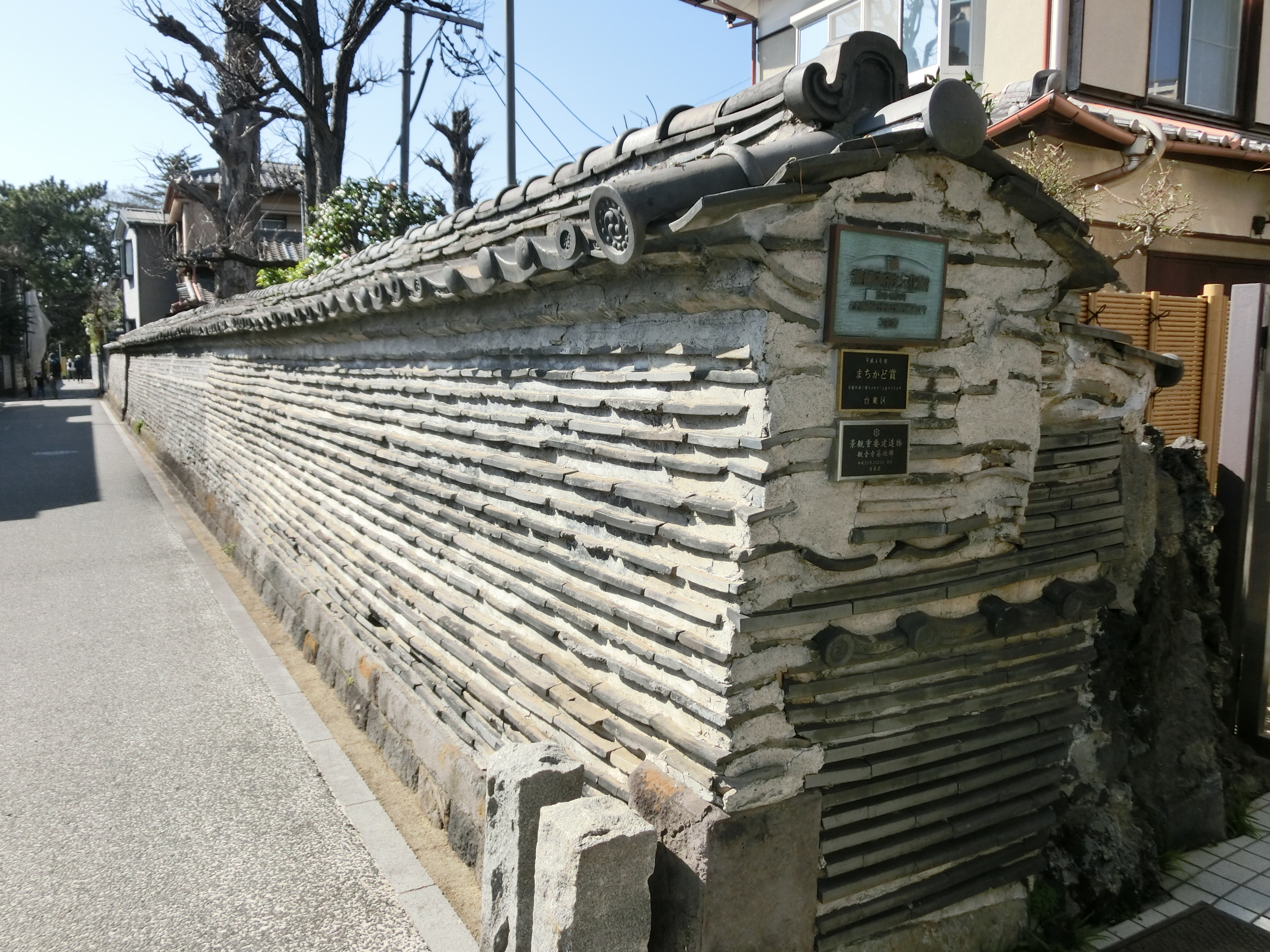
Kannon-ji's south wall is one of the last intact Edo-period tsuiji-bei in central Tokyo, a 37.6-metre run of rammed earth and roof tile registered as a national Tangible Cultural Property; the temple also has a documented link to two of the forty-seven Ako ronin, marked by a memorial pagoda in its precinct.
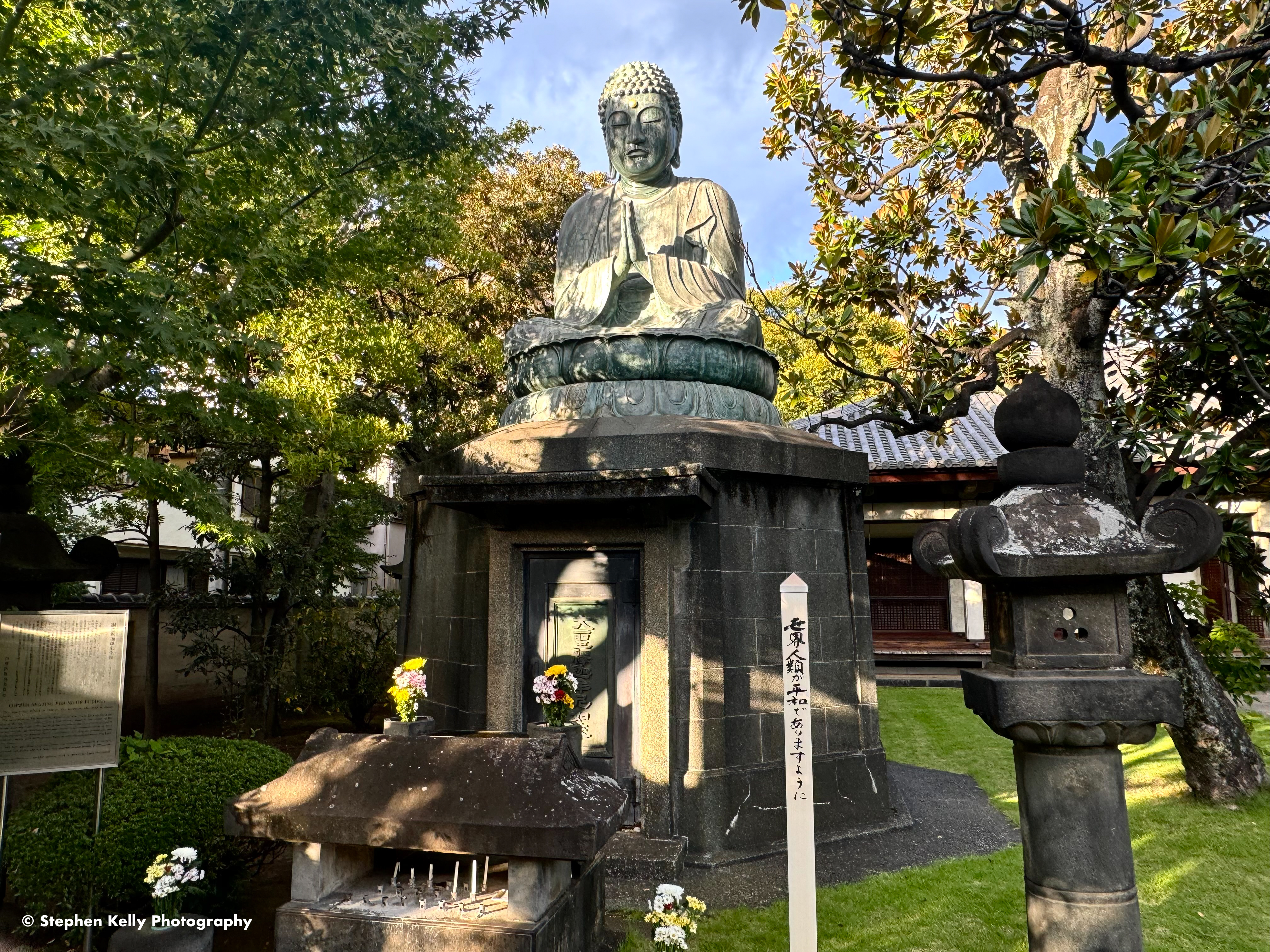
Cast in 1690 by the bronze-founder Ota Kyuemon, Tennoji's seated Amida Buddha has stood in the open air for over three centuries, surviving the wartime metal requisitions that claimed bronze statues elsewhere in Tokyo. The temple itself was forced from the banned Nichiren Fuju-fuse sect into Tendai in 1699, ran one of only three lotteries licensed in Edo until 1842, and lost most of its grounds to the 1874 creation of Yanaka Cemetery next door.
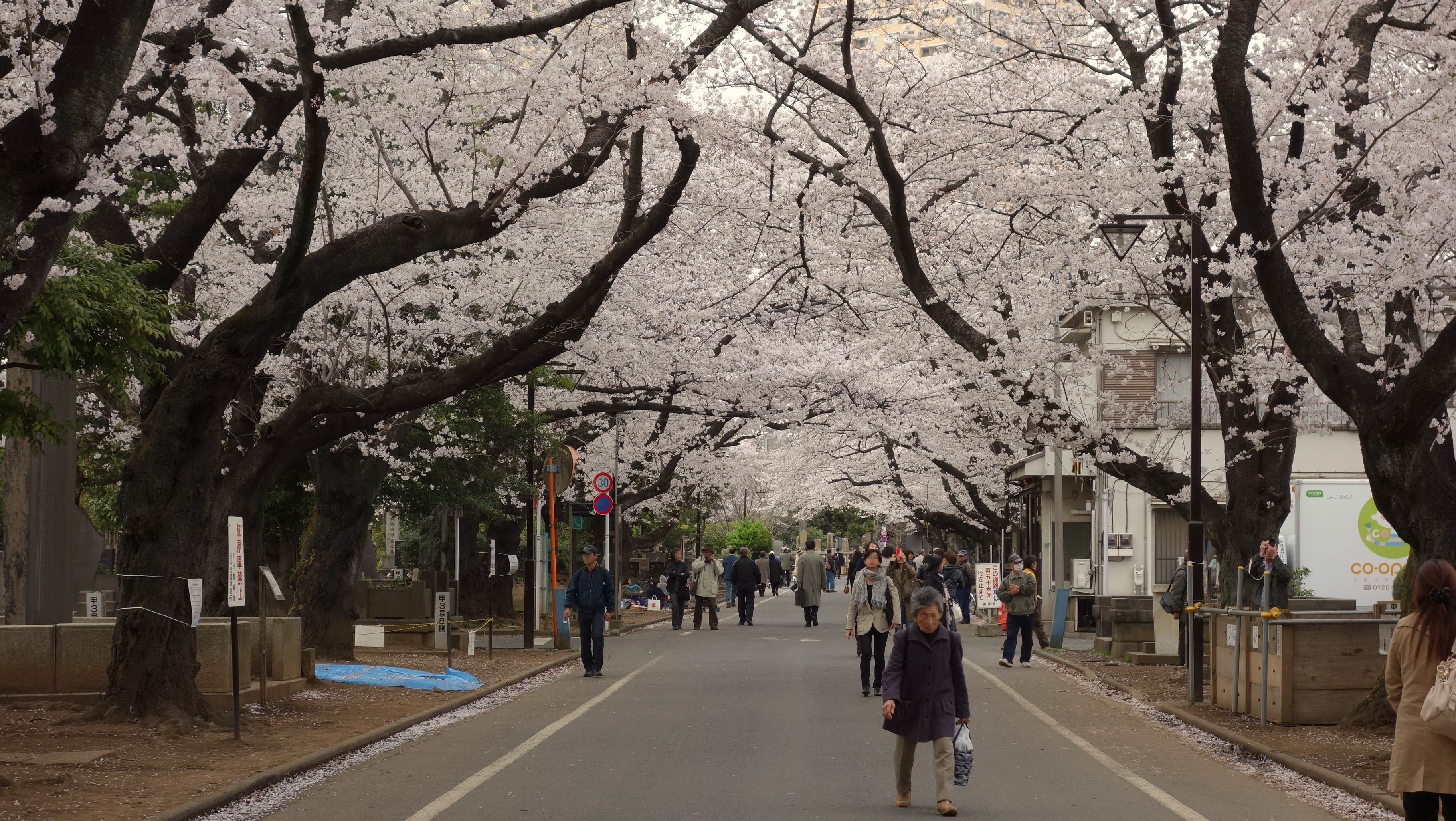
The cherry-lined Sakura-dori cuts as a public thoroughfare straight through Yanaka Cemetery, a Meiji-era public burial ground created in 1874 out of Tennoji temple land; its most famous feature is the five-storey pagoda that stood here until a 1957 arson double suicide left only its foundation stones.
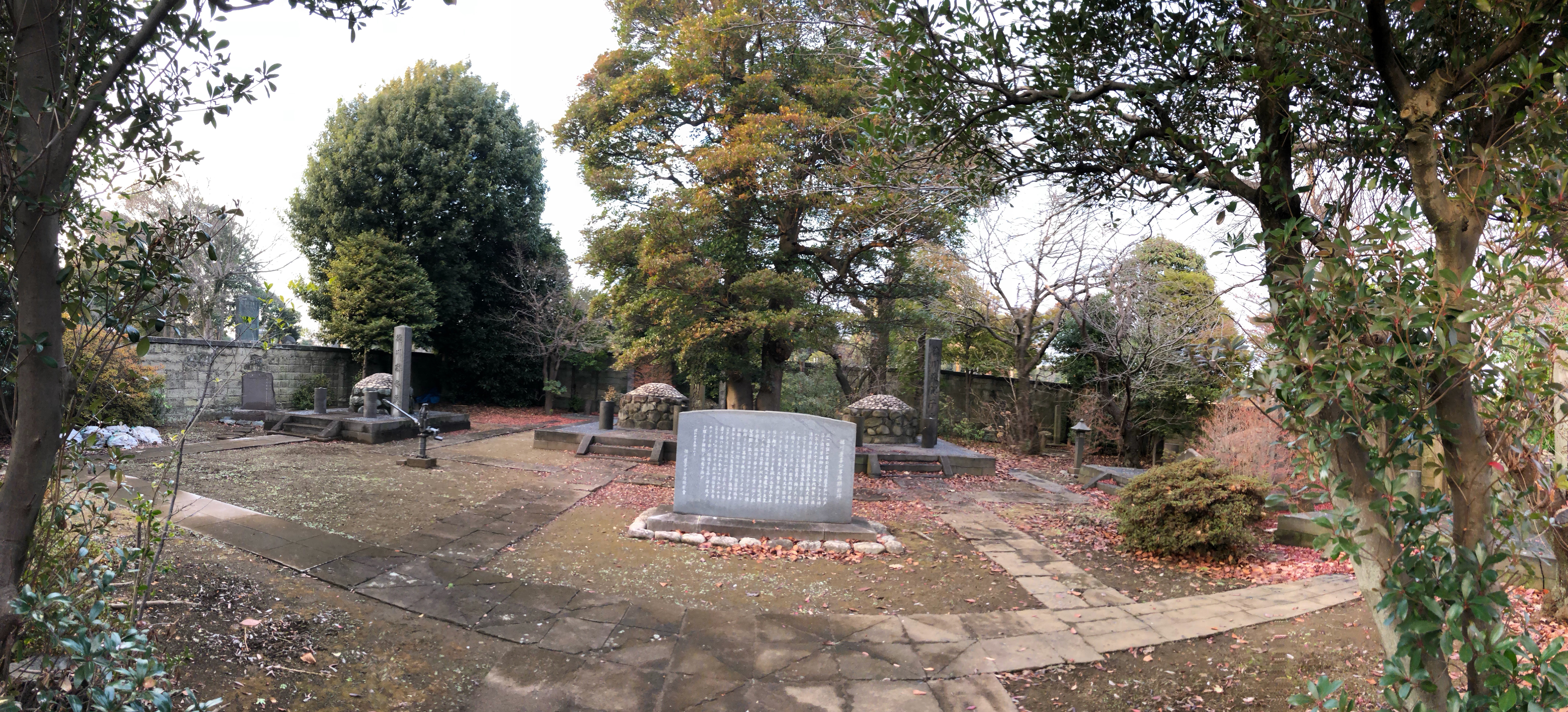
Behind a locked fence at the far end of the cemetery lies a round, Shinto-style earthen mound — the grave of Tokugawa Yoshinobu, the fifteenth and last shogun, who chose this form of burial by his own will rather than resting among his ancestors' Buddhist tombs at Zojoji or Kan'ei-ji.
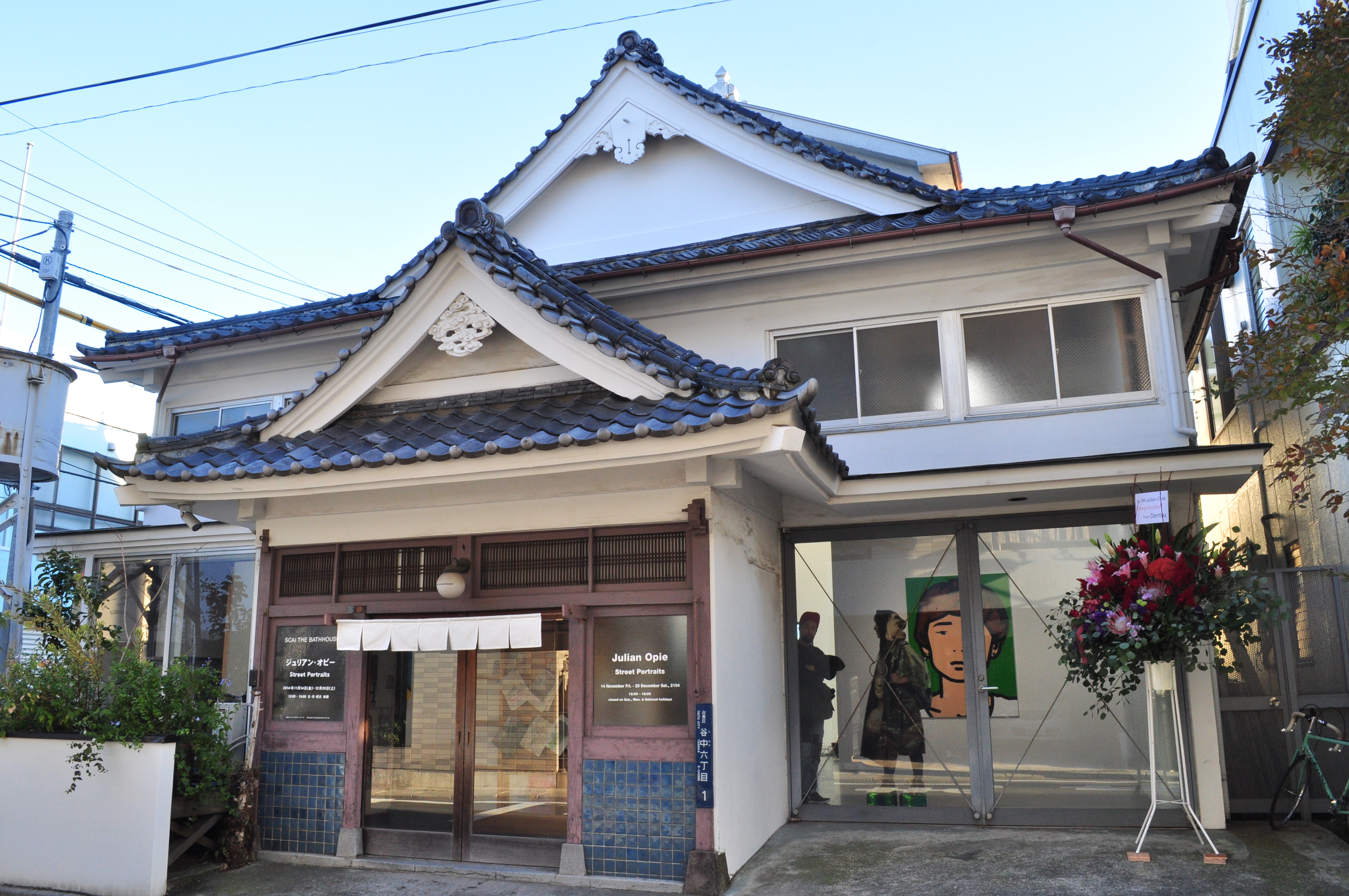
A public bathhouse called Kashiwayu ran on this site from 1787 until it closed around 1991 after roughly two centuries in business, and in 1993 the dealer Masami Shiraishi converted the surviving shell into the contemporary art gallery SCAI THE BATHHOUSE, keeping the tiled roof, chimney, and original wooden shoe lockers.
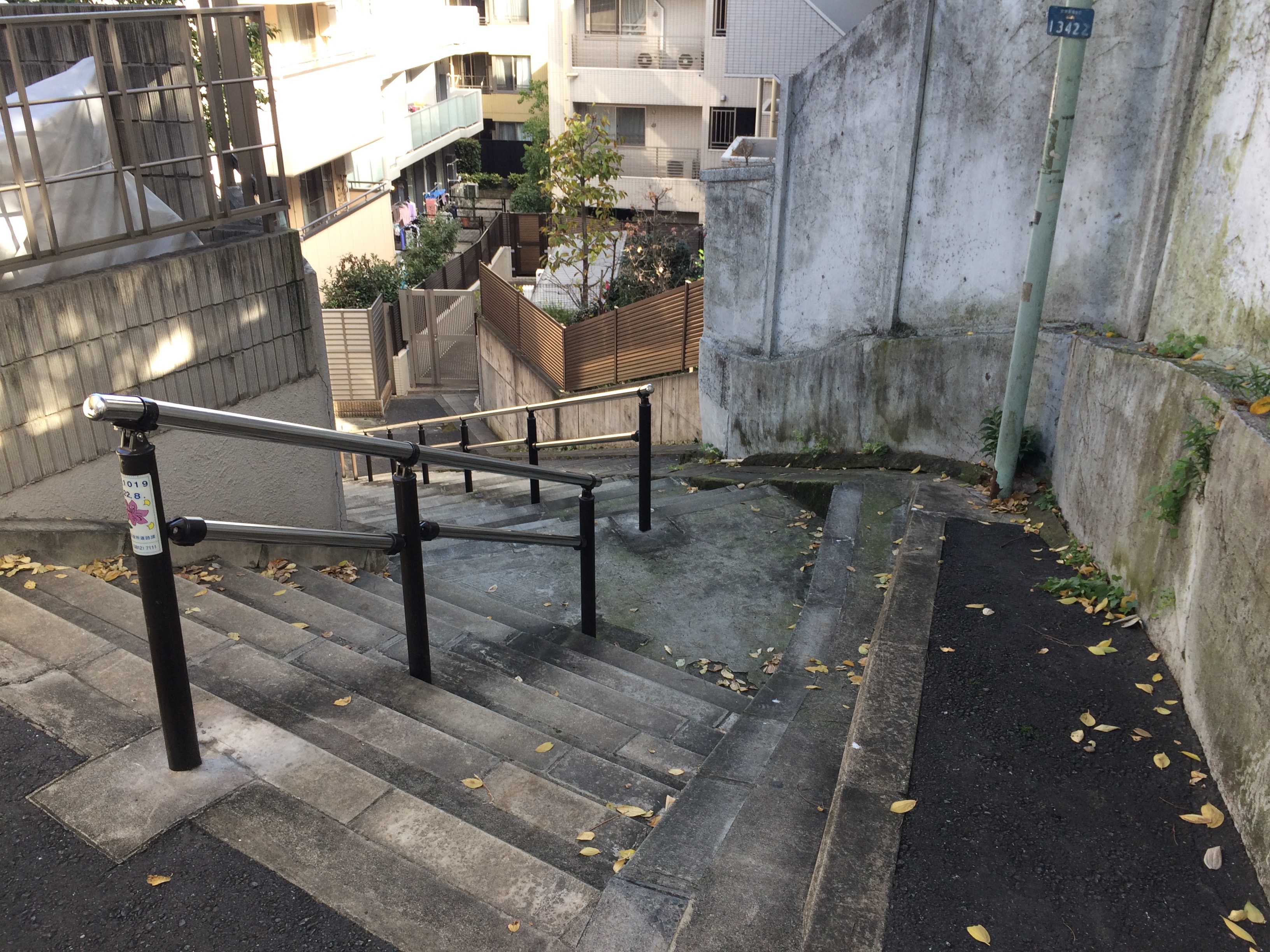
Obake Kaidan, the Ghost Stairs, is a short unsignposted stone staircase on the Taito/Bunkyo ward line, known for a local count of forty steps going up and thirty-nine coming down. It also marks the tour's physical hinge, where Yanaka's surviving high ground drops into the low-lying streets of Nezu.
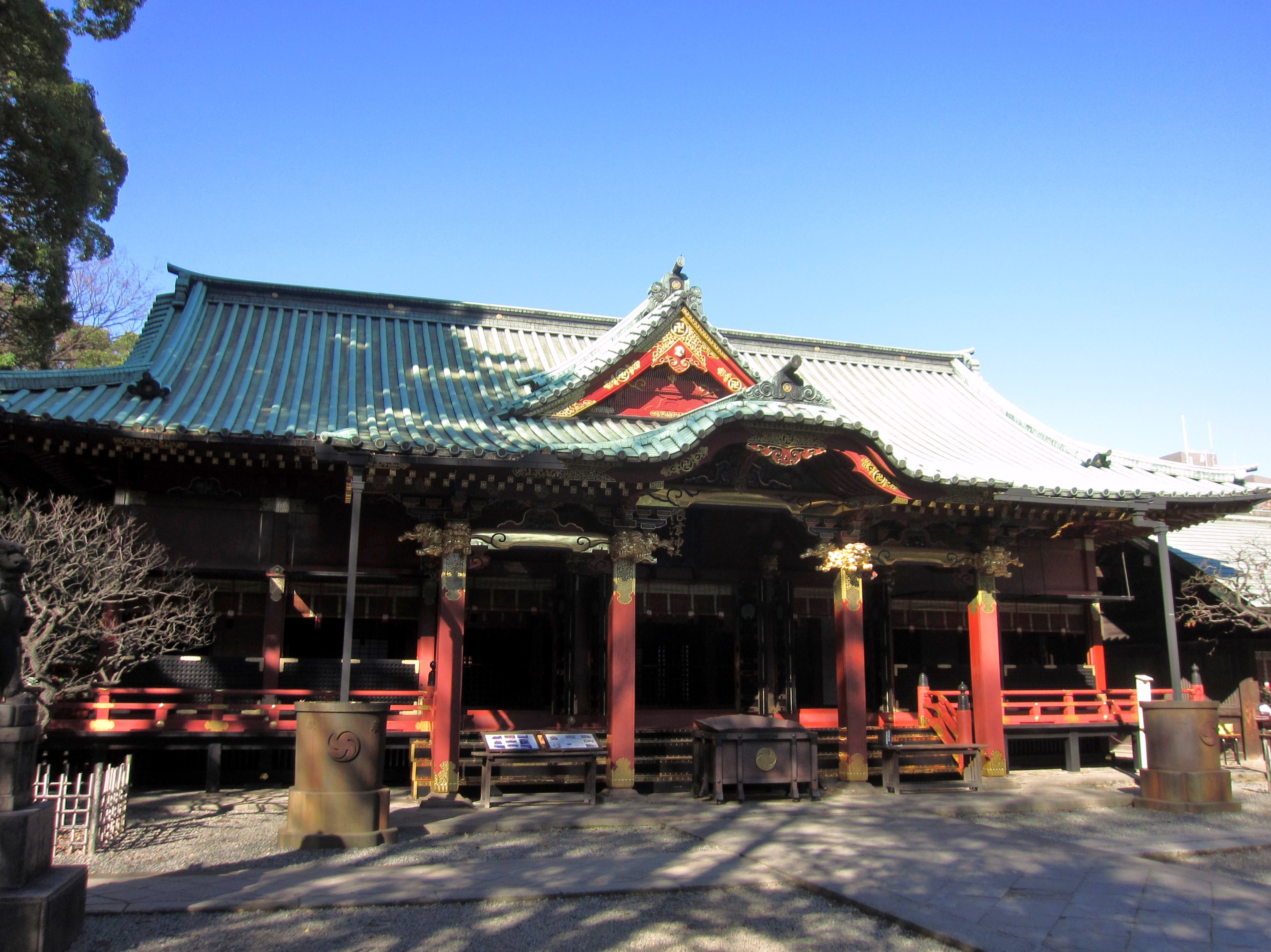
The current Nezu Shrine complex was completed in 1706 on the order of the fifth shogun, Tokugawa Tsunayoshi, and its main hall, worship hall, gate, and connecting corridor all survive together as a rare intact set, now protected as Important Cultural Properties.
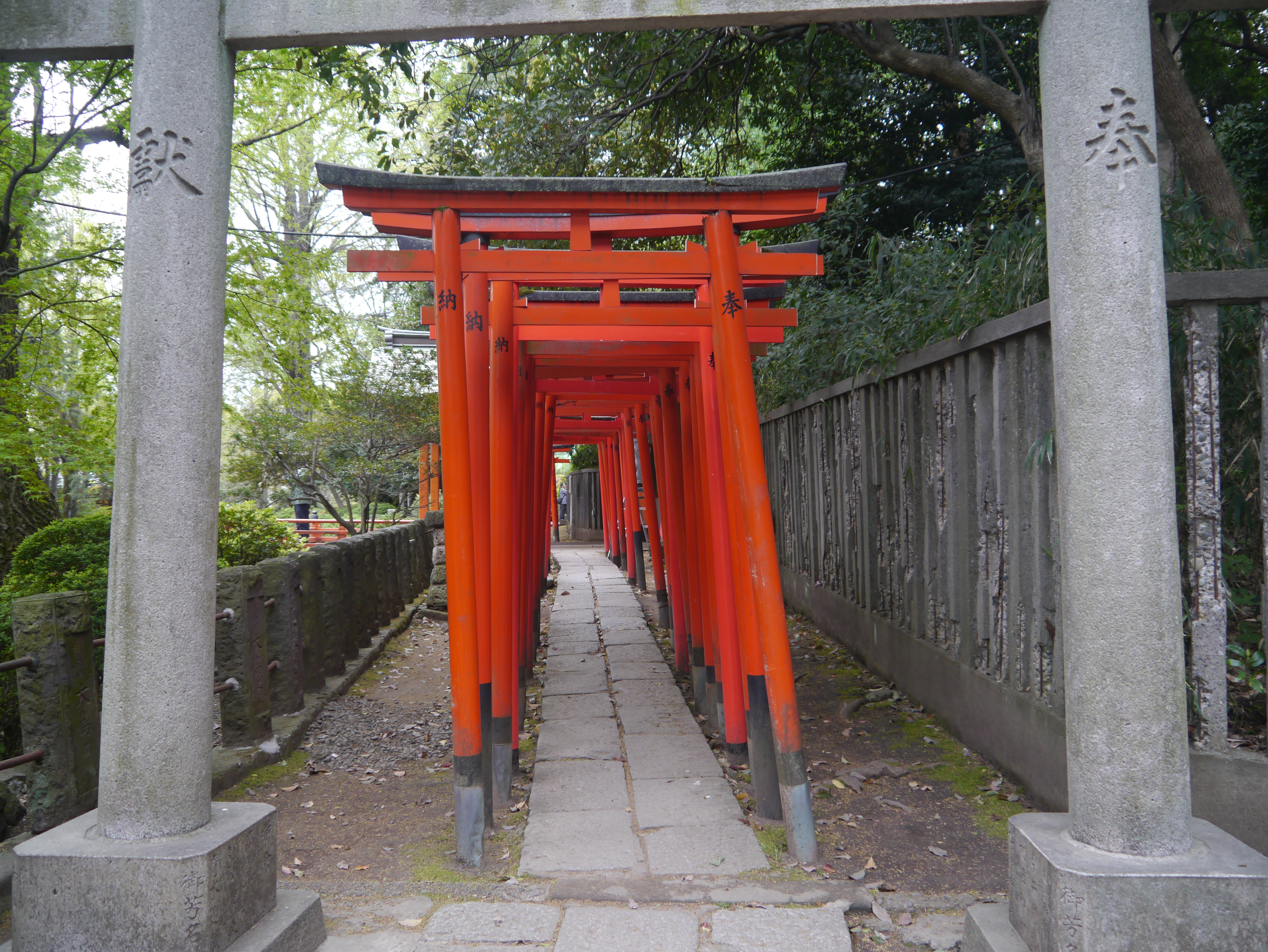
Close the walk beneath Otome Inari's tunnel of vermilion torii gates on Nezu Shrine's western slope, a shrine dedicated to love where each gate was donated by a worshipper whose prayer was answered.
This is the real story from one stop on this walk — every stop has one.
Asakusa is the oldest place in Tokyo and almost none of it is old. The Thunder Gate everyone photographs dates from…
Kiyosumi-Shirakawa is sold as a coffee district because old timber warehouses supposedly suited roasters. That causal…
Ginza is a street the Meiji government rebuilt in brick in 1872 purely so that foreign diplomats would see a modern…
We use cookies to analyse site traffic and improve your experience. You can choose to accept or reject analytics cookies. Learn more