Appetizing and Delicatessen
New York · United States

Appetizing and Delicatessen

New York, United States
80
Duration (min)
1.8
Distance (km)
9
Stops
Easy
Difficulty

Description

An ancient dietary rule forbids mixing meat and dairy — so no shop could sell both, and the Lower East Side's food trade split into two mutually exclusive halves. This walk follows the line between them, from the pushcart street and the tenement kitchen that made cheap portable food a necessity, past a market built to sweep the carts off the pavement and an address where one of the district's grandest restaurants used to stand, to the two survivors facing each other across a hundred metres of East Houston Street. It ends at the humblest thing on the route, still sold from the same storefront since 1910.

Highlights

Katz's and Russ & Daughters: the same trade split in two by kashrut, a hundred metres apart The 1933 awning believed to be the first in America to read "& Daughters" 97 Orchard Street, sealed in 1935 and left shut for fifty years, which is why it survived Ratner's vanished address, and the kosher dairy restaurant as an extinct genre Baked, never fried: hand-rolled knishes from the same room since 1910
Tour Stops

The Bowery
0

The Bowery

5 min

The Bowery began as a Lenape trail and then a Dutch farm road to Peter Stuyvesant's bouwerij, making it Manhattan's oldest continuously used street, and it later became the city's rowdiest 19th-century entertainment strip and, by 1900, its original skid row.
Orchard Street
1

Orchard Street

5 min

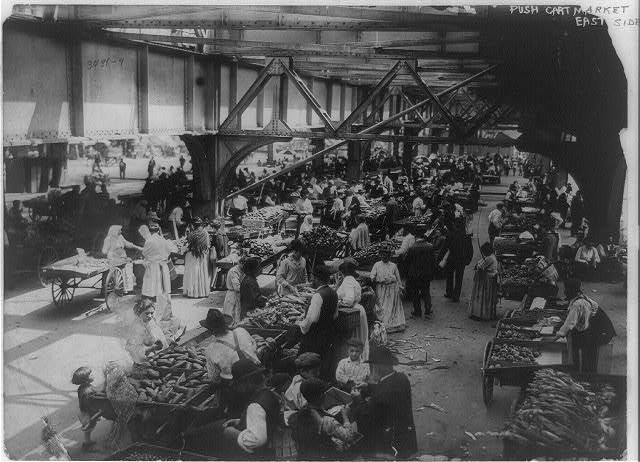
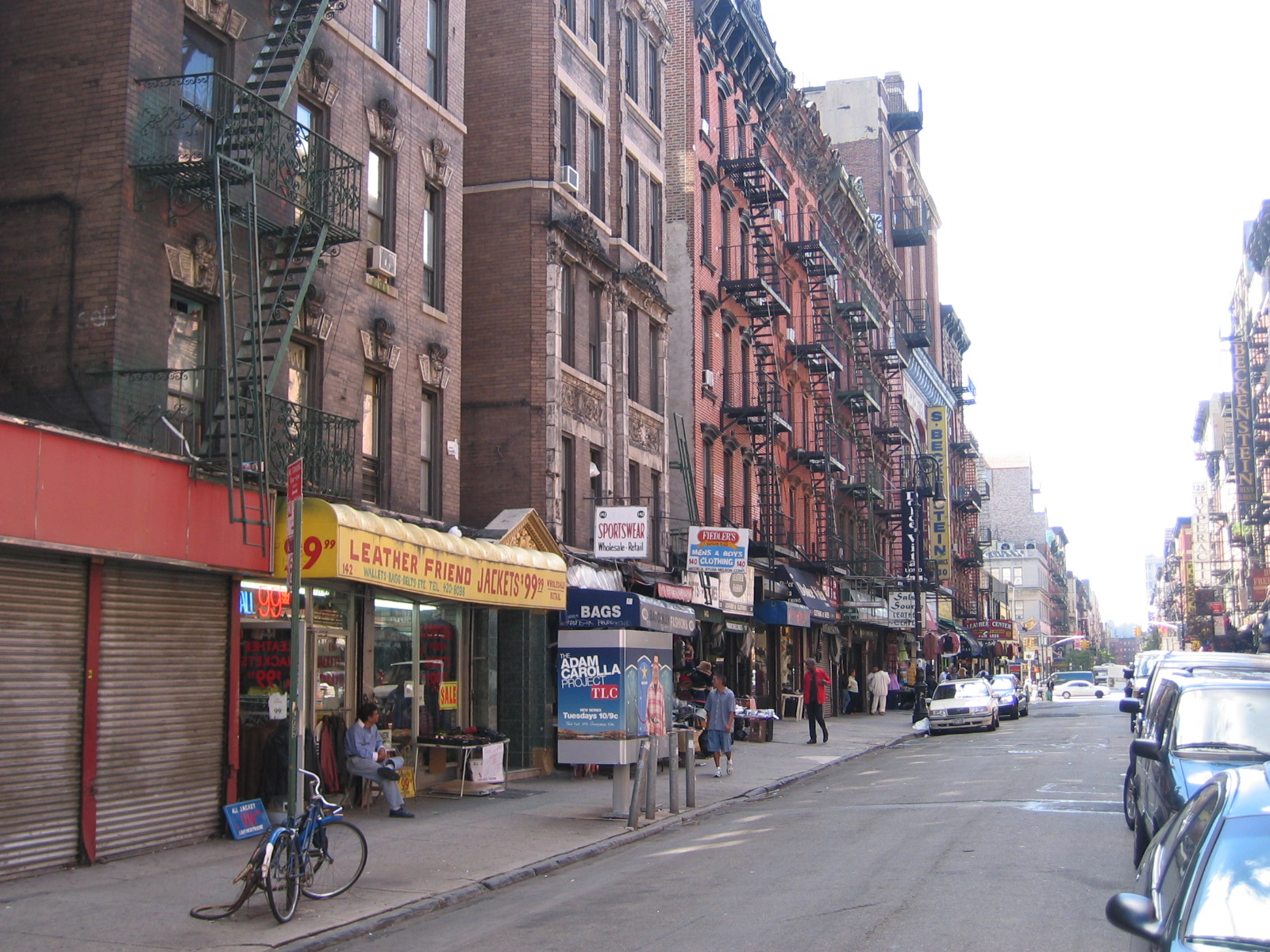
Orchard Street was the Lower East Side's pushcart market, the cheapest possible way for a new arrival to start earning money, and later became a bargain garment retail strip before its current life as a bar-and-boutique row.
Tenement Museum
2

Tenement Museum

5 min

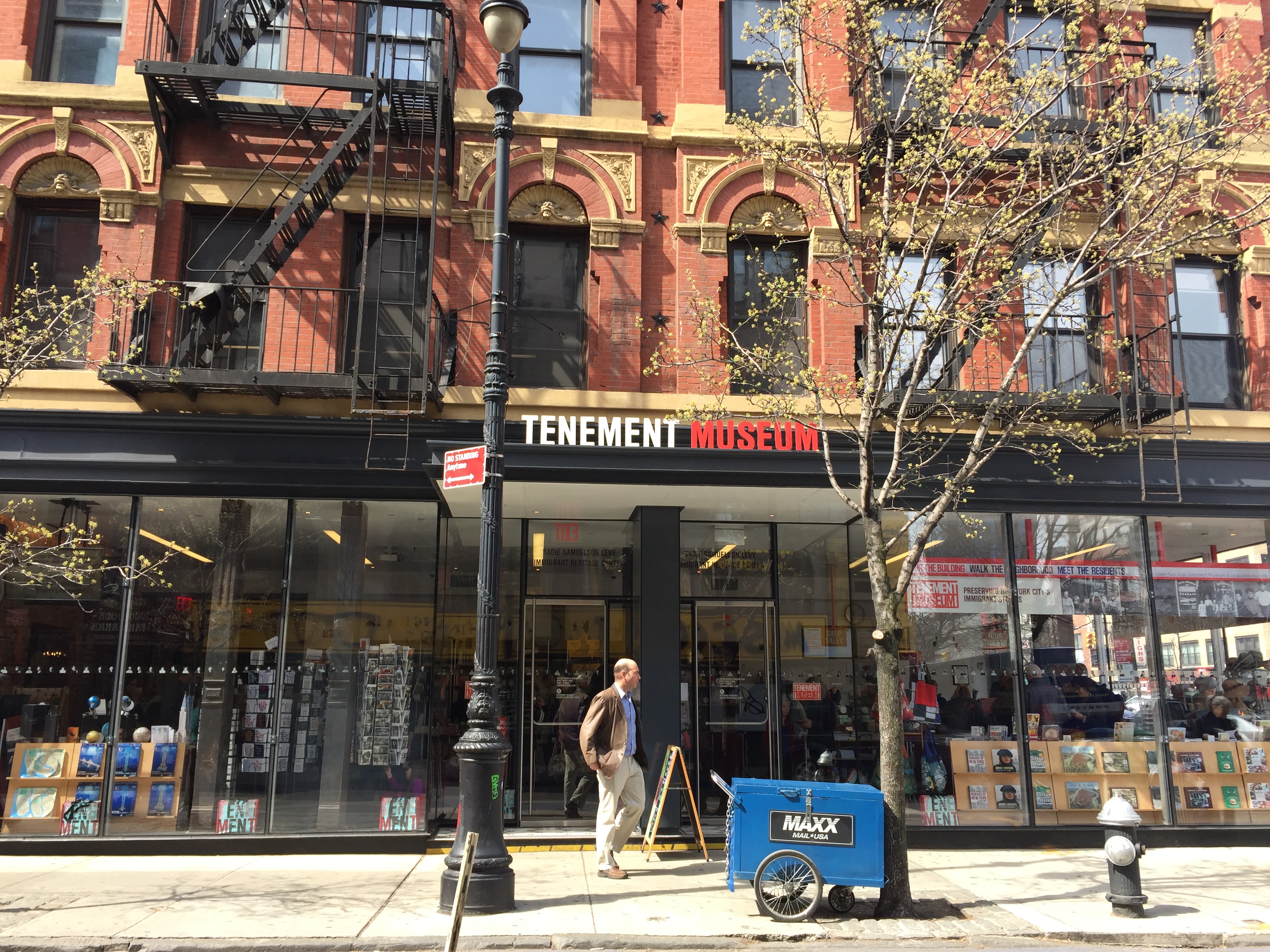
The Tenement Museum preserves 97 Orchard Street, a working-class apartment building occupied continuously from 1863 to 1935, whose sealed-off upper floors survived by accident and now show visitors exactly how immigrant families cooked, worked, and ate in rooms the size of a parking space.
Essex Market
3

Essex Market

5 min

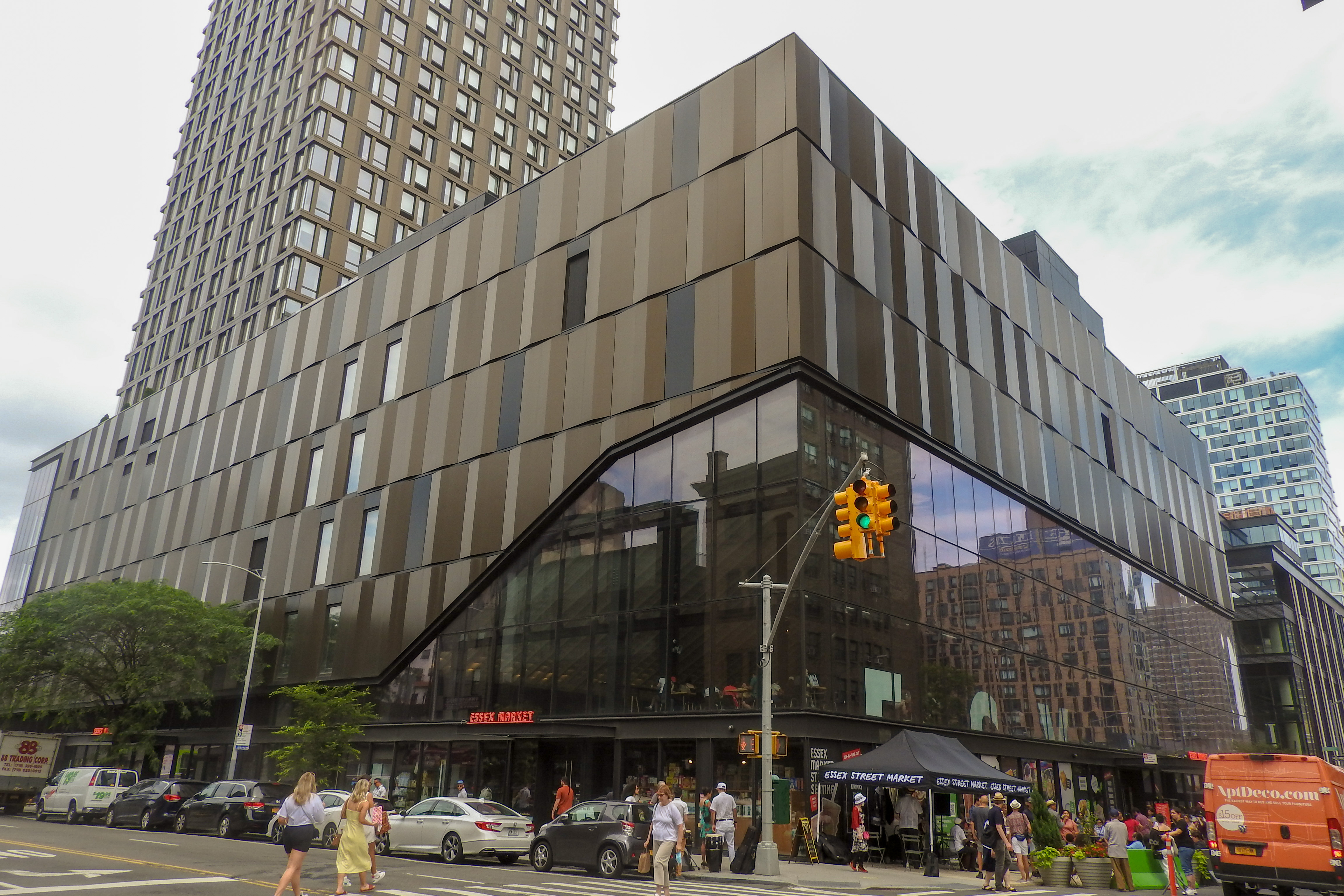
Essex Market began in 1940 as a city-built hall meant to move Lower East Side pushcart vendors off the street, but that original building is no longer the market: in 2018 it relocated across the road to 88 Essex Street in Essex Crossing, where old trades now sit alongside newer Latin American, South Asian, and Middle Eastern vendors.
Ratner's former site
4

Ratner's former site

5 min

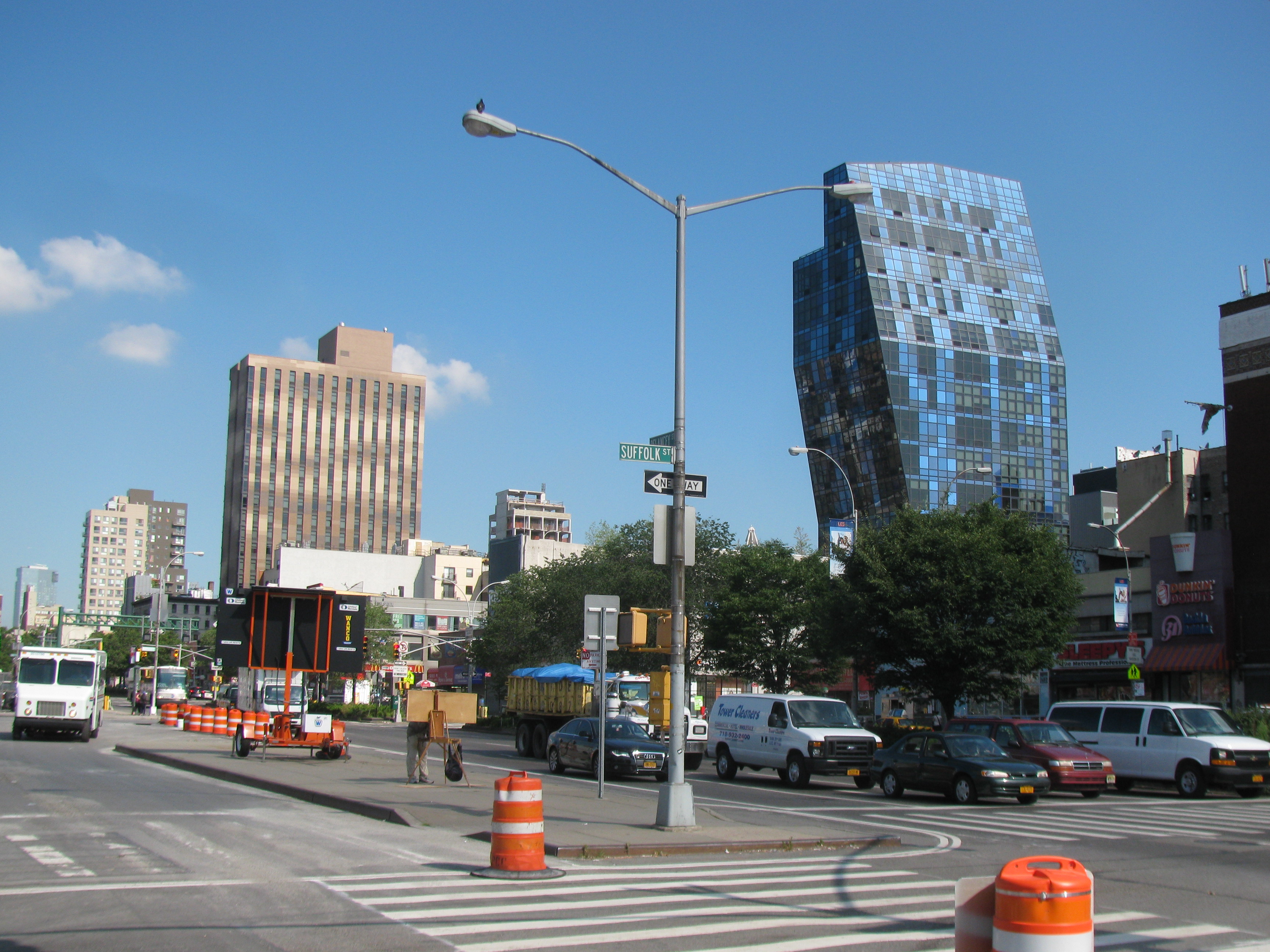
An ordinary storefront on the tour route marks the site of Ratner's, the celebrated kosher dairy restaurant that fed the Lower East Side from 1905 until its closure in 2002.
Katz's Delicatessen
5

Katz's Delicatessen

5 min

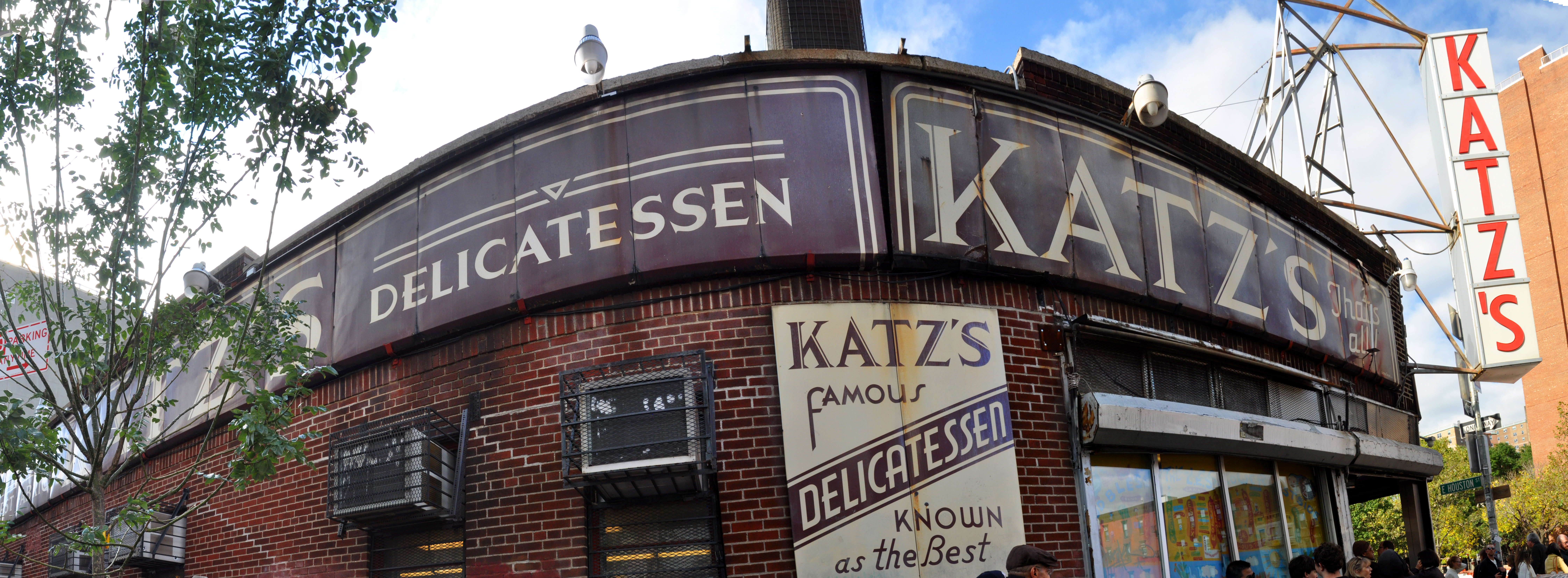
Opened in 1888 on this corner, Katz's is the oldest surviving delicatessen in New York and the meat side of the line, still curing and smoking its own pastrami and corned beef with no dairy anywhere on the premises.
East Houston Street appetizing row
6

East Houston Street appetizing row

5 min

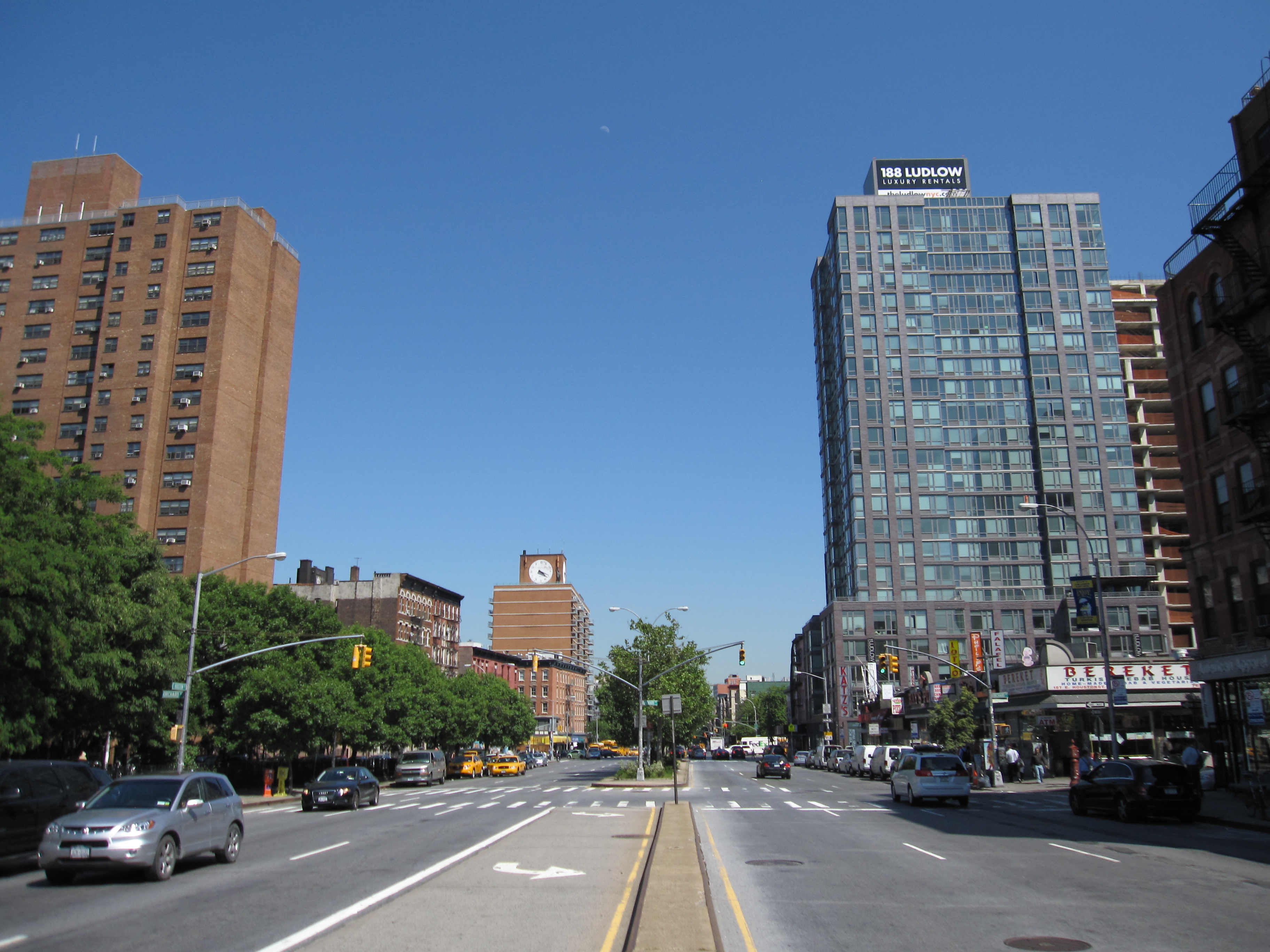
This stretch of East Houston Street is the seam between the two halves of the kosher food trade: because kashrut forbids selling meat and dairy under one roof, the district split into delicatessens on one side and appetizing stores on the other. Roughly 500 appetizing stores operated in New York at the 1930s peak, with about thirty in walking distance of this corner; fewer than ten survive citywide.
Russ & Daughters
7

Russ & Daughters

5 min

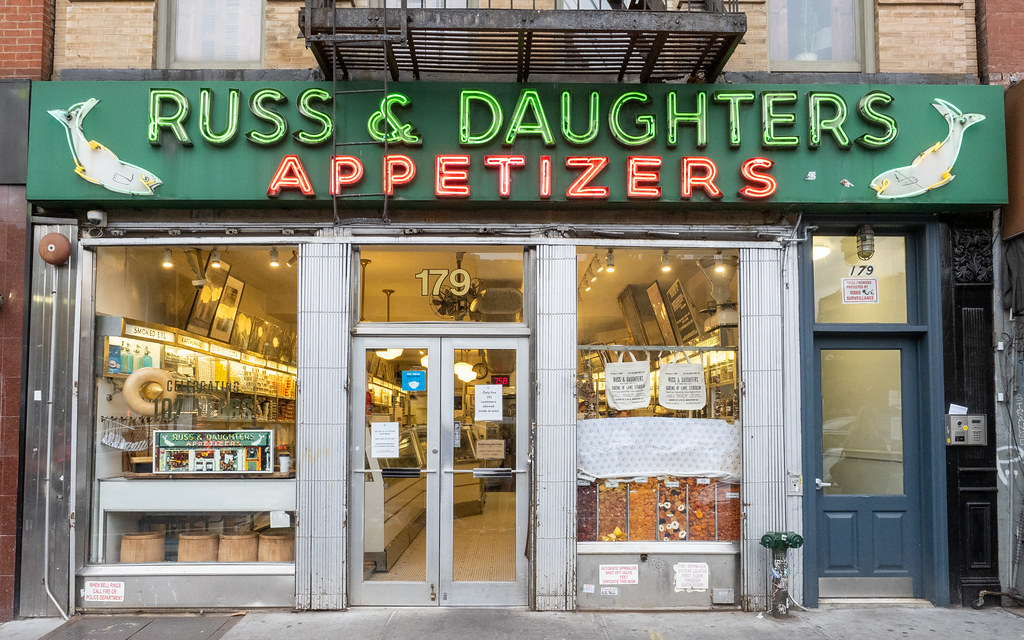
Founded in 1914 by Galician immigrant Joel Russ as a herring stall, this appetizing shop became Russ & Daughters in 1933 when he made his three daughters full partners and put their name on the sign. It is believed to be the first American business to use the words "& Daughters," and it is still run by the family four generations later.
Yonah Schimmel Knish Bakery
8

Yonah Schimmel Knish Bakery

5 min

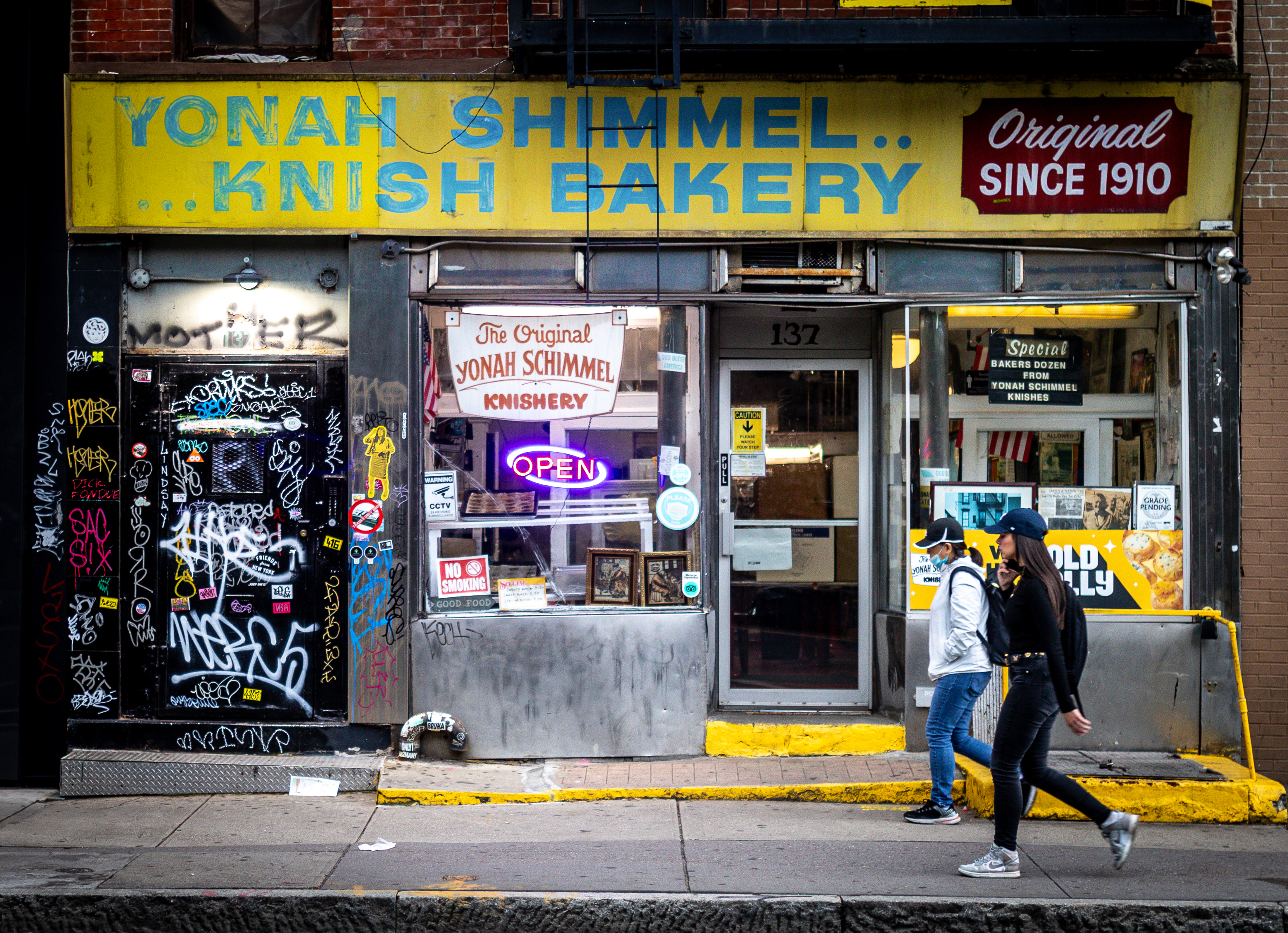
Yonah Schimmel Knish Bakery has sold hand-rolled, baked potato knishes from this East Houston Street storefront since 1910, after starting as a nearby pushcart. Because a baked potato knish is pareve -- neither meat nor dairy -- the shop sits alongside the appetizing side of the street rather than among the meat delis to the east.

A Taste of the Tour

This is the real story from one stop on this walk — every stop has one.

The Bowery

Welcome to the Lower East Side. Before we start, one clarification: this is a walk about food, but it is not a lunch tour. I will not recommend anything, and by the end you may not be hungry at all. We begin here on the Bowery and finish about eighty-five minutes from now on East Houston Street, nine stops and roughly 1.8 kilometres away. Between the 1880s and the 1920s, this district absorbed several hundred thousand people, most of them Jewish immigrants from the Russian Empire, from Galicia, from Romania, into blocks that by 1900 were among the most crowded on earth. They arrived poor. Most stayed poor for a long time. That poverty is not a charming detail to be softened; it is the reason the food of these streets took the shape it did. So the two questions I will keep asking are these. Why did this particular food exist at all? And who could actually afford it? The tour is called Appetizing and Delicatessen. Two ordinary English words. On these streets they were never used interchangeably, and no shopkeeper here would have mixed them up. Why not is what the walk is for. Stand here and look down the length of the Bowery, and you're standing on the oldest road on this island, older than the grid of streets around it by roughly a century and a half. Before Europeans arrived, the Lenape used this route as a trail running north out of their settlements toward the interior. The Dutch inherited it, widened it into a farm road, and gave it the name that stuck: bouwerij, Dutch for farm, because it led out to Peter Stuyvesant's own farm at what's now roughly Stuyvesant Street. Everything else in this neighborhood, the tight grid of side streets, the block numbers, was laid down later, imposed on top of a road that was already old business. By the middle of the 1800s the Bowery had become something else entirely: the loudest, cheapest, most unapologetically working-class entertainment strip in New York. Where Broadway, a few blocks west, served up respectable theater to people who could afford box seats, the Bowery ran variety halls, melodrama houses, dime museums, and beer gardens that stayed open past midnight. It had its own slang and its own style of dress. The Bowery b'hoy, with his soap-slicked hair and pugnacious swagger, was a recognizable New York type decades before anyone had heard of a flapper or a hipster. Respectable New Yorkers considered a night on the Bowery something between a thrill and a moral hazard, and plenty of them went anyway, precisely because it was rougher and funnier than anything Broadway would allow itself to stage. That reputation curdled hard by the century's end. By 1900 the Bowery held dozens of flophouses and lodging houses, stacked one after another for blocks, renting beds, sometimes barely more than a chalk outline on the floor, for a few cents a night, with cheaper wire-cage bunks stacked above them for men who couldn't afford even that. This stretch effectively invented what the rest of the country would come to call skid row: a concentrated district of cheap, transient, often desperate housing, serving men who had run out of other options. It's also where the word bum settled permanently into the city's vocabulary, attached specifically to the men who drifted along this street. The Bowery gave New York both the institution and the insult in the same few blocks. Overhead, for seventy-seven years, none of this happened in the kind of daylight you're seeing now. From 1878 until 1955, an elevated railway ran the length of the avenue, and its structure threw the street into permanent shadow, a dim, girder-striped tunnel of noise and soot that darkened every storefront beneath it. Look up now at the open sky over the street: that's a relatively recent condition. When the el finally came down in the 1950s, the Bowery didn't spring back to life. For decades afterward it stayed a byword for skid row, its flophouses still operating under a suddenly sunlit street. The avenue's more recent turn toward galleries, restaurants, and condominiums is barely a generation old, a blink against four hundred years of the road doing something else. So this is the ground the rest of the walk sits on: a route the neighborhood didn't choose so much as inherit, running along the edge of the streets you're about to enter. Everything on the other side of it grew up as its own separate world, hemmed in against a road that was already ancient business by the time any of it existed. Turn now, off the Bowery and onto the street where that world actually earned its living.

More Tours in New York

Nearby Cities

Back to New York Tours

Cookie Consent

We use cookies to analyse site traffic and improve your experience. You can choose to accept or reject analytics cookies. Learn more