Slopes and Loyalty: Atago Hill to the Forty-Seven
Tokyo · Japan

Slopes and Loyalty: Atago Hill to the Forty-Seven

Tokyo, Japan
120
Duration (min)
4.9
Distance (km)
8
Stops
Medium
Difficulty

Description

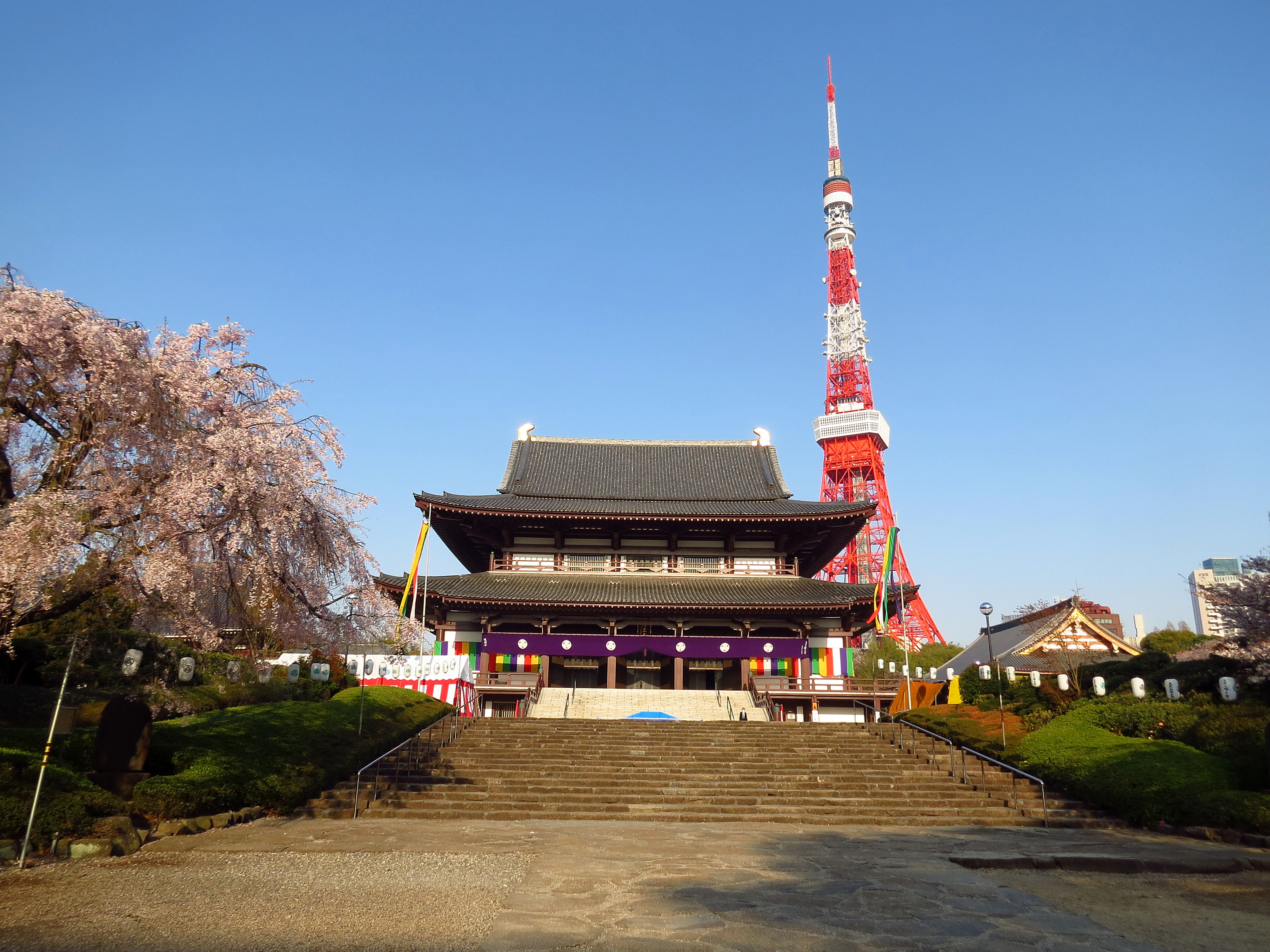
Tokyo's low city burned and rebuilt itself away. On the hills of Minato, Edo survived as three things that are hard to move: slopes, gates and graves. This walk starts by climbing 86 stone steps a samurai is said to have ridden a horse up in 1634 to impress a shogun, reaches the highest natural hill in Tokyo's 23 wards, then drops into the Tokugawa family temple, where one 1622 gate outlived both the 1923 earthquake and the 1945 firebombing and six shoguns lie behind a bronze door most visitors never open. It passes under the tower Japan built to replace them, made partly from scrapped American tanks, and finishes at Sengaku-ji, where the most retold vendetta in Japanese history ends in a graveyard that has not stopped smelling of incense in three hundred years.

Highlights

The Success Stairs at Atago Shrine — 86 steps, about 40 degrees, and a step-free lift for anyone who would rather not The summit where the assassins of 1860 gathered in the snow before walking down the hill Zojo-ji's Sangedatsumon: the one major building on the site that survived both 1923 and 1945, currently inside its restoration shelter until 2032 The bronze gate to six Tokugawa shoguns, and the 1958 excavation that read their remains like documents Tokyo Tower from directly underneath, free, with the story of where its steel came from Sengaku-ji, the graves of the forty-seven, and the receipt somebody wrote for a severed head
Tour Stops

Atago Shrine's "Success Stairs" (Otoko-zaka)
1

Atago Shrine's "Success Stairs" (Otoko-zaka)

5 min

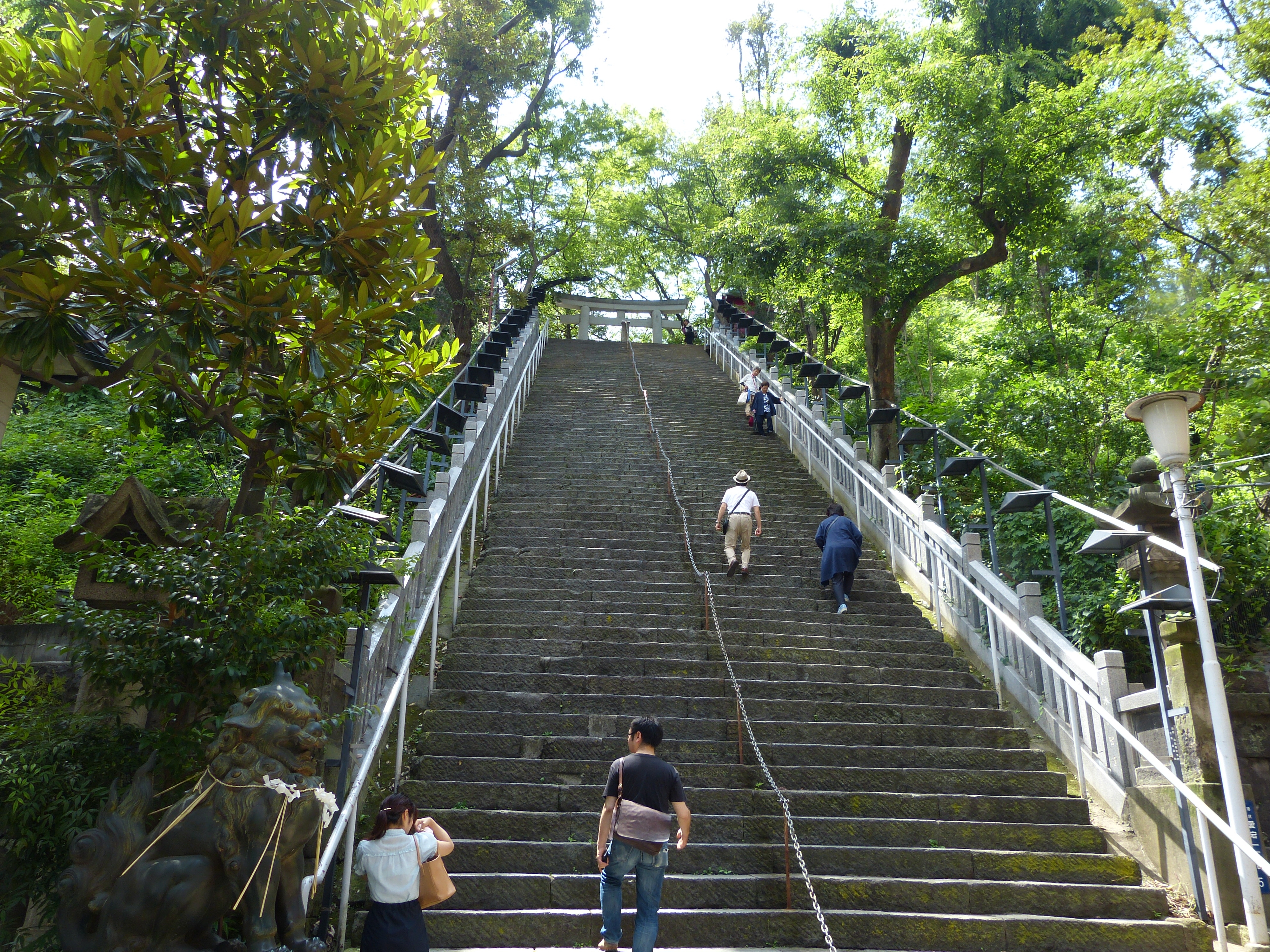
The 86-step stone staircase up Atago Hill, pitched at roughly 40 degrees, which Tokyo has called the "Success Stairs" since a Marugame retainer named Magaki Heikuro is said to have ridden a horse up it in 1634 to fetch plum blossoms for the shogun Iemitsu. The gentler 109-step onna-zaka runs alongside it, and a free public elevator at the foot of the hill offers step-free access to shrine level.
Atago Shrine Summit
2

Atago Shrine Summit

5 min

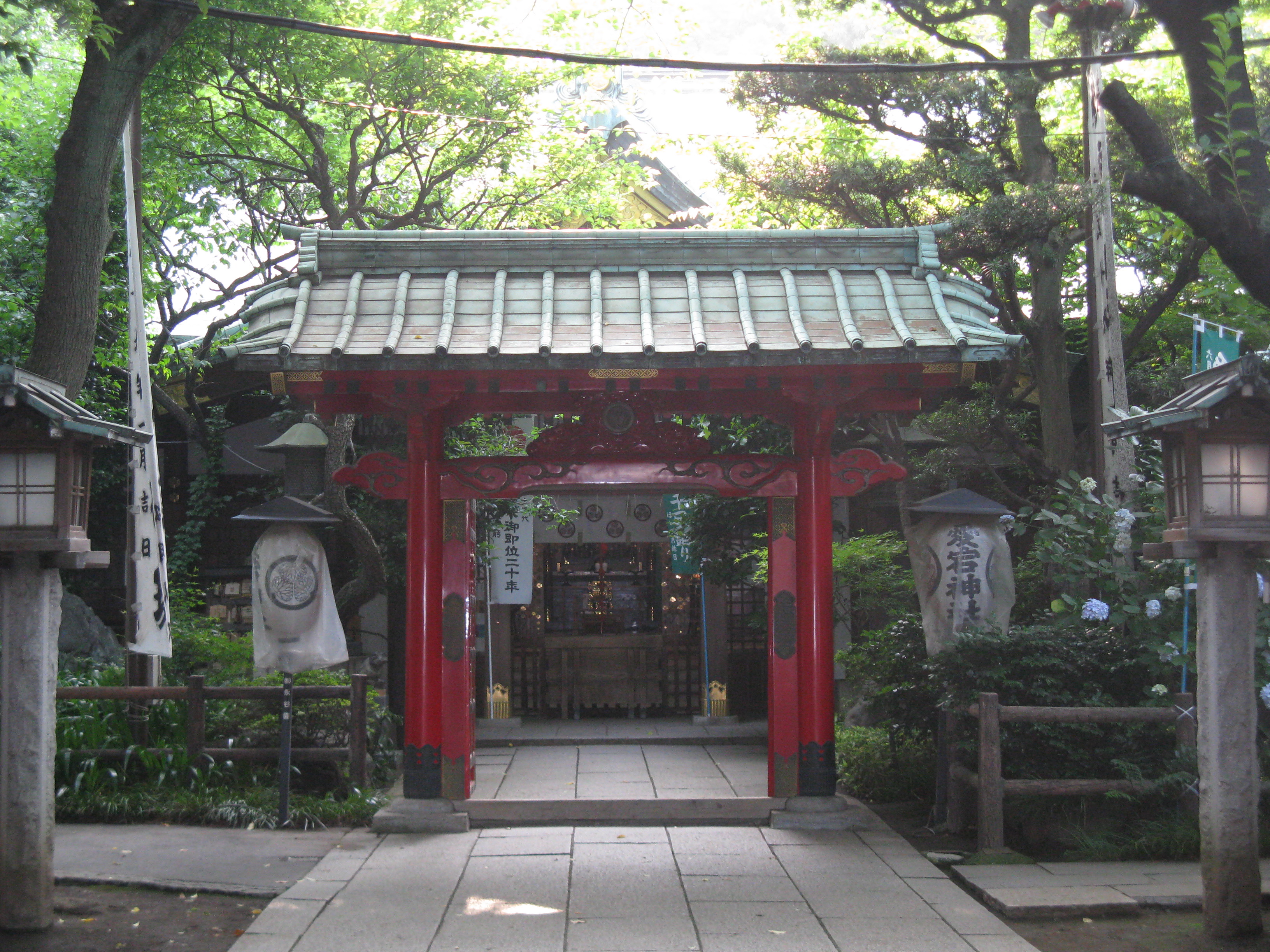
Atago-yama, at 25.7 metres, is the highest natural elevation in Tokyo's 23 wards, and the fire-prevention shrine Ieyasu ordered here in 1603 was sited for its clear view over the low city. That view is now entirely enclosed by office towers.
Zojo-ji's Sangedatsumon Gate
3

Zojo-ji's Sangedatsumon Gate

5 min

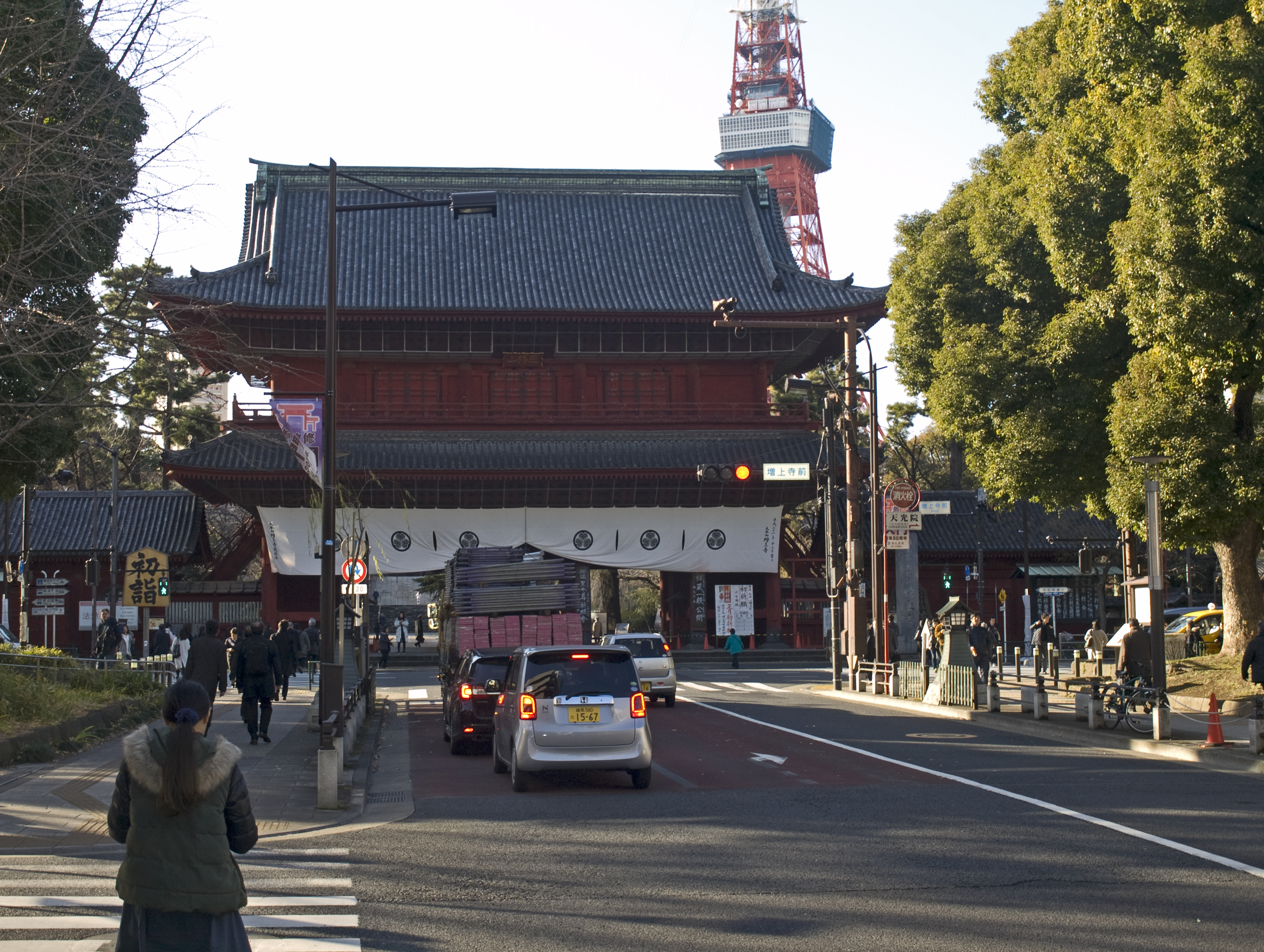
The vermilion Sangedatsumon, completed in 1622 and about 21 metres tall, is the only major building at Zojo-ji to survive both the 1923 earthquake and the 1945 air raids, and is a nationally designated Important Cultural Property. It is undergoing a major restoration and stands inside a temporary steel shelter until autumn 2032, though visitors can still pass beneath it.
Zojo-ji Main Hall (Daiden)
4

Zojo-ji Main Hall (Daiden)

5 min

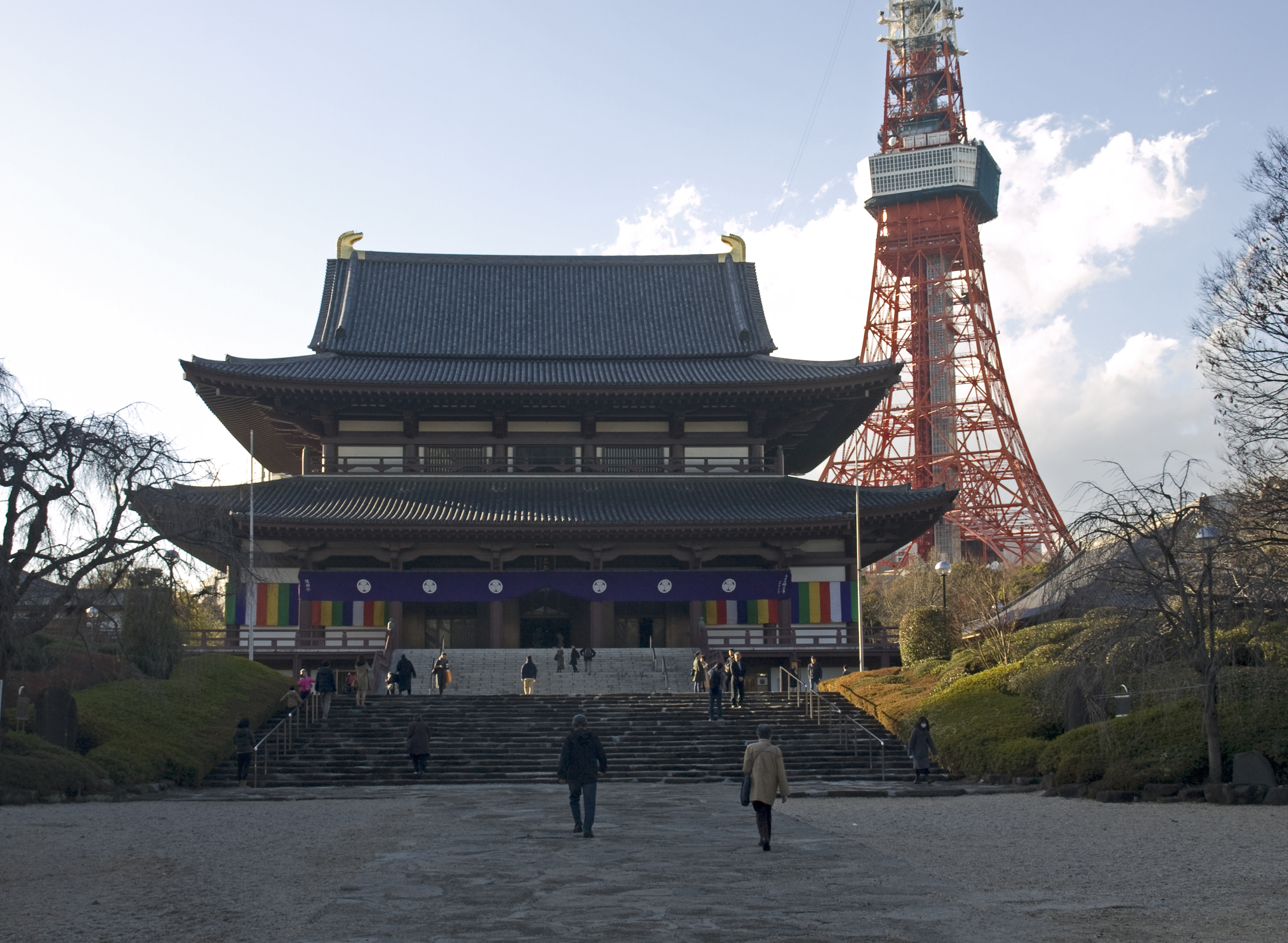
Zojo-ji was founded in 1393 as the main Pure Land seminary of eastern Japan and moved to this ground in 1598, after Tokugawa Ieyasu adopted it as his clan's family temple. The Daiden you see today is a 1974 reinforced-concrete rebuild, standing on the remnant of a precinct that once covered 826,000 square metres and housed 3,000 priests and novices.
The Bronze Gate to the Shogun's Graves
5

The Bronze Gate to the Shogun's Graves

5 min

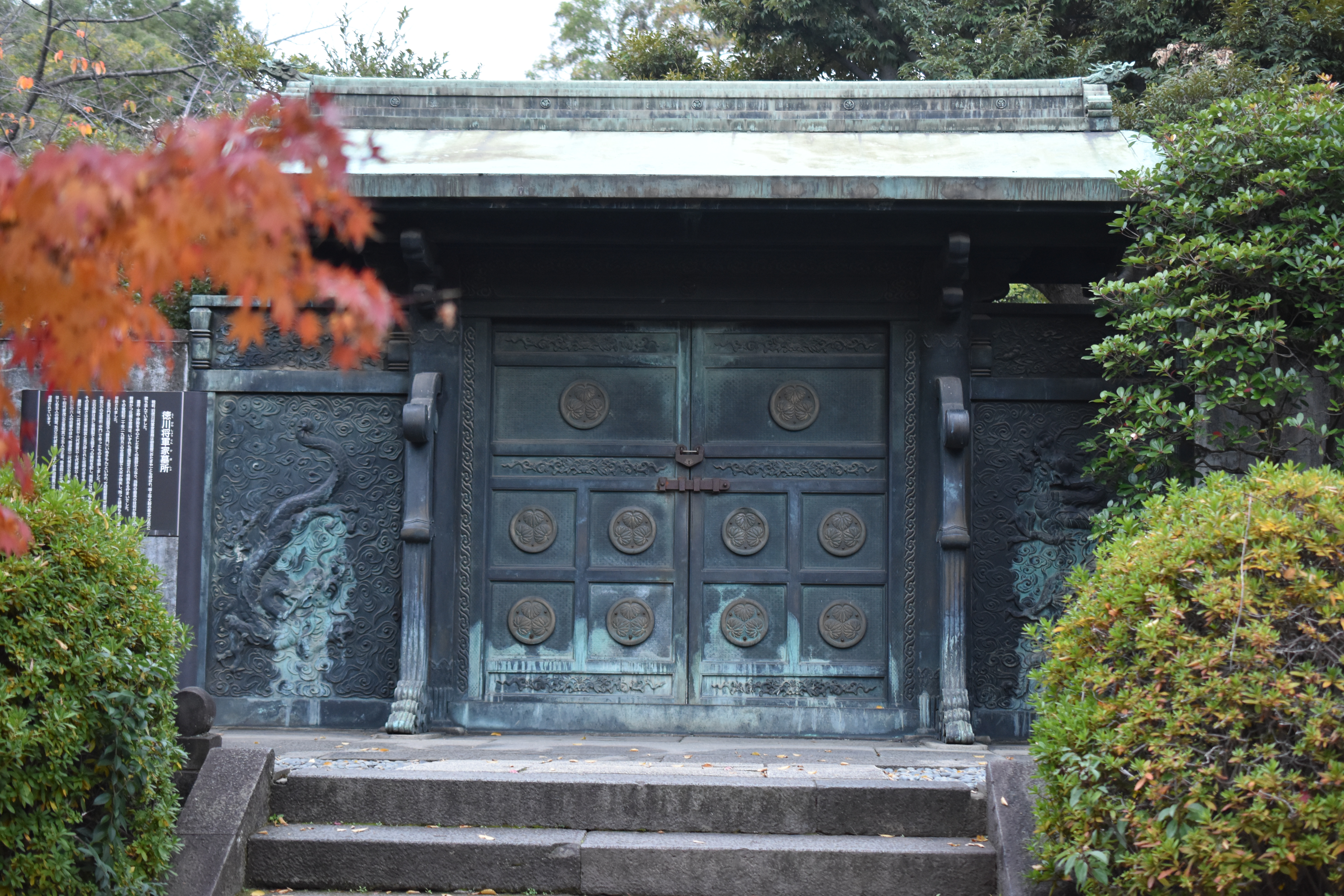
The Tokugawa shogun family graves at Zojo-ji sit behind an ornate cast bronze gate that was salvaged from the 1712 mausoleum of the sixth shogun, Ienobu. Six of the fifteen Tokugawa shoguns and Princess Kazunomiya lie in the small ticketed plot behind it; the gate itself can be seen for free from the temple grounds.
Shiba Park and the Foot of Tokyo Tower
6

Shiba Park and the Foot of Tokyo Tower

5 min

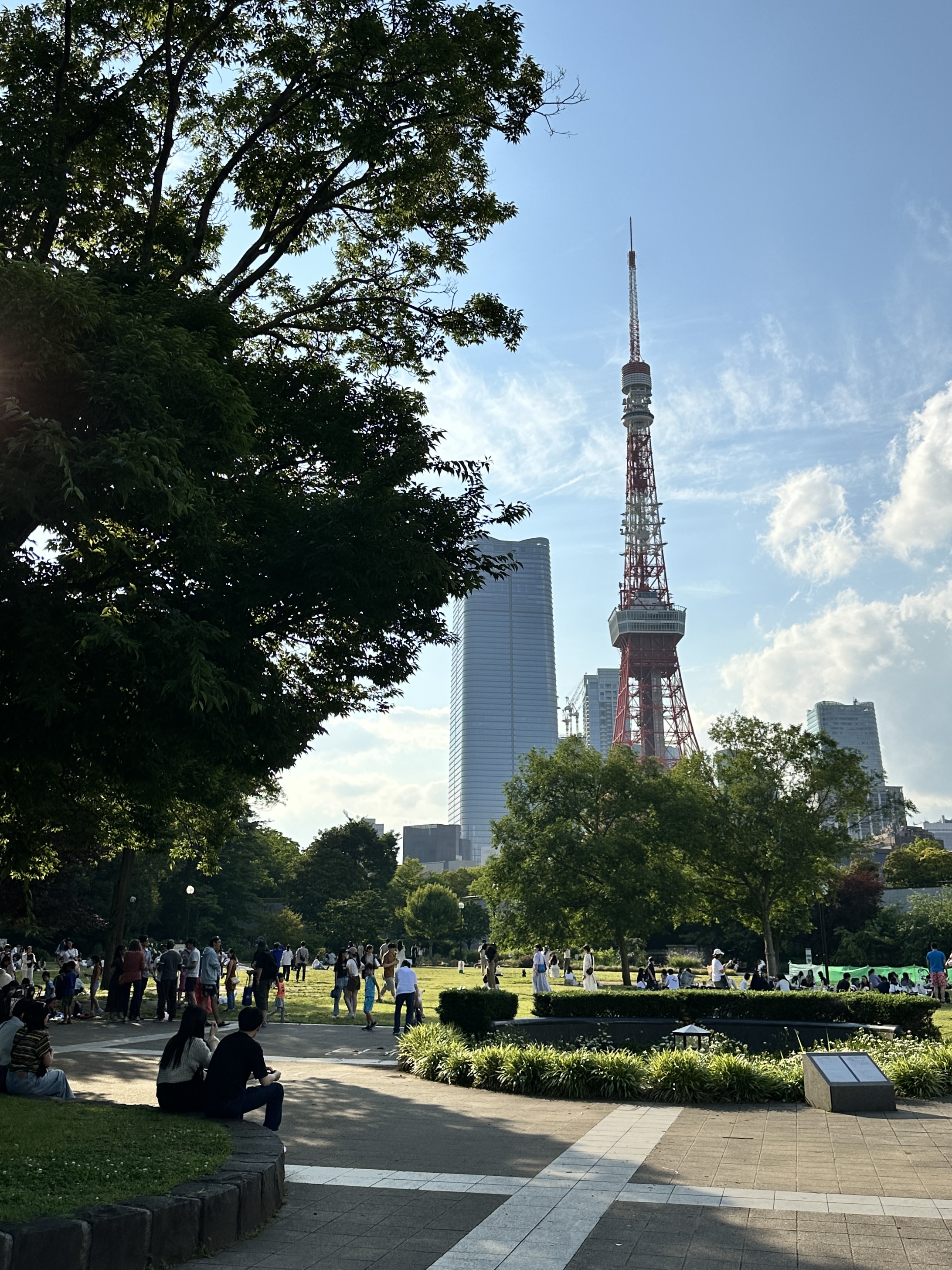
Tokyo Tower, completed on 23 December 1958 at 332.9 metres, was built as a single consolidated broadcast mast for the Kanto region, with roughly a third of its steel rolled from about ninety American tanks scrapped after Korean War damage. The park at its base was created in 1873 on land the Meiji government confiscated from Zojo-ji, and every good view of the tower from ground level is free.
Yurei-zaka (Ghost Slope)
7

Yurei-zaka (Ghost Slope)

5 min

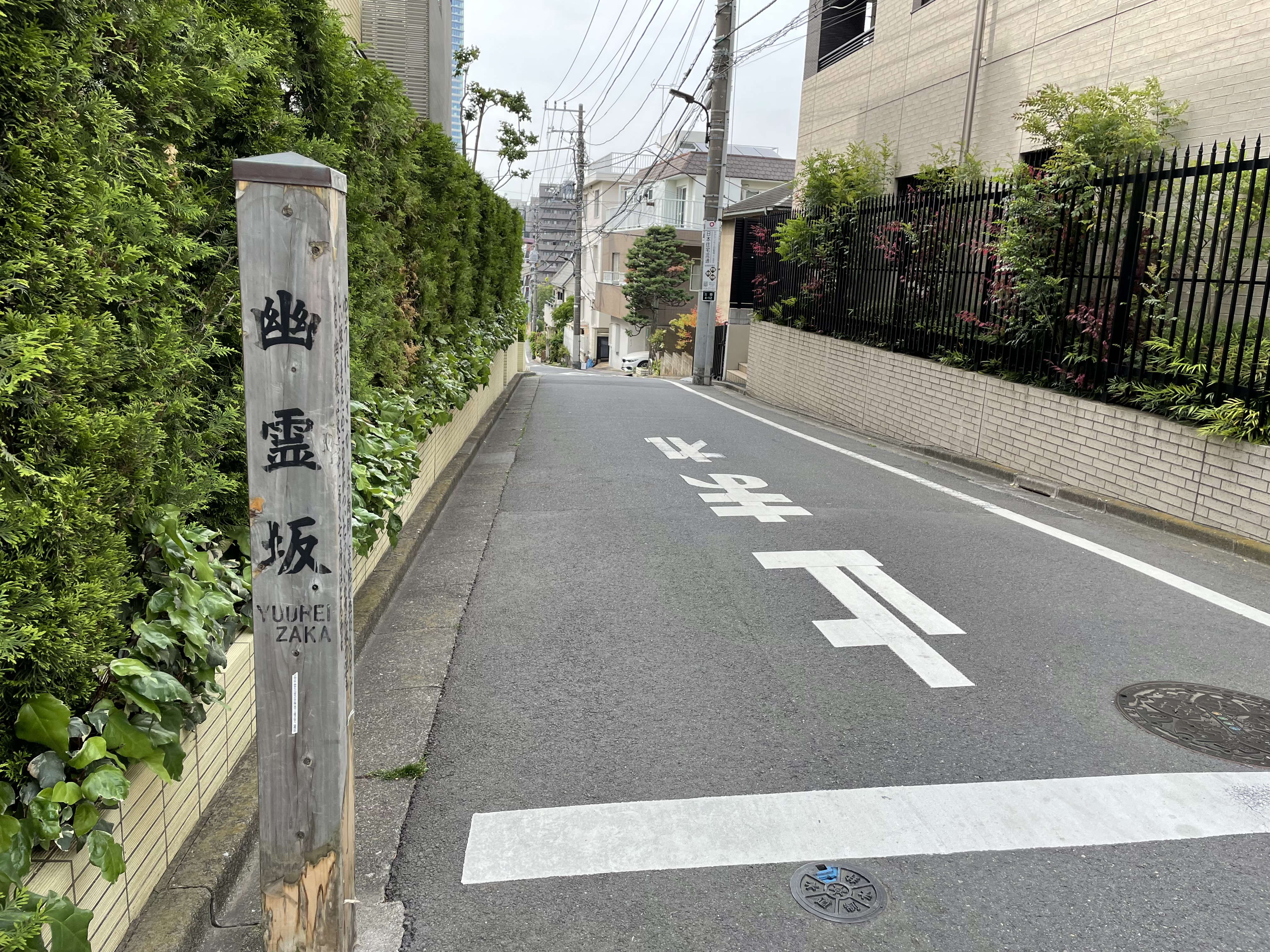
A quiet residential slope in Mita with an official Minato ward marker and two competing origin stories: a lane of temples resettled here in 1635 that was said to be dark enough for ghosts, or a Meiji-era pun on the name of Mori Arinori, the first Minister of Education. It is the clearest place on the walk to see why Edo named its slopes at all.
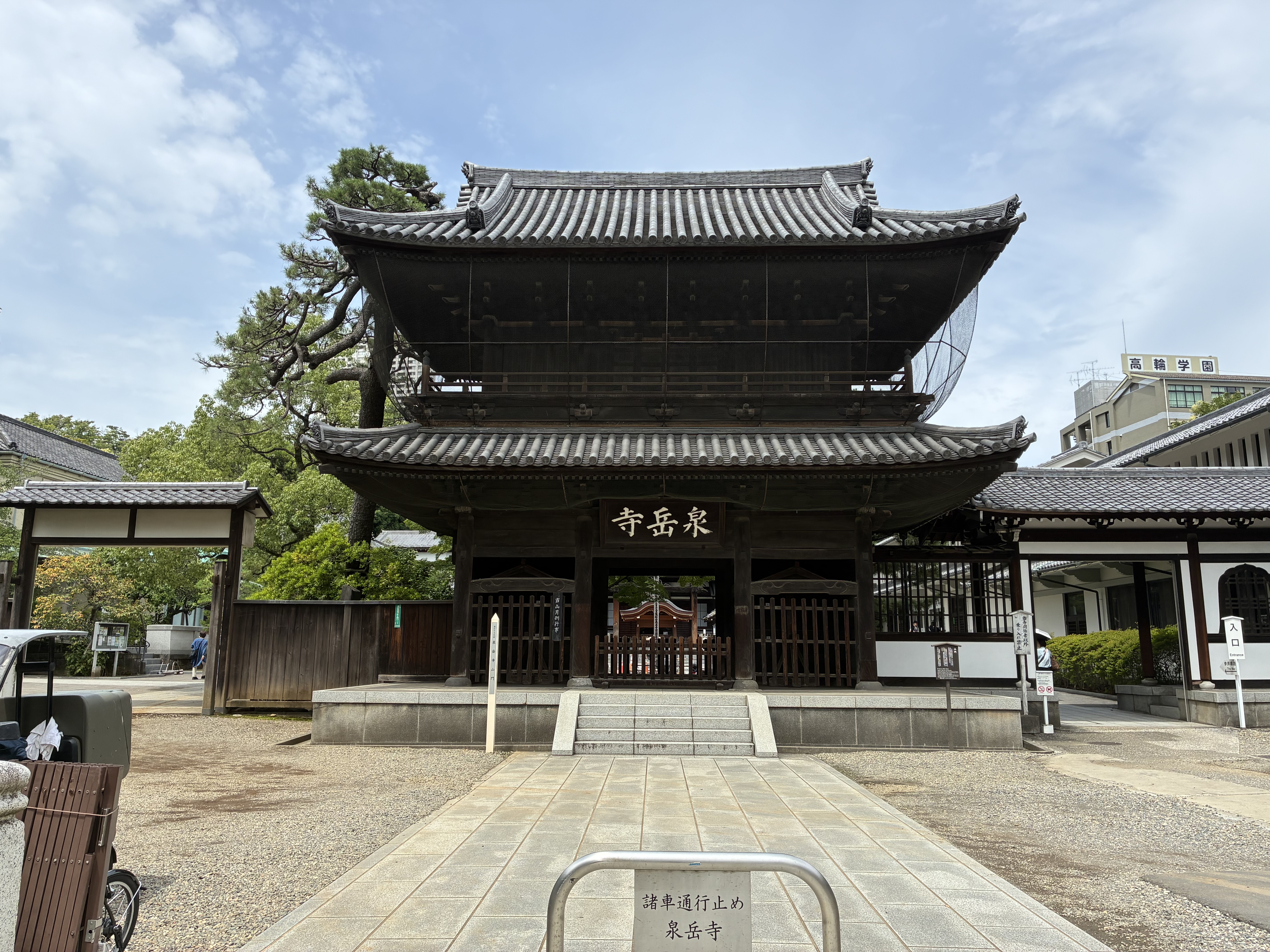
Sengaku-ji and the Graves of the Forty-Seven Ronin
8

Sengaku-ji and the Graves of the Forty-Seven Ronin

5 min

Sengaku-ji, founded by Tokugawa Ieyasu in 1612 and rebuilt in Takanawa after the 1641 fire, holds the graves of Asano Naganori and the forty-seven Ako retainers who marched roughly ten kilometres across Edo in December 1702 to lay their enemy's head at their lord's tomb. The temple still keeps the signed receipt issued when the head was handed back, and incense burns at the graves every day of the year.

A Taste of the Tour

This is the real story from one stop on this walk — every stop has one.

Atago Shrine's "Success Stairs" (Otoko-zaka)

Stand at the bottom and look up before you do anything else. Eighty-six stone steps, pitched at something close to forty degrees, rising about seventeen metres into a wall of green. Each step is only about twenty centimetres high, which sounds gentle until you notice how little room that leaves for the tread. From here the staircase does not look like architecture. It looks like a mistake somebody made and then decided to keep. Tokyo has called it the Success Stairs for nearly four hundred years, and the reason is a horse. The story goes like this. In 1634, the third shogun, Tokugawa Iemitsu, was passing below this hill on his way back from the family temple down the road. He looked up, saw the plum trees at the top in full white bloom, and did the thing powerful men do when they are pleased with a view: he asked for it. Someone should ride up, he said, and bring me a branch. His retainers looked at these steps. Then they looked at their horses. Then they looked at the ground. Nobody moved. And out of that silence rode a retainer of the Marugame domain in Shikoku named Magaki Heikuro, who went up, picked the plum, came back down, and handed it over. Iemitsu called him the finest horseman in Japan on the spot, and Heikuro, who had begun the morning as nobody in particular, ended it famous. Be a little careful with that story. It reaches us mainly through kodan, Japan's tradition of professional storytelling, in a set piece called "Kan'ei Sanbajutsu" — the three horsemen of the Kan'ei era. Which is to say it has been polished by people whose job was to make you lean forward. Whether it happened exactly so, the steps in front of you are real, and generations of Japanese office workers have climbed them before a job interview on the theory that it cannot hurt. Here is the part the legend leaves out, and it is my favourite part. Only three people are recorded as having repeated the feat since. A trick rider called Ishikawa Seima did it in the Meiji era. In 1925 an army groom named Iwaki Toshio rode a military horse up in about one minute. And in 1982 a stuntman, Watanabe Ryuma, went up in thirty-two seconds for a television programme. The ascent, in other words, is showy but survivable. The descent is the problem. Iwaki's horse, having gone up in a minute, needed roughly forty-five minutes to get back down. A horse can be persuaded to charge at something. It cannot be persuaded that a forty-degree drop is a floor. Anyone who has ever taken a promotion and then discovered what the job actually involves will recognise the shape of this. Now look to your left. Running alongside is the onna-zaka, the women's slope — 109 steps, longer and considerably kinder, against this one, the otoko-zaka, the men's slope. The names are Edo-period habit rather than instruction; nobody is checking. The whole approach, both slopes included, is a registered cultural property of Minato City. And if stairs are not happening today, they genuinely do not need to. At the foot of the hill, beside the road tunnel that runs underneath us, there is a free public elevator that takes you straight up to shrine level. No ticket, no asking permission. The paths at the top are gravel in places, so it is not flawless, but it is step-free, and you will arrive at exactly the same spot the rest of us arrive at, only without the sweating. Take it and rejoin us at the top. This is the only real climb on the whole walk — everything after this point descends, gently, toward the flat city. Which is the thread of this tour, and it starts here. Down there, in the low city, Edo was burned and rebuilt and burned and rebuilt until almost nothing of it is legible. Up here on the hills, it survived in the three things that are hardest to move: slopes, gates and graves. You are standing on the first of them. One more thing before you climb. This is a walk about what people will do to be remembered well — a man on a staircase, a dynasty in stone. It ends across the district with forty-seven men who took that question further than anyone should have to.

More Tours in Tokyo

Nearby Cities

Back to Tokyo Tours

Cookie Consent

We use cookies to analyse site traffic and improve your experience. You can choose to accept or reject analytics cookies. Learn more