The River Under Shibuya
Tokyo · Japan

The River Under Shibuya

Tokyo, Japan
75
Duration (min)
2.0
Distance (km)
9
Stops
Easy
Difficulty

Description

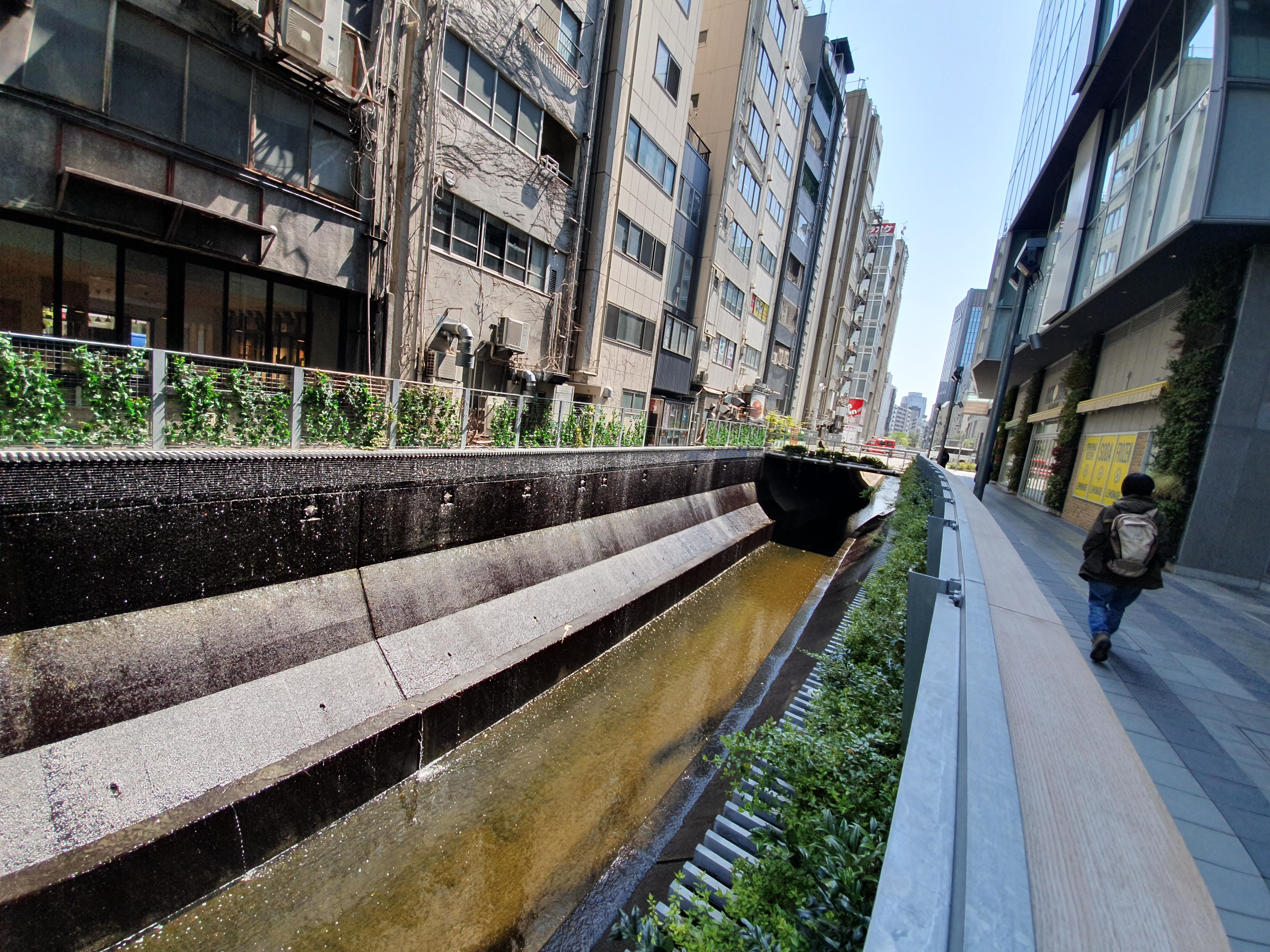
Stand at the busiest crossing on earth and look at the ground instead of the screens. Every street out of it climbs. Shibuya is a river valley pretending to be a city centre, and the river is still there — boxed into concrete under the station complex, section by section from the 1930s to the 1960s, with the 1964 Olympics as the deadline that settled the argument, because an open sewer was not what Tokyo wanted on the world's television. Follow the water and the district stops being random. A slope with a bandit's name is the valley wall. An alley of forty tiny bars survived because its scrap of low ground was never worth a tower. A park sits on a roof because the ground under it was already a lid. A famous shopping street curves the way it does because it is not a street at all — its official name is the Former Shibuya River Promenade. The walk ends at the one stretch somebody uncovered again in 2018, where you can finally look straight at it.

Highlights

The real arithmetic of the Scramble Crossing, against the number every guidebook repeats Where the culvert actually runs — and the 2009 paperwork that stopped it legally being a river at all Nonbei Yokocho, forty bars on land nobody wanted enough to redevelop Cat Street: not a street beside the river, but the river itself, paved A free eleventh-floor lobby where the whole bowl is visible at once — not the paid rooftop everyone queues for Konno Hachimangu, founded 1092 on the safe high ground, and the family the district is named after The daylighted river at Shibuya Stream, uncovered in 2018 and honestly described: a dosed concrete channel, not a stream
Tour Stops

Hachiko Statue
1

Hachiko Statue

5 min

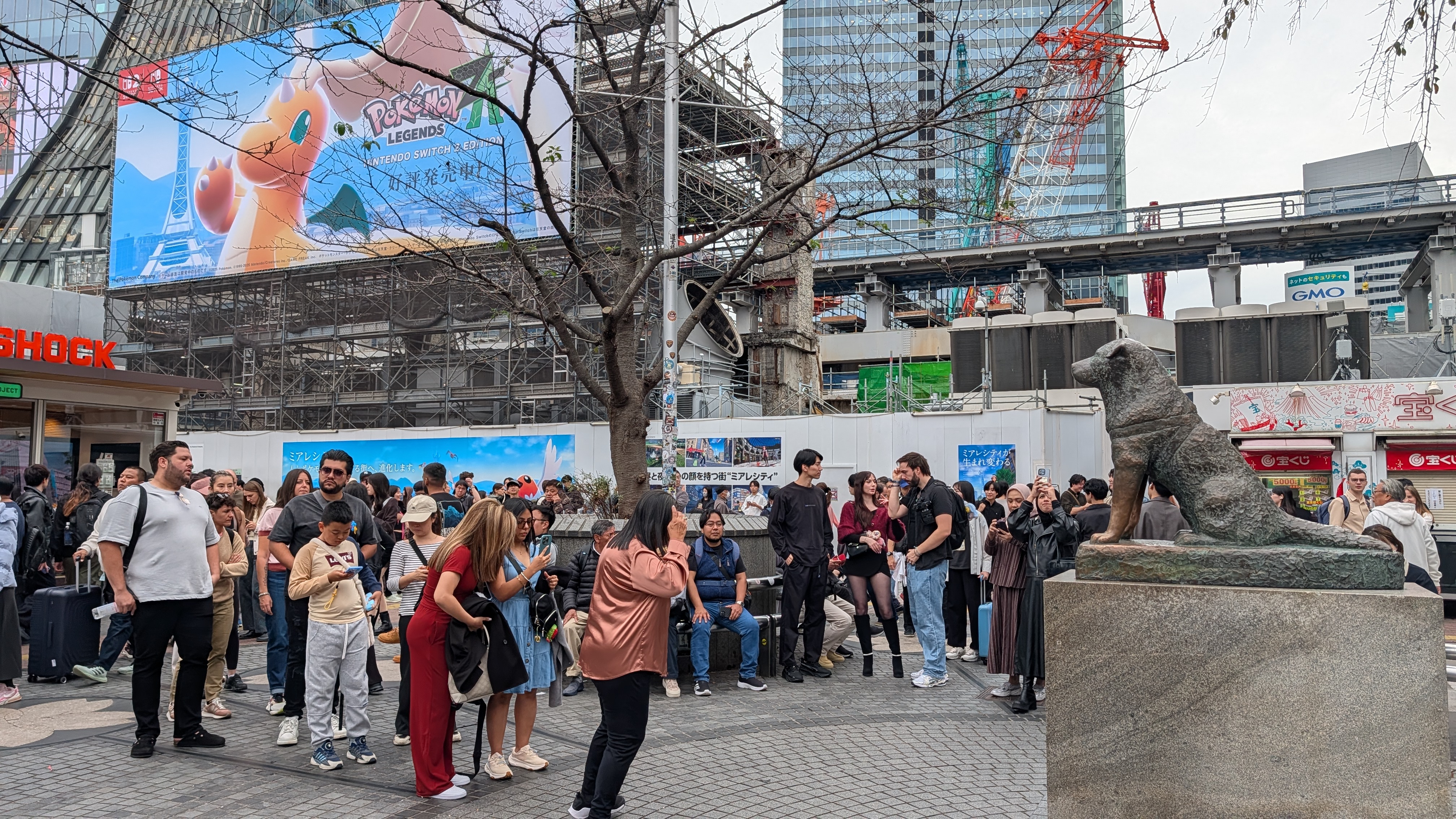
The bronze Akita outside Shibuya Station's Hachiko exit, cast in 1948 to replace the 1934 original that Hachiko attended in person and that was melted down during the war. It stands at the low point of the plaza, where every street leaving the crossing runs uphill.
Shibuya Scramble Crossing
2

Shibuya Scramble Crossing

5 min

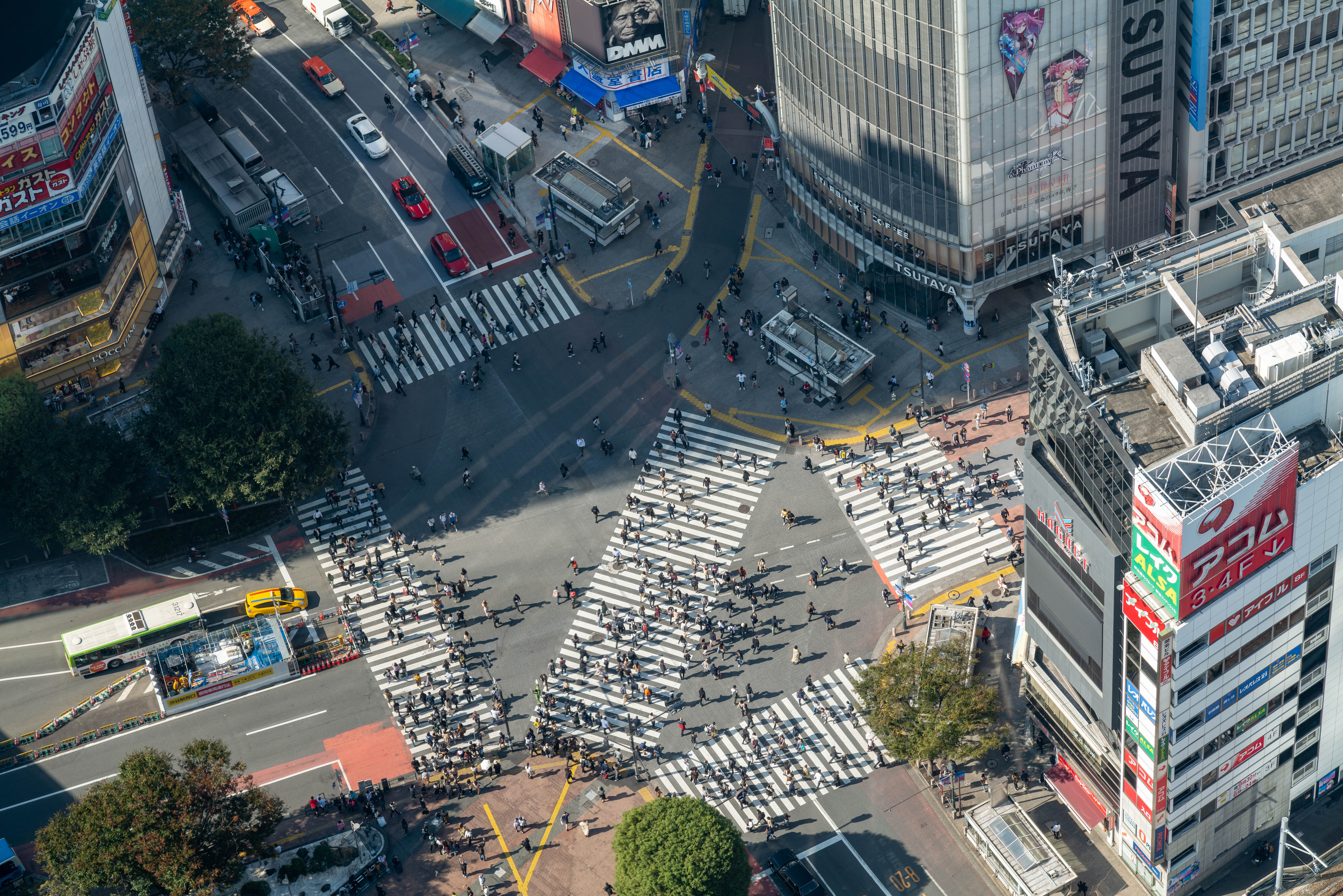
The world's most-filmed pedestrian intersection sits on the floor of a genuine river valley. The Shibuya River runs beneath the station complex at the crossing's edge in a concrete culvert roughly 250 metres long, boxed over in the years before the 1964 Olympics because post-war waste had turned it into an open sewer.
Dogenzaka
3

Dogenzaka

5 min

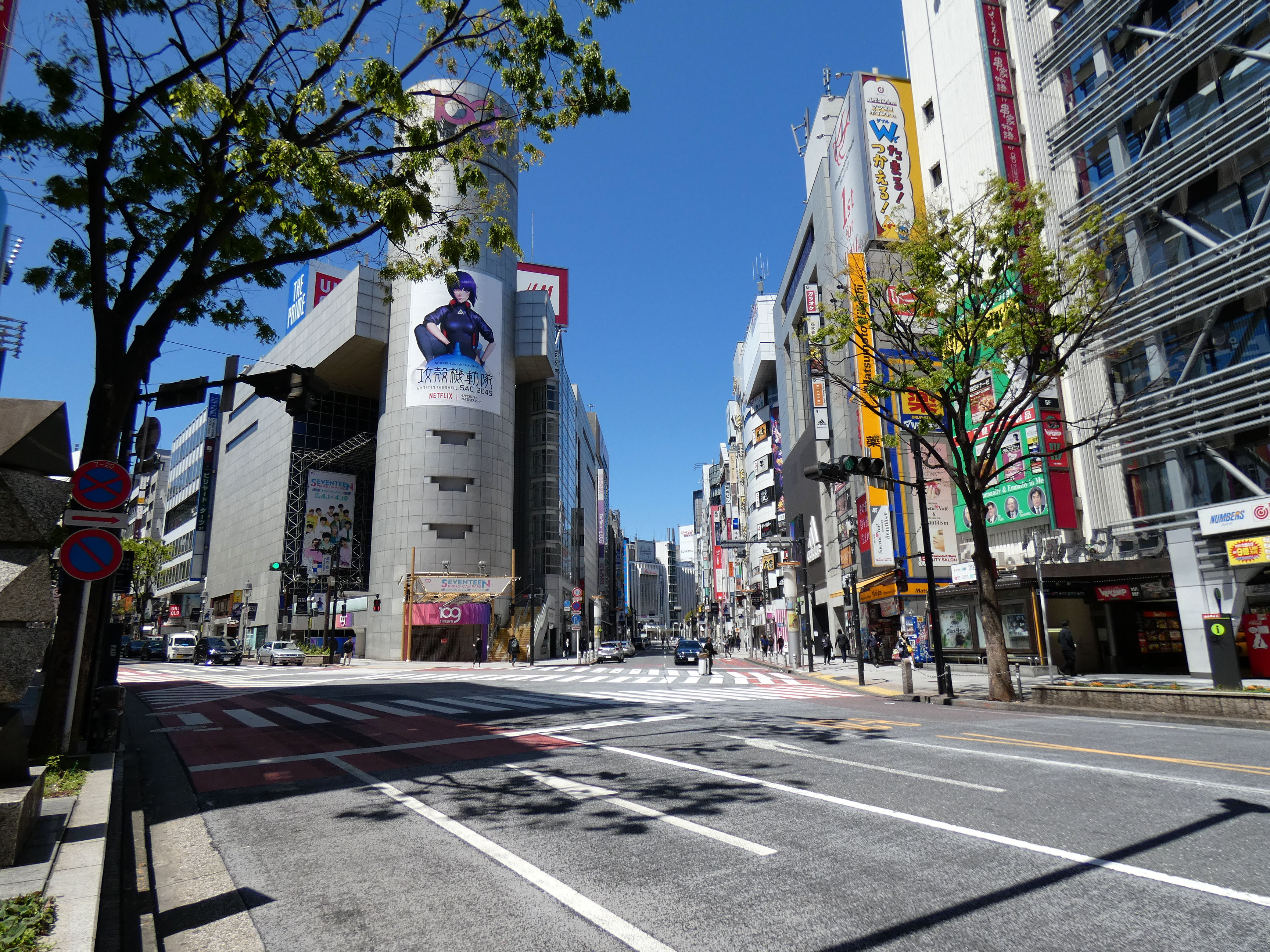
Dogenzaka is the climb up the western wall of the Shibuya valley, about twenty metres of height difference between the station and the crossroads at the top. Its name comes from two competing and still-unresolved legends about a figure called Dogen: a Kamakura-era highway robber, or a monk with a hermitage on the hill.
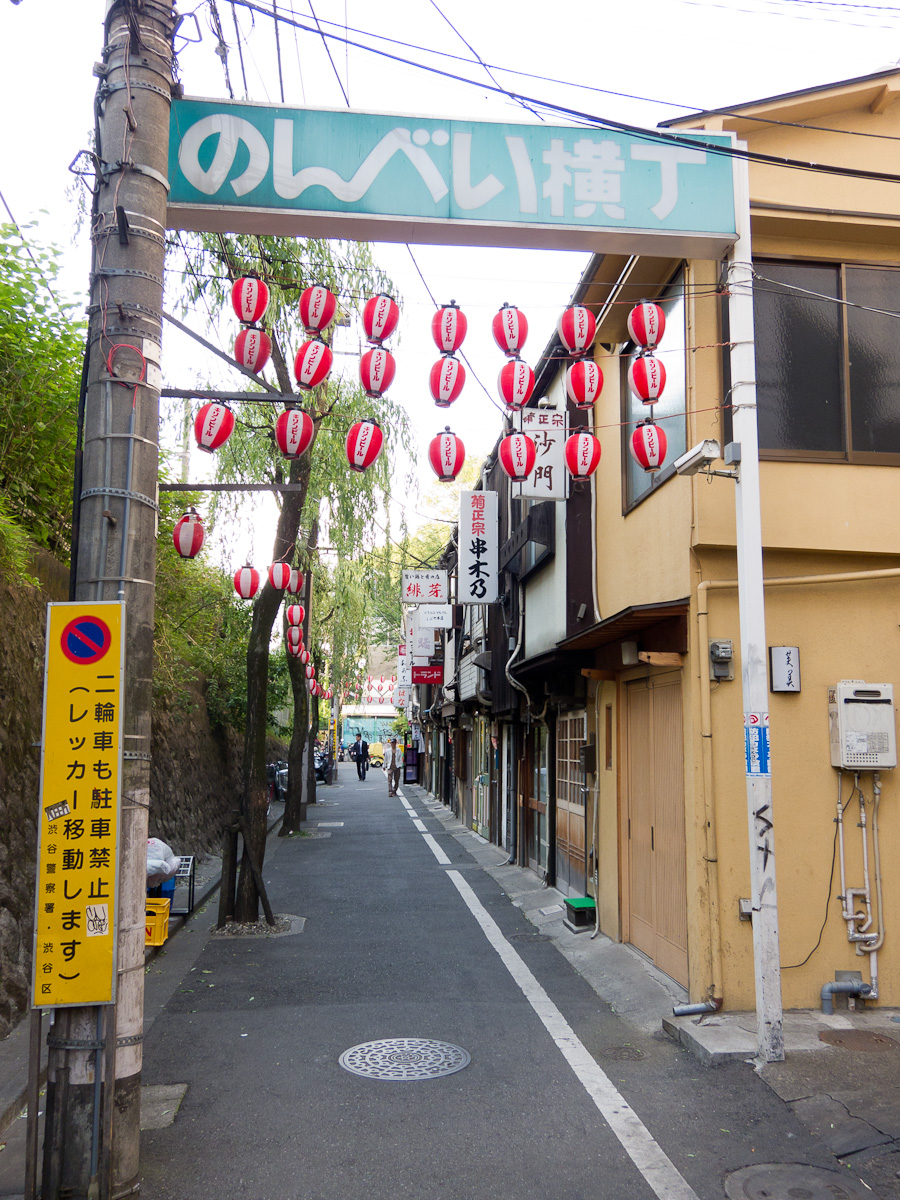
Nonbei Yokocho
4

Nonbei Yokocho

5 min

A two-metre-wide alley of about forty tiny bars, most seating only four to eight people, wedged between the railway embankment and the covered course of the Shibuya River. It was created in 1951 when the city moved Shibuya's postwar black-market stalls onto this leftover strip of riverbank, and it has traded continuously since 1952.
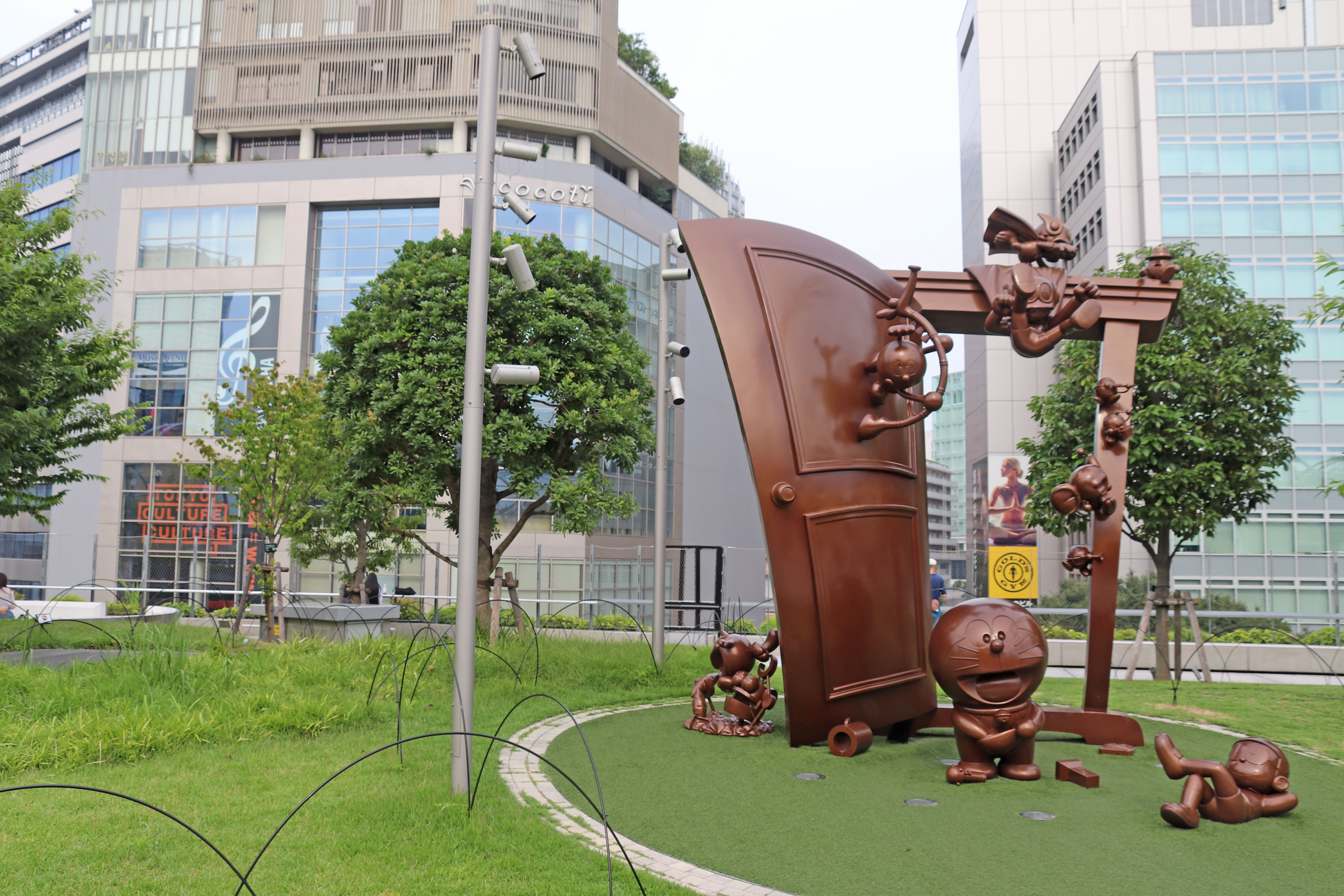
Miyashita Park
5

Miyashita Park

5 min

Tokyo's first elevated park opened here in 1966, rebuilt on artificial ground above a parking garage after the river beside it was culverted, replacing a ground-level park from 1953. After a contested Nike naming-rights deal and the 2010 eviction of homeless residents, the site closed in 2017 and reopened in July 2020 with the park relocated onto the roof of a mall and an eighteen-storey hotel.
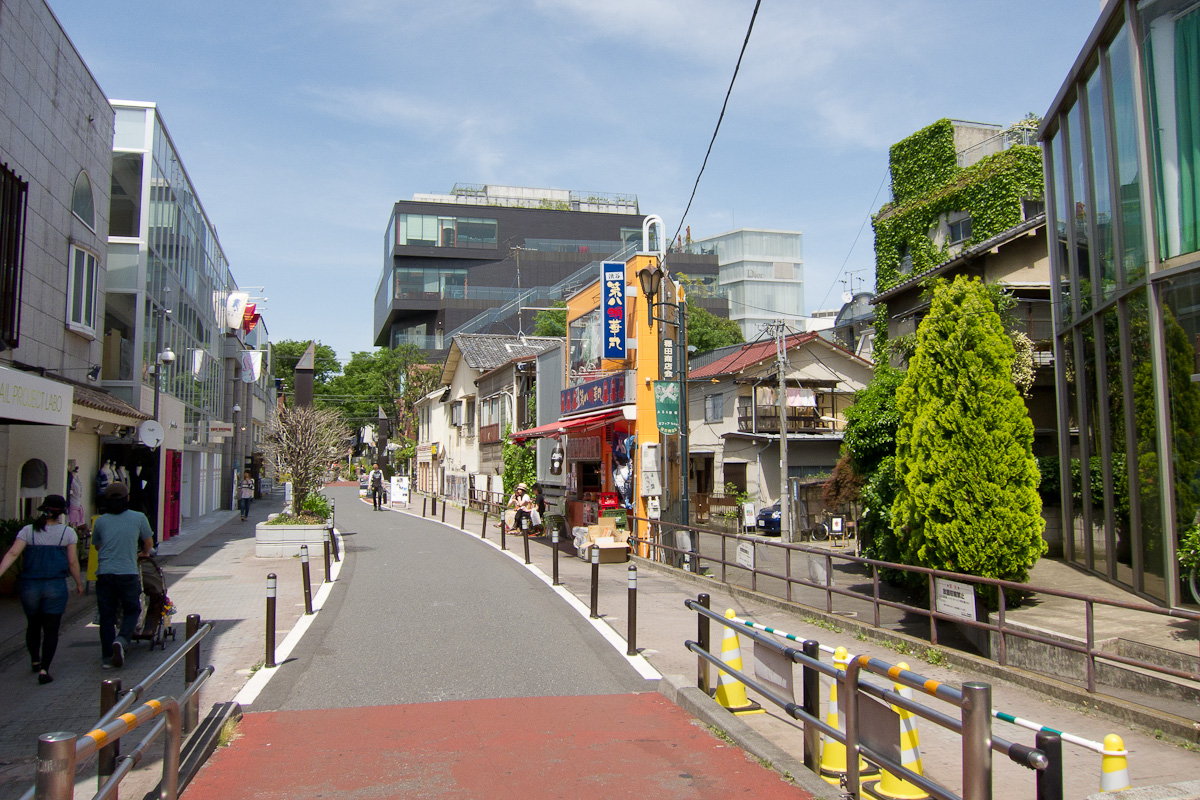
Cat Street
6

Cat Street

5 min

Cat Street's official designation is the Kyu-Shibuyagawa Yuhodoro, the Former Shibuya River Promenade: a walkway laid directly on the culverted bed of the Shibuya (Onden) River, which is why it meanders instead of running straight. Just under a kilometre of low-rise shops runs north from Meiji-dori near Shibuya Cast, crossing Omotesando at the Jingumae police box, toward Harajuku.
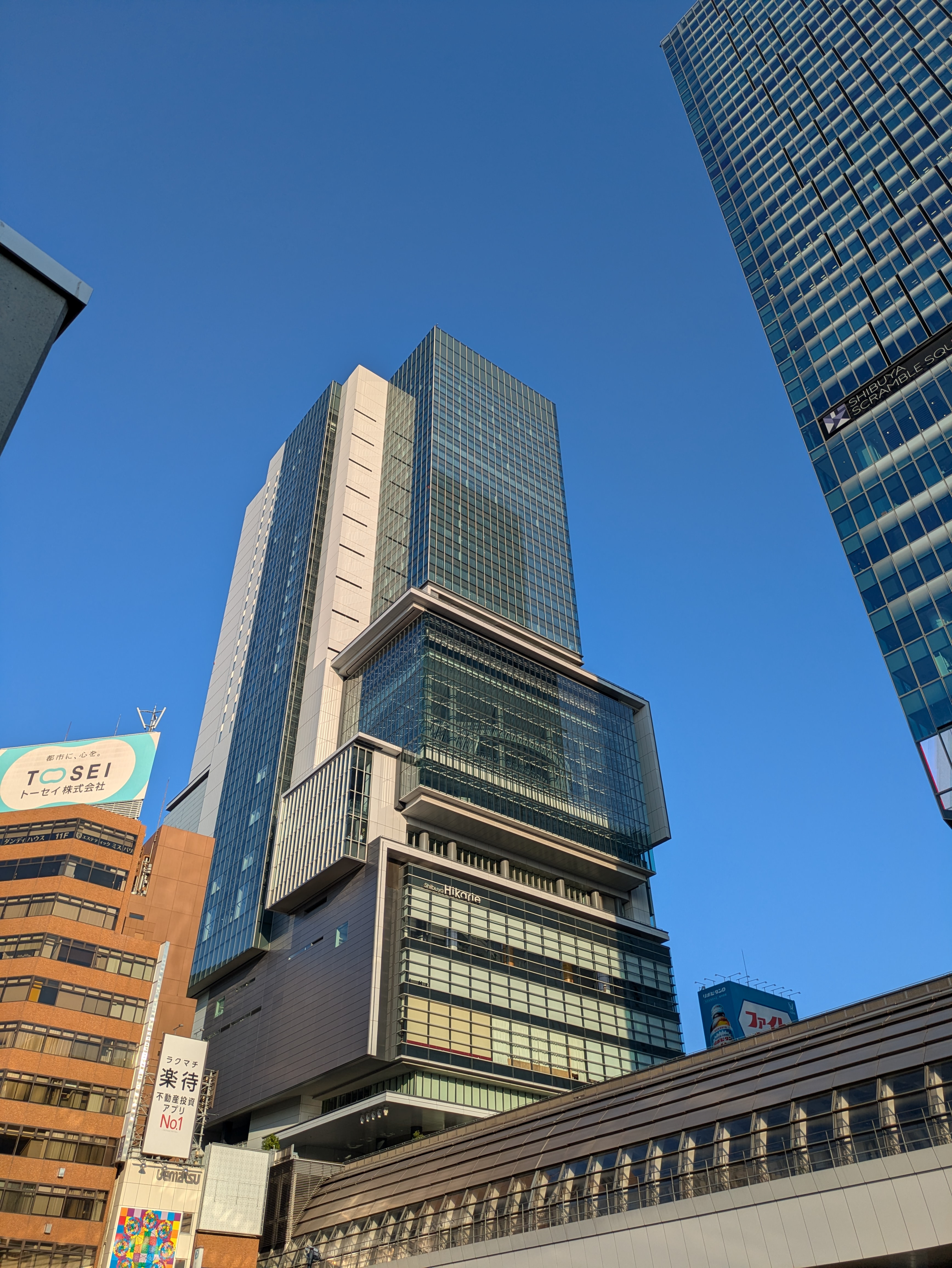
Shibuya Hikarie Sky Lobby
7

Shibuya Hikarie Sky Lobby

5 min

Shibuya Hikarie's 11th-floor Sky Lobby is a glass-walled public lift lobby, free to enter with no ticket or reservation, looking west over Shibuya Station and the crossing. It is not the paid Shibuya Sky rooftop deck at Shibuya Scramble Square, with which it is constantly confused.
Konno Hachimangu
8

Konno Hachimangu

5 min

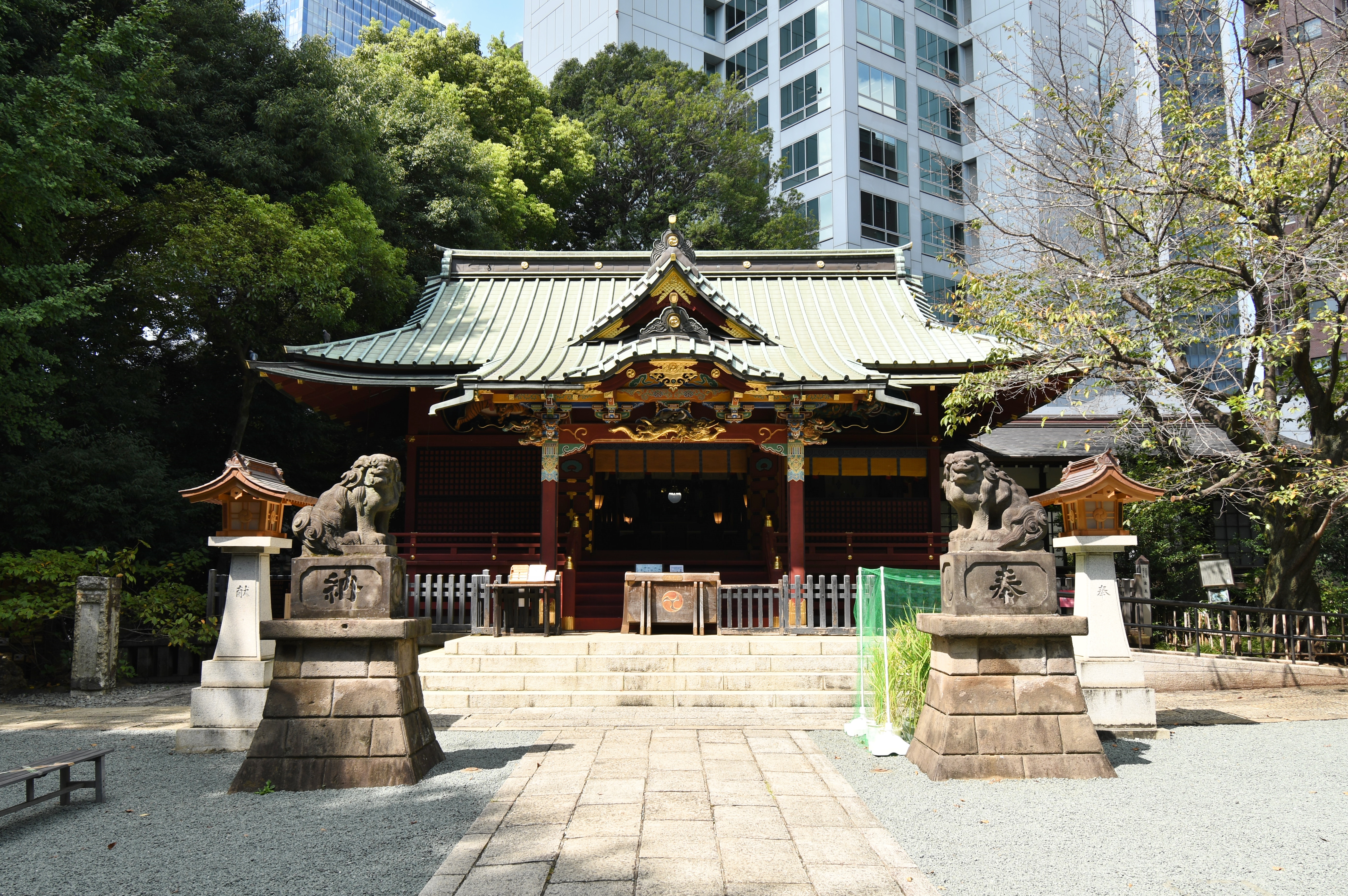
Founded in 1092 as the guardian shrine of the warrior family who held this valley, Konno Hachimangu stood inside the grounds of Shibuya Castle on the high ground east of the river. The castle burned in 1524 and survives as a single stone on the grounds; the 1612 main hall, the Konno-zakura cherry and the Inari torii corridor are what you see today.
Shibuya Stream and the Daylighted River
9

Shibuya Stream and the Daylighted River

5 min

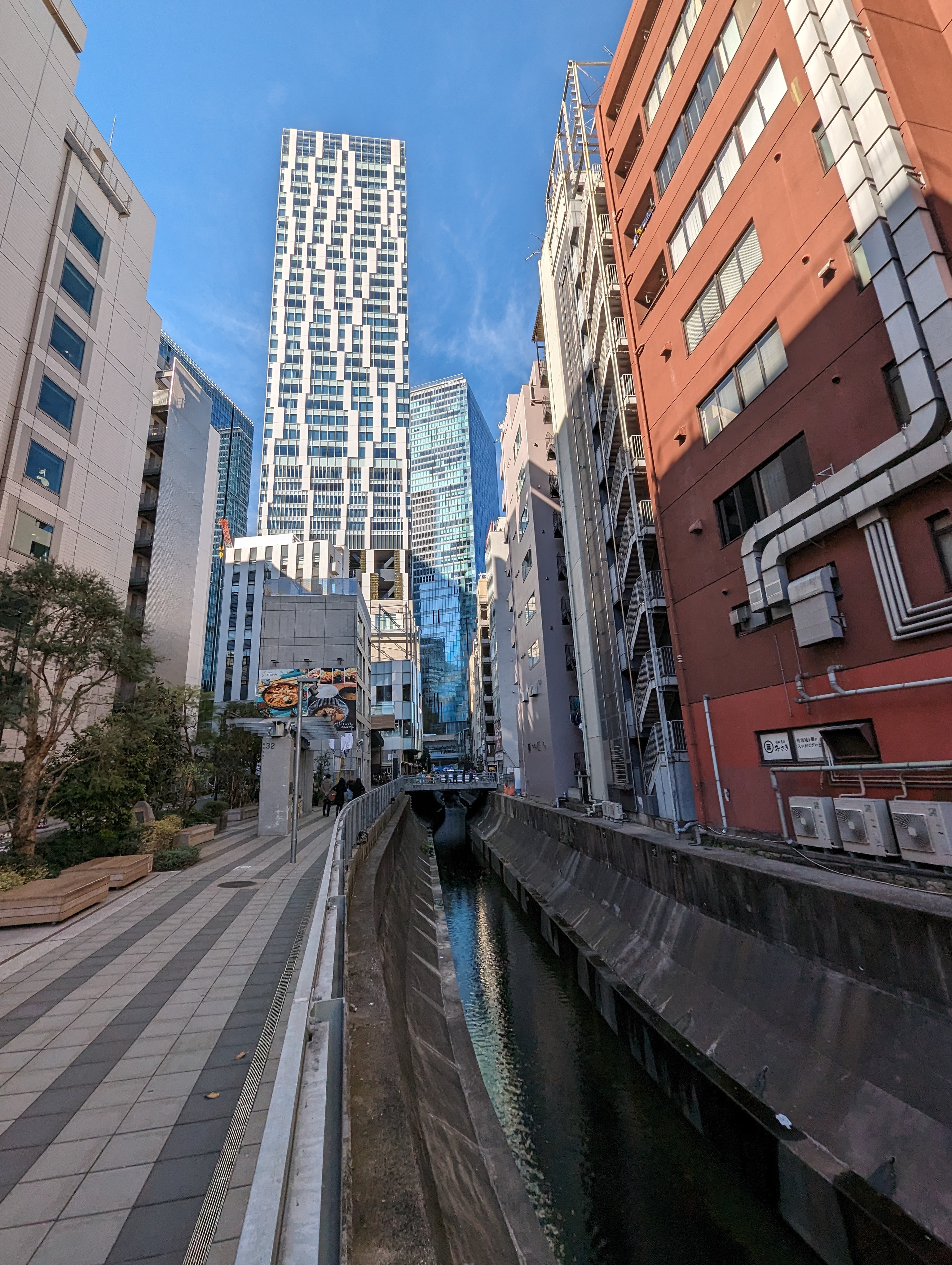
The stretch of the Shibuya River uncovered in 2018 beside the Shibuya Stream tower, walkable along a roughly 600-metre planted promenade running south toward Daikanyama and Ebisu. It is the only place in the district where the buried river of this walk is visible in daylight, its flow topped up with reclaimed water from a Tokyo water reclamation centre.

A Taste of the Tour

This is the real story from one stop on this walk — every stop has one.

Hachiko Statue

Before anything else, the shape of the day. Nine stops, about two kilometres, roughly seventy-five minutes. Every stop is free to reach and nothing needs booking. Two of them are indoors and upstairs — a rooftop park reached through a shopping centre, and a free eleventh-floor lobby with a lift — and the paid facilities up on that roof are optional and not part of this walk. Two short climbs, because this is a valley walk rather than a flat loop. All you need is shoes and a willingness to look at a very famous place sideways. Now, the dog. There is almost certainly a queue for photographs, and that queue has been forming, in one shape or another, for ninety years. Hachiko was an Akita, born near Odate in Akita Prefecture in November 1923 and brought to Tokyo as a puppy the following year by Hidesaburo Ueno, a professor of agricultural engineering at Tokyo Imperial University who lived a short walk from here. The routine was ordinary. Ueno went to work; Hachiko came down to the station in the evening to meet him. On the 21st of May 1925, Ueno had a cerebral haemorrhage at the university and died there. He never came home, and nobody could explain that to the dog. Hachiko kept coming. Not for weeks, for nine years. He was passed around between relatives and former servants, shooed off by station staff, fed scraps by the yakitori sellers, and he kept turning up at the station around the hour the train came in. It only became a national story in October 1932, when Hirokichi Saito, founder of the Japanese dog preservation society, wrote him up in the Asahi Shimbun. Japan wept, and then Japan moved fast: a bronze was commissioned from the sculptor Teru Ando and unveiled on this spot in April 1934, with Hachiko himself present at his own unveiling, elderly and presumably baffled. He died on the 8th of March 1935. For decades people said a chicken skewer had killed him; a re-examination of his preserved organs in 2011 found terminal cancer and a heavy parasitic worm infection, plus four skewers in his stomach that had damaged nothing at all. The statue you are looking at is not the one he attended. That bronze was stripped out and melted down for the war effort, and Teru Ando was killed in an air raid. In 1948 a society formed specifically to bring the dog back commissioned Ando's son, Takeshi, who rebuilt his father's work from photographs and memory. So the thing in front of you is a son's reconstruction of his father's portrait of a dog who waited. That is a lot of loyalty packed into one small bronze. And now it functions as an address. Hachiko is where you tell someone to meet you when you cannot be bothered to explain anything further; the station exit behind you is officially the Hachiko exit; an entire city uses a dead Akita as a map coordinate. Which brings us to why you are actually standing here. Turn slowly, all the way round, and look past the crowd at the streets leaving this plaza. Every one of them goes up. The road to the left climbs, the road opposite climbs, the lanes behind the station climb. You are standing at the bottom of a bowl, and bowls do not happen by accident in a city. Something carved this shape long before anyone laid a paving stone or bolted a screen to a building. That is the whole walk in one sentence: Shibuya is a valley pretending to be a city centre, and once you can see that, nothing about the district's shape is arbitrary. We finish, eight stops from here, at the one place in this district where you can stand and look straight at the thing it is built on.

More Tours in Tokyo

Nearby Cities

Back to Tokyo Tours

Cookie Consent

We use cookies to analyse site traffic and improve your experience. You can choose to accept or reject analytics cookies. Learn more