Piano Town to Little Egypt
New York · United States

Piano Town to Little Egypt

New York, United States
130
Duration (min)
4.6
Distance (km)
9
Stops
Easy
Difficulty

Description

Astoria is among the most linguistically diverse places on earth, and this walk asks how that happened. The answer turns out to be layering rather than mixing: in the 1870s Steinway built an entire company town here — factory, foundry, worker housing — and the street still carries the name. Greeks came, then Italians, then Egyptians and Moroccans, alongside Bangladeshi, Brazilian and many more communities today. Each wave built something and many moved on, and what they built stayed behind: a beer garden still owned by a benevolent society, Doric columns given to a park, a film studio that predates Hollywood's dominance and outlived it. The walk runs 4.6 km north to the Hell Gate Bridge.

Highlights

A German piano dynasty's company town, and the street that still carries its name Little Egypt on Steinway Street, in business now Athens Square's columns and Socrates, paid for by the community that wanted them A beer garden owned since 1910 by a Czech benevolent society Astoria as an American film capital before Hollywood, and the studio that came back
Tour Stops

Museum of the Moving Image
0

Museum of the Moving Image

5 min

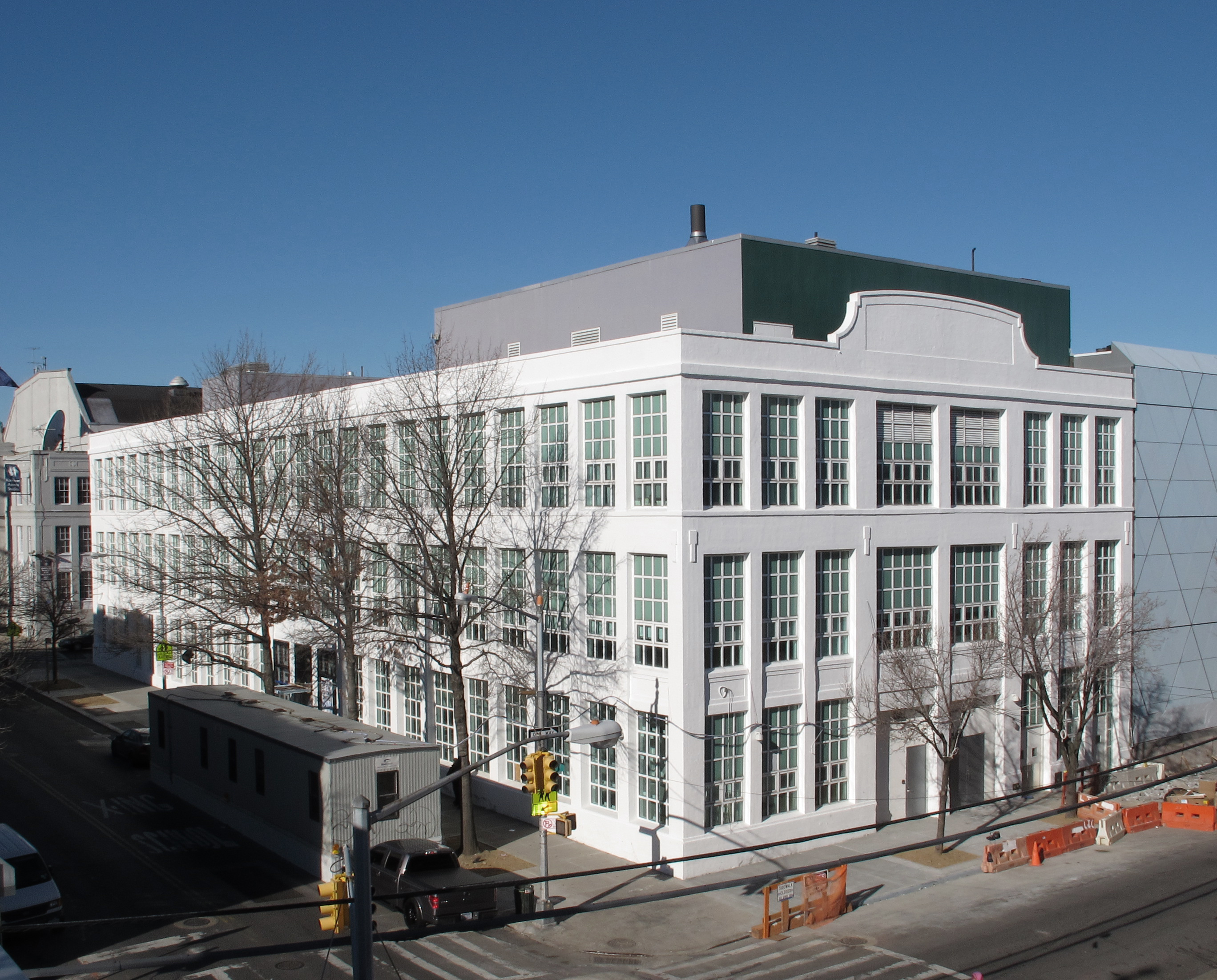
The Museum of the Moving Image, on 35th Avenue, is the only museum in the United States devoted entirely to film, television, and digital media, and it sits on part of the ground once occupied by Astoria's historic silent-film studio complex.
Kaufman Astoria Studios
1

Kaufman Astoria Studios

5 min

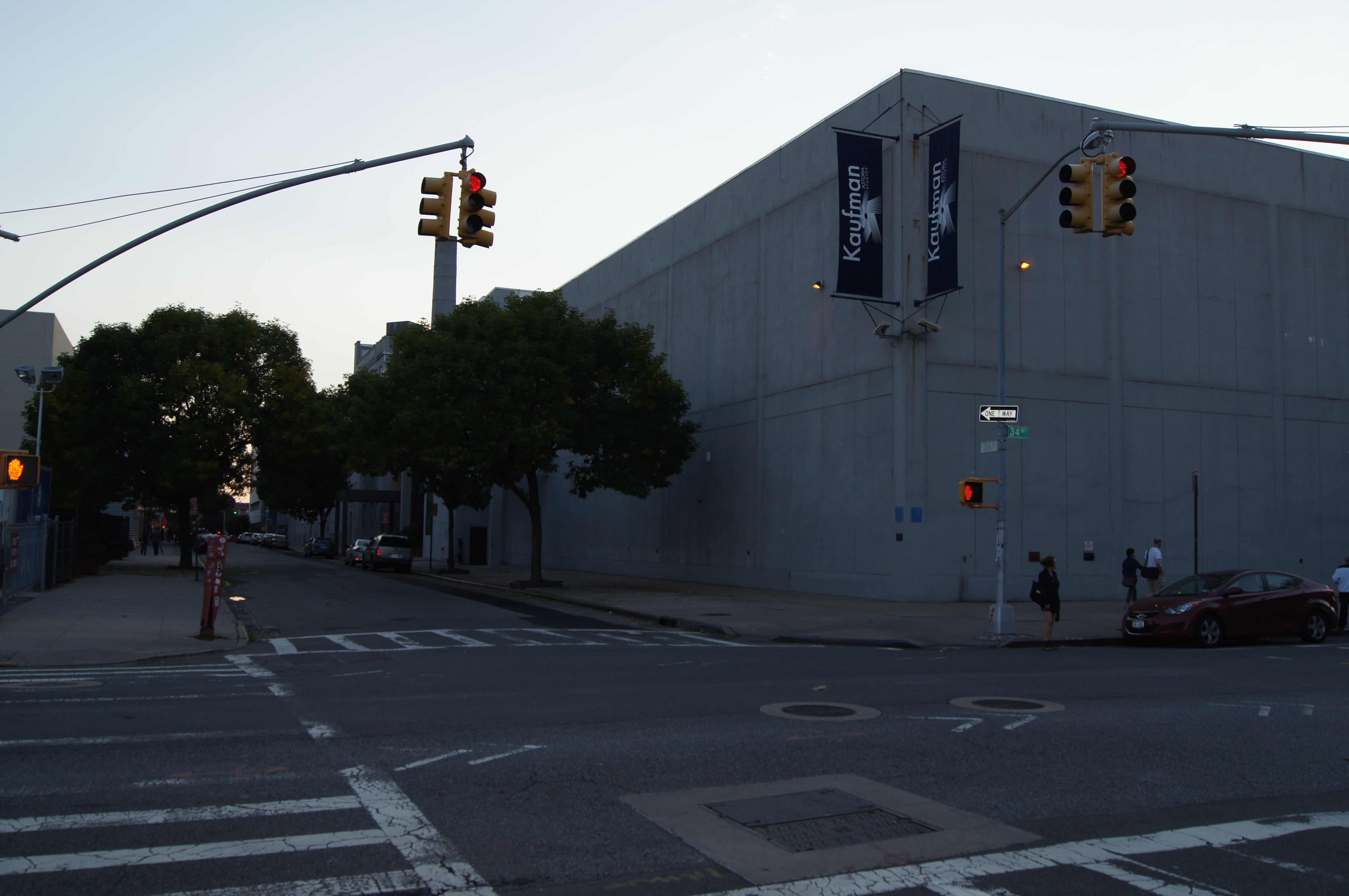
Paramount built this lot as its East Coast studio in 1920, and it has stayed a working film and television facility, with only its owners and its output changing, for over a century.
30th Avenue
2

30th Avenue

5 min

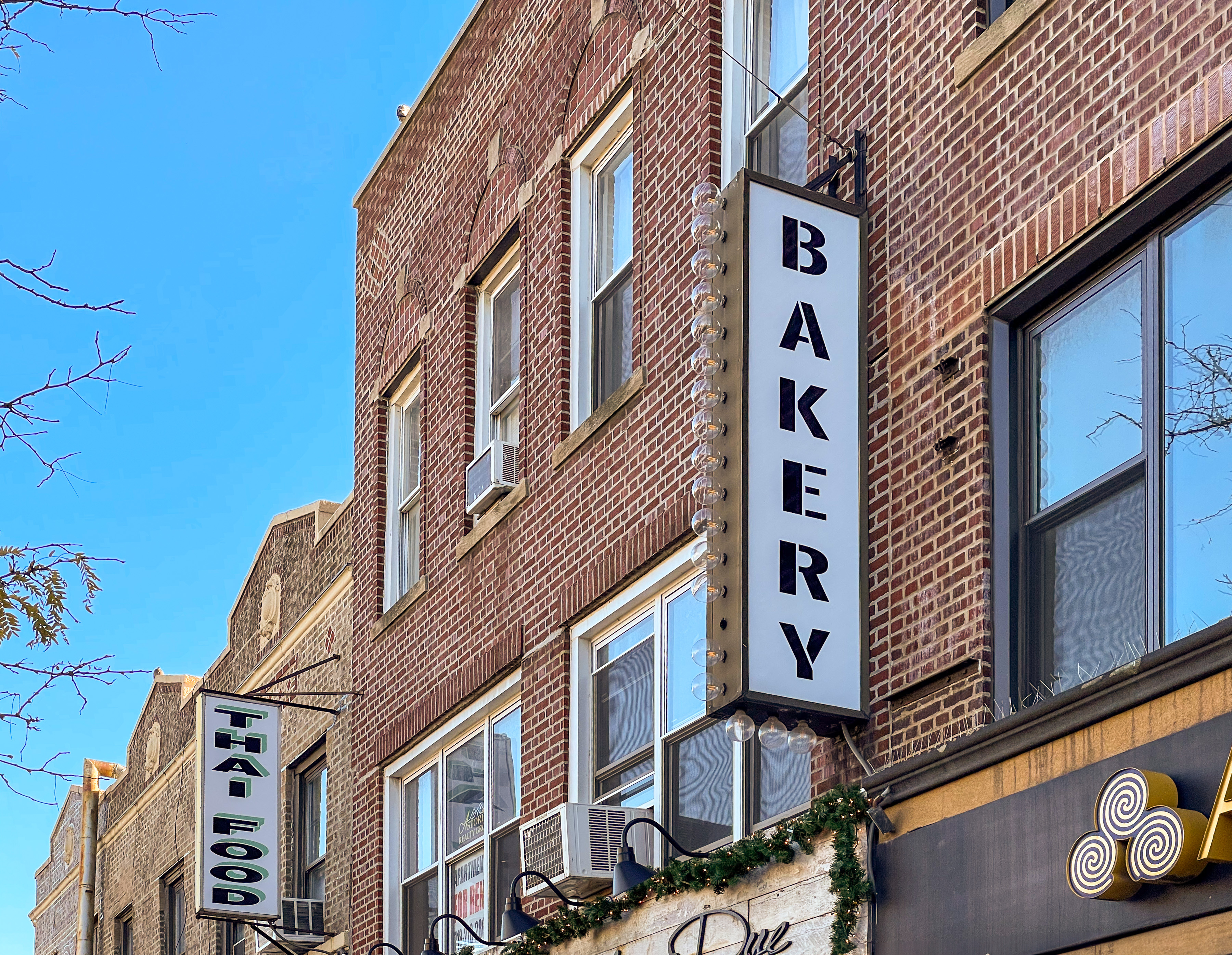
30th Avenue is Astoria's second commercial spine, a shopping street where Greek, Bangladeshi and South Asian, Italian, Egyptian and Arab, and Brazilian and Latin American businesses have operated side by side for decades without displacing one another.
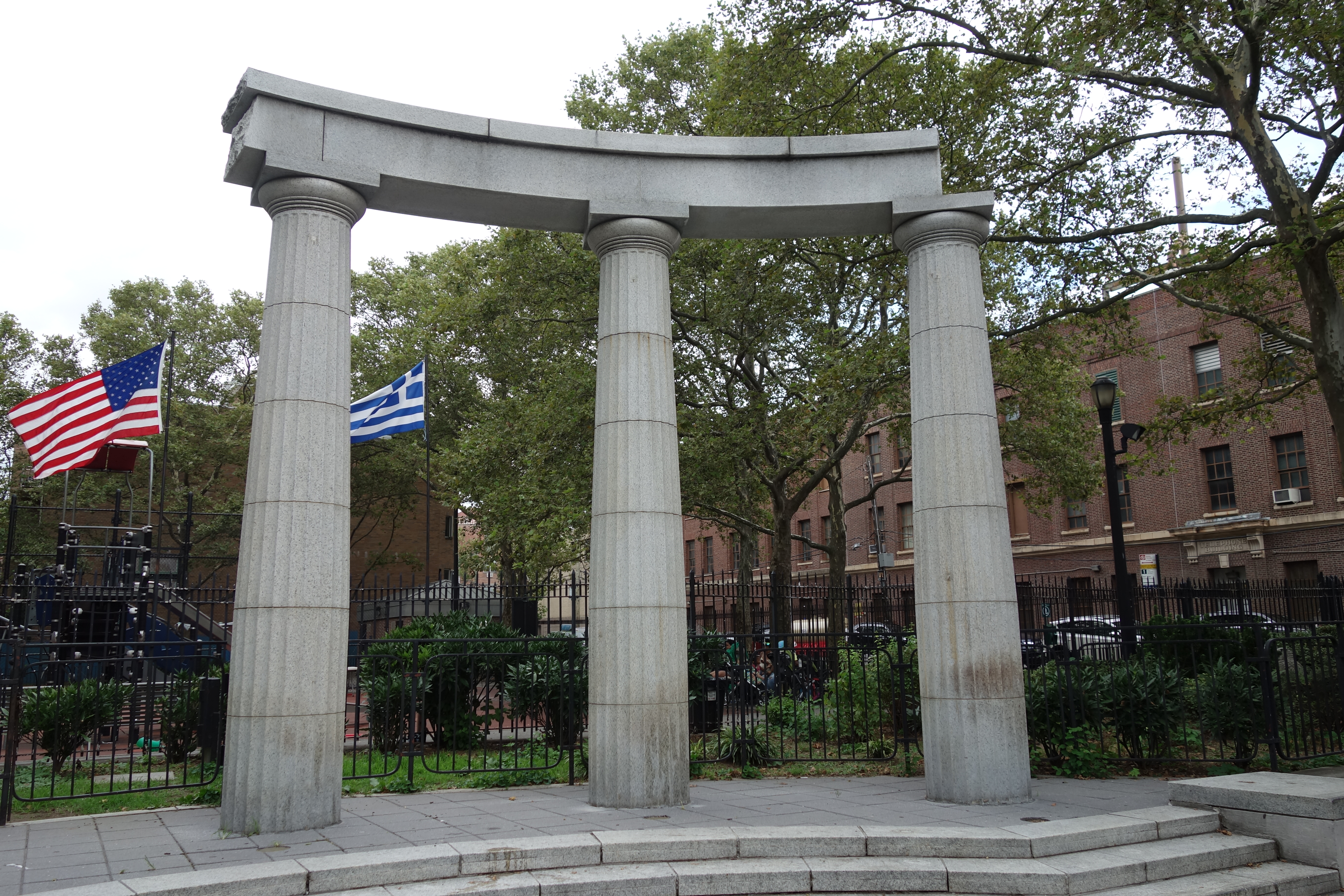
Athens Square Park
3

Athens Square Park

5 min

Athens Square Park, a small public park just off 30th Avenue, holds Doric columns and a bronze statue of Socrates donated and paid for by the Greek-American community and Greek institutions, then installed on city-owned ground rather than commissioned by the city itself.
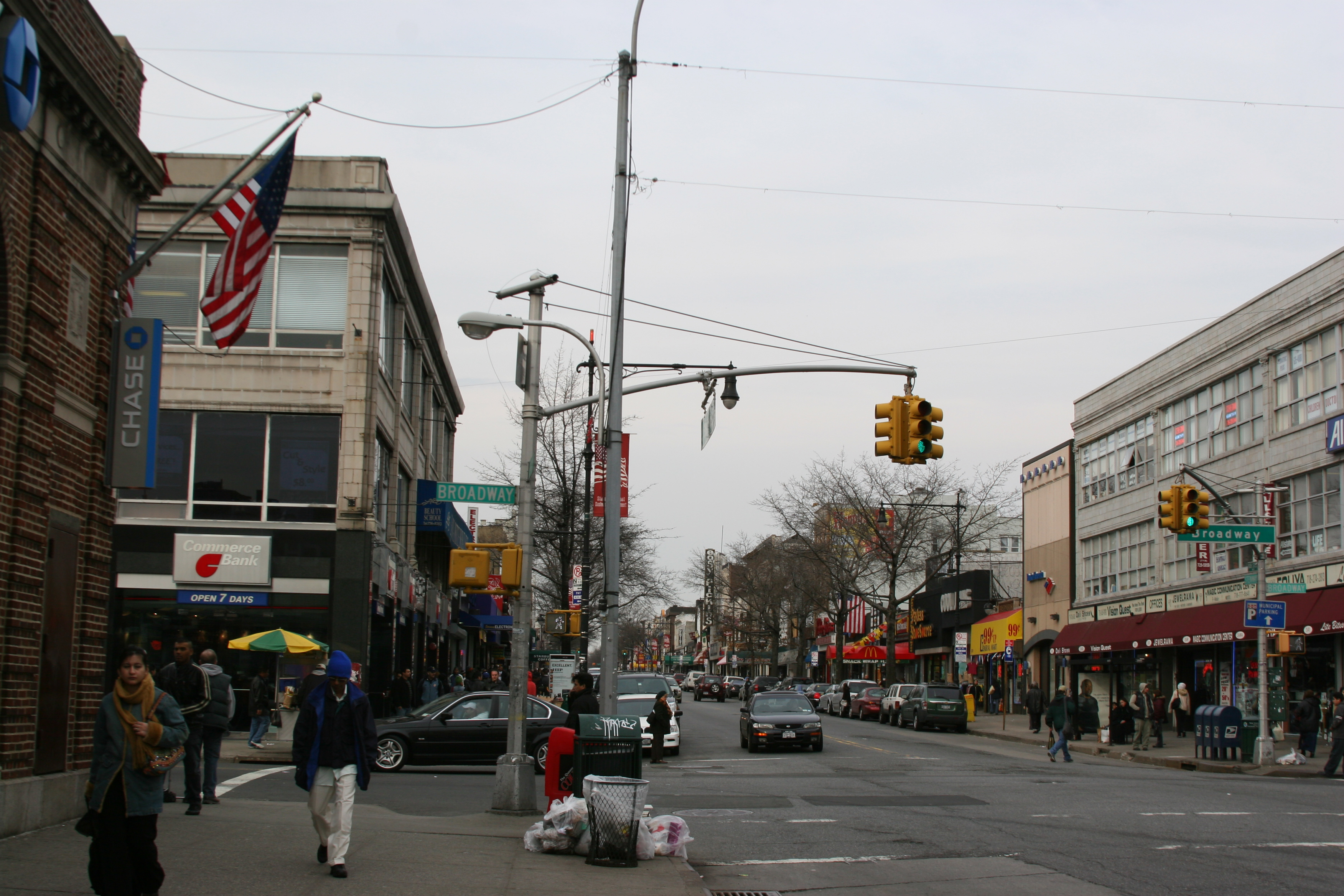
Steinway Street
4

Steinway Street

5 min

Steinway Street carries the name of the German piano dynasty that built a company town in this corner of Queens in the 1870s and 1880s. The stretch running roughly between 28th Avenue and Astoria Boulevard is known today as Little Egypt, a working commercial district of Egyptian, Moroccan, Yemeni, Lebanese and other Arabic-speaking businesses.
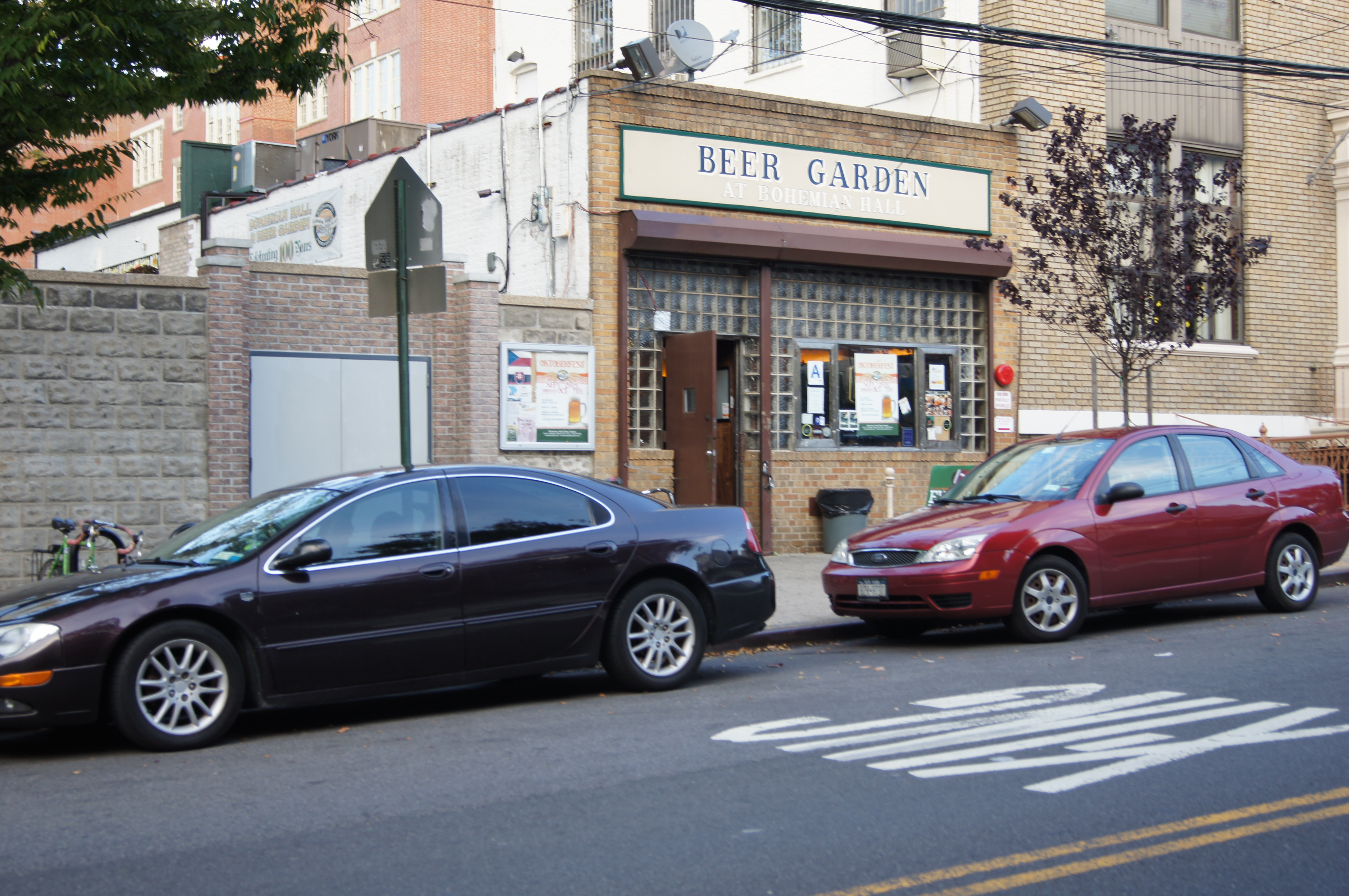
Bohemian Hall & Beer Garden
5

Bohemian Hall & Beer Garden

5 min

Bohemian Hall & Beer Garden at 29-19 24th Avenue was founded by the Bohemian Citizens' Benevolent Society of Astoria, a Czech and Slovak mutual-aid organization that laid its cornerstone in 1910 and completed the outdoor beer garden in 1919. The society still owns and operates it today, and it is widely reported to be New York City's oldest surviving beer garden.
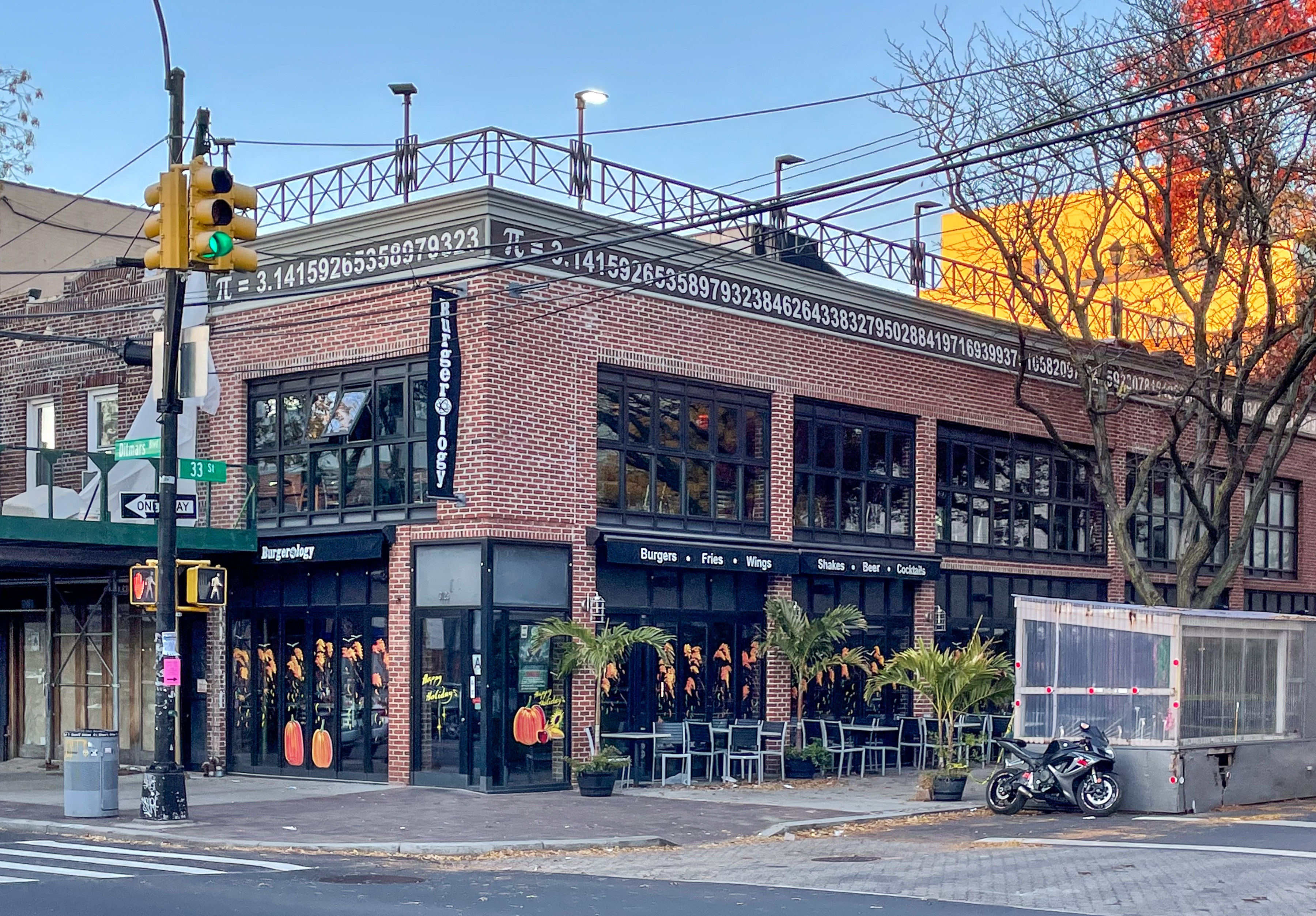
Ditmars Boulevard
6

Ditmars Boulevard

5 min

Ditmars Boulevard is Astoria's old Greek commercial spine, lined with bakeries, spanakopita counters, and Mediterranean grocers, including a pastry shop trading since 1937 from an earlier Italian layer.
Astoria Park
7

Astoria Park

5 min

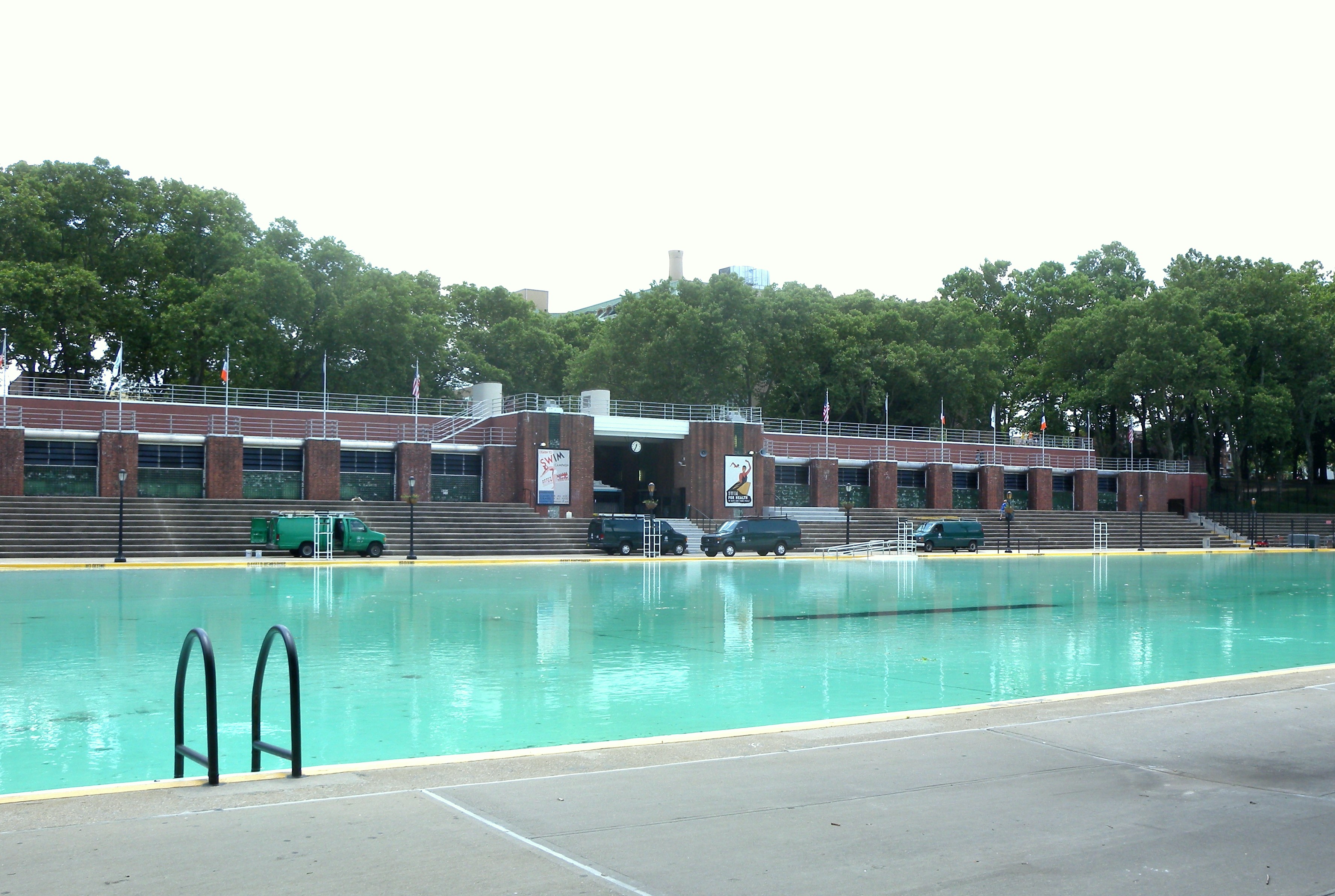
Astoria Park's 1936 WPA-built pool, one of eleven Robert Moses opened that summer and a former Olympic trials site, is the one piece of public infrastructure every wave of the neighbourhood inherited equally.
Hell Gate Bridge
8

Hell Gate Bridge

5 min

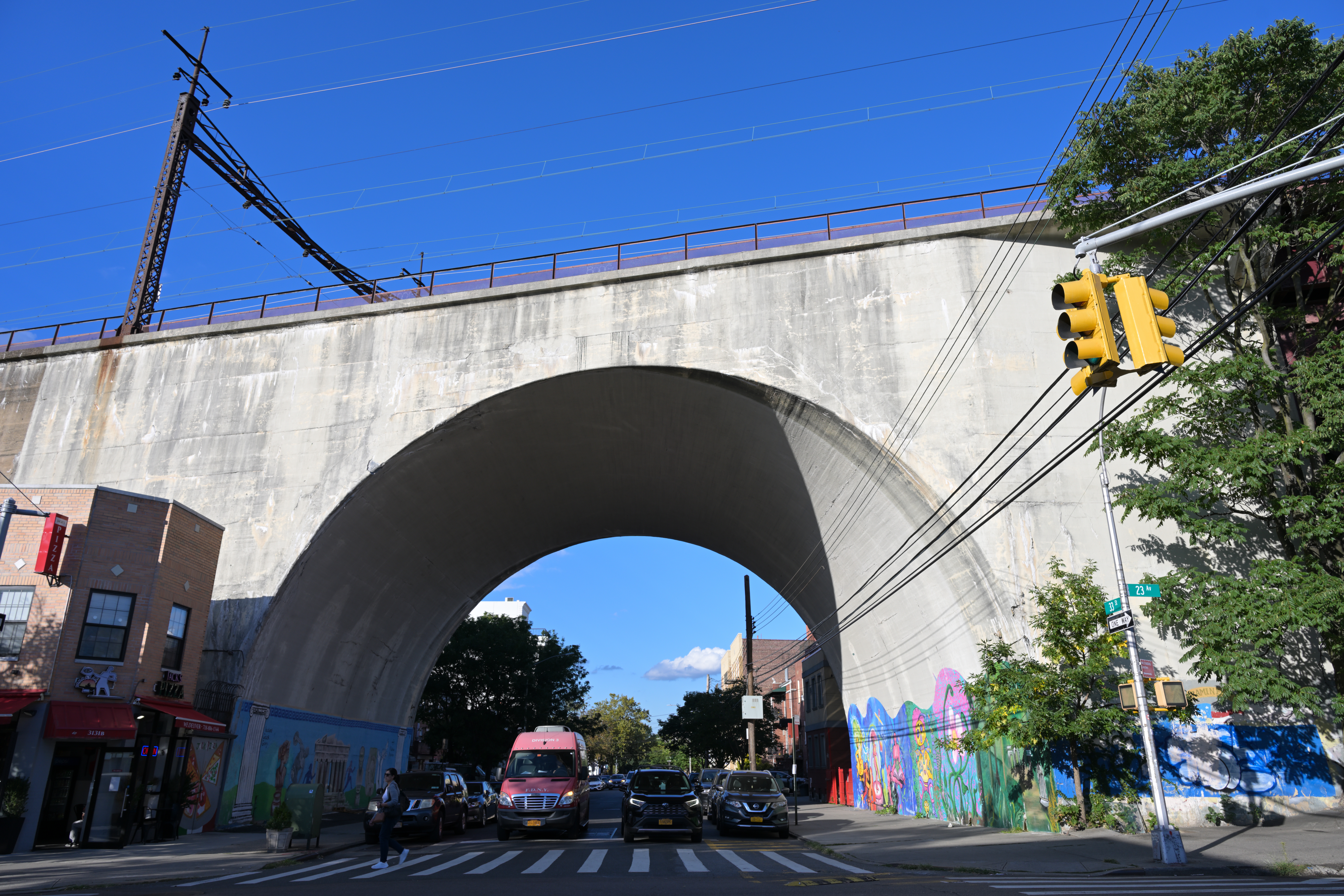
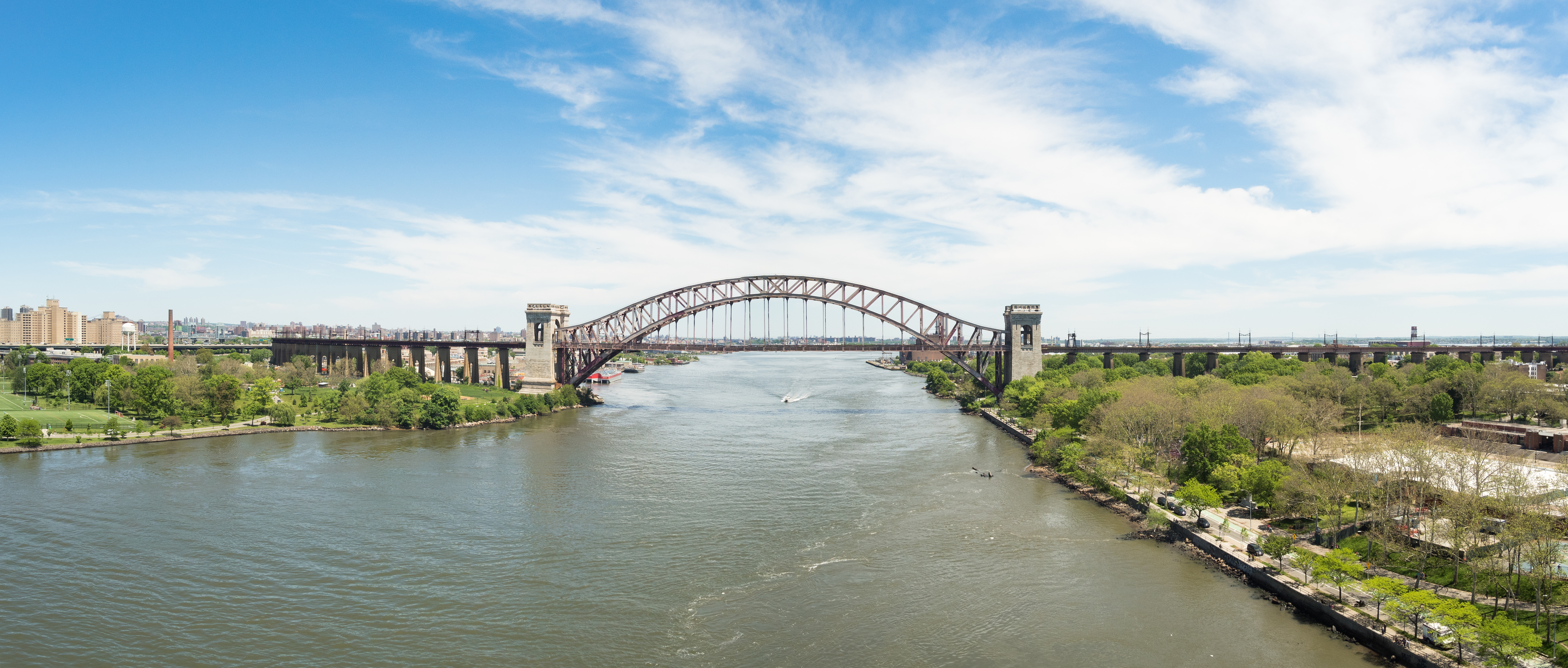
Hell Gate Bridge is the 1916 steel arch, designed by Gustav Lindenthal, that carries rail traffic over the East River tidal strait of the same name. It is a railway bridge with no pedestrian crossing, viewed from the Astoria Park shoreline along Shore Boulevard.

A Taste of the Tour

This is the real story from one stop on this walk — every stop has one.

Museum of the Moving Image

You're standing outside the Museum of the Moving Image on 35th Avenue, a low brick building that gives no hint of what's ahead. Over the next two hours you'll walk roughly 4.6 kilometers north through Astoria, ending at a bridge over the East River. It's an easy walk, mostly flat, straight up through the neighborhood's spine. Astoria is one of the most linguistically diverse places on earth. Walk a few blocks in almost any direction and you'll pass signage in Greek, Arabic, Bengali, Spanish, Korean, Czech, Italian. That's not a curiosity to admire from outside; it's the ordinary texture of a place where people live, work, raise children, bury their dead. The question worth carrying today isn't why Astoria looks this way, but how it got this way, one arrival at a time, and what each group building a life here has left behind for the ones who came after. You won't find the whole answer at any single stop. It's in a street name, a park bench, a storefront awning, a building that changed hands and purposes several times over a century. Start walking. The first piece of it is right here. Start here, because the order matters: before this neighborhood had a Greek main street, an Arabic storefront, or a Czech beer garden, it was an industry town, and the industry was film. Not Hollywood. New York. Through the 1920s, this stretch of Astoria was one of the country's major centers of motion picture production, and for a while it had a fair claim to being the capital of American filmmaking outright. The building complex behind and beside this museum was built in 1920 by Famous Players-Lasky, the company that became Paramount Pictures, and it turned out silent films by the dozen while Los Angeles was still mostly orange groves and cheap real estate. Rudolph Valentino worked here. Gloria Swanson worked here. The Marx Brothers shot their first two feature films on these soundstages before anyone in California had heard of them as more than a vaudeville act. This was the East Coast's answer to the West, and for a stretch of years it wasn't clear which coast would win. The reason it stopped being the center of gravity is mostly about weather and land. Hollywood had reliable sunlight for outdoor shooting and endless flat acreage to build studio lots on; Queens had neither in the same abundance. Through the 1930s and 40s the industry's center of mass drifted west. What happened to this complex after that is the next stop's story, and it is stranger than the version most people assume. The museum standing in front of you now was carved out of part of that same historic footprint, which is why it and the building next door share a block the way they do. It opened in 1988, built specifically to be the only museum in the United States devoted entirely to film, television, and digital media as its full subject, not a wing of a larger institution but the whole institution organized around a single question: how do moving images get made, and what do they do to the people watching them. Inside, if you come back on a day it's open, the collection runs from magic lanterns and early animation devices through television sets spanning a century of industrial design, to costumes, makeup effects, and a substantial video game history section, including puppets and props from productions people know by heart. It is genuinely a collection built for people who want to know how the trick was done, not just that it was. Here's the part worth being exact about, because getting it wrong sends you to the wrong door: this museum and the production studio next to it are two separate institutions on adjacent ground, not one campus with two entrances. This building is the public one — ticketed, with specific opening days, closed more days than it's open. The building beside it is a working production facility with no public access at all, which you'll look at from the sidewalk at the next stop. If the museum happens to be closed when you're standing here, that's not a problem with your timing; it's simply how this stop was built to work. Everything worth knowing about it is available from right where you're standing, in the plaza, looking at the exterior — you don't need the doors open for the history to be real. That's also a useful note for the rest of this walk. This is a neighborhood, not an attraction strip: you'll pass homes, working shops, a couple of institutions with their own hours and their own owners, and nothing ahead of you requires stepping inside anything. Look, when it's useful, and keep moving, when it's useful. The street itself is going to do most of the talking. For now, take in the fact that the version of this place people picture — the shops, the languages on the awnings — came second. Astoria was a company town for the pictures before it was a neighborhood of anyone in particular, and that plaza in front of you is where the industry got here first.

More Tours in New York

Nearby Cities

Back to New York Tours

Cookie Consent

We use cookies to analyse site traffic and improve your experience. You can choose to accept or reject analytics cookies. Learn more