Berlin · Germany
East Side: Wall Art and Free Friedrichshain
Berlin, Germany
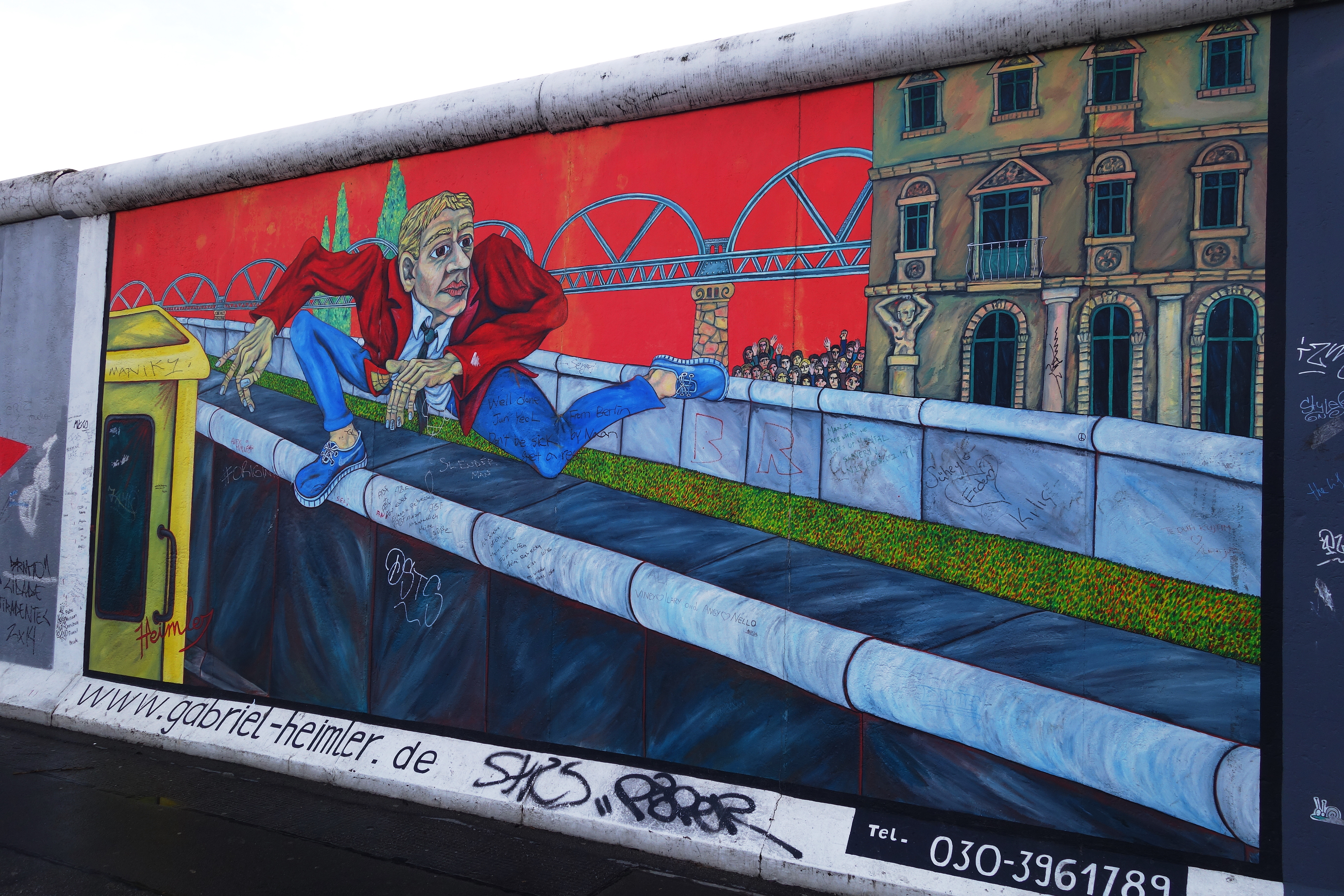
Test the Rest — Birgit Kinder's Trabant crashing through the Wall The Fraternal Kiss — Brezhnev and Honecker, painted from a real photo The Spree border — the unpainted side and the river's dark history Oberbaumbrücke — spy-swap bridge turned vegetable-battle arena RAW-Gelände — a locomotive yard reborn as Berlin's subculture citadel
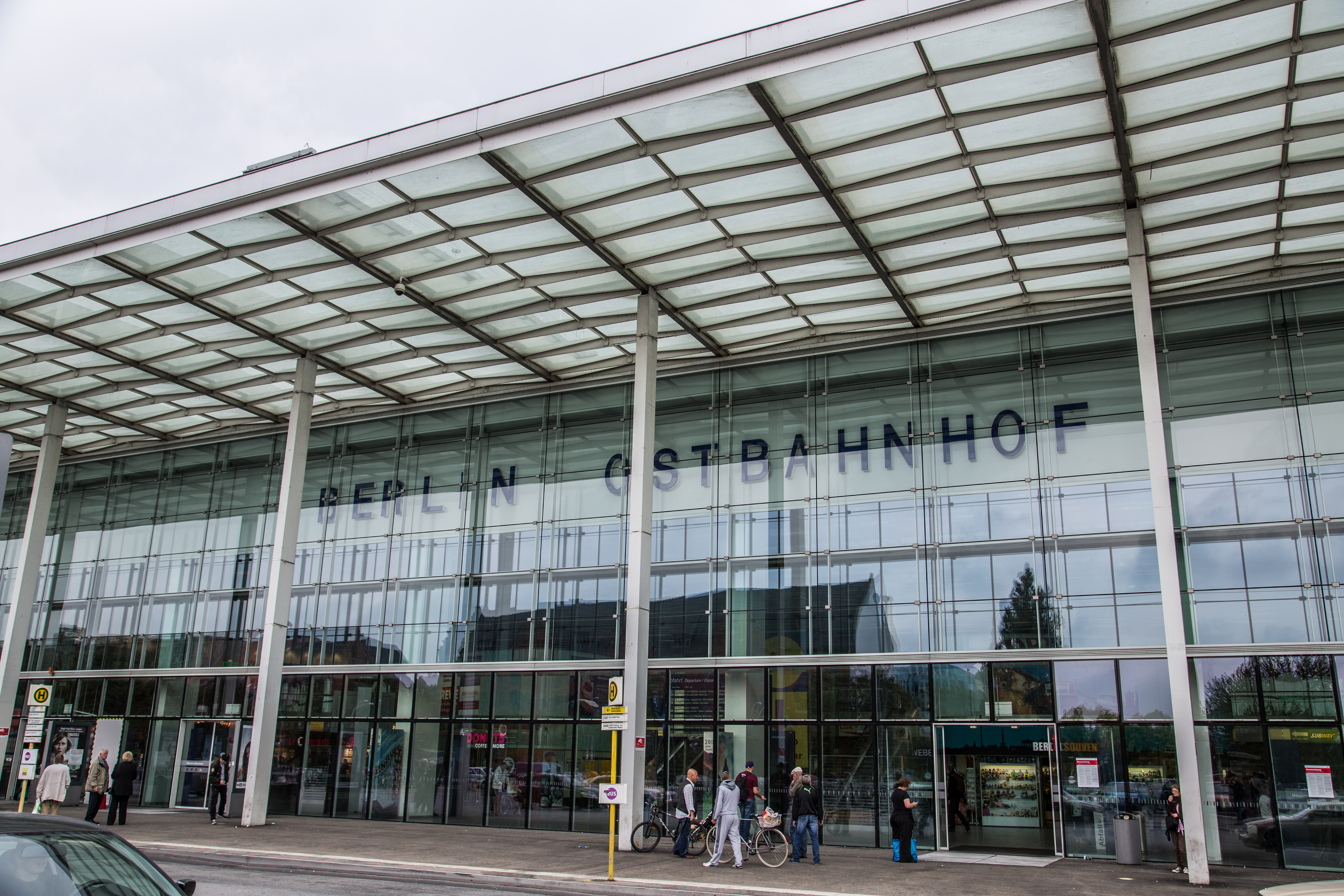
Ostbahnhof, opened in 1842, has carried five names under five regimes — Frankfurter Bahnhof, Schlesischer Bahnhof, Ostbahnhof, the GDR's Hauptbahnhof, and Ostbahnhof again — while serving as Berlin's rail gateway to Warsaw and Moscow. The tour begins here, with the East Side Gallery just across Mühlenstraße.
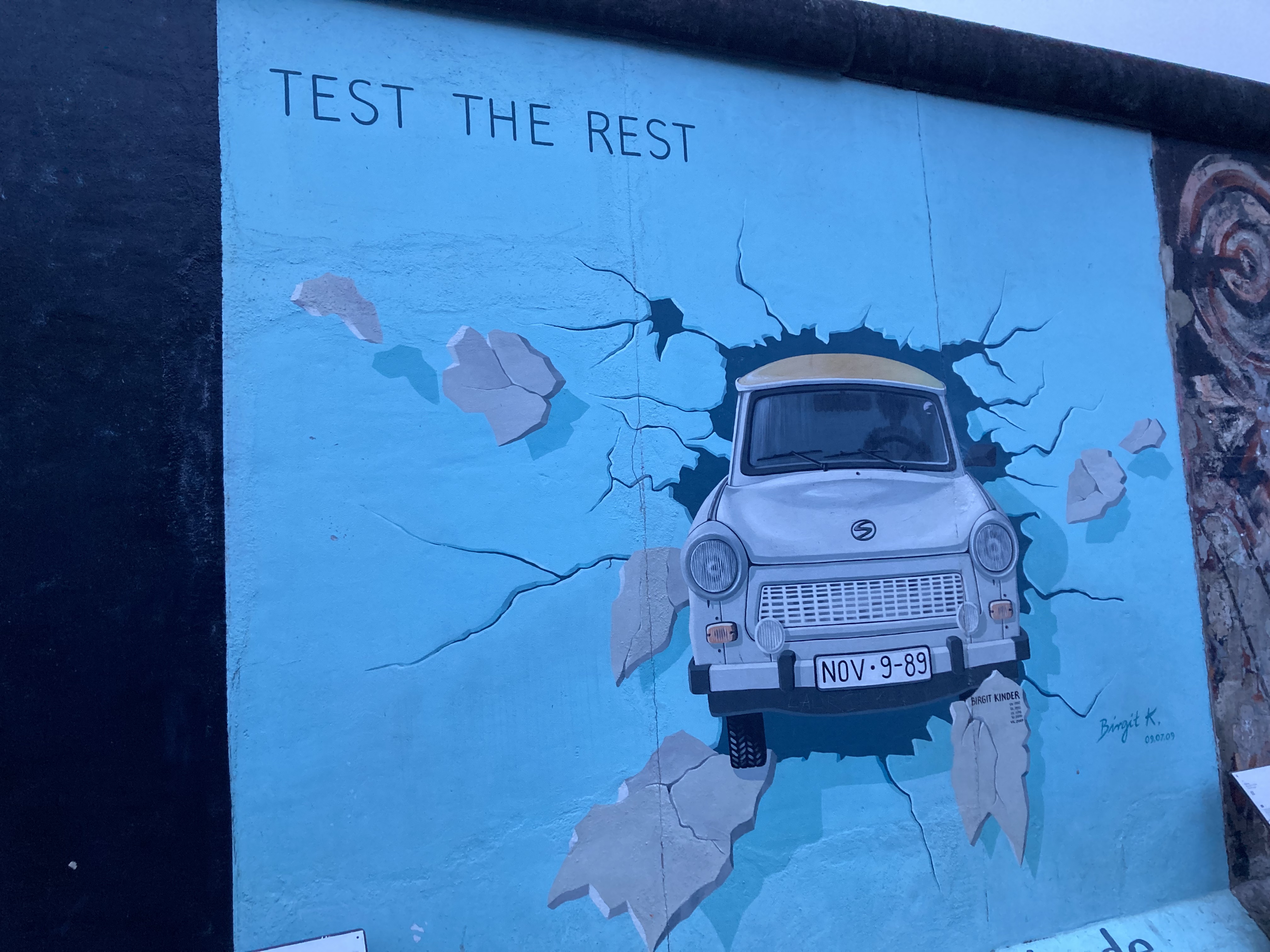
Birgit Kinder's Trabant bursts through the concrete with license plate NOV-9-89 — the date the Wall fell — your first icon of the East Side Gallery, 1.3 km of Wall painted in 1990 by 118 artists from 21 countries. This east-facing side had been untouchable blank concrete for 28 years.
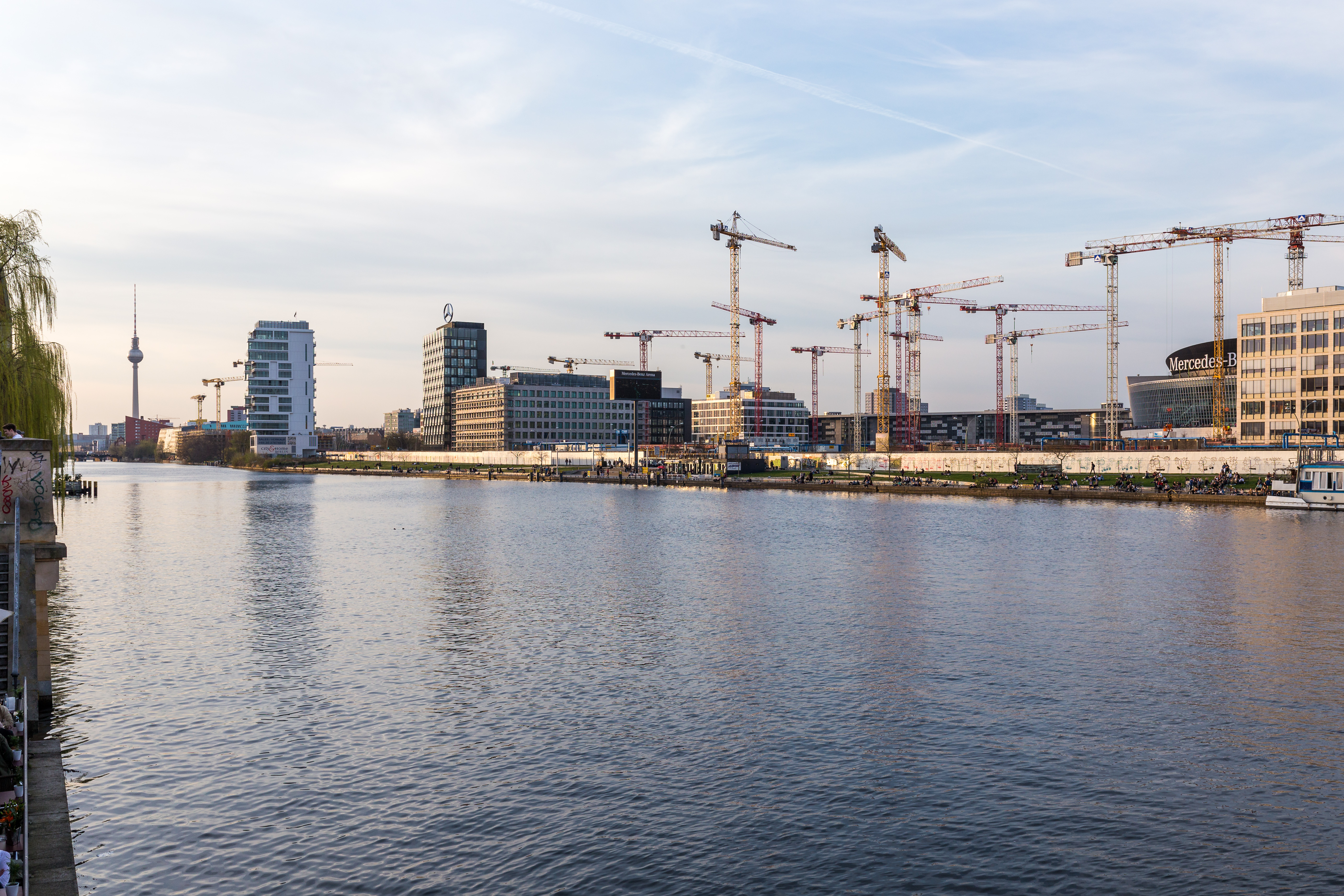
The unpainted river side of the Wall faces the Spree, whose full width belonged to East Berlin — a water border where swimmers and five Kreuzberg children drowned because neither side could legally rescue them.
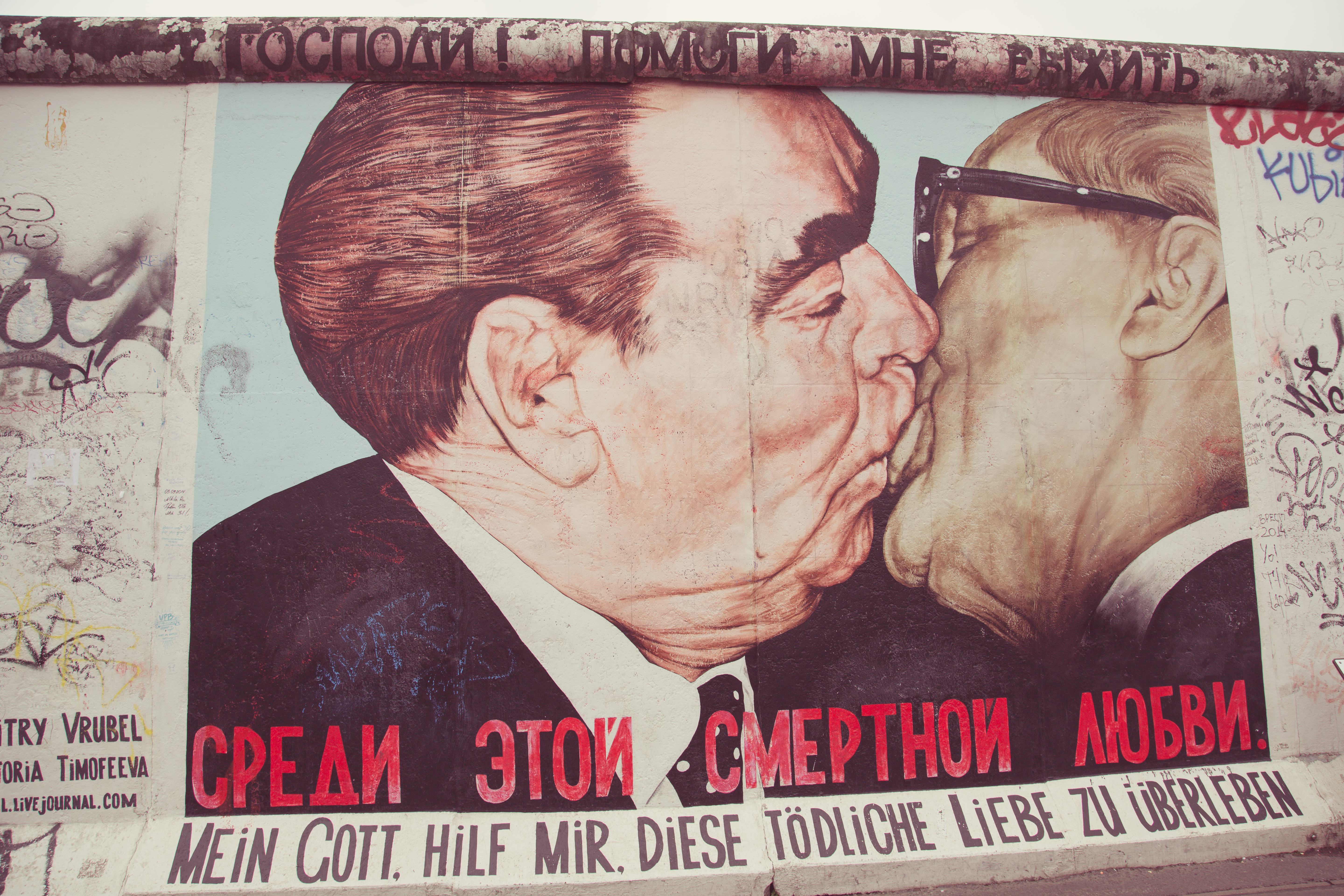
Dmitri Vrubel's mural of Brezhnev and Honecker's fraternal kiss, painted in 1990 from Régis Bossu's real 1979 photograph and repainted by Vrubel himself in 2009, is the most photographed image on the entire Berlin Wall.
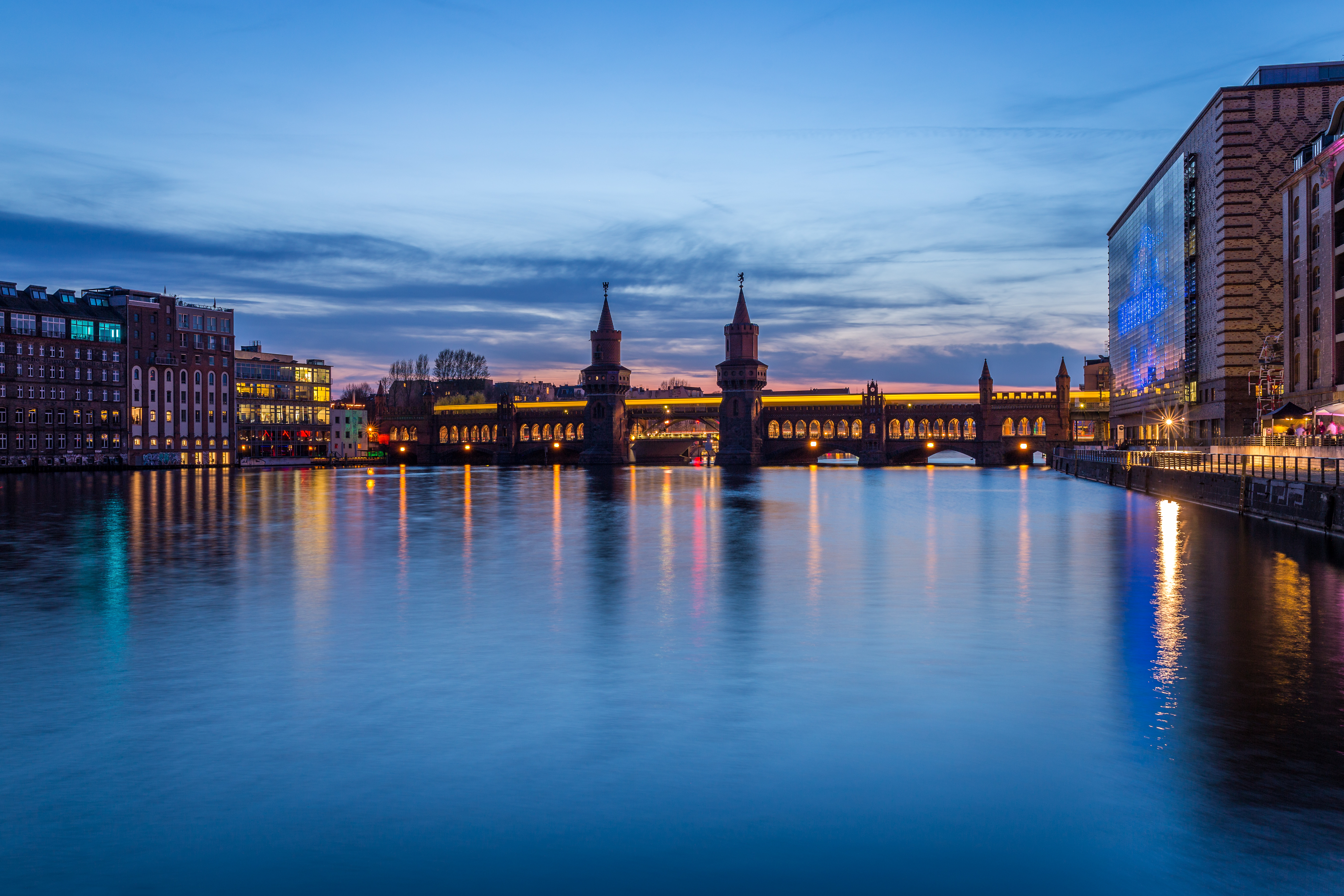
The Oberbaumbrücke, a twin-towered double-deck brick bridge from 1896, served as a pedestrian-only border crossing between West and East Berlin from 1961 to 1989 and saw quiet Cold War agent exchanges. Today Kreuzberg and Friedrichshain re-fight the old divide with the annual Gemüseschlacht vegetable battle across its span.
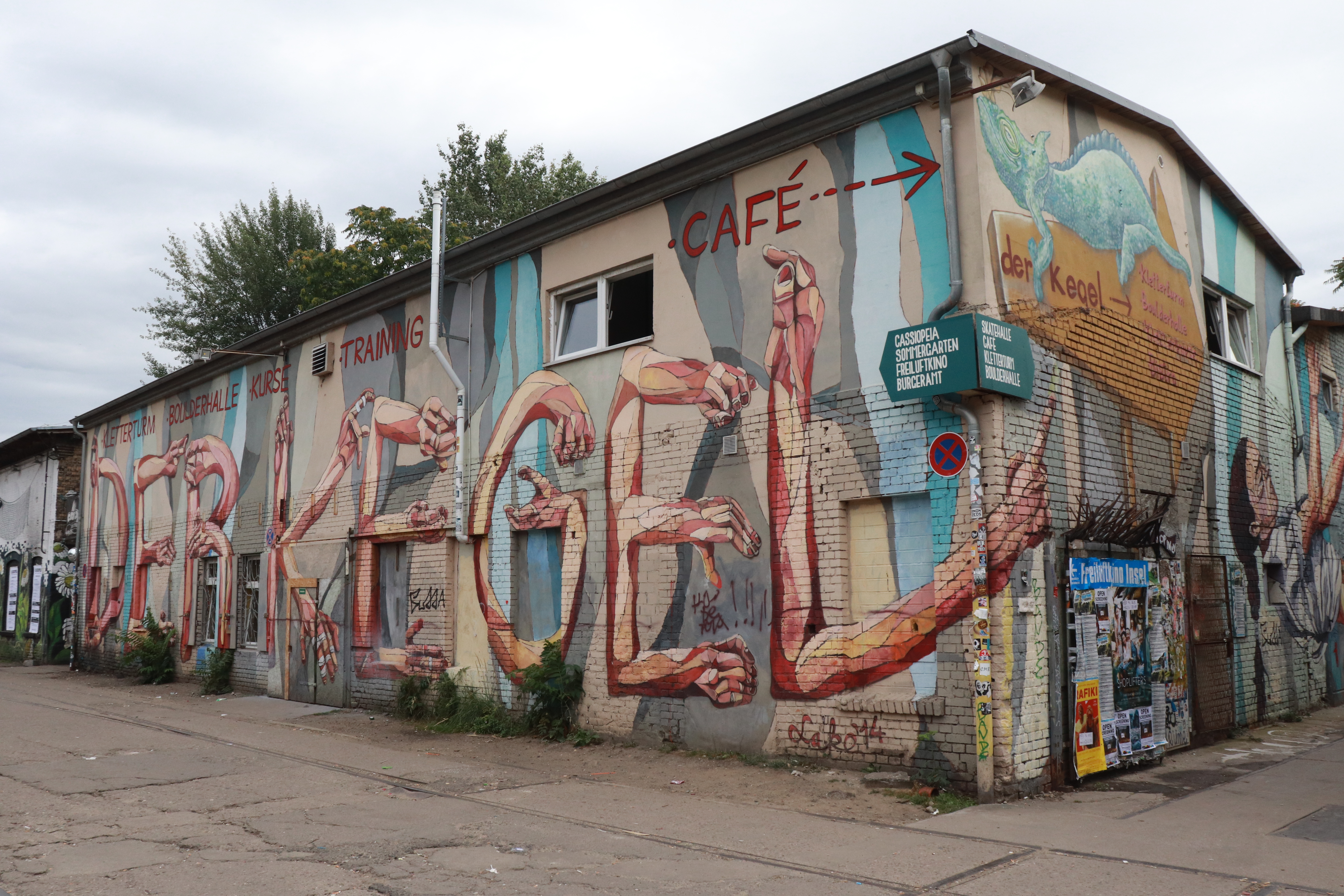
A locomotive repair yard that worked for 127 years (1867–1994) and was then abandoned, the RAW-Gelände became Berlin's concentrate of 'temporary use' subculture — clubs like Astra and Cassiopeia, a famous skate hall, artists' studios, a Sunday flea market, and a WWII air-raid bunker turned climbing wall called Der Kegel.
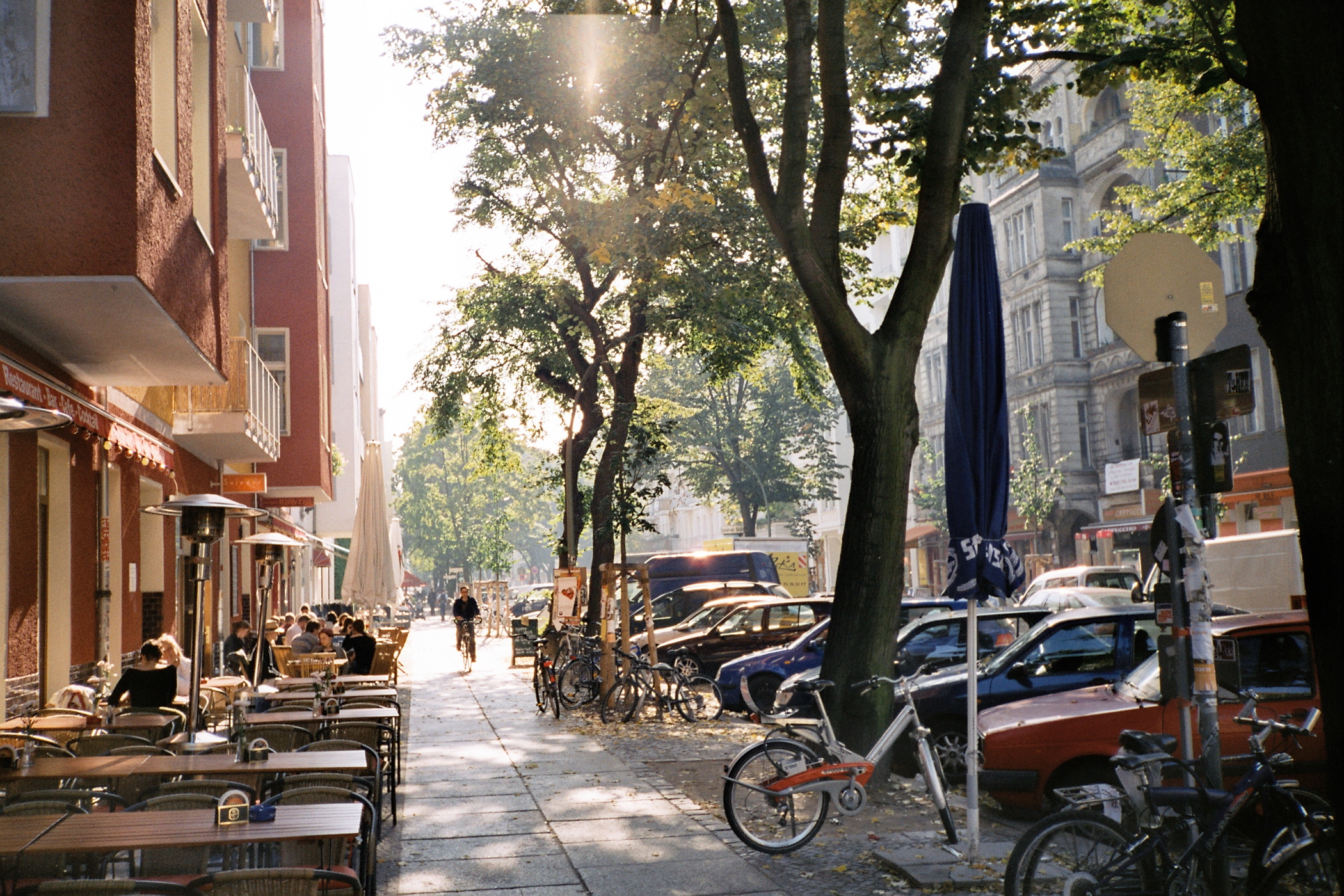
Friedrichshain's café-and-bar spine, named after a Baroque poet of friendship and forged in the post-1990 squatting wave. Today its terraces are the neighborhood's tourist face — and the subject of its most honest arguments about gentrification.
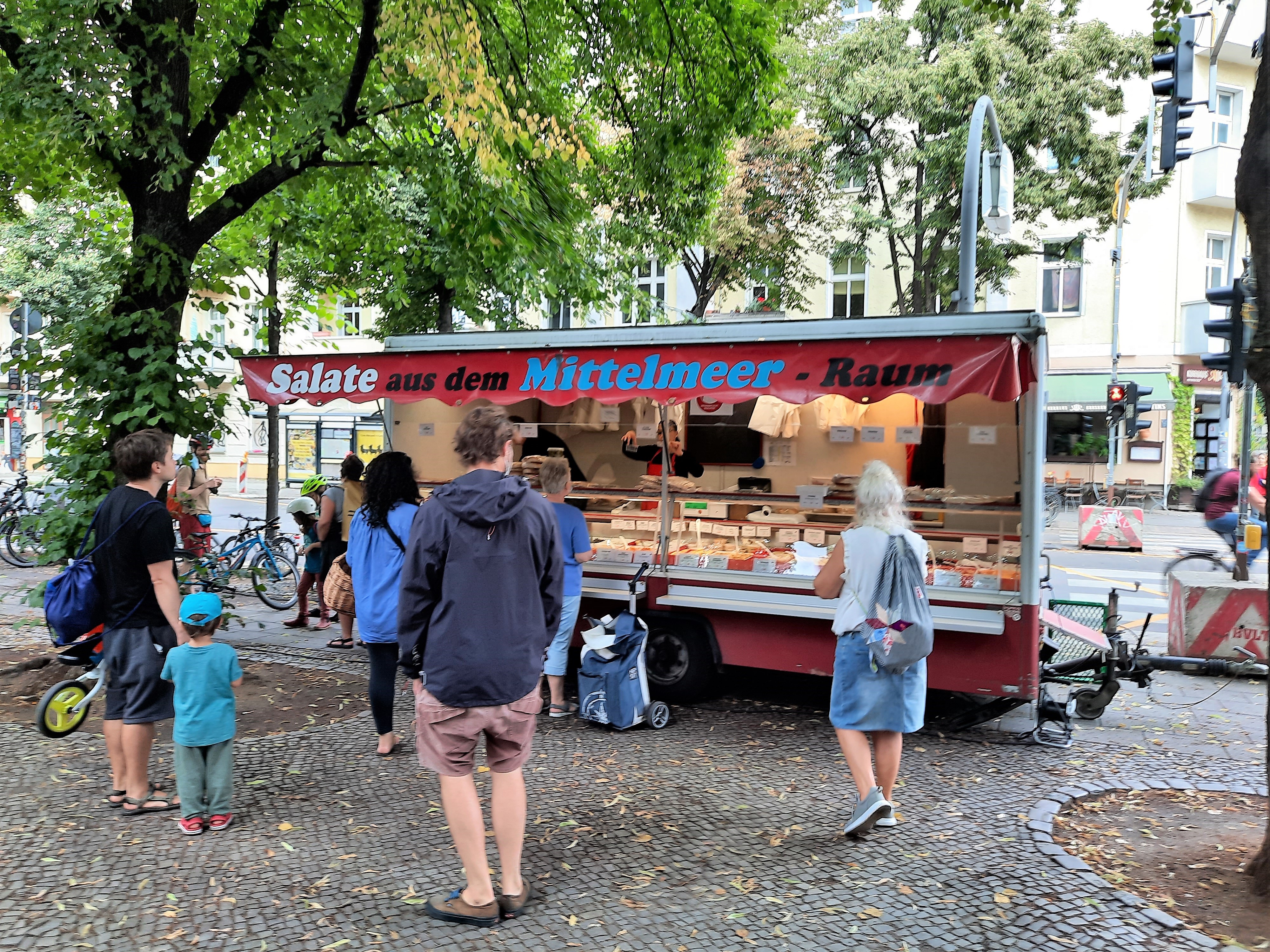
Friedrichshain's green living room, ringed by Gründerzeit tenements that survived both wartime bombing and GDR-era neglect. 'Boxi' hosts a century-old Saturday farmers' market and a Sunday flea market famous for its East German nostalgia finds.
This is the real story from one stop on this walk — every stop has one.
Walk one mile through the heart of Mitte and read Berlin's entire story — Prussian kings, a fragile republic, the Nazi…
Trace the Nazi dictatorship on the ground where it was actually run — from the Reichstag fire that killed a democracy,…
Follow the Berlin Wall as the people who lived it did — from the Palace of Tears where families said goodbye, past the…
We use cookies to analyse site traffic and improve your experience. You can choose to accept or reject analytics cookies. Learn more