Tokyo · Japan
Omotesando: The Open-Air Architecture Museum
Tokyo, Japan
The 12-metre Otorii, cut from a 1,500-year-old cypress found on a mountain in Taiwan — an errand that can never be repeated The reveal that Meiji Jingu's forest is a hundred years old, planted from nothing on a 150-year plan Tange's 1964 gymnasium, its roof hung from cables like a suspension bridge Takeshita-dori, included as the road not taken, one block and a whole philosophy off the avenue Four buildings, four answers to the same trees: Dior disappears, Omotesando Hills ducks underneath, Tod's copies the branches outright, Prada bends them back at you Kuma's free bamboo approach at the Nezu Museum, outside the ticket gate
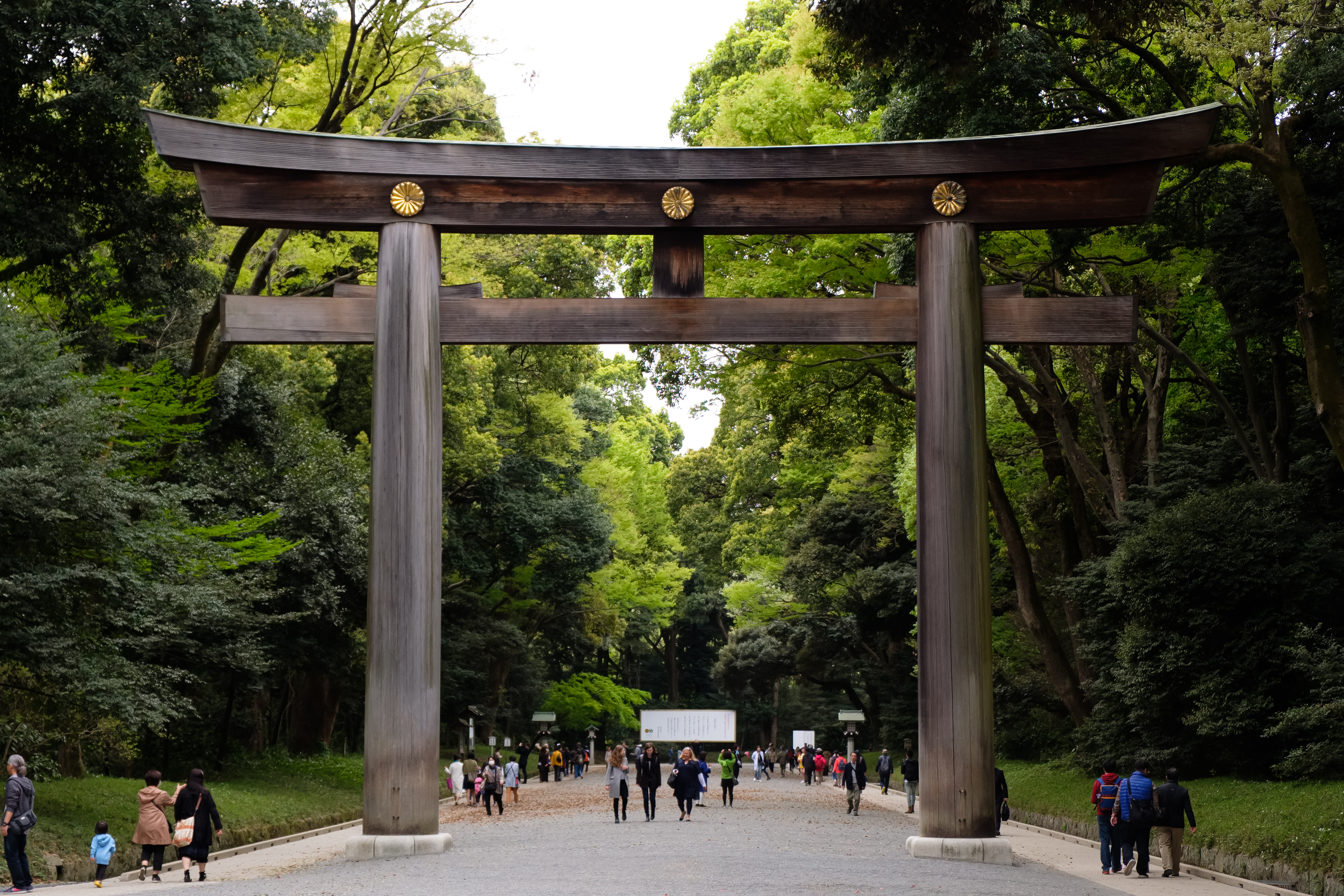
The Otorii is the largest wooden myojin-style torii in Japan (the type with an upswept curved top beam), 12 metres tall and 17.1 metres wide, with cypress pillars 1.2 metres in diameter. Raised on 23 December 1975 after lightning struck the 1920 original in 1966, it was cut from a roughly 1,500-year-old cypress found on Mount Danda in Taiwan.
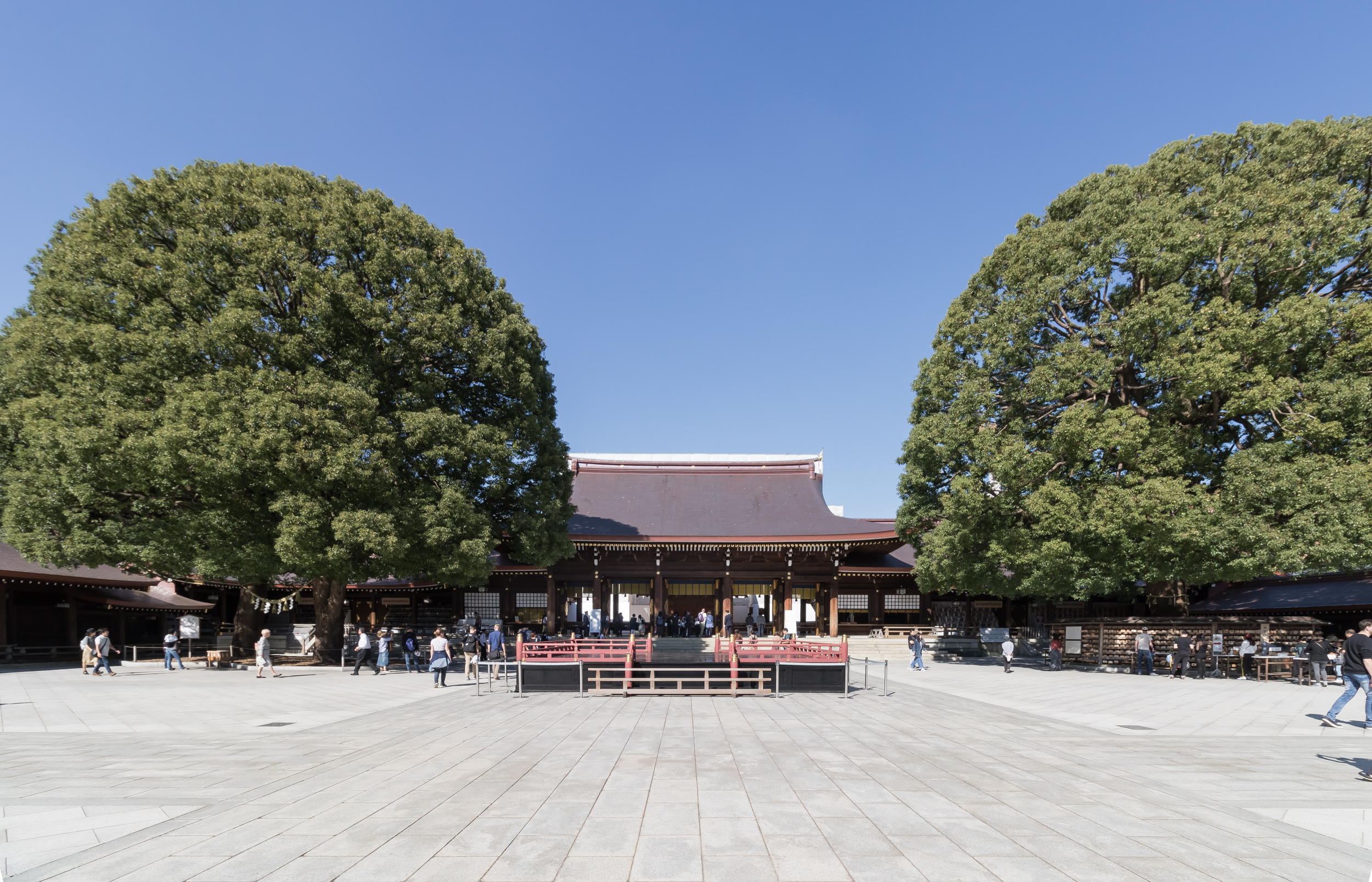
Meiji Jingu was dedicated to Emperor Meiji and Empress Shoken in 1920, destroyed in the 1945 air raids, and rebuilt in 1958 with public donations. The forest around it is younger still: roughly 100,000 trees of some 365 species, donated from across Japan and planted by around 110,000 volunteers on former farmland, following a 150-year succession plan drawn up in 1915.
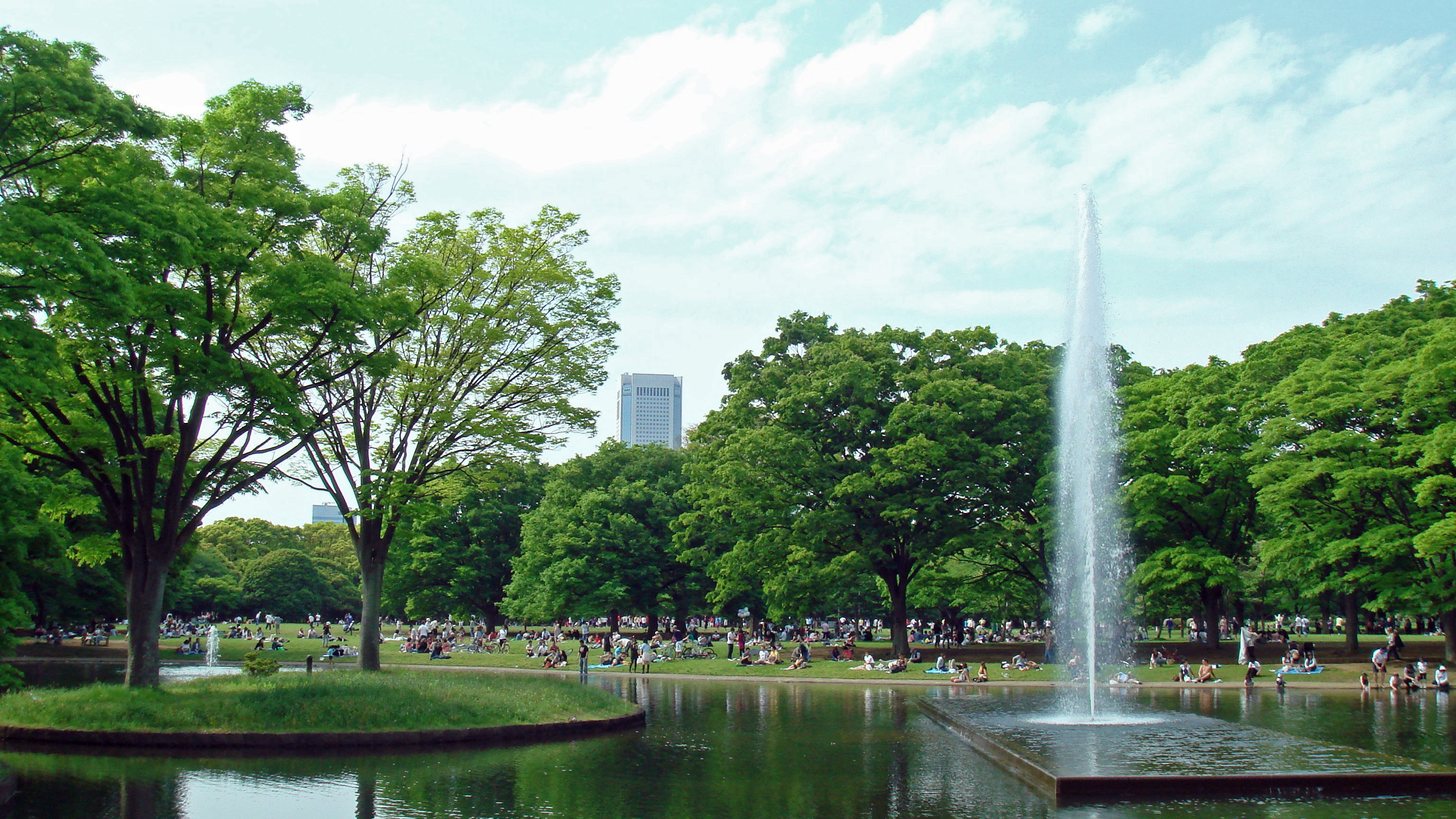
Yoyogi Park sits on ground that was an army parade field, the site of Japan's first powered flight in 1910, the fenced US occupation housing estate Washington Heights from 1946, and the 1964 Olympic Village, before opening as a public park in 1967. One house from the estate still stands in the park as a memorial.
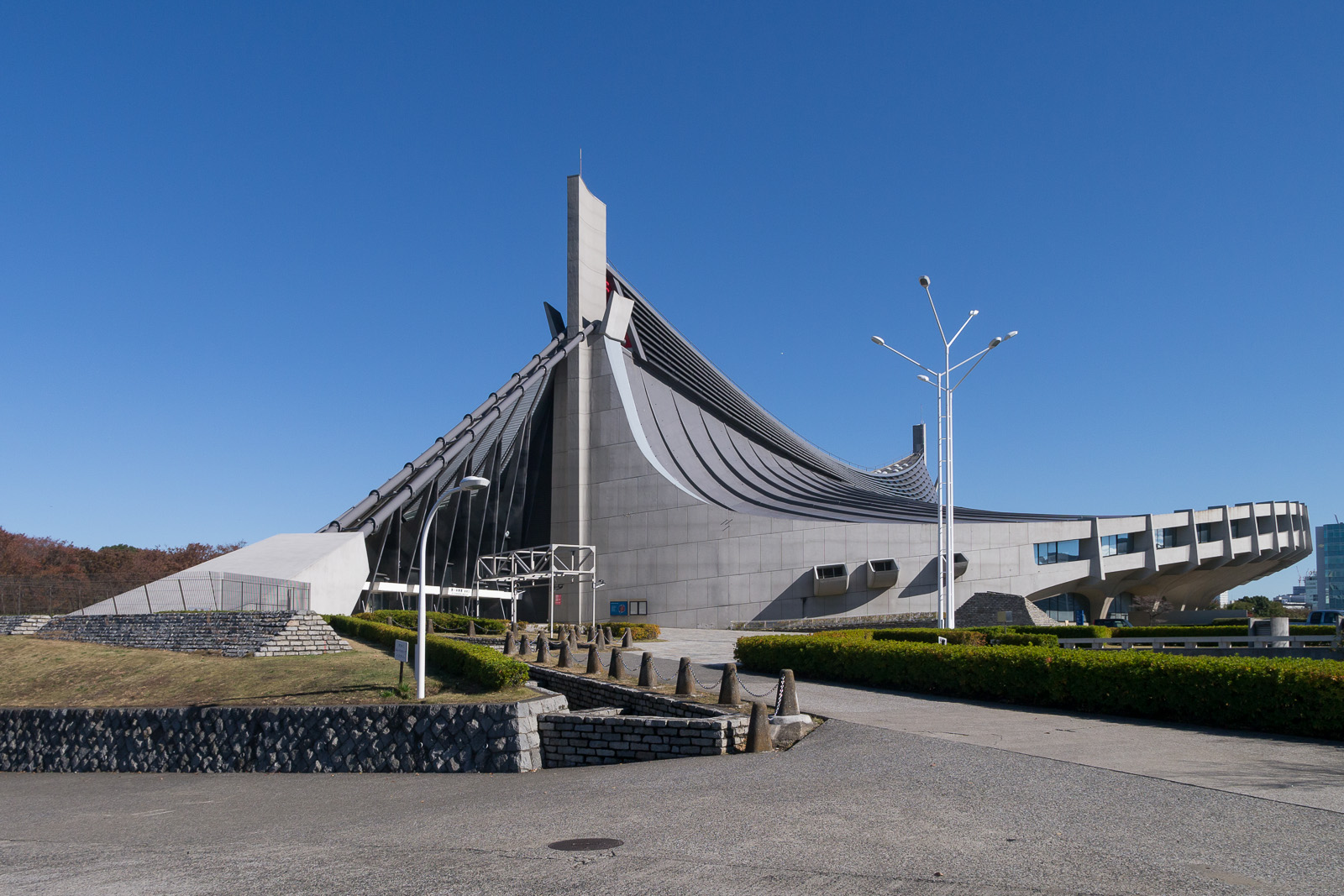
Kenzo Tange's 1964 Olympic gymnasium hangs its roof from steel cables slung between two forty-metre concrete pylons, the largest suspended roof in the world when it opened. Still in active use for sport and concerts, it hosted events again at the 2021 Olympics and was designated an Important Cultural Property that same year.
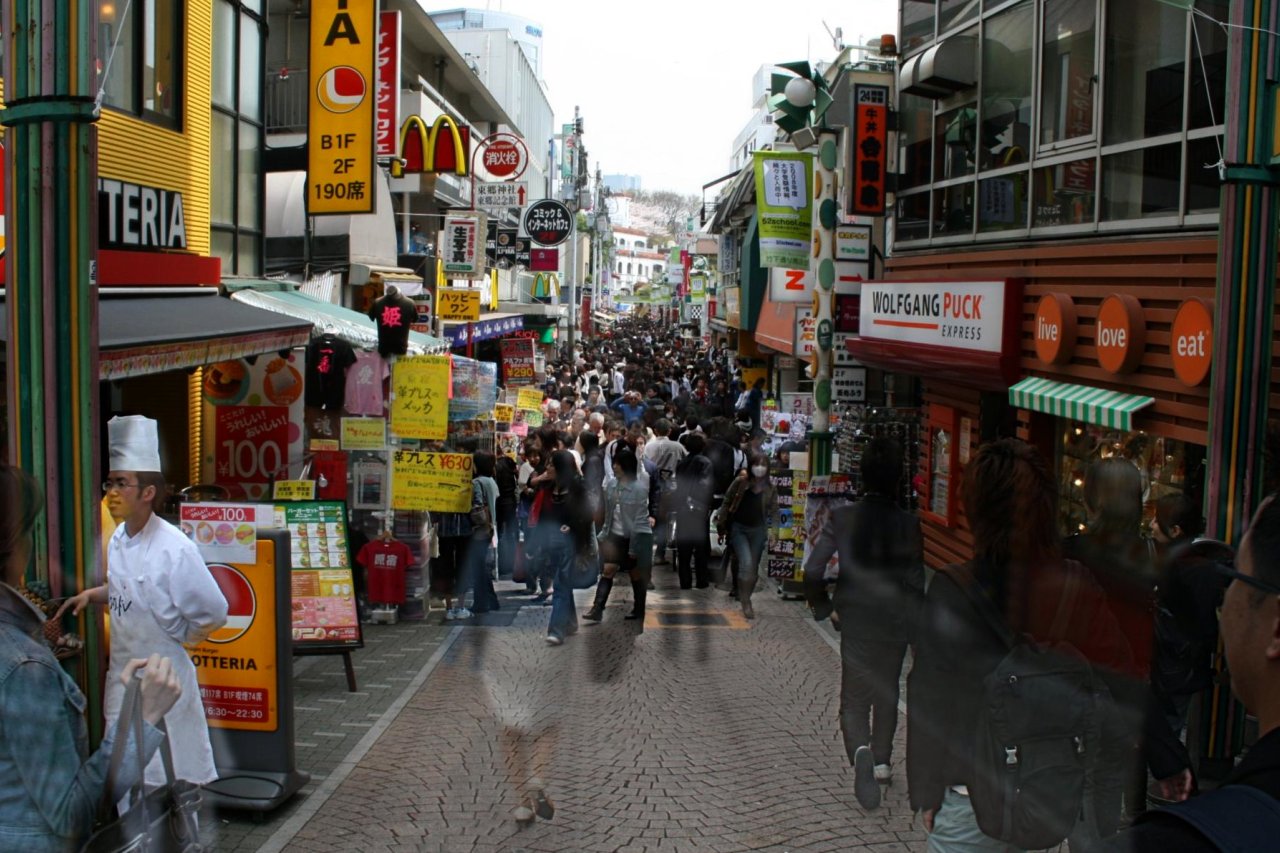
A roughly 350-metre lane running downhill from Harajuku Station's Takeshita exit to Meiji-dori, packed with around 130 tiny shops, crepe stands and purikura booths. It is closed to vehicles only between 11:00 and 18:00 each day; the rest of the time the crowd does the work the bollards do.
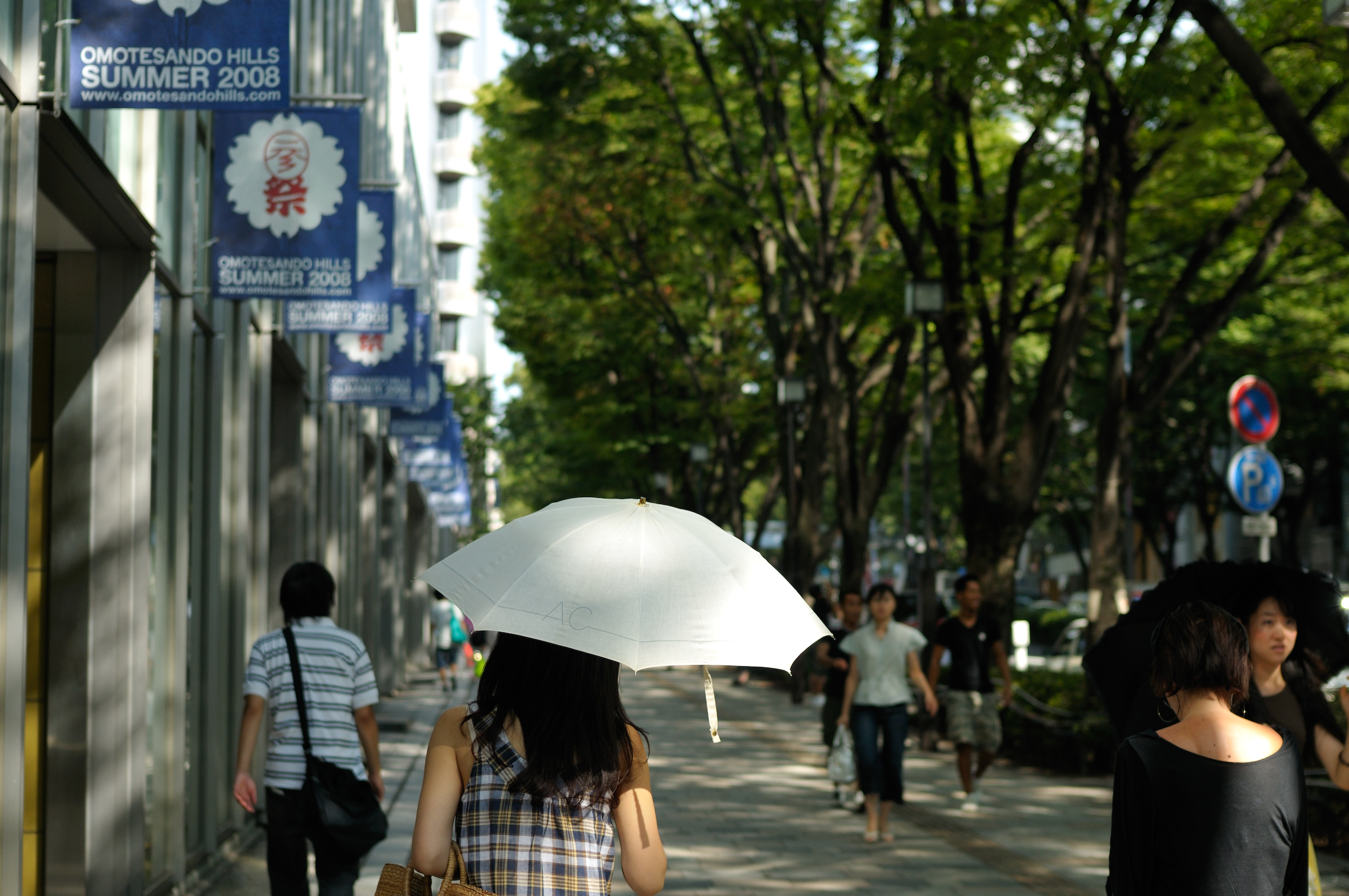
Laid out around 1919 as the formal front approach to Meiji Shrine and planted with roughly 200 zelkova (keyaki) in 1921, this 36-metre-wide avenue lost all but about 13 of its trees to the 1945 firebombing and was replanted privately around 1950. Its canopy sets the informal height line that the architecture of the rest of the walk answers to.
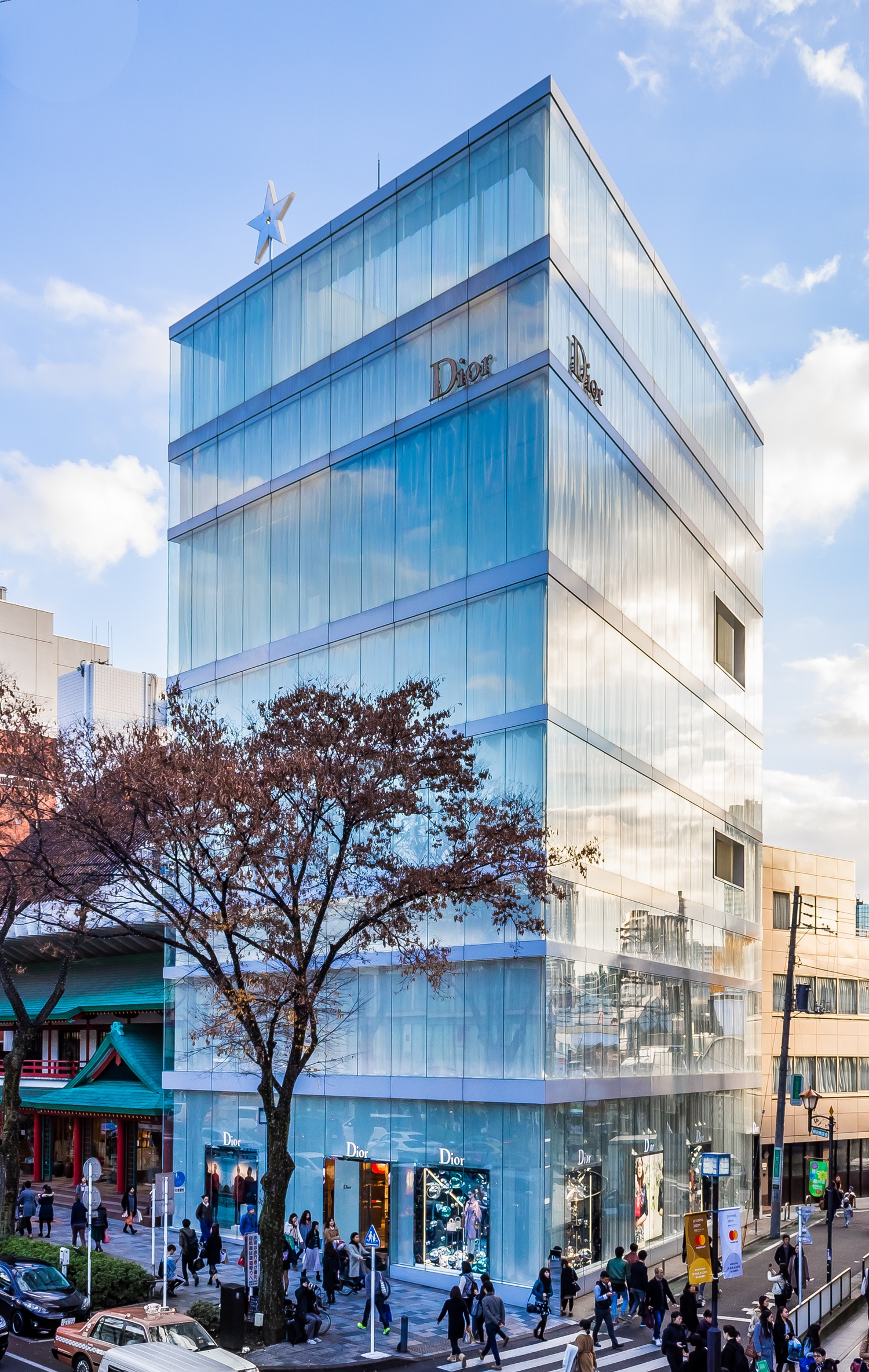
SANAA's Dior Omotesando flagship, opened in December 2003, wraps its four above-ground floors in two skins: an outer wall of flat clear glass with a layer of curved white translucent acrylic set behind it, so the building glows rather than reflects. Floor slabs sit at deliberately uneven heights behind that skin, reading as soft horizontal bands that disguise how many storeys the thirty-metre building actually has.
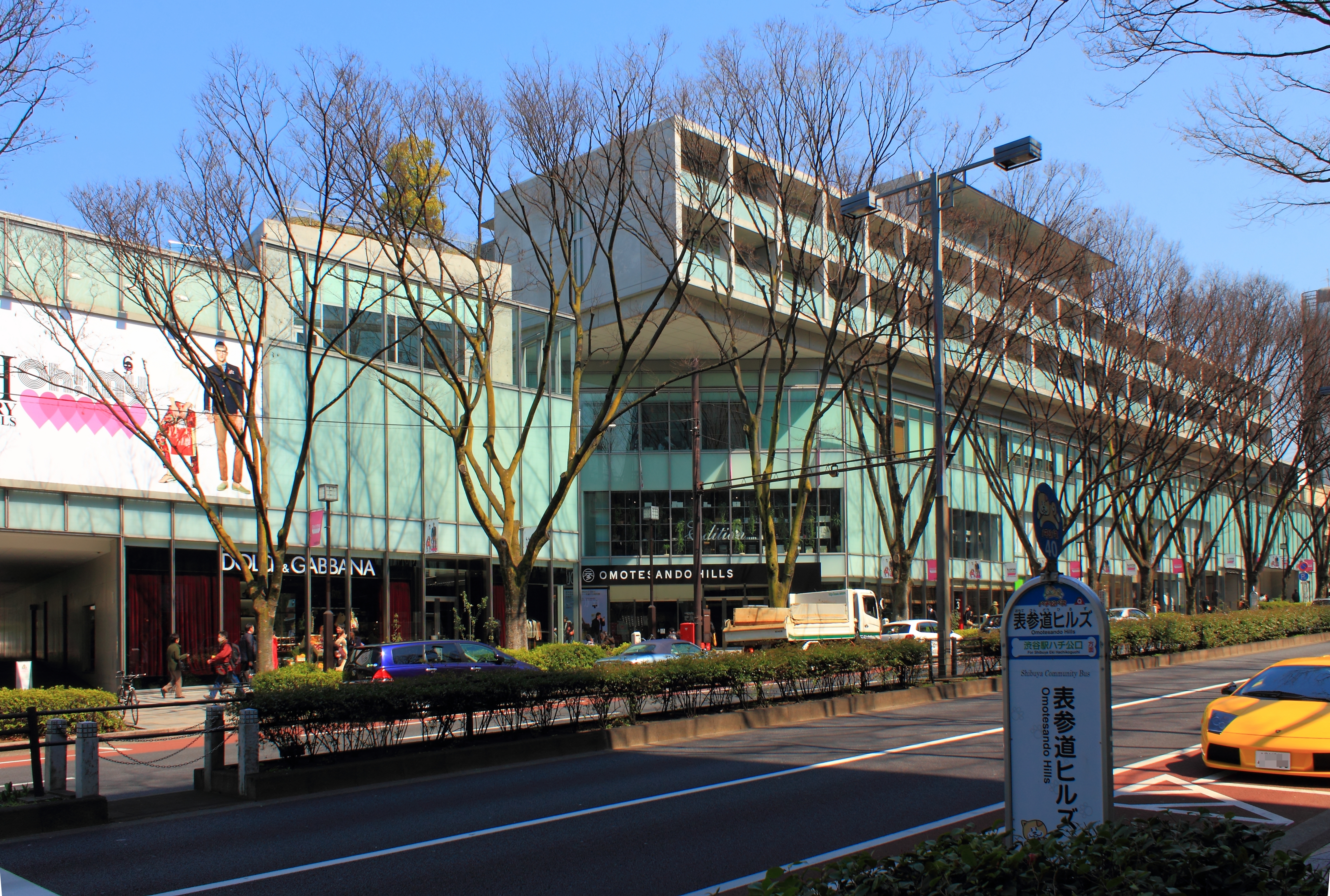
Tadao Ando's 2006 retail complex puts six of its levels underground and holds its above-ground height to roughly 23 metres so the roofline never clears the zelkova canopy, with a 700-metre spiral ramp inside pitched at the same three-degree gradient as the street. It replaced the Dojunkai Aoyama Apartments of 1926-27, demolished in 2003 and partly reconstructed as the Dojunkan at the east end.
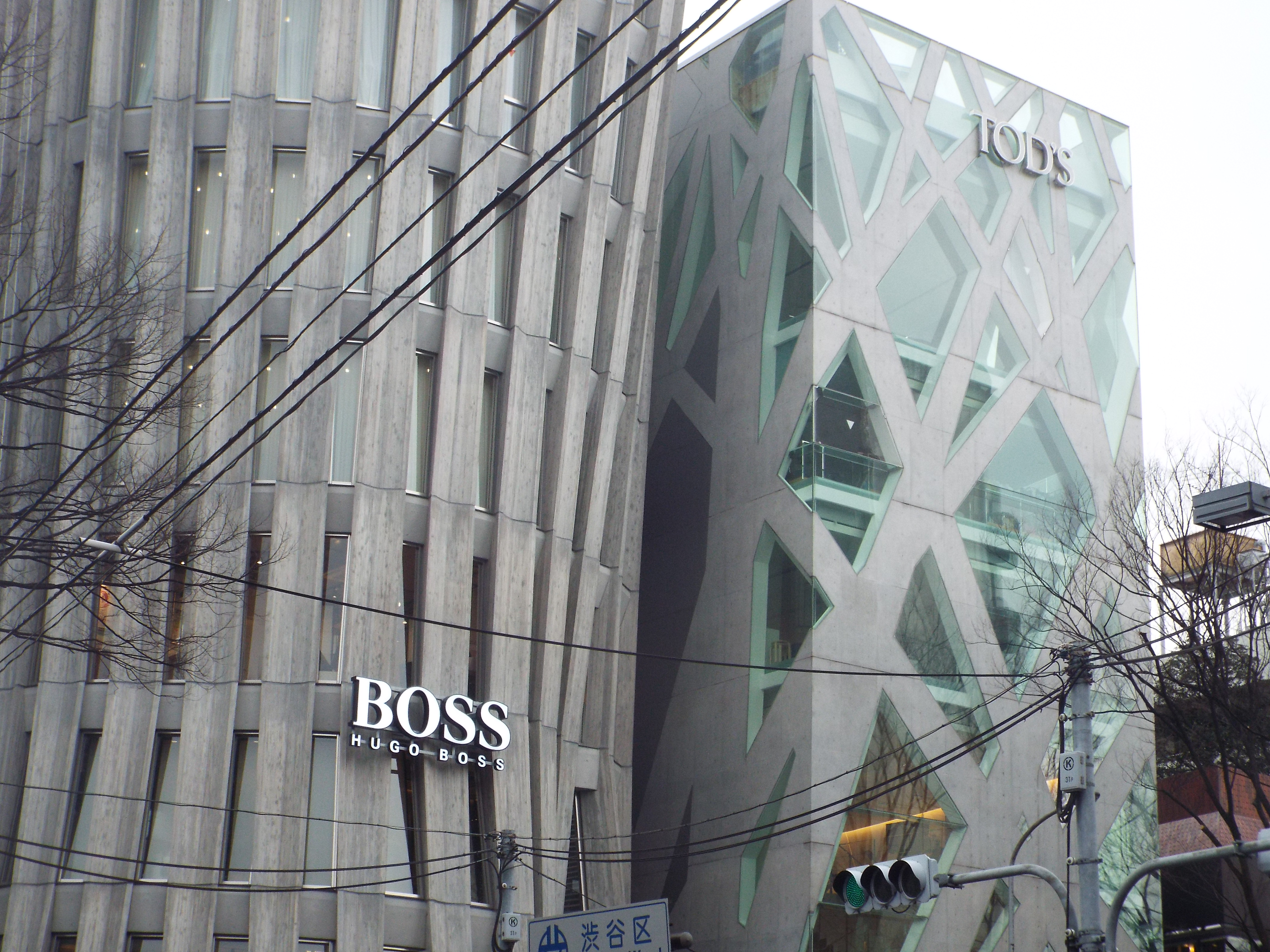
Toyo Ito's 2004 building on Omotesando, where nine overlaid zelkova silhouettes were folded around an L-shaped plot and cast as a 300mm load-bearing concrete lattice, leaving the interior entirely free of columns. Tod's has since left: the building has been Kering's Japan headquarters since 2019.
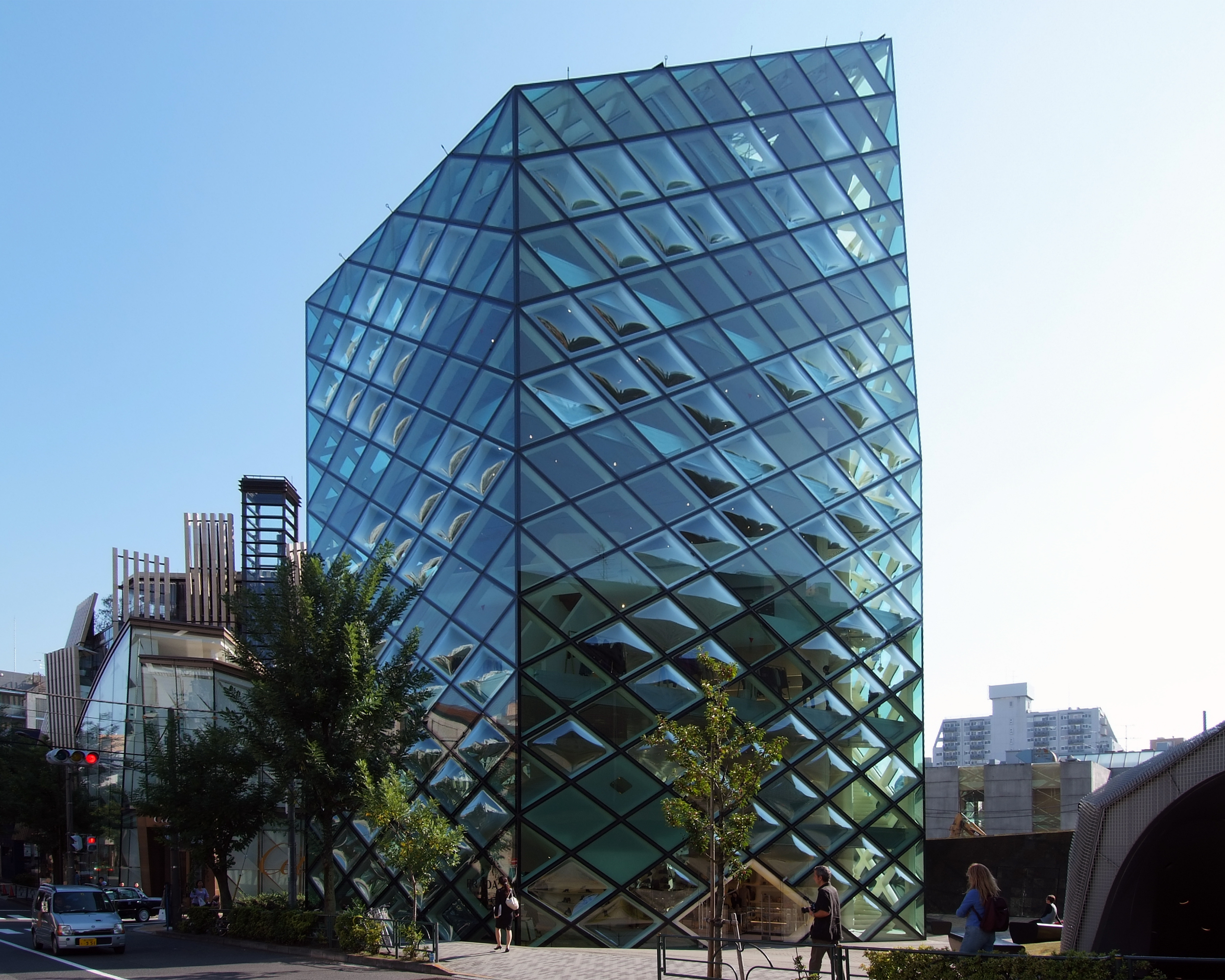
Herzog & de Meuron's 2003 Prada Aoyama is a five-sided glass crystal whose steel diamond lattice is filled with flat, convex and concave panes, so reflections of the street and its trees warp as you walk past. The architects stacked the site's entire permitted floor area into a 32-metre tower so that nearly two thirds of the lot could stay unbuilt as an open, moss-walled plaza.
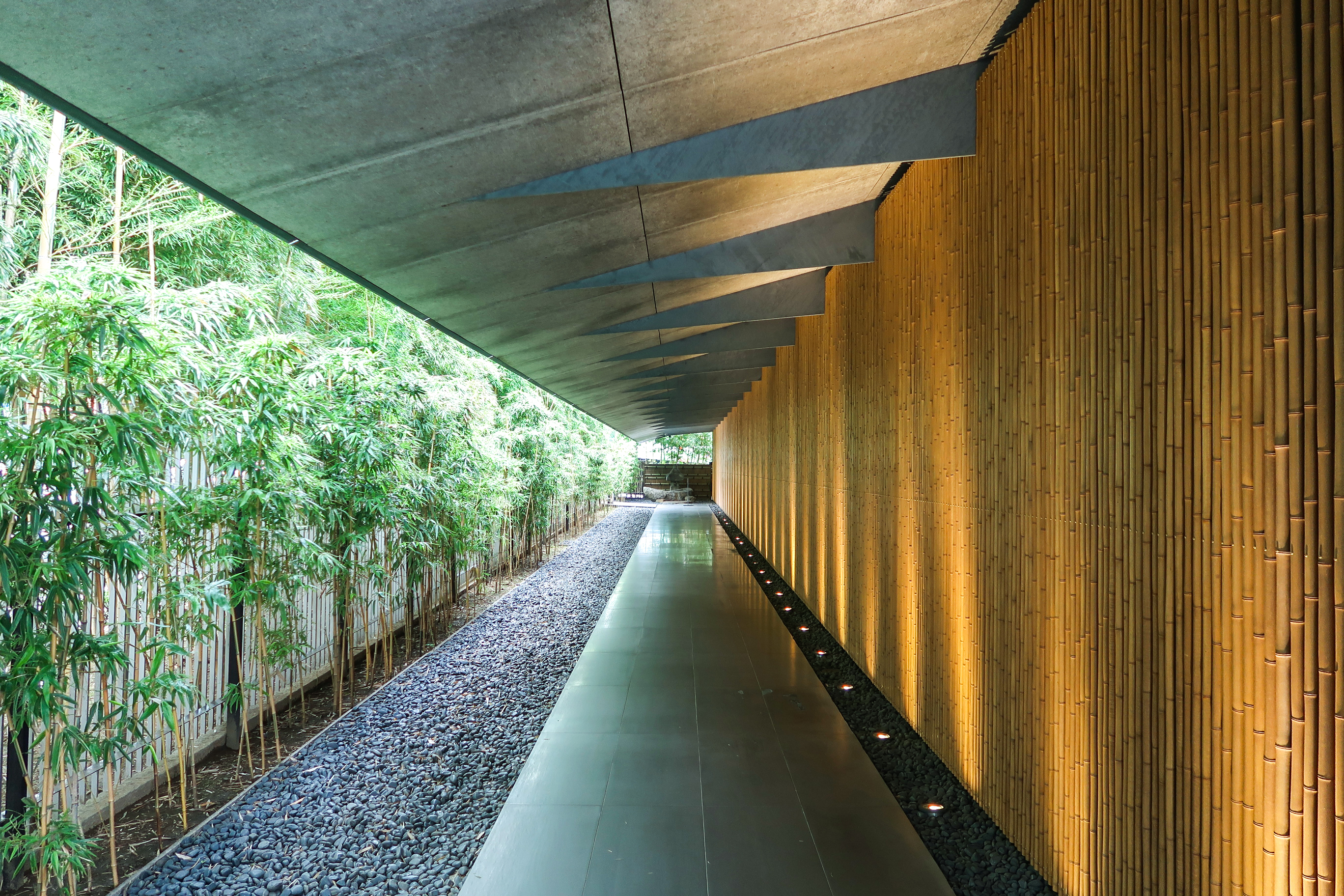
Kengo Kuma's 2009 rebuild of the Nezu Museum opens with a roughly forty-five-metre bamboo-lined walkway under a deep, low eave of charcoal tile and razor-thin steel, all of it outside the ticket gate and free to walk. Behind the door sit the East Asian art collection of railway magnate Nezu Kaichiro and a 17,000-square-metre garden with four teahouses, both ticketed.
This is the real story from one stop on this walk — every stop has one.
Asakusa is the oldest place in Tokyo and almost none of it is old. The Thunder Gate everyone photographs dates from…
Kiyosumi-Shirakawa is sold as a coffee district because old timber warehouses supposedly suited roasters. That causal…
Ginza is a street the Meiji government rebuilt in brick in 1872 purely so that foreign diplomats would see a modern…
We use cookies to analyse site traffic and improve your experience. You can choose to accept or reject analytics cookies. Learn more