Tokyo · Japan
The Island the Shogun Built: Tsukuda and Tsukishima
Tokyo, Japan
The founding story told straight, against the compressed version on every plaque Sumiyoshi Shrine, founded 1646 by transplanted Settsu fishermen, and its ceramic name plaque glazed so the salt could not eat it Why an island of fishermen is named with the word for a cultivated field Ten'yasu, simmering tsukudani on this ground since 1837 — and how one island's name became a food sold across Japan The shipyard the shogunate ordered in 1853 with Perry's fleet in the bay, and the 1876 refounding the monument actually commemorates Monja Street: a cheap flour-batter snack sold to children, now eighty-odd restaurants Kachidoki-bashi, whose leaves last lifted for a ship in the late 1960s and have not moved since a test run in 1970
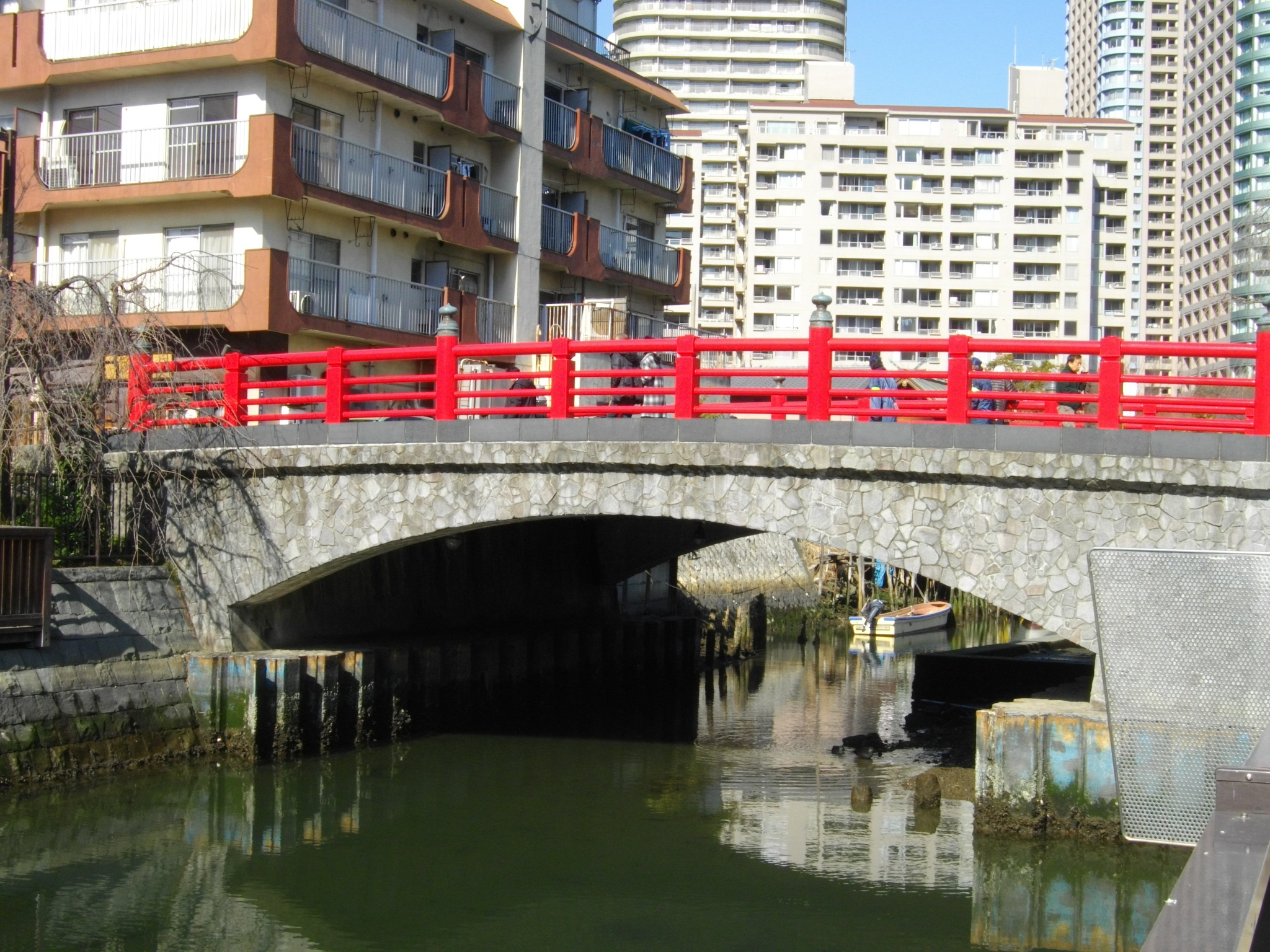
Tsukuda Kobashi is a small vermilion bridge over Tsukudabori, the boat basin at the heart of Tsukuda; the present span dates from 1984, though a crossing has stood on roughly this line since the island was completed in the 1640s. From the middle of it you see moored boats and low tiled roofs in front and the towers of Okawabata River City 21 directly behind.
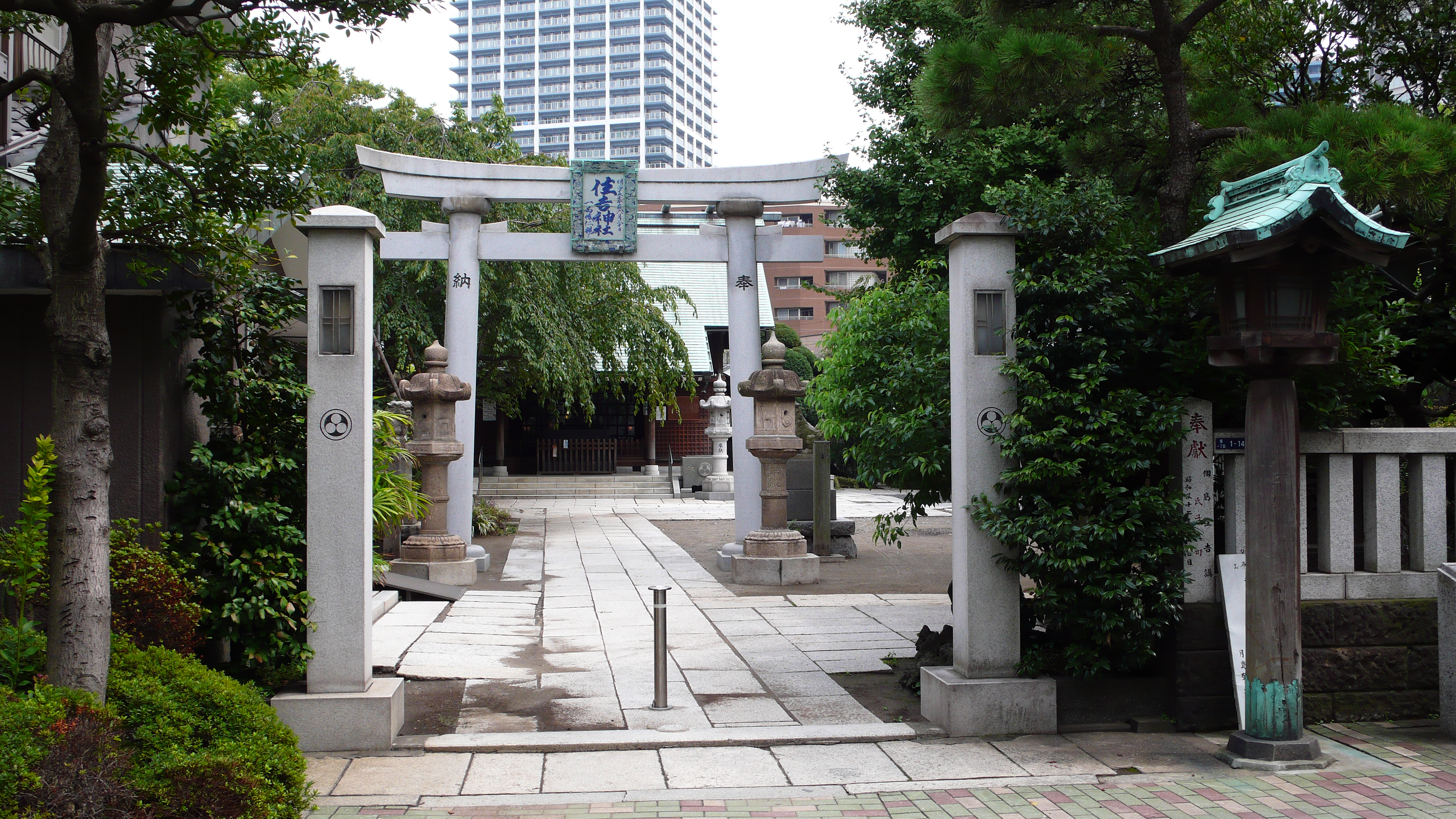
Sumiyoshi Shrine was founded in 1646 as a branch of the home shrine of the fishermen from Tsukuda village in Settsu, who had followed Tokugawa Ieyasu to Edo in 1590 and then spent more than a decade building this island out of tidal flats. Its ceramic name plaque, its stone lanterns and its 986 surviving documents are the community's own proof that Tsukuda was a relocated village rather than simply reclaimed mud.
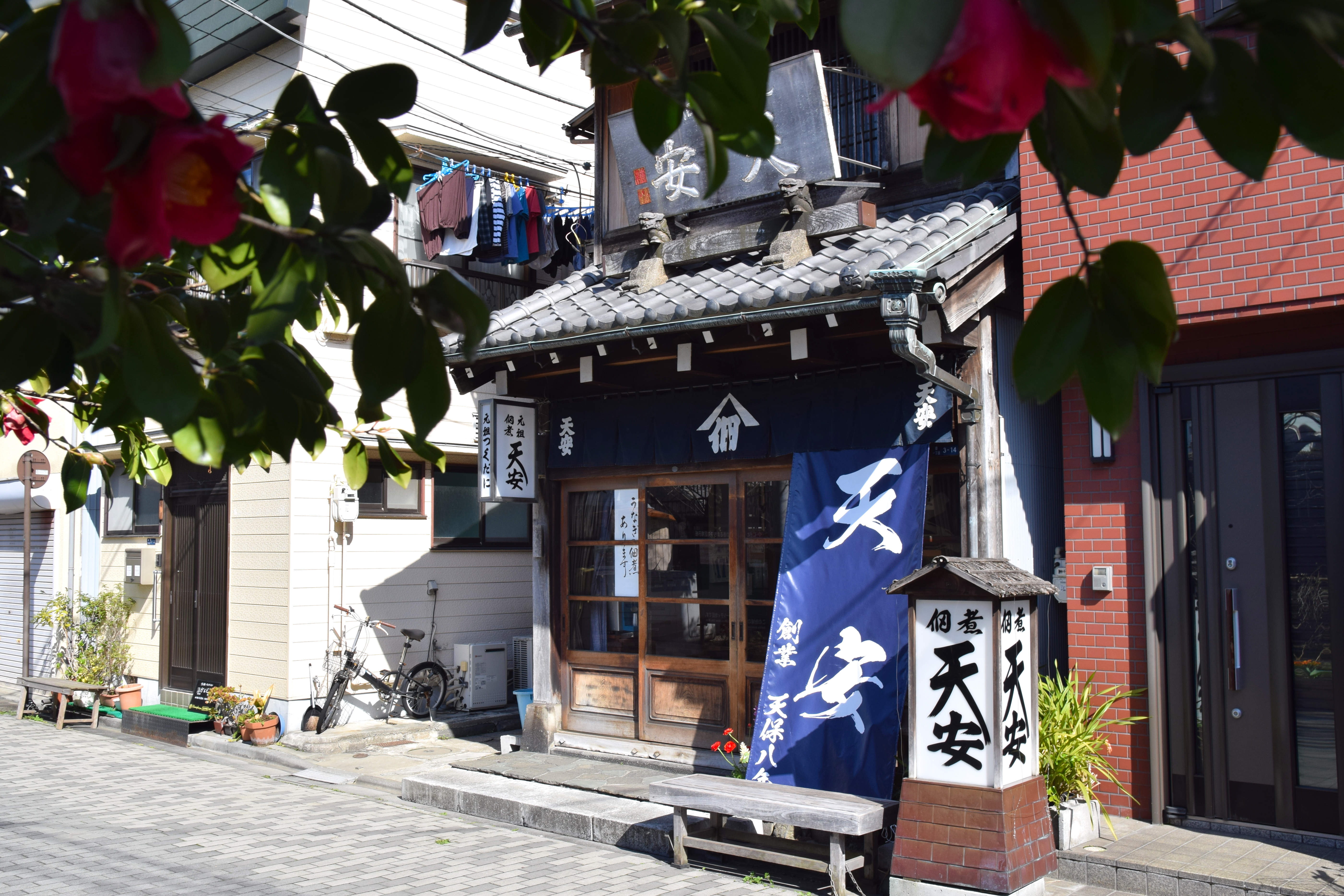
Ten'yasu, trading at 1-3-14 Tsukuda since 1837, is the oldest of the island's three surviving tsukudani makers, still simmering baby fish, clams and kelp in soy sauce, mirin and sugar and selling them by weight from a wooden shopfront. Tsukudani began here as a way to stop a fishing village's unsellable surplus catch from spoiling, and the word is now used across Japan for the method rather than the place.
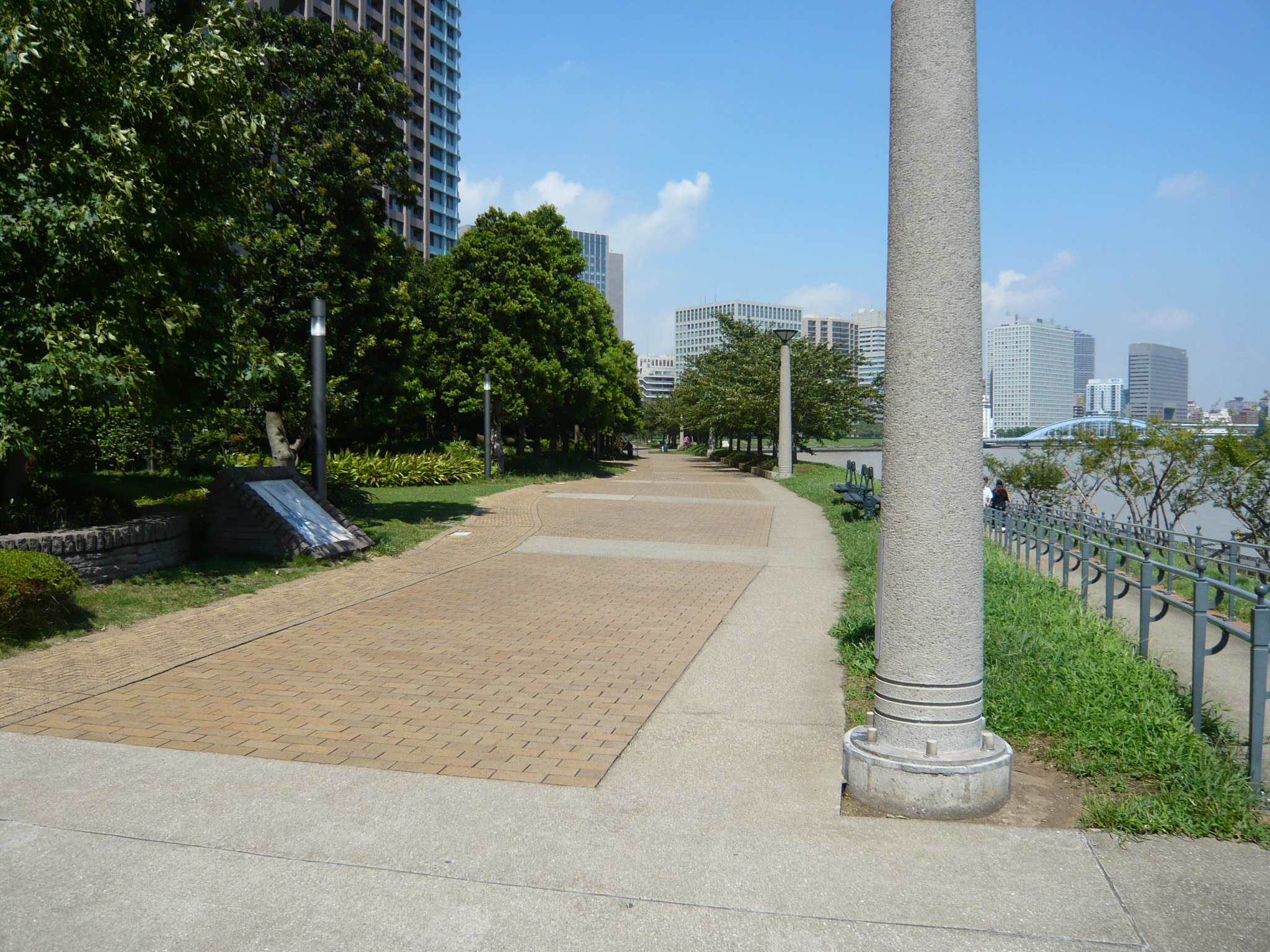
A riverside monument in Ishikawajima Park marks the spot where, in 1853, the shogunate ordered the Mito domain to build Japan's first Western-style shipyard as Perry's fleet sat in the bay. Refounded as a private yard in 1876, it grew into today's IHI Corporation, and its 103-year-old works closed in 1979 to make way for the towers behind you.
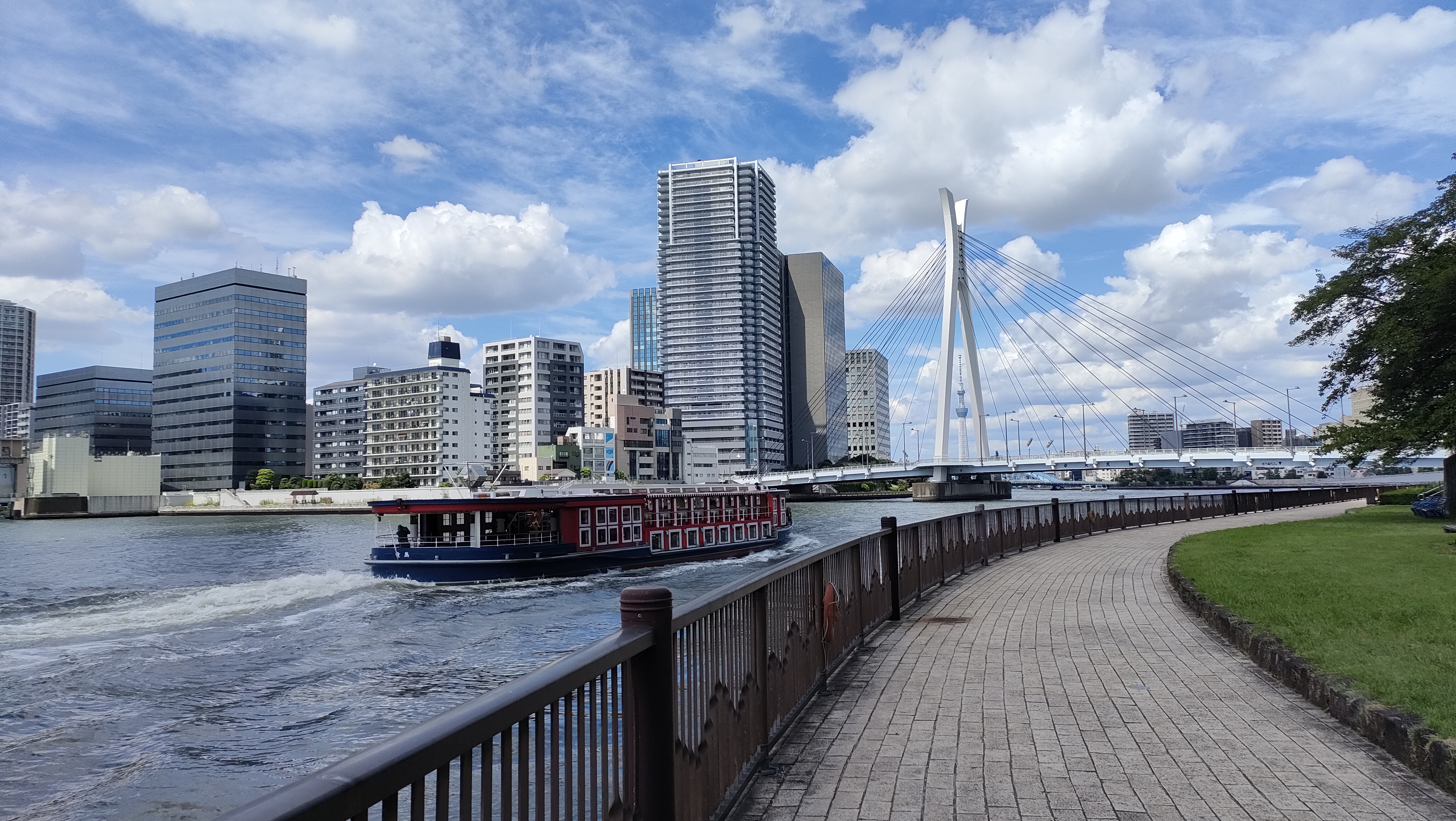
A short viewpoint stop on the Sumida embankment walkway in Tsukuda, where the wooden village, the cable-stayed Chuo-Ohashi bridge of 1993 and the Okawabata River City 21 towers line up in a single sightline. The terrace itself is the top of a flood defence, built to replace the concrete sea walls that once cut the island off from its river.
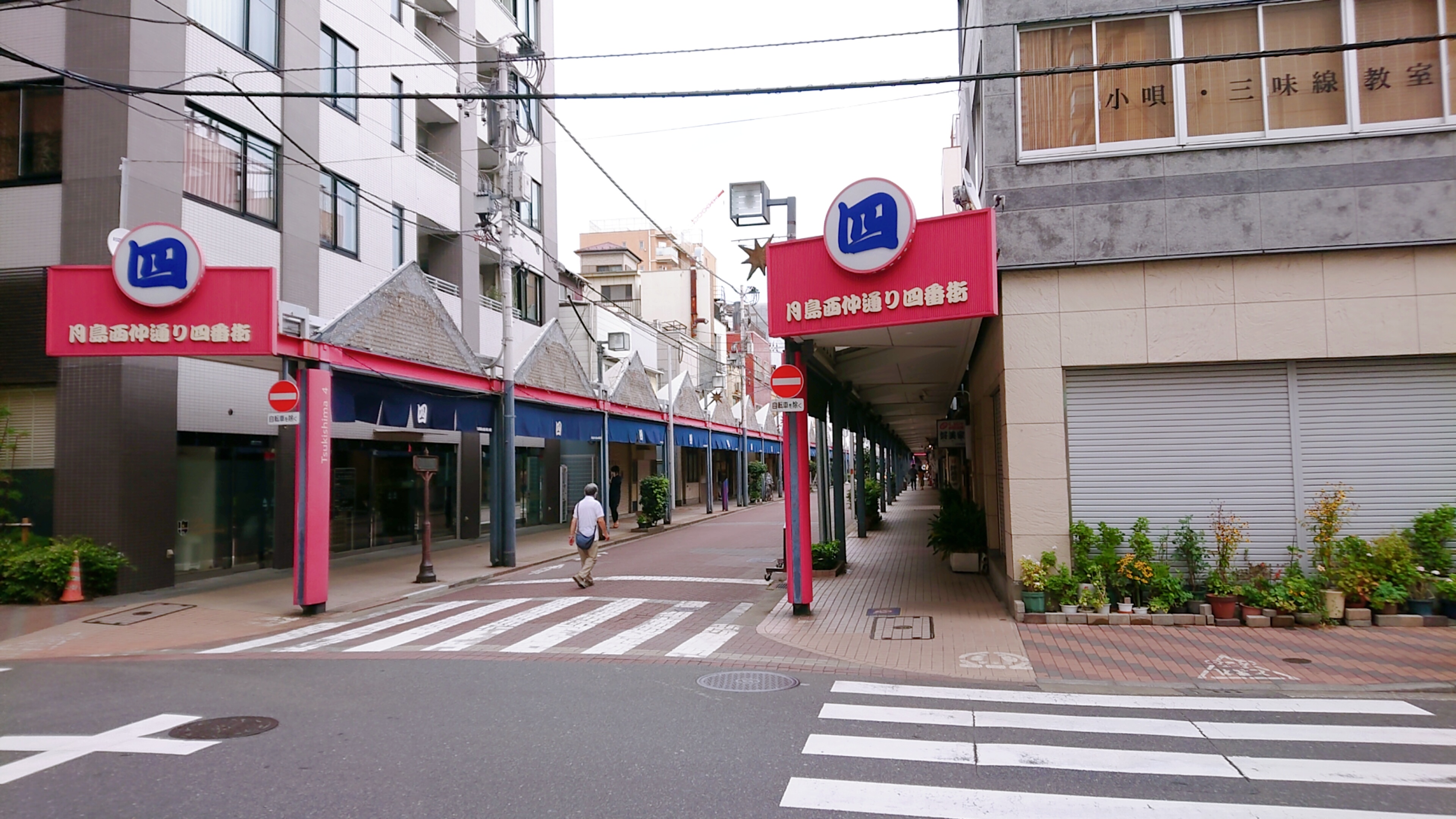
Tsukishima Nishinaka-dori, a shopping street of roughly eighty monjayaki restaurants under pavement canopies, is the home of a dish that began as a flour-and-water snack cooked for children on the hotplates of penny-candy shops. Tsukishima itself is a nineteenth-century island, reclaimed from Tokyo Bay and completed in 1892.
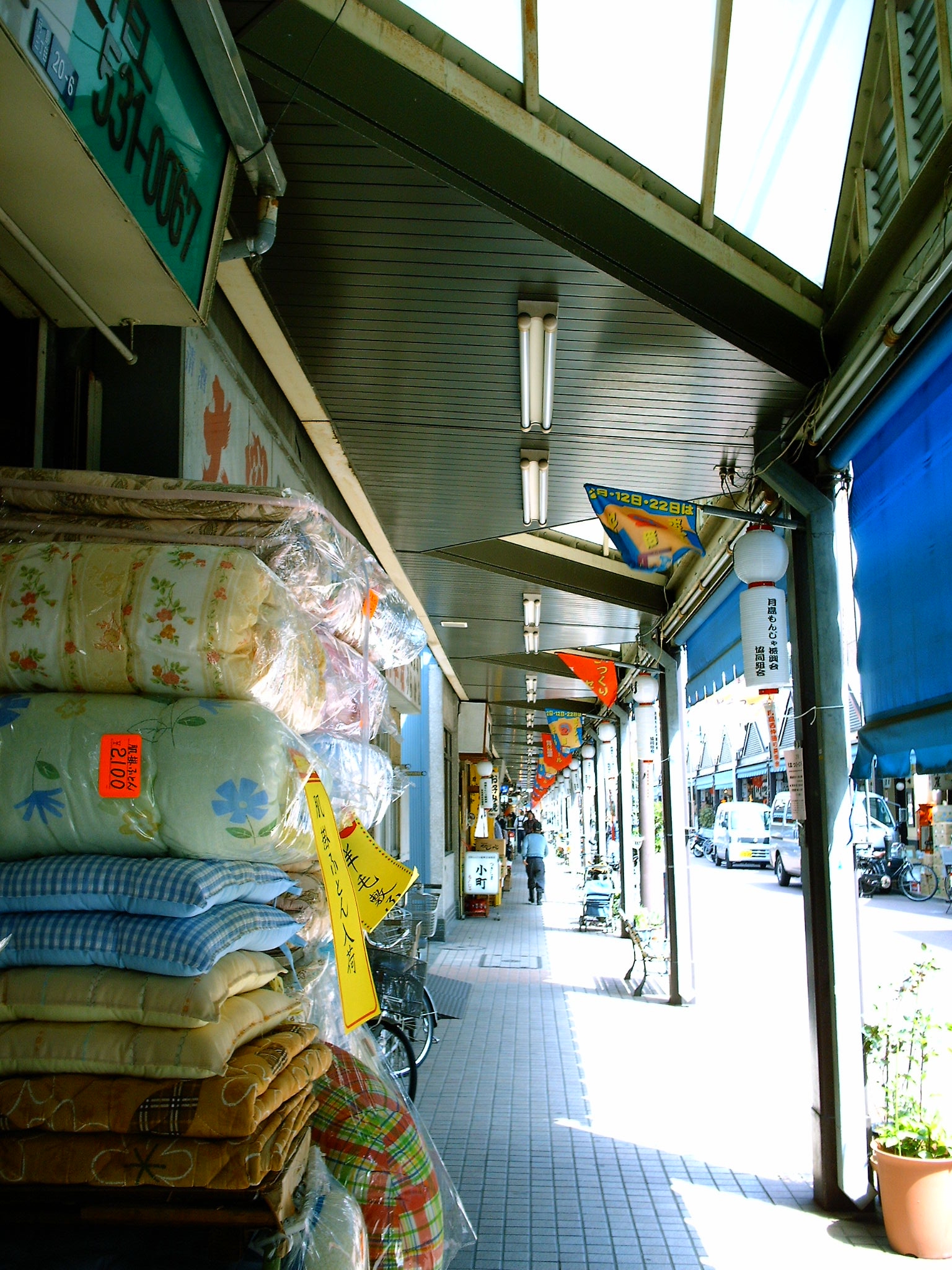
Kawashimaya, a grocery and sake shop at Tsukishima 3-7-10, has traded on Nishinaka-dori since the Meiji era by its own account and still supplies both residents and local kitchens. It stands among the restaurants rather than behind them: the everyday shops of this shotengai, including a Meiji-era footwear shop and a Meiji-era bookshop, are interspersed along the same corridor.
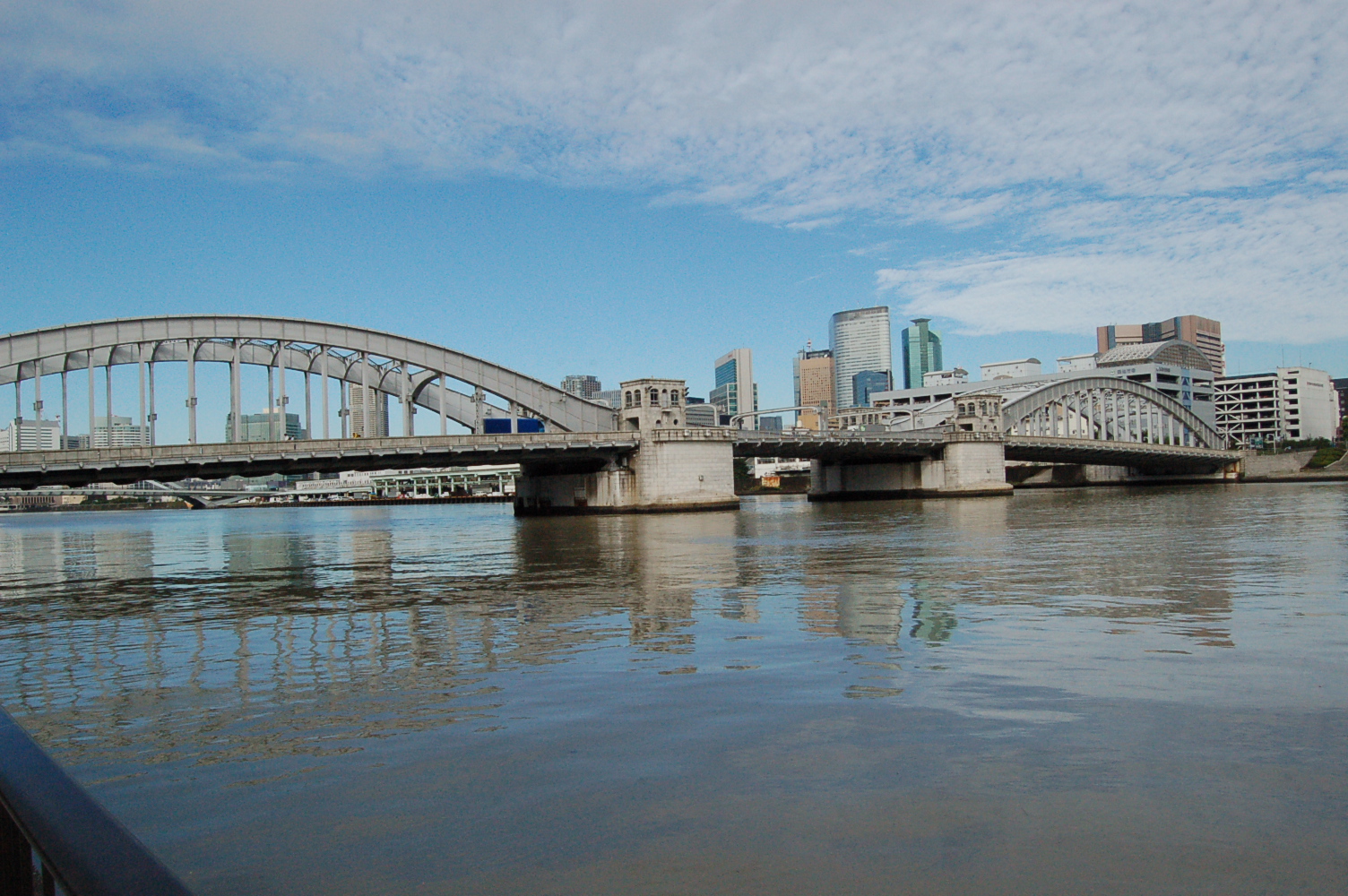
Kachidoki-bashi, completed on 14 June 1940, is a double-leaf bascule bridge built as the ceremonial approach to a Tokyo world exposition that was cancelled as Japan went to war. Its four-thousand-tonne leaves rose to seventy degrees in about seventy seconds until the final lift on 29 November 1970; it was designated an Important Cultural Property in 2007.
This is the real story from one stop on this walk — every stop has one.
Asakusa is the oldest place in Tokyo and almost none of it is old. The Thunder Gate everyone photographs dates from…
Kiyosumi-Shirakawa is sold as a coffee district because old timber warehouses supposedly suited roasters. That causal…
Ginza is a street the Meiji government rebuilt in brick in 1872 purely so that foreign diplomats would see a modern…
We use cookies to analyse site traffic and improve your experience. You can choose to accept or reject analytics cookies. Learn more